










In Business of Home’s series Shop Talk, we chat with owners of home furnishings stores across the country to hear about their hard-won lessons and challenges, big and small. This week, we spoke with Marie-Joe Bouffard, the principal of the full-service interior design firm JFY Designs and retail store Le Studio, both in Nashville’s Berry Hill neighborhood.
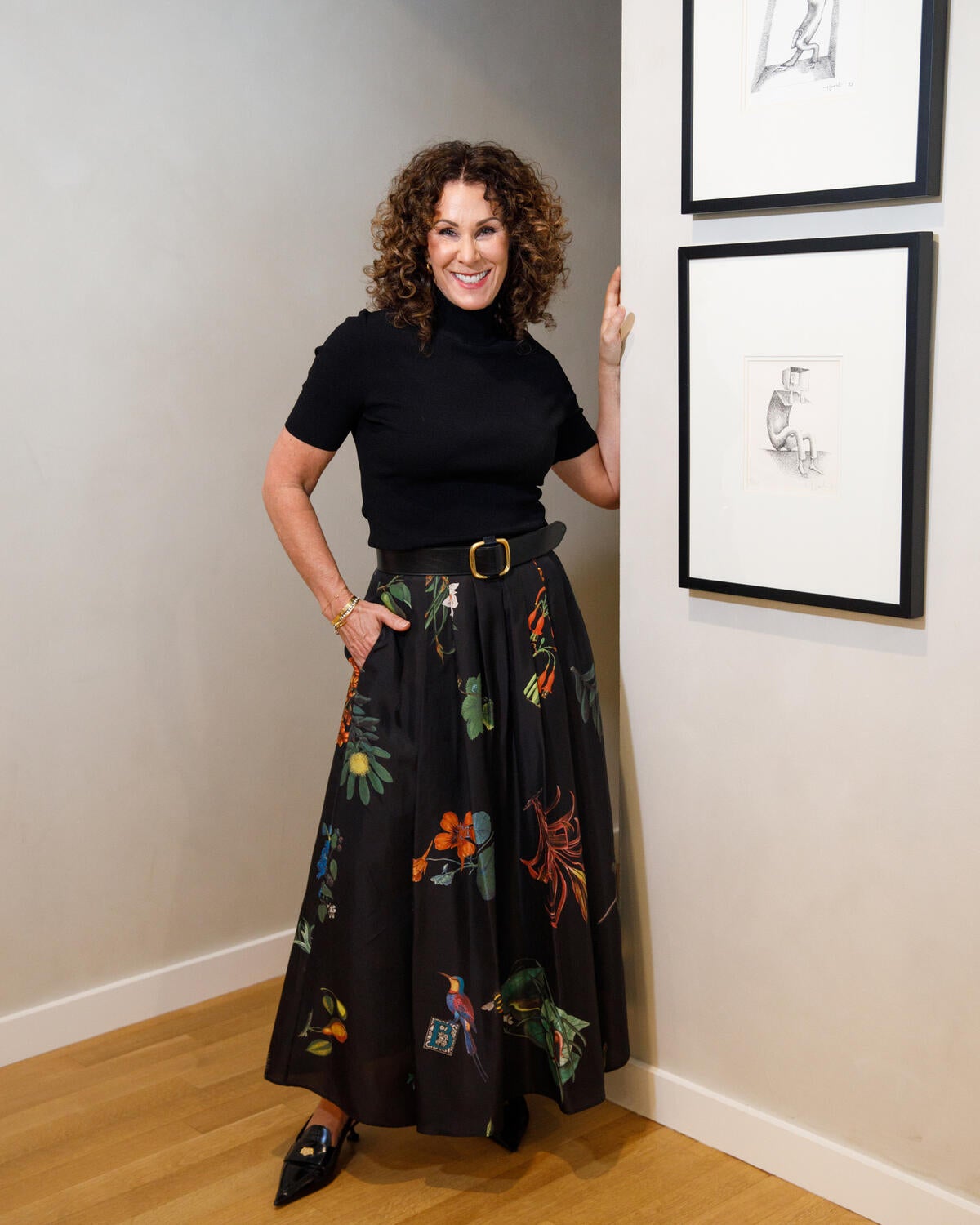
“When I design, I’m always one to lean into the obstacles,” says Bouffard, who began her professional life as a magazine editor in Montreal before briefly living in Dallas and then moving to Nashville with her family two decades ago. That lean-in philosophy suits her well in retail as well, having fashioned a store out of a former recording studio, making use of the dark back rooms as cozy nooks and crannies for customers and her design team alike. Ahead, she discusses the importance of hosting customers, her love affair with Verellen, and why original art is so crucial in both her designs and retail inventory.
Why did you decide to go into retail in 2021?
We started with one storage unit and it wasn’t big enough. A bigger one wasn’t big enough. It’s where we kept all of our treasures we bought at Market. Sometimes a longstanding client will text you two weeks before a party or Thanksgiving and say, “Hey, can you come refresh my living room?” We were paying for all these storage units and you’d have to drive there to go look at what you have. We decided our home base needed to be a place with a nice sample room, close to our vendors.
In Berry Hill, there are a ton of tile shops and stone yards, and Ferguson [Home] for plumbing. I hated the idea of a typical office with no personality. When I stumbled upon the studio, it was pretty dilapidated, but the exterior was really cool and different. I could see it. The building was a little more space than we needed, so the idea came: What if we use this studio as our storage, but it’s well-displayed? When our clients come to see us, they see all of it. And they can grab their favorite candle for a gift, or a big piece of art because there’s a hole in their foyer. It became a working studio for the JFY team, where anybody can walk in off the street and discover what we’re about.
How would you describe the store’s aesthetic?
It was very driven by the building. It was a recording studio for decades. It was run-down. The ceilings are really low. We could have blown it up and erected new walls, but the ceiling height is what it is. A lot of how the studio feels was driven by these space limitations. It sounds crazy, but [the space] was kind of telling us what it wants to be. There are steps up and down, here and there, and instead of trying to level it, we just embraced the quirkiness.
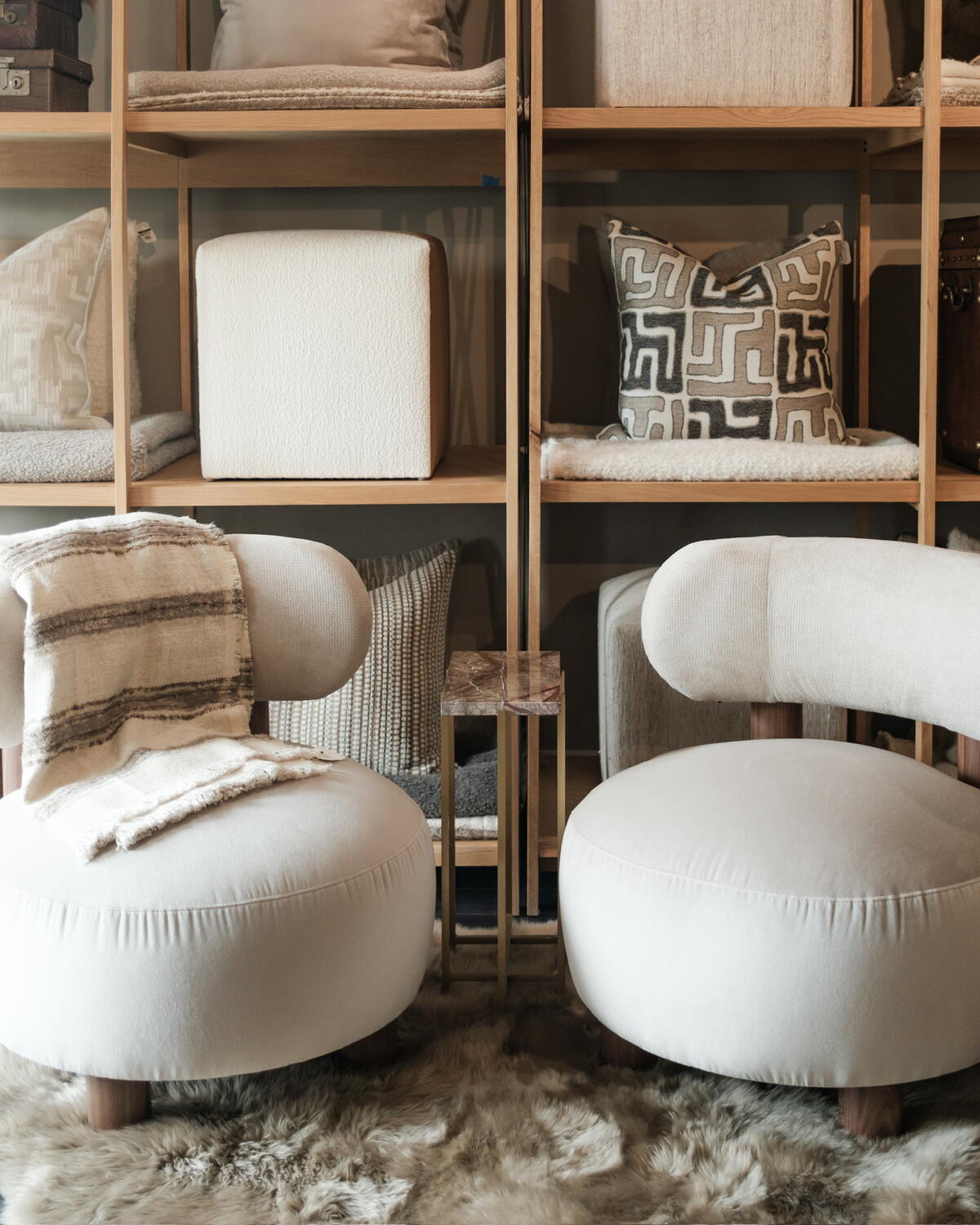
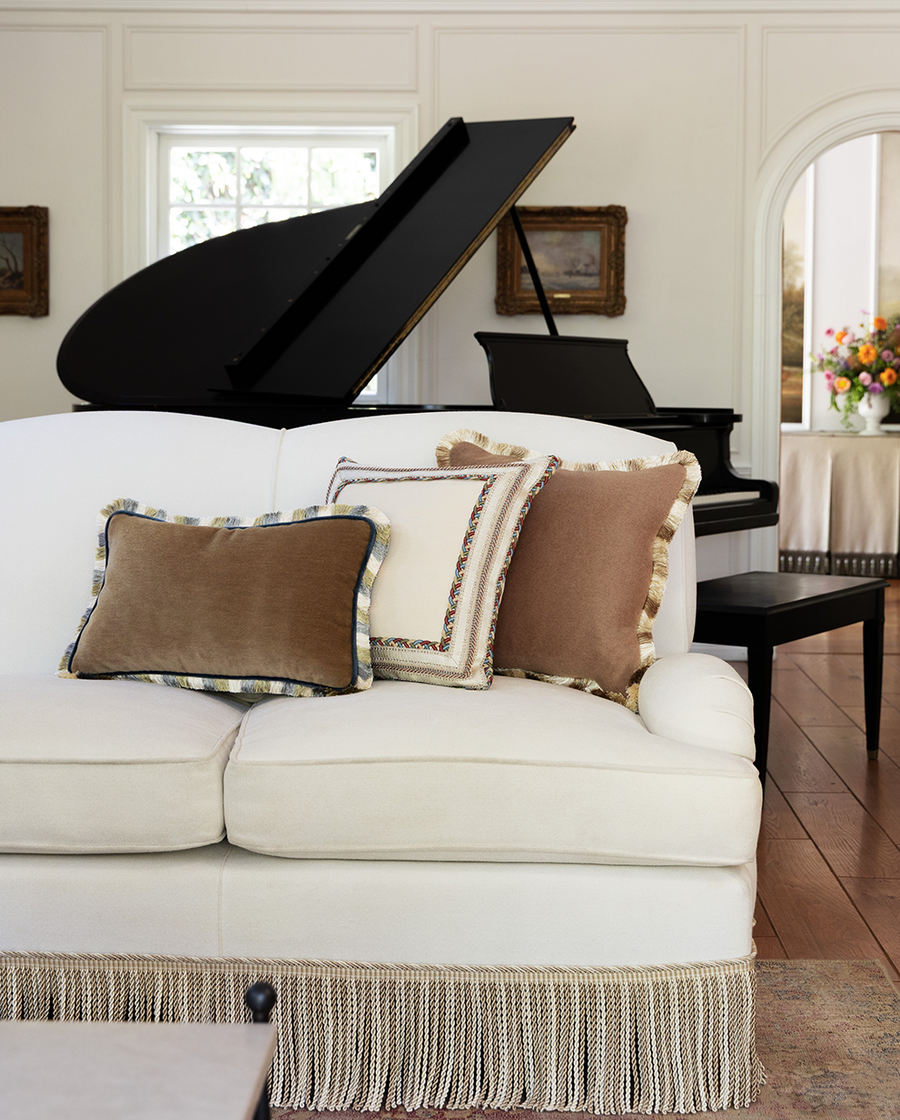
At the front, there are these huge windows and a ton of light, so we made the front rooms brighter. In the back, the ceilings are painted black to hide all the [exposed] mechanical, and instead of fighting that and having artificial light, we leaned into it and turned those back rooms into moody [vignettes]. It feels like you’re in a home at nighttime, with lamp lighting. The walls are painted Studio Green by Farrow & Ball. Everything in that space is [one of] our favorite objects by our favorite vendors, and is mainly one-of-a-kind, so it feels collected.
Does the store align with your design aesthetic?
Every single project we do is fully custom. We have clients who are very traditional and want a very Southern classic home. We have clients moving here from California and New York who want something edgy and modern, but we balance that with “You’re building a house in Nashville. How can we make sure it fits well here?”
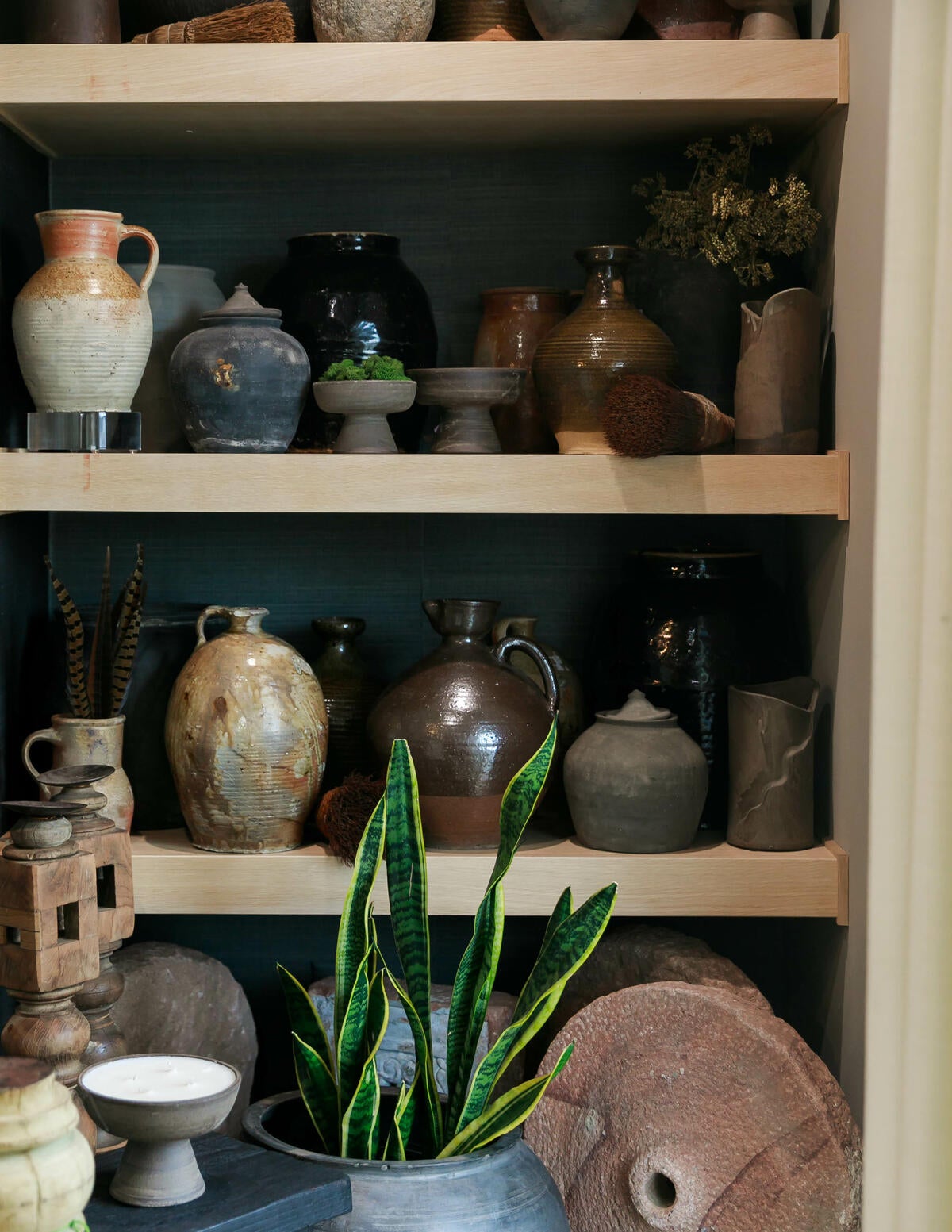
What Le Studio does reflect is the sensibility we have to make spaces very warm and inviting, collected, well-layered. Most of our displays are antique bookshelves filled with treasures. I didn’t want anything to feel very new or shiny. I met clients [at the store] for the first time yesterday. The husband was sitting on a sofa with his feet up on the ottoman, and the wife was in a comfy chair. They said, “Can we just stay here all day?” My designers can work from home, but most choose to work from Le Studio. We have some little rooms for making calls or Zoom. But the fact that my employees also choose to be there as much as possible because they love it and it’s so comfortable to them? It’s the biggest compliment.
Is there a certain Nashville look that you’re bucking? How do you fit into the local scene?
Berry Hill is this storied neighborhood with recording studios and coffee shops and independent businesses that are a little funky. I felt like it gave us carte blanche, especially with our exterior being so different. It just feels like a unique place. When I design, I’m always one to lean into obstacles. I have a client right now with a very dark room and they’re like, “Can we do everything white?” And I said, “Even if we do everything white, it’s a room in a basement with no natural light. It’ll still be dark—but with no soul. We are so much better off leaning into what we have. Let’s make it moody and sexy. Can we create a room that you want to retreat to, that feels like an embrace?”
In the back of Le Studio, the music is on. We love to entertain. We have a curved bar. We’ll make people the perfect coffee, the perfect chai. At night, it could be an Aperol spritz or a glass of wine. Being a good host to both my employees and our clients is really important to me. You want to relax. You’re a little bit in a bubble while you’re at Le Studio. Sometimes when I work back there for hours and I’m lost in the sauce, I go back to the front and it’s almost shocking. The sun is going to assault you. I love that it just feels like its own little world back there.
Who are your typical customers?
The trade is probably about 50 percent of our business: designers who are getting ready to do an install and need more pillows, more throws, some small art. We give a generous trade discount. We want to be convenient for other designers.
We don’t have a lot of walk-ins, because Berry Hill is not a neighborhood where people walk. That is something we’re trying to fix. It’s a big hope of mine that in the next year or two, we can make more people aware of us. If we don’t have what you need, you tell us and we’ll find it for you, because we have access to such a vast network of vintage vendors, antiquers, artists, anything you want.
[The remaining customers are] our own [design] clients. Last Mother’s Day, I can’t tell you how many clients were texting me, saying, “Hey, my mom was at our house and she fell in love with our sheets. What sheets did you put in?” Then they’ll order three, four, five more sets to give as presents, which cracks me up.
What’s your sourcing process like? Do you use any of the online marketplaces or platforms?
Hardly ever. I’m such a purist. I need to touch. When you buy things on 1stDibs, I find it really hard to see tone with photos. Regardless of how well they try to do their photography, you get a rug and the colors can be so off. You think it’ll be a beautiful little blush and it’s bubblegum pink. So we do our best to source everything in person, which means going to a whole lot of markets. We go to High Point probably four times a year; I have a ton of great connections there. And then of course, all of the big showrooms for case goods and upholstery. We sit on everything, we touch everything. We go visit our favorite vendors and manufacturers to learn how things are made. We invest a lot in educating ourselves.
I travel a ton. I find new artists and galleries, and I bring back pieces for my clients. Last year I went to Mexico City [for] our family Christmas trip, but of course I stumbled upon this custom lighting company that I’m now doing business with. It’s about being curious and always on the lookout.
What’s a vendor you’re thrilled to work with?
Verellen. They make everything themselves still, which is really important to me. The integrity of how they do things—they have a very strong sense of who they are. You can tell a Verellen chair. There’s a certain aesthetic they are loyal to, while always evolving in a way that’s true to the brand. They’re also not scared of saying no; they keep their product a little more exclusive by not giving access to everybody. They make it hard to buy Verellen.
I feel a kinship with Verellen in that intentionality, in the integrity of design and practice, a level of quality in that “If we’re going to do this, let’s do it right.” We’re not just doing it to make a quick buck.
What’s an item or category that flies out the door for you?
We do a ton of pottery. Large vases, small vases, serving pieces. We source a lot of vintage and antique pottery, and we also have dishes that are handmade in Mexico City. We have these cool vases—they’re funky, and we can only get our hands on a few at a time, so we get wiped out pretty quickly.
What’s your own favorite category?
Art. We source a lot of different styles. We have little French and Belgian paintings from the 1800s, we have some very modern pieces. We try to buy as much original art as we can. I can’t tell you how many clients have told me, “We don’t want to spend a lot of money on art. We don’t care about art.” Then, when their house is finished and filled with art that fits well, they start to collect. For me, a home is so unfinished when you have blank walls or super generic pieces everywhere that don’t elicit any emotion.
We try to have art at all different price points, and some from emerging artists, so it’s not necessarily such an investment. We have a room in the back with an art ledge and maybe 25 pieces. We call it “the snug.” There’s a banquette with an old table and a bar cart with snacks. It’s like a little artful coffee shop. It feels so good to sit there surrounded by paintings.
What’s the design scene like in Nashville?
Nashville people have become so passionate about design. It’s something that’s really changed since I moved here. There’s a pride [about design here now]. People love to make their house a home, and for it to reflect who they are. It’s a fun time to have both an interior design business and a retail space that speaks to that need. The influx of people from all over created this need, and brought a slew of people who are experts in their fields. There’s such a vibrant design community in Nashville now.
What are your hopes for the future of the business?
Last year we collaborated with this little company that makes handblown glass. They were a few blocks from us and they’ve since moved, sadly, but we collaborated to make our own line of barware—all shapes and sizes of glasses and some carafes. The pieces were inspired by a trip to Japan, where I fell in love with certain shapes. It was just so fun to create something, and to know that nobody else has this. Encouraging local artists and artisans by collaborating with them is definitely something I want to keep exploring.
I think we’re pretty comfortable with where we are, and the scale. I think we have so much to offer. I’m a very habitual person. If I need a gift, I have a few places where I’ll go. I would love to become a regular resource for this certain kind of person who visits us because they can rely on the fact that we will have something unique, artful and cool.
What’s your best day at the store?
I have two. On Tuesdays we have our team meeting in the morning. We spend an hour and a half or two hours catching each other up, like: “Hey, this vendor has this new product.” Or we brainstorm, because someone has a hurdle they can’t solve. It’s a way of making sure that all of the design team gets together in one room at least once a week to collaborate. We tend to stay there, order lunch. Then everyone breaks into little groups in different corners, working on things. The energy on Tuesday is so fun. It’s often when clients drop by too.
My next-favorite day is when the big black Verellen truck comes, or when we get a big delivery and can change up what we have in the studio. That’s hard to beat.




 Withdraw Consent / Manage Privacy Preferences