










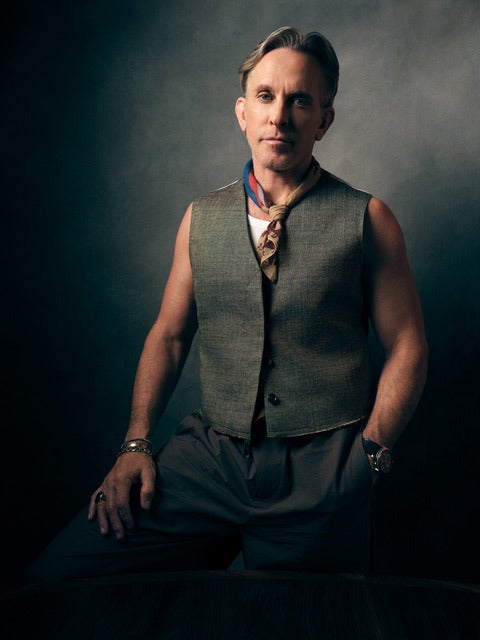

When Jay Jeffers embarked on his design path, it was on a lark. At the time, he was working in advertising at Gap’s corporate headquarters in San Francisco, but felt dissatisfied with the lack of creativity in his developing career and was looking for a new direction. Flipping through the course catalog for a nearby Berkeley extension campus one day, he happened upon an introduction to interior design course, and decided to enroll.
“I took the class, and it was the most eye-opening experience I’ve ever had,” Jeffers tells host Kaitlin Petersen on the latest episode of Trade Tales. “I was like, ‘I think I’m kind of good at this—and I also think I’ll have fun making a living doing this.’”
Over time, he transitioned out of his corporate job, taking on more design classes and working under the wing of a local designer. A few years later, he got his big break after a room he’d decorated in his own apartment earned him a spot on the San Francisco Chronicle’s list of fresh design talents. A few projects here and there turned into a steady pipeline, and by the end of 1999, Jeffers had officially launched his eponymous firm.
In the years since, the designer’s creative imagination has run wild—he has experimented with retail; developed and opened The Madrona, his own boutique hotel in Sonoma County; and published three books, including the recently released Modern Classic. Internally, JayJeffers Inc. has remained an environment of stability and steady growth, leading to a design team that’s in it for the long haul and an environment where clients feel safe enough to trust the firm’s creative risks.
Elsewhere in the episode, he shares how he’s protecting his firm from pipeline fluctuation; the value in creating a workplace that attracts senior talent; and what he learned from the process of opening his own hotel.
Crucial insight: Over more than two decades in business, Jeffers’s firm has seen its fair share of market volatility. In order to weather those dips in demand, he’s hewed closely to a few key tenets: a lean team, a solid financial cushion and regular profitability audits. Doing so has allowed his firm to conduct experiments in other categories—retail and hospitality, for example—and refrain from sacrificing quality for quantity in his pipeline. “If there are small downturns in markets, we’ve got runway,” says Jeffers. “I’ve also learned not to take every single thing, or to take a job out of desperation—take a job if you want to do this job.”
Key quote: “I figured out early on that if you believe in it, then you can sell it. I believe in what we’re showing. I believe in what we’re presenting. I believe in what we’re doing, and I believe it’s the right thing for these clients in this home. It doesn’t feel like sales anymore; it makes it much easier.”
This episode was sponsored by High Point Market and Minted. Listen to the show below. If you like what you hear, subscribe to Trade Tales on Apple Podcasts or Spotify.












 Withdraw Consent / Manage Privacy Preferences