




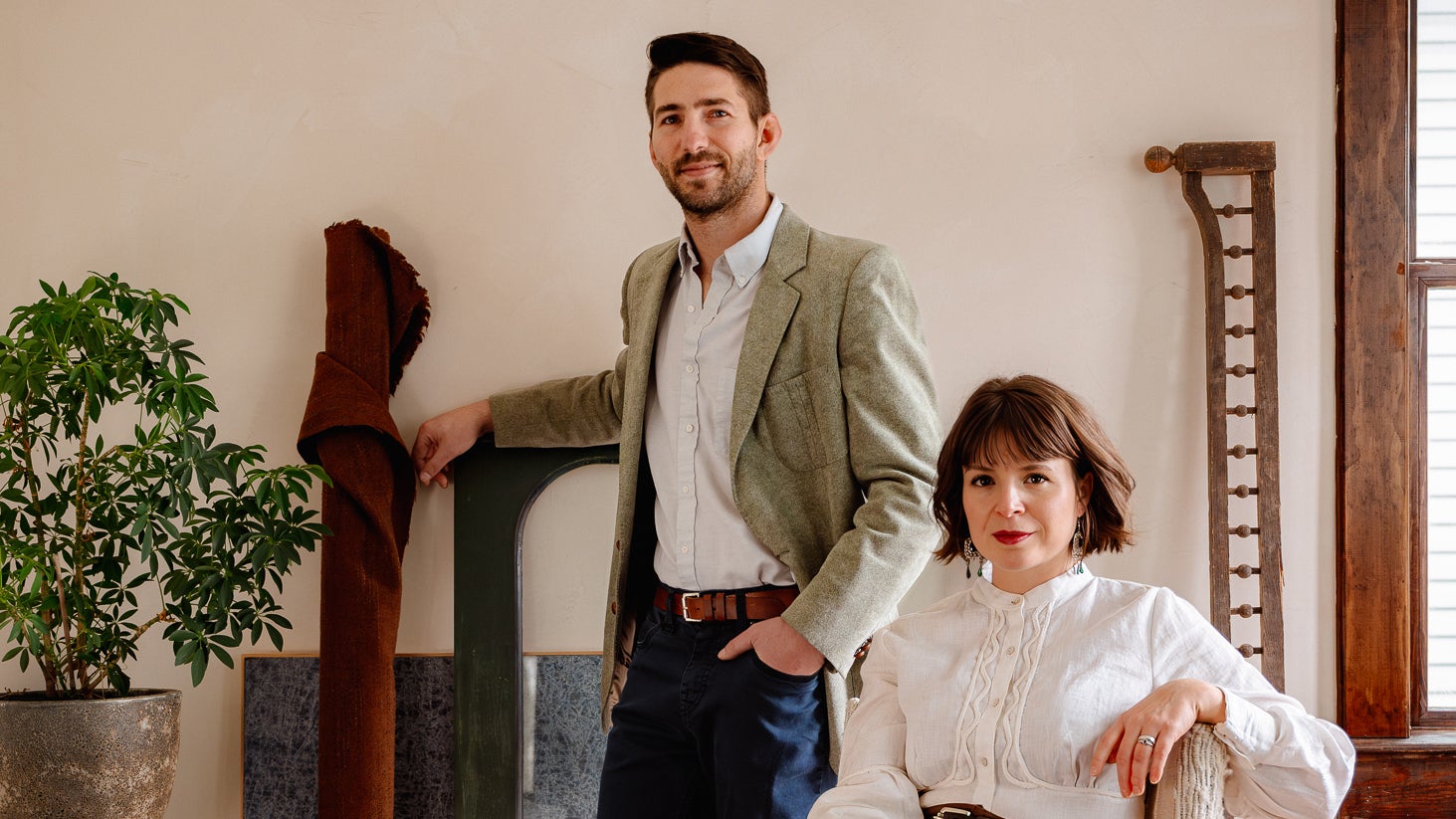

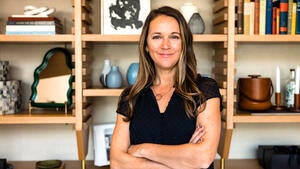
In our new series Ask an Expert, we’re speaking to the specialists who help design firms thrive. This week, we talked to Giulietta Pinna and her husband and business partner, Nate Bachmann, who together run Baltimore-based agency Limonata Creative.
Pinna originally founded the company in 2016 as a service for art direction and styling. When Bachmann, a graphic designer, came on board in 2024, the duo expanded their services to include branding and web development. Here, the pair talk about why they want to be a one-stop shop for designers, what it takes for firms to stand out in a crowded marketplace, and why they aren’t worried about being replaced by AI anytime soon.
How did Limonata get started?
Giulietta Pinna: I was working as a [self-employed] art director and a stylist for years. My primary clients in the beginning were food-based clients and product-based clients. During the pandemic, [my business] gradually evolved into mainly being an interior stylist for designers and architects. The pandemic was such a tailspin for so many industries. My product and food clients sort of trickled away because of what was happening in those industries at the time, and then simultaneously, the design industry started to ramp up—and it hasn’t stopped since.
What does your client base look like now?
Pinna: I would say 90 percent of our clients are now design clients. I love it.
How did Nate end up joining the business?
Pinna: In 2021, we both hit a blockade where we hadn’t gone anywhere in over a year because of Covid, and we wanted to explore. So we decided to go on a six-month travel sabbatical. Nate had been working as a [graphic] designer in New York and then in Baltimore, when we moved here in 2014. After the pandemic, both of us were like, “We need just a refresh.” I put everything on hold; he left his job with very amicable conditions.
When we returned from that trip, I was so slammed because there’s not a lot of stylists, even nationally, but particularly in the region where I’m based, there’s only a handful of us. I hit the ground running. It was incredibly busy. Nate was trying to figure out what the next step in his career journey was going to be at the time. He was like, “Let me help you. You’re swamped.” He started learning the ins and outs of what I’d been doing for the last seven years, and going on shoots with me and meeting my clients. And then two and a half years went by.
Nate Bachmann: As [Giulietta] mentioned, I have a background in graphic design and I worked in branding. When I started working with her, I was helping to manage and build out a new website for our prop house, another aspect of the business. I took that over and then redesigned the Limonata branding, and that led me to web design. I had always been a creative director and directed web developers, but utilizing Squarespace and some other programs, I realized, “Oh, I can actually do all of the design, from soup to nuts.”
How did you start offering those services to designers?
Pinna: I had a couple of interior design clients that happened to need branding and design work. They had seen what Nate had done for our own business in that time and were blown away by it.
Bachmann: And that led to our full-service clients, where I start with the branding and web design, and then Giulietta does the art direction and interior styling. Together, we’re helping these designers take a big step forward. Instead of hiring one person to do one thing, another person to do another thing, and they’re not all speaking to each other, we’re able to create this continuity between all of these components.
Pinna: We formalized our agency about two years ago, so it’s relatively new, but we’ve had three full-service clients and we have three more coming—so it’s been growing relatively fast. What we’ve really been able to see is how much value our clients are getting from having a unified team focus on all of these services.
Can you walk me through your process?
Bachmann: I have a pretty lengthy questionnaire ranging from career goals to types of clients. I want to know what [project] experiences the designer enjoyed. What experiences didn’t they enjoy?
Pinna: What we found is that most of us are just head in the sand, working, and it’s very rare to look up and be like, “Wait—what do I actually want? Am I doing the right thing for [my business]?” If you’re going to invest in a full rebrand, what type of work is going to bring you the most joy? [Nate] really helps designers dig deep into themselves. They know that they want to grow, they know they want bigger clients and bigger projects. Once we [help them define] their ideal client, we can focus all of our energy on copywriting and language that supports that, while also finding their strengths and what helps them stand out. What are their unique qualities as a designer? We’re very thorough. By the end of [the process], all of [our clients] are like, “Oh my God, I did not realize X, Y, Z.”
Has that process led any clients in interesting directions?
Pinna: We had a client realize that she should tweak the name for her brand.
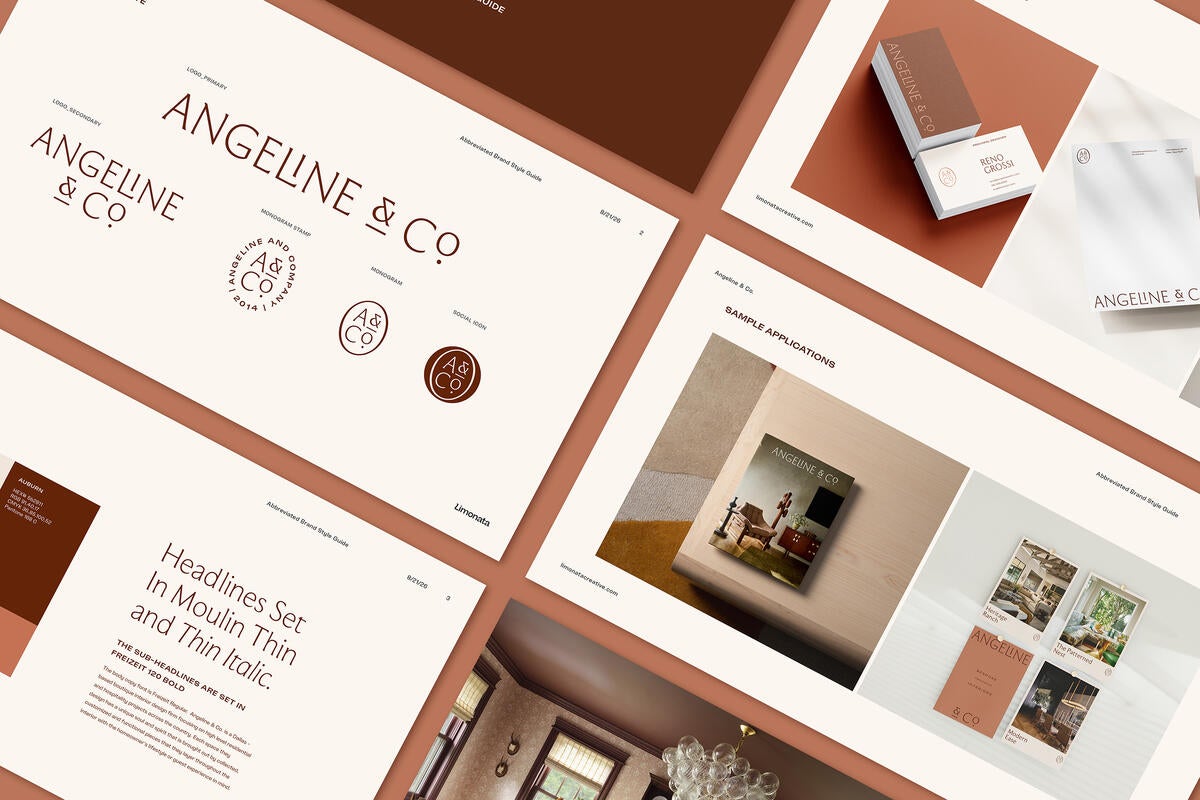
Bachmann: We worked with Angeline & Co., formerly Angeline Guido Design. We looked at names that were really far from her original name, and then we landed pretty close to her actual name, and that was the smartest move for her. Part of her vision is growing into a product line, and her studio’s grown to seven or more employees now. It’s not just her. She wanted her end client to understand that it’s not just one person behind a desk doing design work. It’s a whole team now and a studio, and it’s probably going to lead into other things. Giving her just that little tweak gives her the flexibility to really grow with that name.
What comes after you decide to make a change like that?
Bachmann: From there, it’s the brand identity design, and we’re starting to introduce the visuals. I begin with mood boards and then black-and-white logo concepts. It’s a full brand identity system with a style guide. That leads into custom brand applications—a stationery suite, welcome packets, presentation templates.
How does this differ from templated offerings that are out there?
Bachmann: With every client, I essentially embed myself into their [firm] for three to four months. We’ve had some designers come to us who are a little too green for that level of service—they’re looking for something that’s quick and easy, and less expensive. We’re not that. We’re for that designer that’s at the mid-tier taking a step to the higher tier.
What value do you see for designers in investing in visual branding?
Pinna: It’s like having a financial planner, but somebody on the [brand strategy and aesthetic] side, to be like, “OK, if this is where you want to be in five to 10 years, here’s how your visuals have to look in order to meet those goals.”
How does interior styling fit into this package?
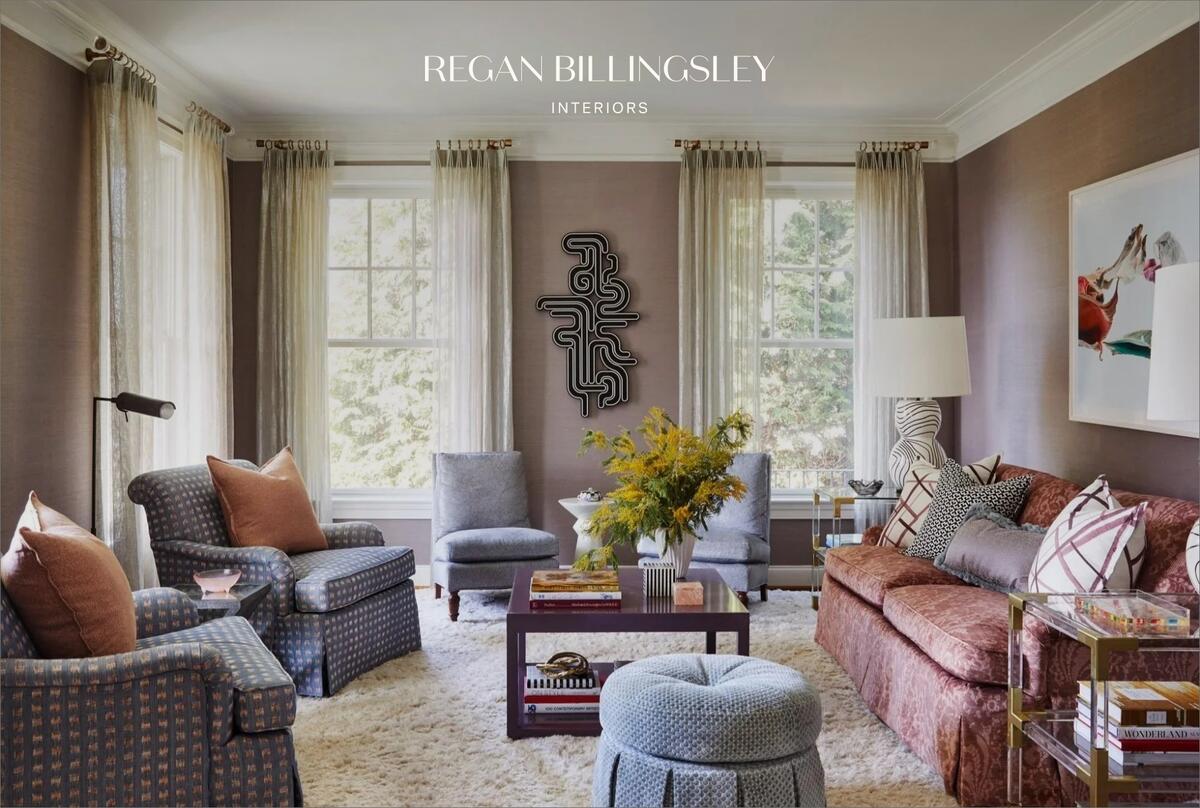
Pinna: In order to stand out today, designers need to be individual [and intentional] in branding and their photography. Over and over again, clients would come to me first and we would create gorgeous imagery for their new projects, and then they would try to pitch to a publication and they would get turned down because their web presence and their branding was so poor. It wasn’t aligning with the magazine itself, which has its own brand to uphold.
Then on top of the disconnect between [the designer’s] brand and the publication, you have this beautiful project and you go put it in your portfolio—it is a shining star, but it’s like seeing a shining star in a puddle because the website is so poorly made. We want to help designers to be confident with their whole presence, not just one photo shoot.
How do you prepare ahead of a photo shoot?
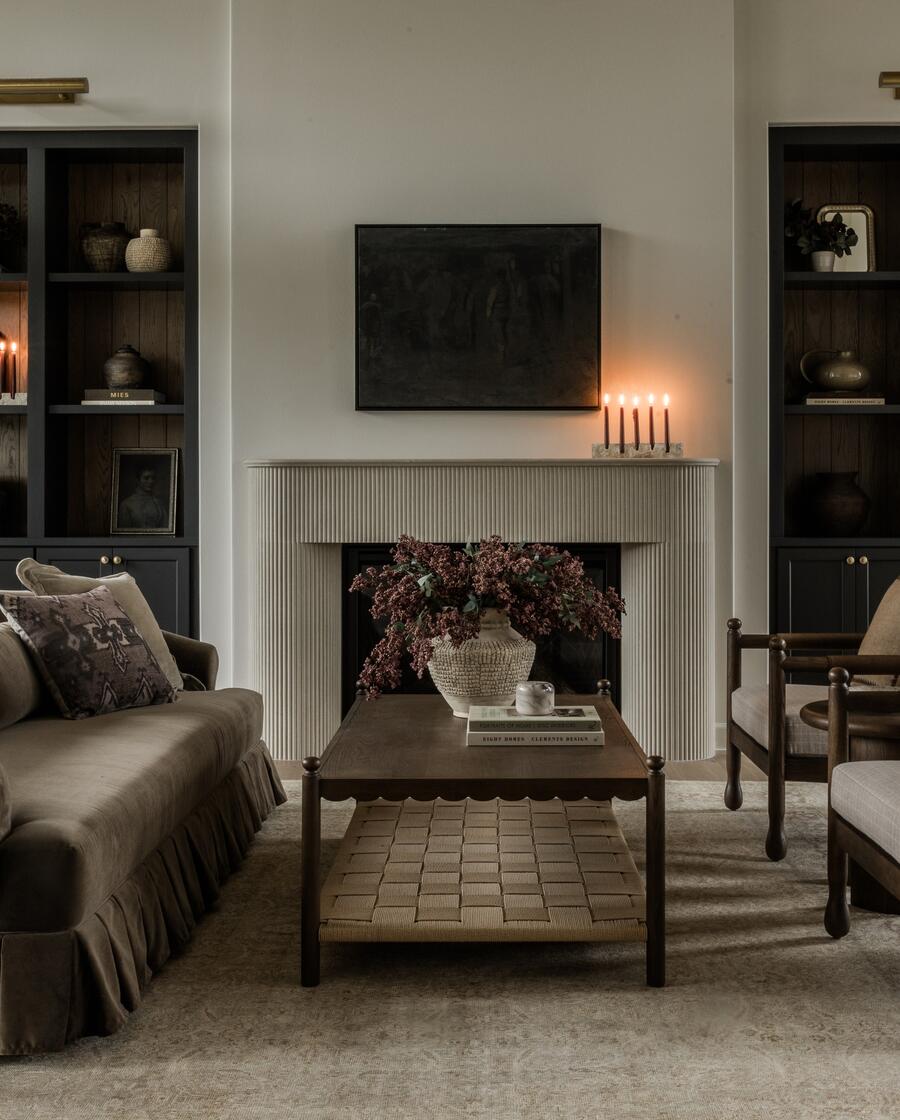
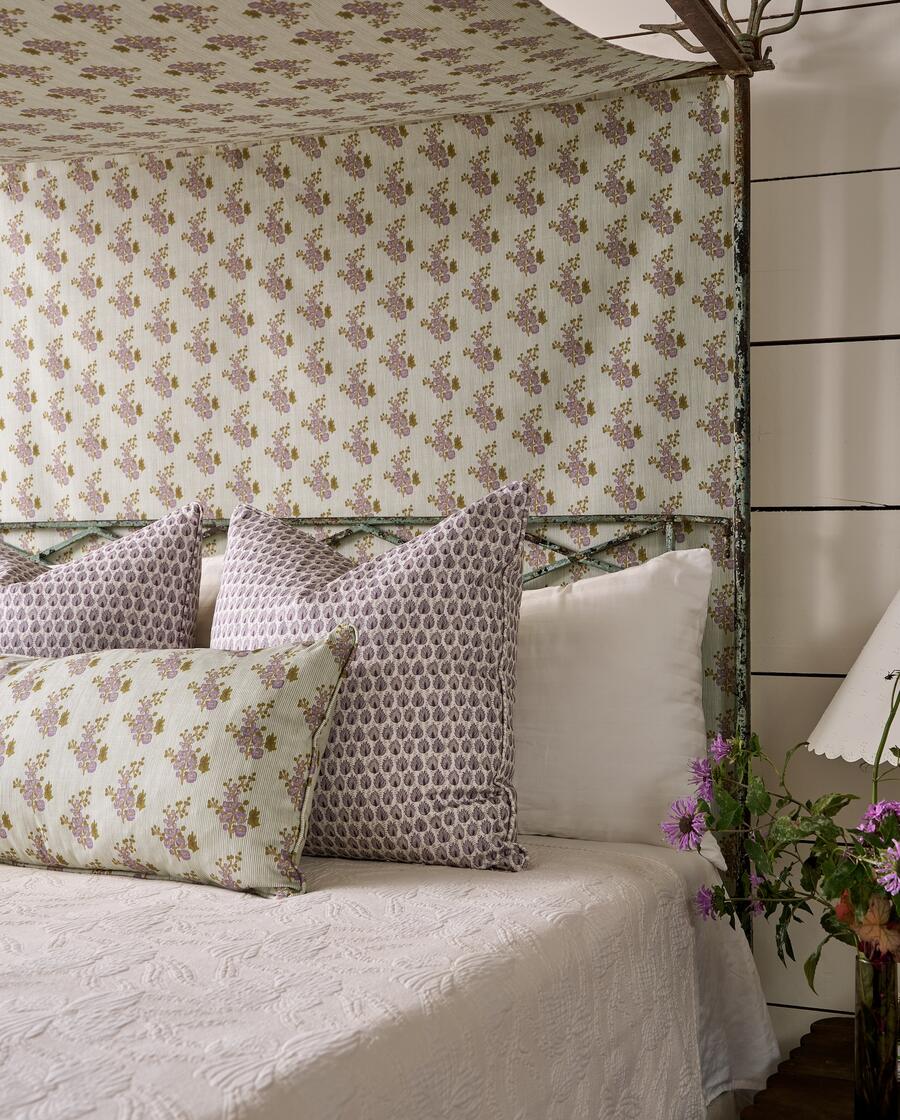
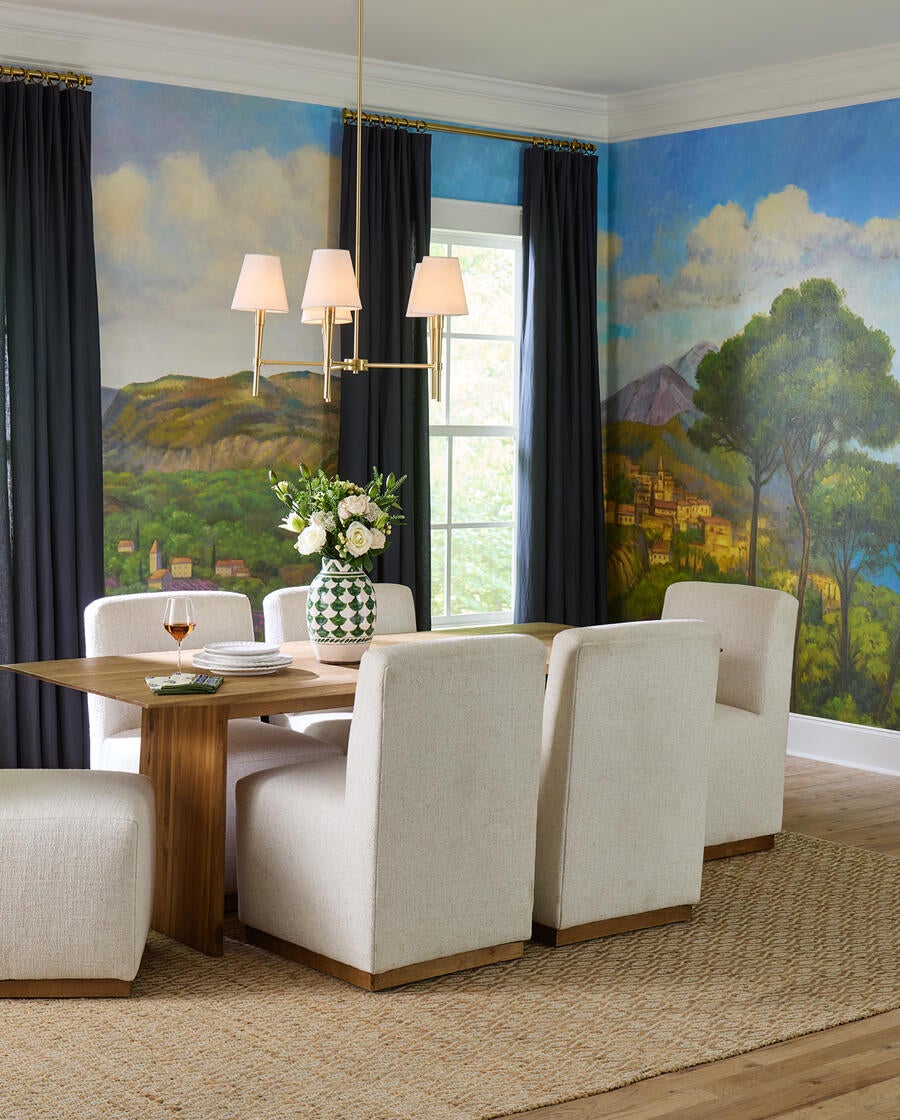
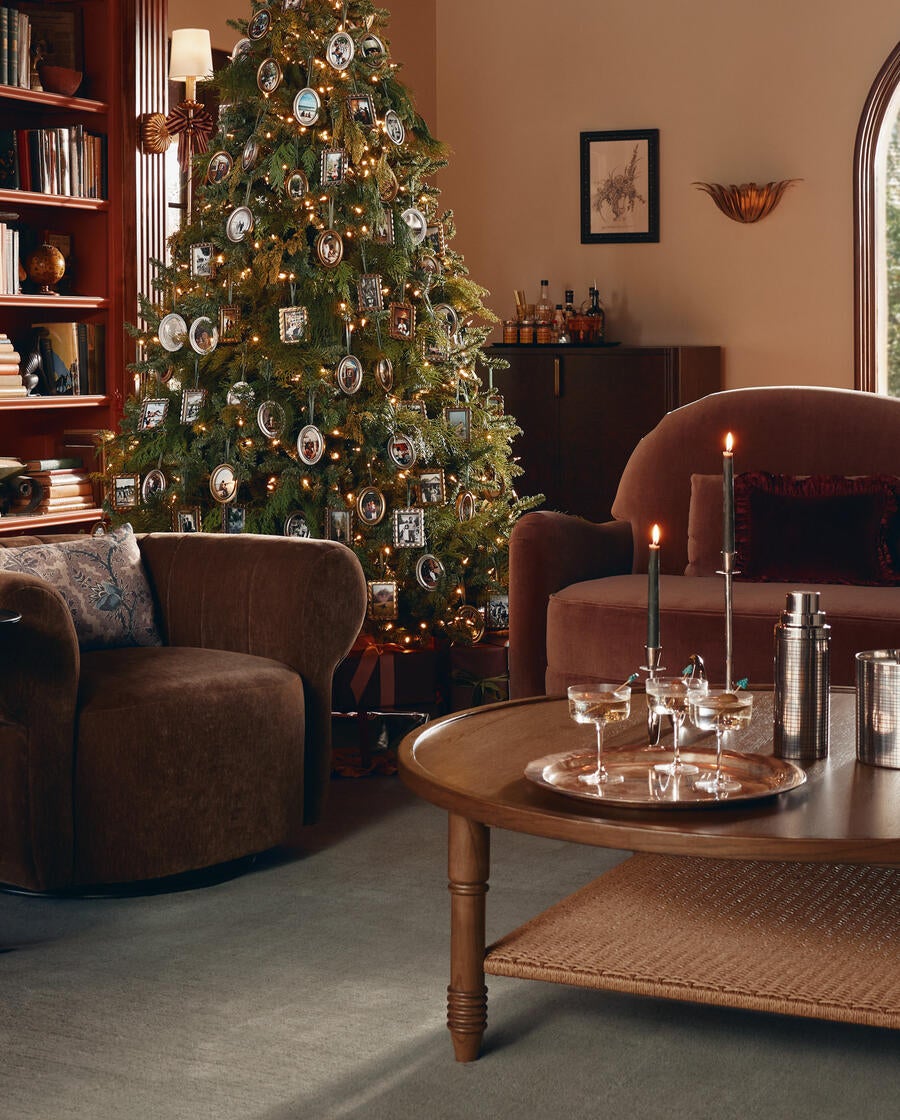
Pinna: It’s a holistic process. What Nate does for branding, I do for visuals. We talk about the intention for [each] project. Are we pitching it? If we pitch it, which publication? Each has a very specific style, and [the editors] like to see certain things in their imagery. I pull together all of those cues—and also the designer’s personality—and [make recommendations for] how to make them really shine and stand out from the crowd. I build out a deck of what the photo shoot is going to look like per room: “You’re going to have this decor and these flowers; and here’s where they’re going to be placed; and here’s the story that we’re telling.” I build out an entire plan for the shoot, so that when the day comes and your photographer is there, we can really create the story together and make it as strong as it can possibly be so that they reach their goals.
You have a prop warehouse, Prop Up Shop, too. How does that fit into your business?
Pinna: Prop Up Shop started about five years ago. We’re located in the Maryland/Washington, D.C./Virginia area. We’re the only prop house for photo shoots and for designers to use as a resource in this entire region. [Unlike] New York or Los Angeles, which have prop houses, I’d buy things for shoots and then I couldn’t return them, or I’d be thrifting or antiquing—and you can’t return those. I was storing it all in our basement and it was out of control. I was like, “I’m going to die under a stack of plates one day.” So, right after the pandemic, we decided to make it a formal part of the business. [The building] also has a photo shoot space that we rent out as well. We have brands like Anthropologie and José Andrés Group that use it as a resource for their own projects, separate from our studio. It is open to the public, by appointment. I personally know how difficult it is to find things in our area, and what a time suck it is to try to go to a million places to get what you need. Designers will use it and rent items for their own shoots that they’re styling themselves as well.
There’s a lot of buzz about using AI to design and build your own website. What are your feelings on that, and what do you offer that AI can’t?
Pinna: AI is a great answer generator. However, it’s not going to do all the work for you. Even if it can code a website, it is a lot of work to fully understand how to implement the instructions it gives you. You still need a team to help you build things after you get whatever code you get from AI. I think that’s something people forget. Also, AI doesn’t have great taste. Or if you’re using it for copywriting, you’ll read what it gives you and often it’s like: “Oh, that is not how humans speak!” You still need a human with taste and opinions looking over whatever AI is doing for you.
We’ve seen clients trying to use AI for SEO optimization. And again, AI is a fantastic tool for figuring out where the holes are in your website that could be improved upon, but sometimes it takes [that strategy] to such an extreme that it only prioritizes certain keywords to the point where it dilutes your brand voice. And you should consider: Is it going to be your ideal client landing on that website, or is it just going to be more eyeballs who look at it and then wander away?
Have you seen AI’s influence impacting styling choices on shoots?
Pinna: There’s been a change in how we approach styling to look more lived in, more real looking and not so pristine, because you want people to know that you’re a real designer and these are real projects. It’s not a rendering.
What’s your vision for the future of your agency?
Pinna: At the moment, we’re only taking three full-service clients—meaning branding, website and interior styling as a package—per quarter. We’re very selective and intentional with how we approach this, because we want to give our clients 100 percent of us, not a watered-down version of us. We’re really happy to be working together as a team and as a couple, and helping designers meet their goals. It’s very rewarding for us, and this is why we’re in it.



 Withdraw Consent / Manage Privacy Preferences