









In Business of Home’s series Shop Talk, we chat with owners of home furnishings stores across the country to hear about their hard-won lessons and challenges, big and small. This week, we spoke with Jeremiah Young, the creative director and principal of Kibler & Kirch, a design firm and retail store in Billings, Montana.
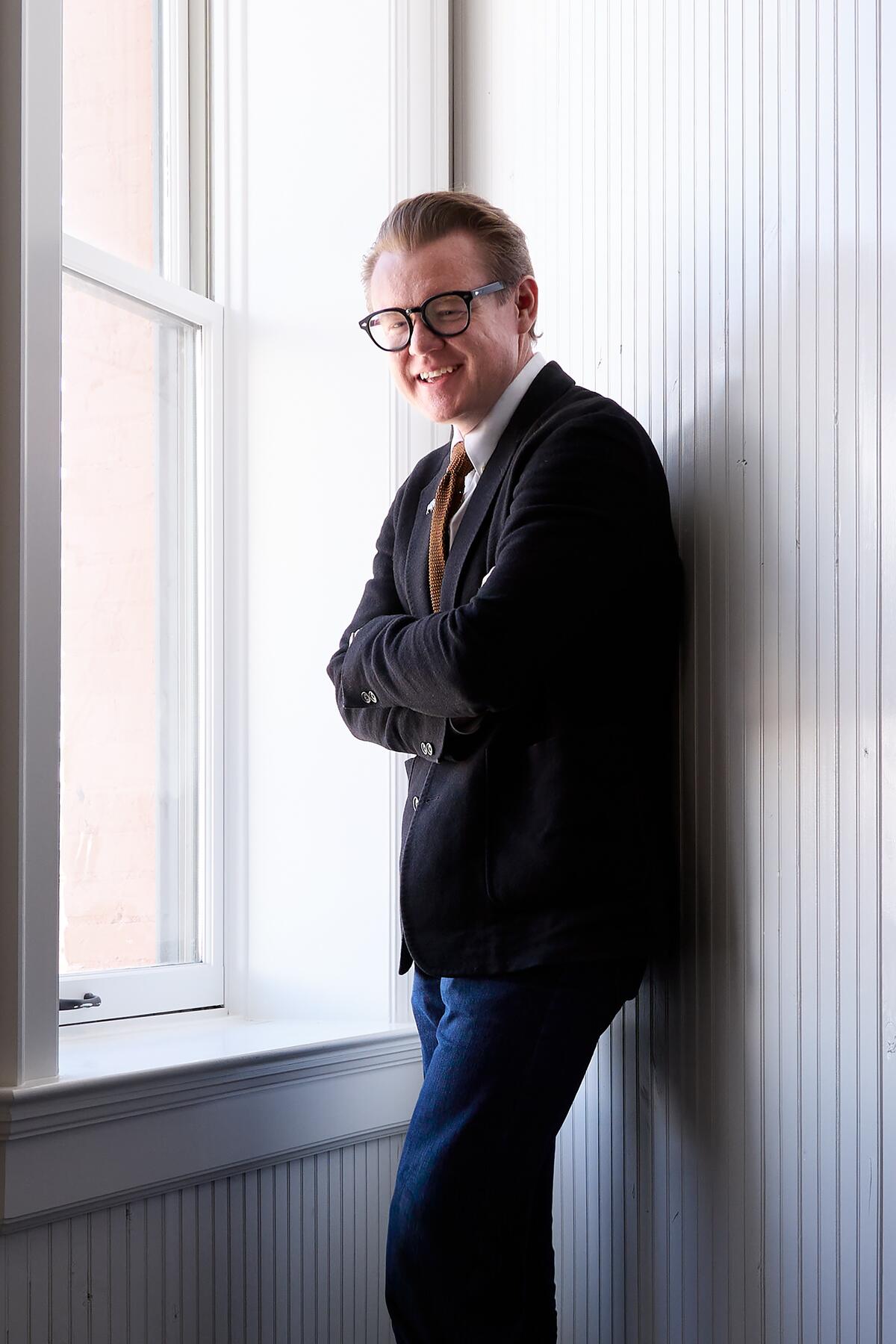
Young’s career reads like that rare case of undeniable destiny. Moving to Montana from Tennessee as a teenager, he stepped into a home store in the town of Red Lodge and fell in love with its carefully rustic aesthetic. Years later, in 2010, he walked in again to find the original owners were planning to close up shop—and he dropped everything to take over the business. Ahead, he discusses the process of adopting a 20-year-old company; the other careers he tried first; the loss of momentum and branding when the store moved to a city; and why he thinks the concept of balance is kind of a farce for small-business owners.
Tell me about your design background.
When I was 17, I remember going into Kibler & Kirch. It was always a design firm, but to the outward appearance, it looked like a store. At this point, I knew nothing about design; but I walked in and said: “Whoever put this together, we are the same.” There was a sensibility that resonated with me—an authenticity, materiality, the colors. After college, I had a degree in English lit, not design, and I was a librarian for a few years in Asheville, North Carolina. I was voracious in reading about my passions: architecture, interiors and design. I just read and read. I’ve always been sort of hungry like that.
Years later, after running a clothing boutique and doing a variety of things that gave me a skill set, I walked into Kibler & Kirch and they were doing a retirement sale. The gals who founded it, one of whom [became] my mentor, were going to close. After [the recession in] 2008, they thought the world was ending, and this was 2010. I said, “Doesn’t someone want to buy this?” A month later, there I am, and I’ve got the tiger by the tail. I’ve been whipping around the jungle since then.
What was the ownership change like?
Rosina [Kastelitz] still does projects here and there, but she did retire. We worked alongside one another for a few years. It wasn’t a line in the sand that we crossed over; it was a transition. I got the opportunity to know all those resources and ask questions and learn from her. Rosina and I would go on buying trips, or we would be with clients, and we didn’t even need to talk—we just knew what one another was thinking. If you set us both loose in, say, Walmart, we would come back with the same things. The universe was working with us. And that’s how I came to be the owner and creative director. For the last 16 years, I’ve been tireless and ambitious and have had some amazing opportunities.
What major changes have you overseen with the brand during this time?
Kibler & Kirch had cultivated an impeccable reputation, for quality foremost. We had a beautiful retail store. People would walk in just to soak it in. … We’re in Montana, so we’re far away from everything—and this store was in Red Lodge, a small ski town—and people would travel from a great distance just to take it in and be inspired. But it was small.
When I first took over, I didn’t want people to see us just as a store, which they did, even though 80 percent of our work was the design business. I wanted to be a professional design firm first. I continued to run the store in Red Lodge until 2019, and then right before Covid, I closed, with the plan to open in Billings. I had built a design studio here, in this old building, and I wanted to have the store near that. If I’d had to carry the store during the [Covid] years, it would have been really tough. We needed the time to build this thing out and do something really thoughtful.
Is the aesthetic still similar to the one of the store you walked into as a teenager?
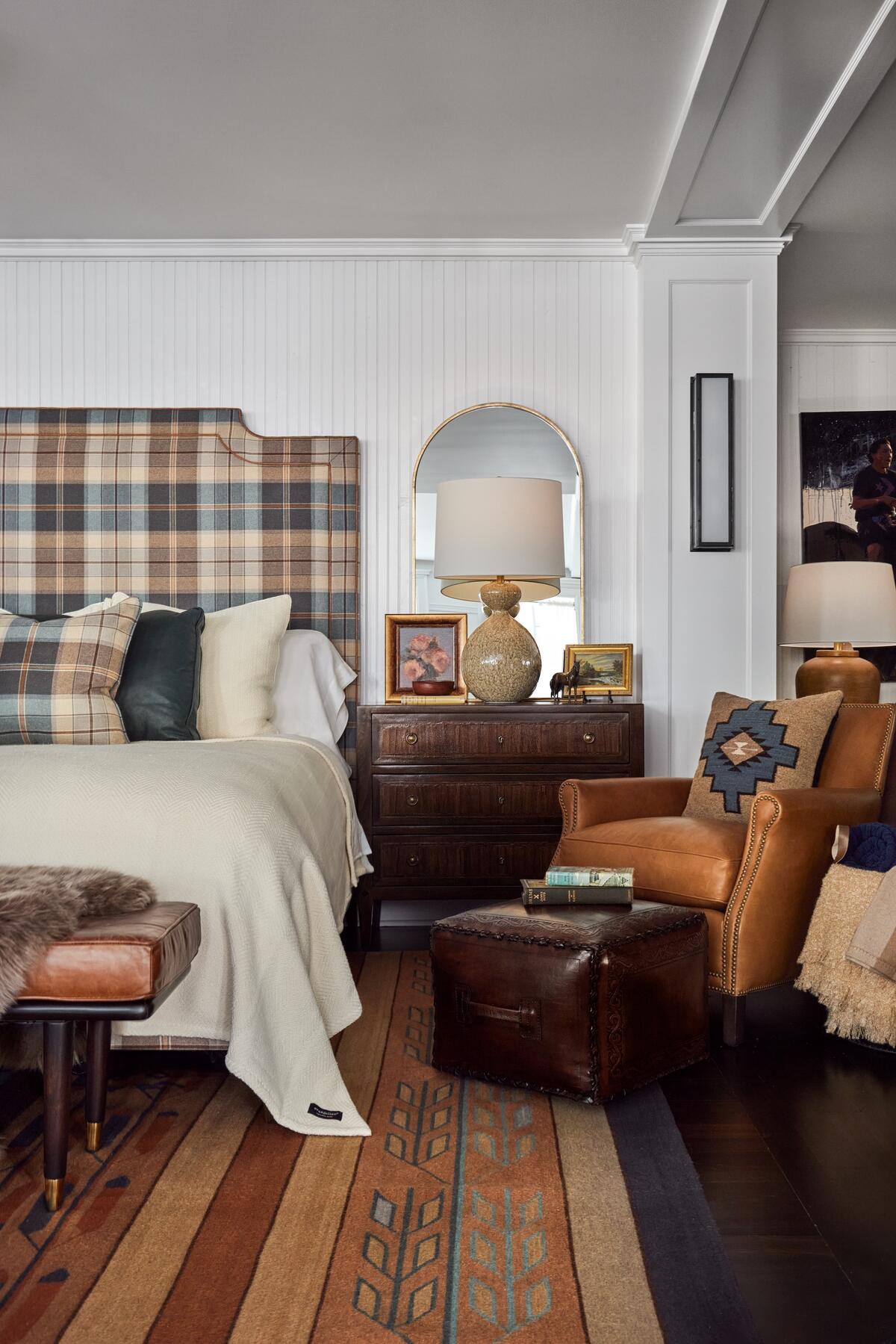
In some ways it’s the same. We’ve used a lot of the same resources, suppliers and brands for years and years: great old American furniture companies like the Hickory Chairs, the Lees. We have cultivated an incredible supply chain through these years, and relationships with these companies and makers.
There is a sensibility about it that is classic. The word timeless is overused; but I will tell you: When you go into our projects 20 years later, they are relevant. They are not outdated, because the whole thing is to put things in place that you never have to replace, and to take a long-term view. Of course you’re making investments, but they’re not things you’re going to toss aside. We want people to buy things that their kids will fight over when they die.
Is your typical customer in the trade or walk-ins?
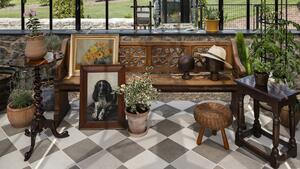
It’s a combination, and the store exists in large part as a resource for us as well. Our [design] clients are often second-home owners in the West—Montana, Wyoming, Idaho, Colorado—so it’s a pretty broad region. They’ve always dreamt of having a place in Montana; that’s something we see a lot. The store functions as a scratch-and-sniff experience for objects, or that sofa we might start a project with, or that pair of chairs we will pull. People get the opportunity to see and touch the fabrics and the leathers and sit their butts in seats, and know the quality we represent. It’s not an abstract thing. The store gives us that ability.
What’s a vendor you treasure?
On the upholstery front, we probably sell more Lee Industries than anything, because it meets a nexus of quality and price that’s good. I absolutely love Hickory Chair, this grand old company. There’s a company called Bennett that makes case goods in Italy—superb, superb.
What’s your general approach to sourcing? Are you always looking to add new vendors?
At this point, we know the landscape of what’s available. We keep a really big design library here, with fabrics from all manner of vendors, all the wood finishes, all of the catalogs. We’re in Montana, so I can’t go down to a design center. I have to have it here. I’m not always looking for new things. It has to be something that’s pretty spectacular to get us to jump ship.
One of the key tenets [of our firm] is we can say to the client: “Look, I never put something in someone’s home that I don’t have experience with, that I’ve not touched, sat in, that I don’t know if the finish will hold up over time.”
What’s your favorite category in the store?
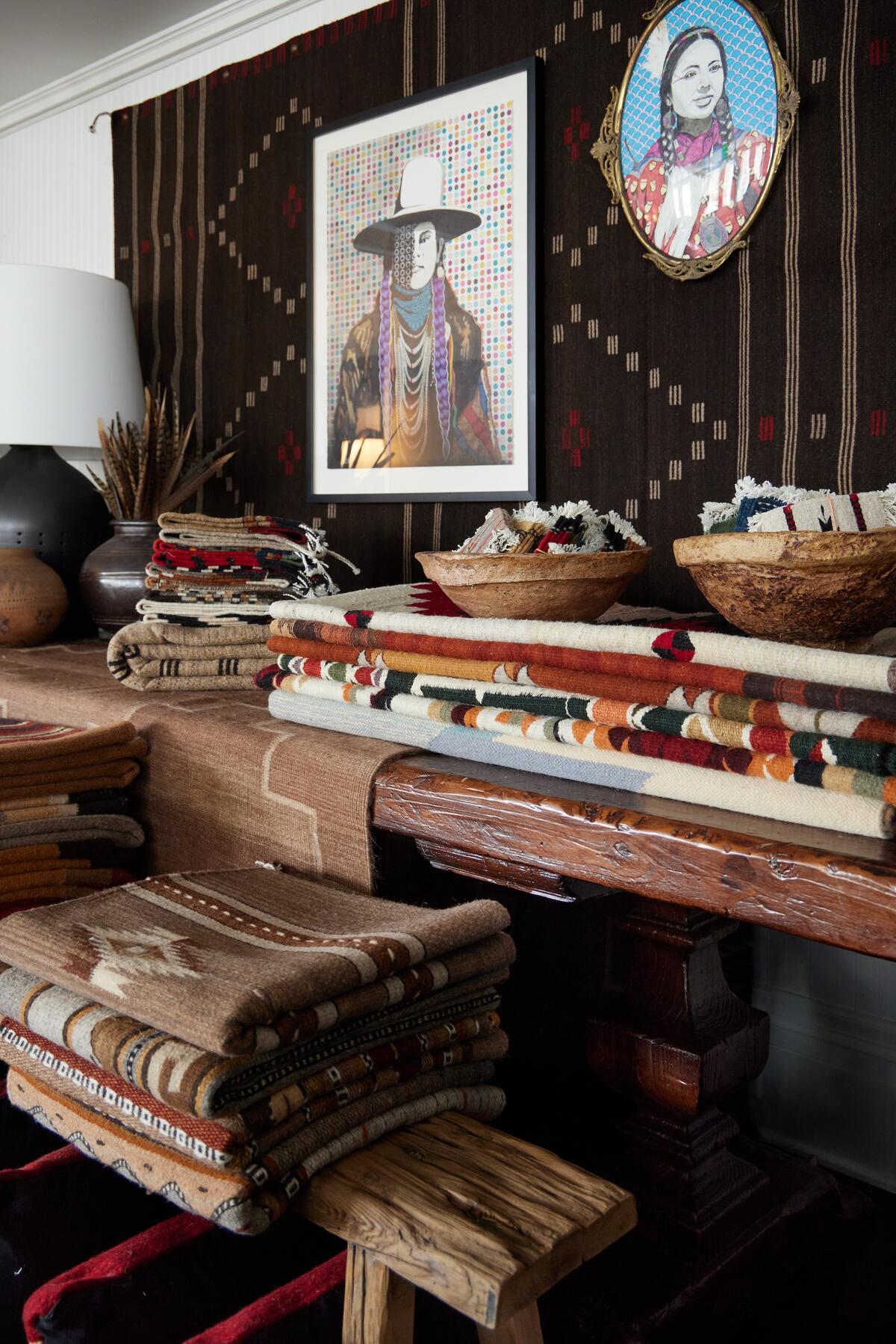
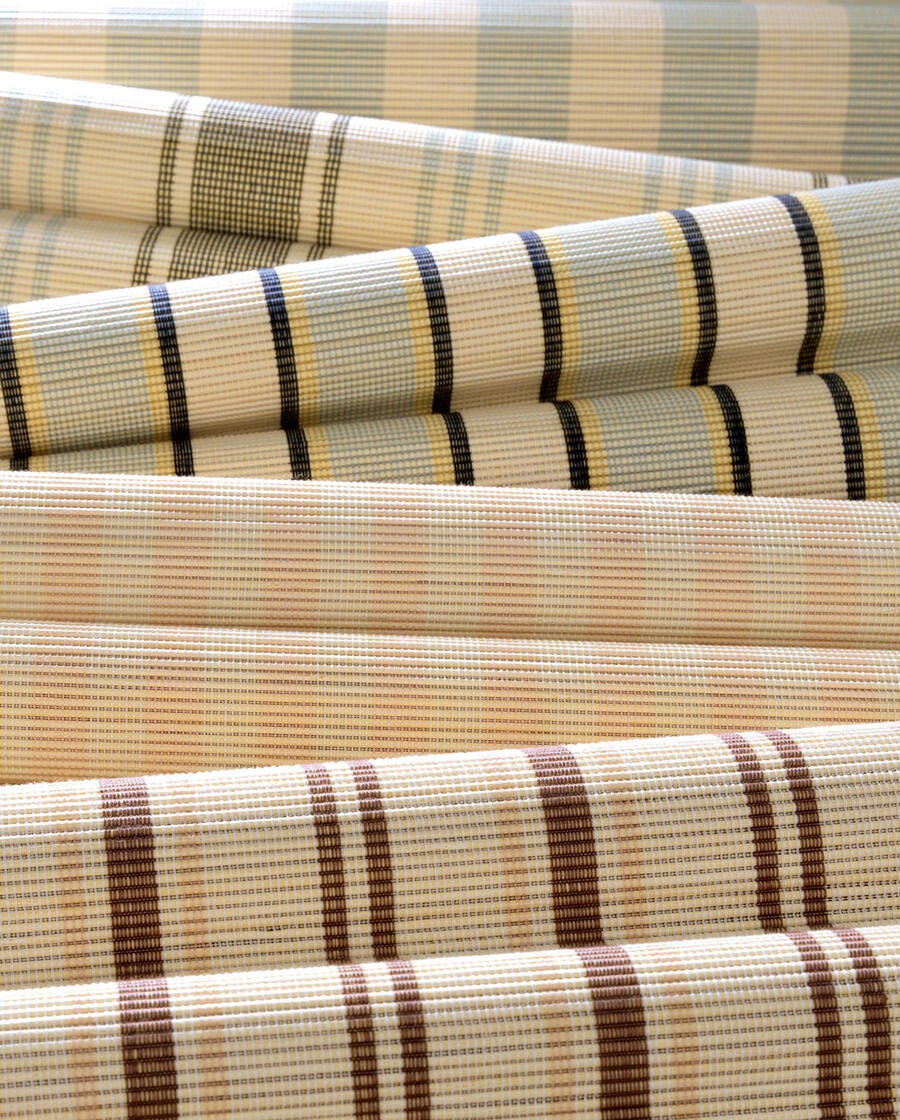
I am a sucker for a good rug. We start every project with a rug. We build up from that, because that’s your lead pattern, your color palette. And I guess everybody would probably say original art. We have a gallery and we represent artists from Montana, which is an incredible pool. It’s the rugs or art that fire me up.
What flies out the door?
It’s a little different than in Red Lodge, because that was a little resort town and people don’t exactly come to buy a big sofa and put it on the back of their motorcycle to take home. In this bigger town, we’ve sold rugs and art at the best pace.
Those are big purchases. I feel like it’s usually candles.
Well, we do sell candles. We sell the crap out of these wonderful Mexican beeswax candles from Santa Rosa, which we have sold for the entirety of Kibler & Kirch, actually. So many things that we have, we’ve had forever.
What’s your e-commerce strategy?
We don’t really have an e-comm business. We have our gallery, Kibler & Kirch Fine Art. We are laying the groundwork for more of an e-commerce experience, but even that’s going to be a very serious edit of objects that we’ve returned to many times.
But that’s running another business. We’ve got a design business that we honestly cannot keep up with on a given day, because we’re a little team. And at the end of the day, it’s me who is basically on every project, and one person can only do so much. We can’t seem to put the resources we need toward some kind of e-commerce, but we’re just full throttle all the time. Getting the store open again and managing the experience when people come in takes tremendous effort.
Given the success of the design arm, why did you want to stick with retail and open a new location?
Well, I’ve always believed in brick-and-mortar. I really respect people who have thriving retail operations in our industry, because it’s not easy. I ran a contemporary clothing boutique for many years, and that is so different. The inventory turns faster, and you’re putting out clothes, but here we are building rooms, vignettes. It’s a great physical effort just to keep the store going, or present it in a way that is up to our standards—or up to my standards, and I’m kind of a maniac in that way. If it’s not going to be perfect, it’s not going to be.
Tell me about the location in Billings. It’s a massive space, right?
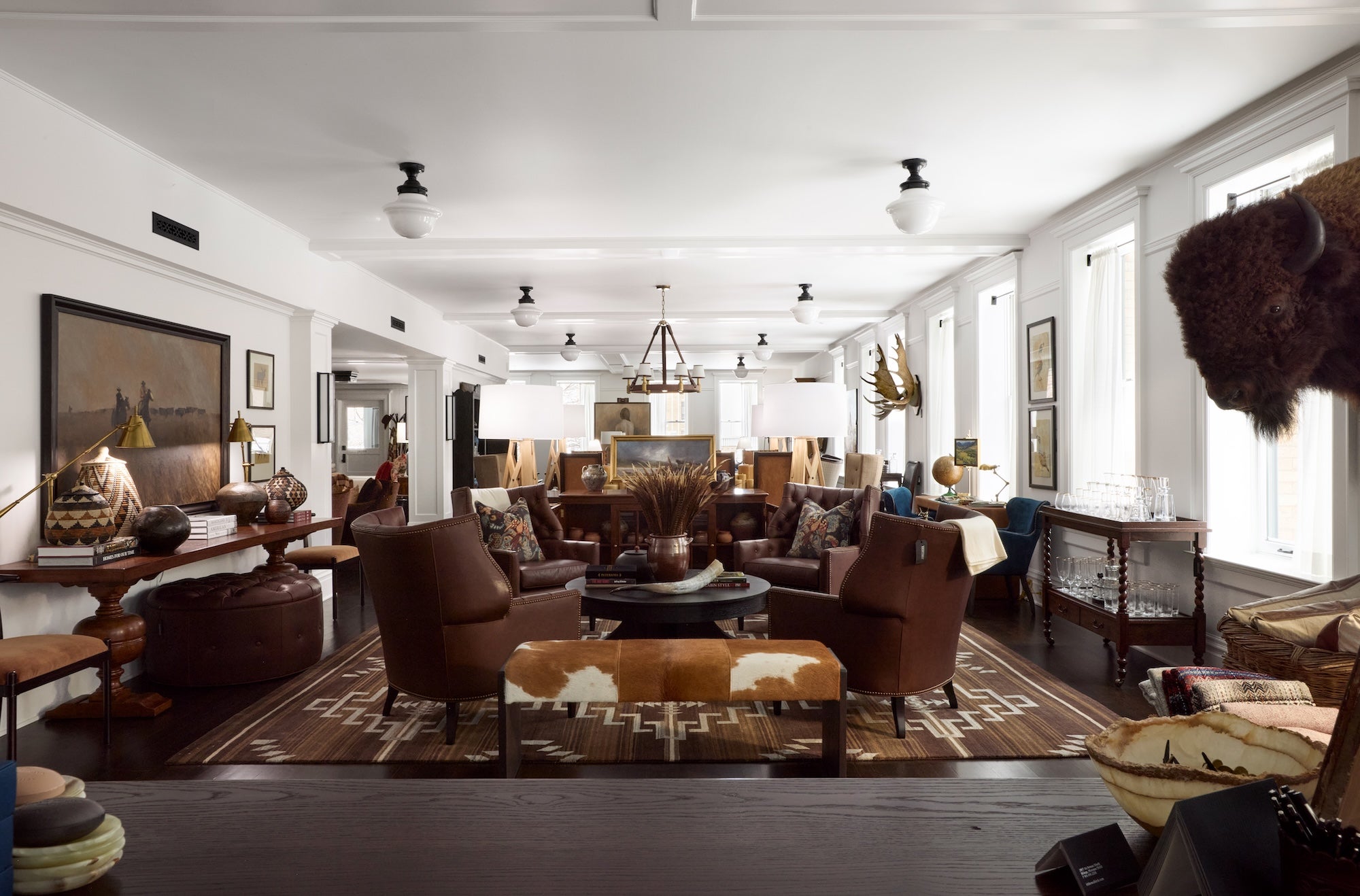
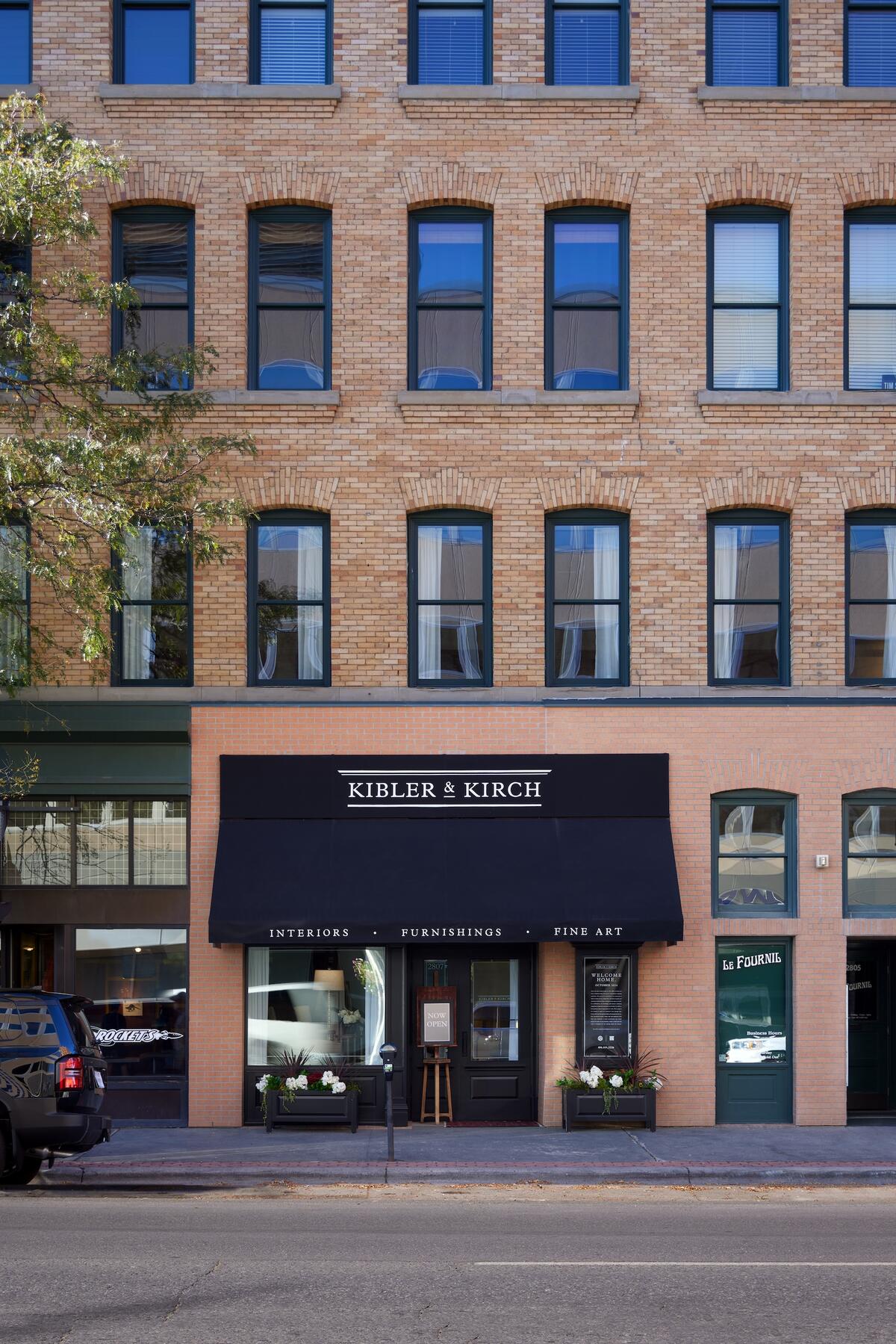
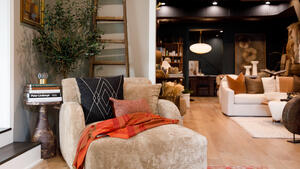
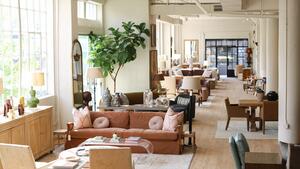
Yes, we occupy a floor of an old building downtown. It’s one of the most wonderful buildings in downtown Billings, built in 1904. In total, we have 14,000 square feet between our retail space, design studio and workroom, with the retail about 6,000 square feet. The building was more or less abandoned since the ’80s, and it was in unbelievably poor condition. Nothing existed except for the outside walls, which were crumbling brick, and heaving subfloors. It had been stripped of everything historic, all the trim, everything. I found the original plans and remade all of the woodwork and millwork exactly as it was in 1904.
What changes did you make?
Our store and our studio are on the second floor of the building, which is an unusual move. We’ve got this lovely entryway, with a staircase that’s a replica from 1904, incredibly ornate and wonderful. The big move was cutting a hole in the floor and putting in the staircase and an elevator. We can move an 8-foot sofa in the elevator, and that was crucial for making this work.
Billings has changed so much in recent years. How did it impact the design scene?
No matter what happens, whether the crash of 2008 or the real estate bubble or the pandemic, we seem to be isolated from those things. Montana has seen good growth, but people [usually] get a piece of property in the middle of nowhere. People’s dream of moving to Montana is not to live in a town or city; it’s to have their own space. So [Billings] is not booming.
What are some of your hopes for the future of the business?
I hope that we’re able to visually present our things better [digitally], and put more time and effort into that, whether that’s in e-commerce or just more robust visuals and social media. It is a goal to have a form of e-commerce that is manageable, presenting the things we feel the most strongly about, or that are the most tried, true and tested Kibler & Kirch things.
For years, at our old store, people came in and walked around and flipped over tags and saw, OK, these things are fairly costly. Quality does come at a cost. But they would see how we could put things together, and they would say to themselves: “When I build a house, I want these guys to help me.” That might be five years, it might be 10 years, that they approach you to design for them. I think that’s what’s going to happen here. People come in and have an experience, and there’s a long tail to that. We’re planting seeds with people for future design work, and for the acquisition of that great piece.
How do you balance the arms of the business?
I have no idea. Anybody who’s successful [probably doesn’t] have balance. We’re all out of balance. I don’t want to say triage, but we’re just going full steam all the time. You just hope that you wake up every day and hit the [floor] ready to go. I have been that way for years. You have to love it or you’ll burn out. That means that a lot of people aren’t going to be able to keep up with you, and that’s OK.
What’s your favorite day at the store?
My favorite days are always the ones where my entire team is working on the same thing all together, whether that’s an install for somebody’s home or a rework and remerchandising of the store, which is obviously exhausting and complicated. When we are working as a team, I really love that.


 Withdraw Consent / Manage Privacy Preferences