






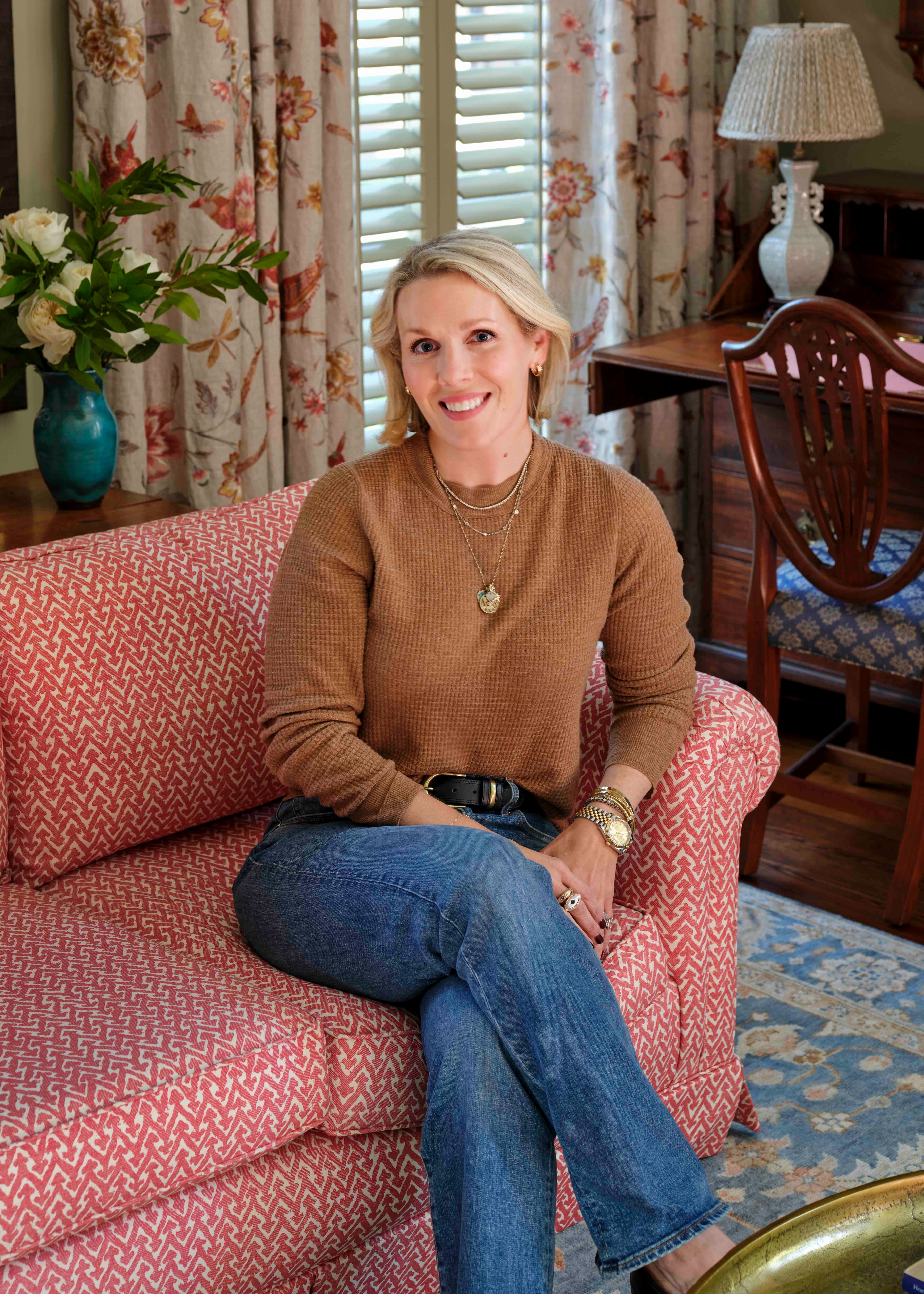

After earning her degree from Texas Christian University with a major in art history and a minor in business, Hattie Sparks Collins received the advice no recent graduate wants to hear.
“It was the [Great] Recession, and my advisor very kindly and tactfully told me: ‘You’re not going to get a job—you might as well stay in school. If you want to work in this field, you would do well to have a master’s degree,’” Sparks Collins tells host Kaitlin Petersen on the latest episode of Trade Tales.
She took the advice, and moved to New Orleans—the city where the rest of her creative career would soon unfold. By the time she earned her master’s in art history from Tulane University, the region was flourishing, bolstered by an influx of investment for post-Katrina rebuilding efforts. Sparks Collins began working for Anthropologie’s operations team, soon building enough connections with artists and designers to open her own store specializing in fashion and home decor items made by Southern talents.
Despite the success of the business, the retail landscape became increasingly challenging to navigate. When considering her next move, she thought about her creative interests—particularly the growing attention she paid to her store’s home assortment, and to residential design in general. In 2019, she launched Hattie Sparks Interiors with just a handful of clients, whom she garnered through her store’s social media presence. Then, the pandemic hit.
“Three weeks after everything shut down, I started getting emails—and they didn’t stop for three years,” she says.
As her project pipeline continued to grow, Sparks Collins did what any designer would do, scaling up her firm in order to meet demand. From the outside, her business appeared to be a rapidly expanding, well-oiled machine. Internally, she increasingly felt herself losing control of her processes—and even worse, she found herself saying yes to the wrong projects. To right the ship, she decided it was time to go back to basics, rebuilding with a focus on sustainable growth. What emerged was a firm that not only had real staying power, but reflected her vision for what a creative business should be.
Elsewhere in the episode, she talks about the value in hiring for help with procurement, the reboot that right-sized her firm, and how she shifted her definition of success.
Crucial insight: Last summer, Sparks Collins realized that her firm was taking on projects that didn’t align with the level of work she’d set out to complete when she launched her design business. It quickly became clear that the issue stemmed from a need to take on a greater workload in order to cover overhead expenses. “I thought about all the conversations I had way back when I first started … about ‘Where do I want this to go?’ and ‘What do I want this to look like?’ and ‘How do I reinvest back into the business in a way that helps the business and isn’t adding more stress and work to my plate?’” she says. “As hard as it was, the answer was to scale down even more.” With a leaner team, she soon found herself able to step out of the manager role and into the role of creative lead, taking on only the projects that felt true to her ethos.
Key quote: “I want [clients] to feel involved through having a complete understanding of how the process works, because the less mystery that it’s shrouded in, the more comfortable they feel with the process—and the more trust that builds in us.”
This episode was sponsored by Dallas Market Center and Vanguard. Listen to the show below. If you like what you hear, subscribe to Trade Tales on Apple Podcasts or Spotify.











 Withdraw Consent / Manage Privacy Preferences