






On the Ask Us Anything podcast, editor in chief Kaitlin Petersen taps former Trade Tales guests to answer real, confidential designer questions, offering a safe space to discuss business frustrations, conundrums and fears. (Have a question of your own to ask? Send an email to start the conversation.)
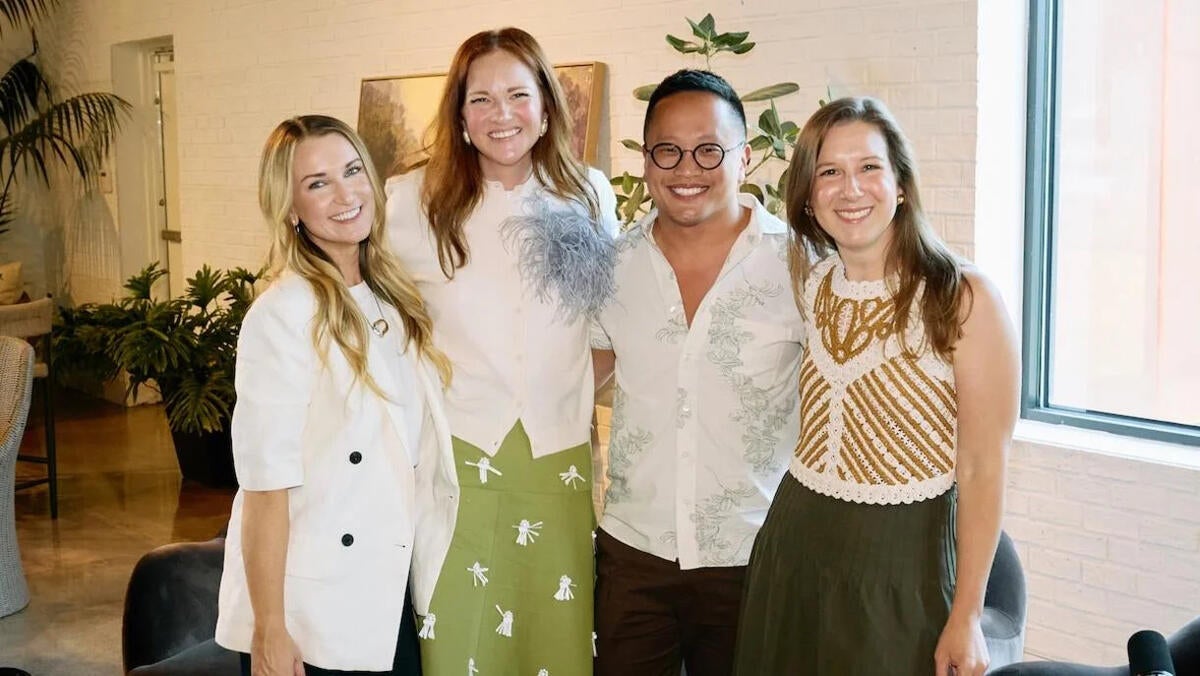
During a special event at the Four Hands showroom, designers Evan Millárd, Melissa Oholendt and Audrey Scheck joined host Kaitlin Petersen for a live episode of Ask Us Anything, responding to four anonymous designer questions—plus audience queries—and sharing advice in real time.
First up, the trio discussed how to filter out unqualified leads and attract better inbound inquiries. Millárd advocated for sending a clear message from start to finish by maintaining consistent language around level of work, and explained how he uses the phrase “full-service design”—on his firm’s website and social media and through in-person conversations—to clarify the type of projects he’s seeking.
The next query dealt with best photography practices, including image licensing, usage rights and publication agreements. As a photographer-turned-designer, Oholendt recommended that designers invest early in finding a photographer they like working with, and to sustain that relationship in the years to come, resulting in a cohesive portfolio that’s easily recognizable to magazine editors. She added that designers can also improve their odds of editorial placement through the connections photographers have with editors—a consideration that should come into play before booking a shoot.
The third advice-seeker was dealing with client requests for itemized pricing. Scheck explained that for her firm, it often boils down to a value proposition. From the discovery call through the design process, her firm is not only communicating cost structure (an hourly rate and a margin on procurement), but also reiterating that what the client is really paying for is the ability to hand off the complicated process to a professional. “The value oftentimes comes from them understanding this world that they’re entering—and how much they don’t want to be integrated in it,” she says.
Staying on the topic of finances, the final question centered on stabilizing cash flow, understanding profit margins and unlocking profitability. All three designers chimed in to stress the importance of finding a billing strategy that reliably supports your firm’s overhead, while leaving room to improve margins in areas like procurement.
Crucial insight: When it comes to attracting clients who are ready to take on her level of service, Scheck has found that a certain directness around her firm’s typical project spend is the best way to weed out unqualified inquiries. “We have an investment guide that we leverage for introductory conversations and early education, making sure that they understand what the investment process looks like, from design fees to materials and construction and labor costs,” she says. “We’re constantly pushing that to set the precedent of, ‘Here is the typical investment; this is what this looks like.’”
Key quote: “I try to have enough candor in our discovery call with [clients to say] that this is relationship-based. We’re going to be in a relationship for about a year at least, and we hopefully will still like each other at the end, because it’s going to get messy and hard, and it’s going to be great and then it’s going to be terrible and all the things,” says Scheck. “So I really want to have a relationship with [clients] where they really love our team, who are incredible, and they are representing our firm and our value.”
This episode was sponsored by Four Hands. If you like what you hear, subscribe on Apple Podcasts or Spotify.









 Withdraw Consent / Manage Privacy Preferences