











Once Evan Millárd made it to design school, he knew two things with certainty. The first was that this was where he belonged: Between his classmates and the coursework, he felt right at home—after his first attempt at a creative career fizzled when he realized that graphic design wasn’t quite people-oriented enough for him. The second realization was that residential would be his area of expertise, thanks to the spaces that stuck with him from childhood.
After getting his interior design degree at Belmont University in Nashville, Millárd got jobs with residential designers, where he learned the ropes—first locally with Roger Higgins, and then under Alessandra Branca in Chicago. A few years later, he banded together with two design school classmates, and the trio started a firm of their own in Music City. It was the perfect entrée to design entrepreneurship, and gave him the confidence to take yet another leap four years later with the launch of his own firm in 2018.
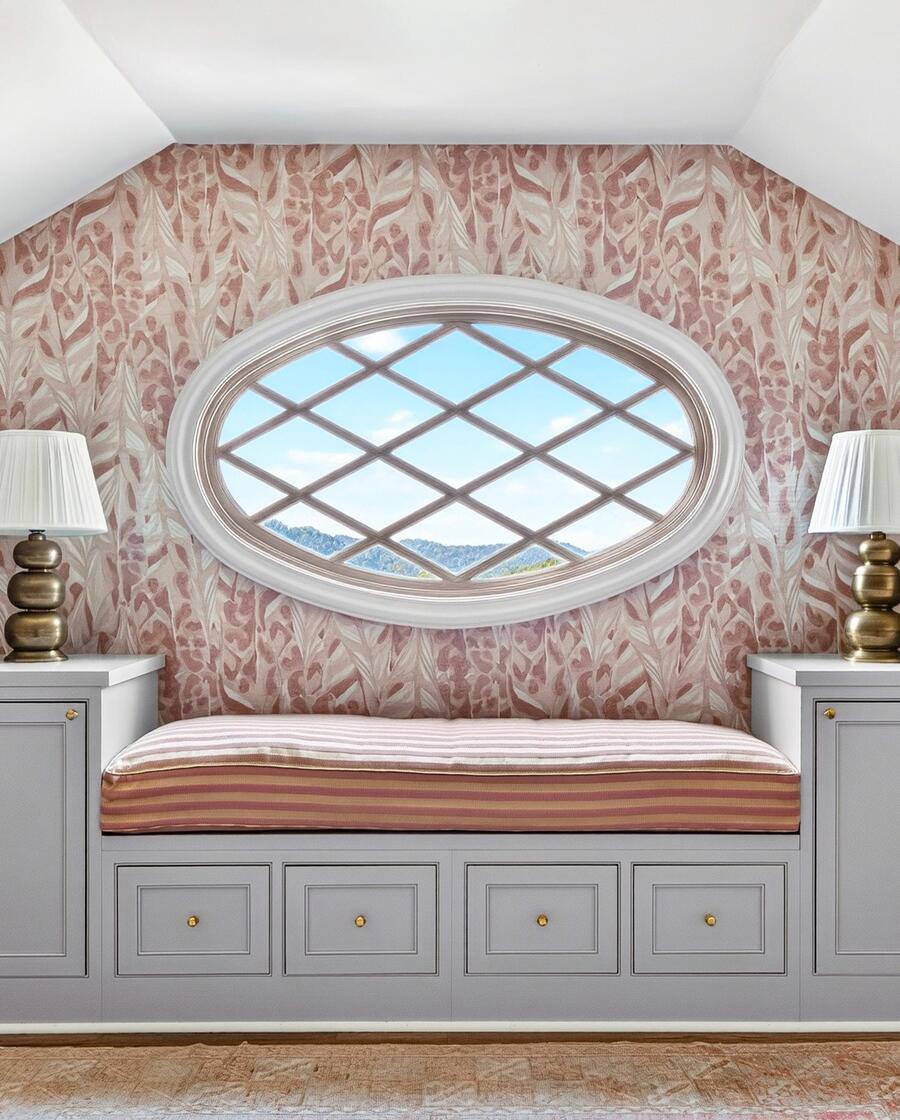
As the leader of his eponymous studio, Millárd decided to maximize his showhouse opportunities—something his previous firm had dabbled in but didn’t consider a top priority. Seven years on, he’s completed six in total, and considers each experience a crucial building block in establishing his presence in the industry.
“The reason why I do a showhouse is because I love a challenge. They’re one of those things where if you can dream it, and if you have the resources, you can make it happen—which is one of the most gratifying things that I’ve done to date in my career,” Millárd tells host Kaitlin Petersen on the latest episode of the Trade Tales podcast. “One of the main things that’s important is being there every day the door is open, because no one can tell your story and sell you as a brand like you can yourself.”
Elsewhere in the episode, he shares how he’s entering what he calls the “adult stage” of his studio’s aesthetic evolution, how being a solo designer affords him room to grow in new directions, and why it’s important to be transparent with clients about his firm’s finances.
Crucial insight: When it comes to the costs of design, Millárd has found that clients’ expectations from the outset of a project don’t always match up to reality. To break the ice, he assigns an exercise during the initial meetings to get everyone on the same page. “I like to have my clients go through and outline the pieces that they see per room, and then I’ll let them shop [on a website] and drop in pieces that they like,” he says. “It really gives them a great idea of, ‘Oh I thought my room was going to be $10,000, but it’s actually close to [$50,000]—and that does not include drapery or shipping or anything.’ Whether our client can or cannot afford it, what it does is open up the lines of communication, and it gives us a starting point.”
Key quote: “I believe that every project deserves a piece of original art. I think that art is for everyone, and everyone can afford it—it doesn’t have to be a van Gogh in every project; maybe it’s the gentleman who’s hosting a pop-up shop at a local craft market. It’s something that adds so much soul and life to a project.”
Listen to the show below. If you like what you hear, subscribe on Apple Podcasts or Spotify.








 Withdraw Consent / Manage Privacy Preferences