







Of course, you should never, ever lie to clients. The trust between designer and client is the bedrock of any good project, and breaking it can derail a job—maybe even an entire career. Honesty is a black-and-white issue.
But let’s discuss gray areas. Experienced designers will know that some situations—intractable clients, meddling spouses—call for a little sleight of hand to arrive at the optimal result. It’s not deception exactly, but gentle manipulation. If all goes off without a hitch, it becomes a victimless “crime” that benefits the people, project and business involved. Sometimes you simply have to trick your client for their own good.
To protect the innocent, we’ve granted five designers anonymity to share their masterminding tips, tricks and hacks. Use them with caution—while the payoff may be well worth the risk, the risk is yours alone.
The Gift Book Trick
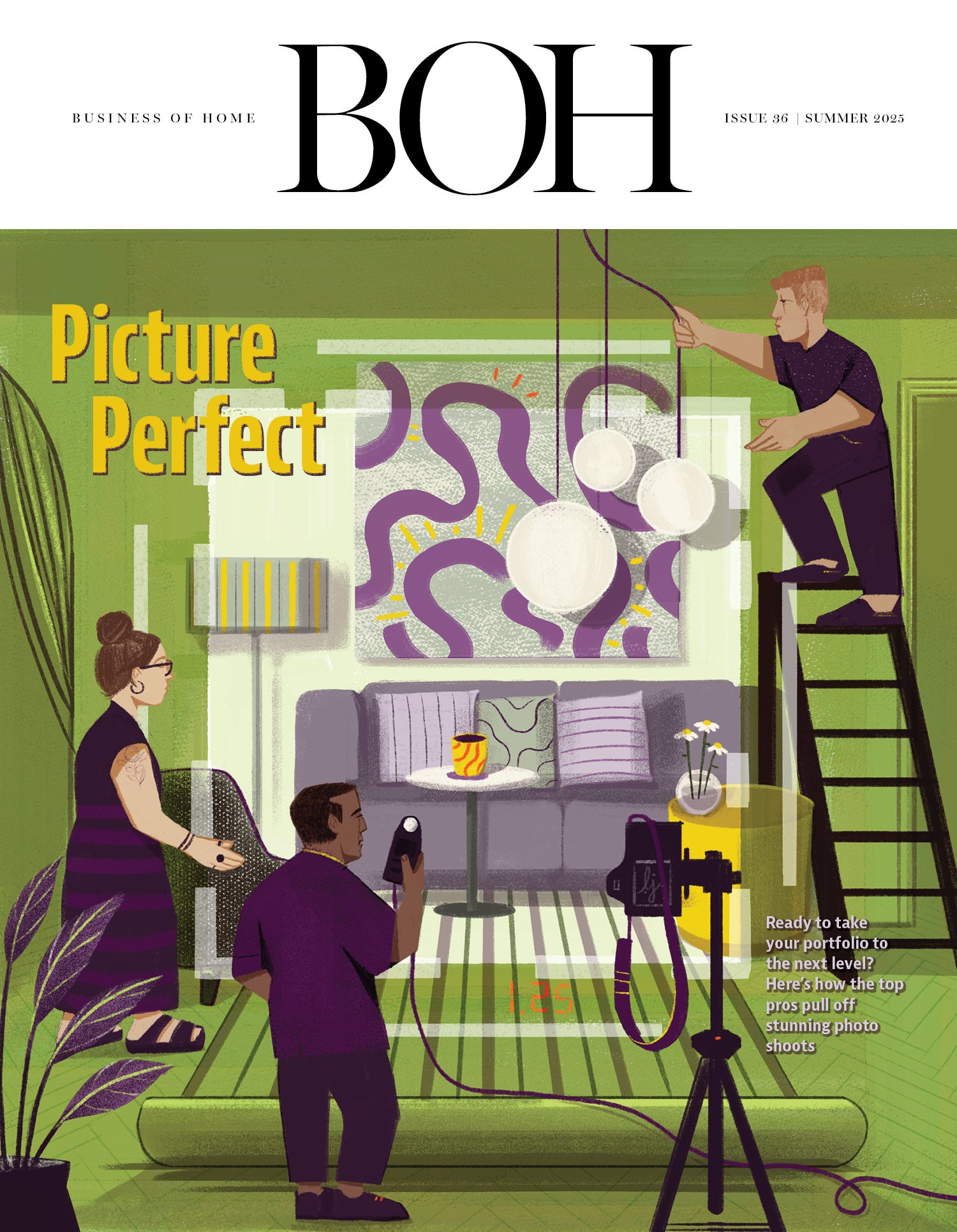
Getting clients to agree to photography is a perennial pain point of the industry—and one that has taken on newly added sensitivity in the social media age. One designer broke through his client’s resistance with a clever move. To celebrate the end of the project, he offered to gift them a bound book full of photos of their finished home, and they agreed. The designer then had the house professionally photographed—the very thing they’d initially turned down. When the clients saw the results, their opposition melted away, and they granted permission to publish. This maneuver is not for the faint of heart: If you pay for the photography and still end up with a no from the client, that’s a hefty bill. But fortune favors the bold.
The Public Rendering Trick
Sometimes no matter how well a designer presents a vision, the client just can’t see it—and if they dig their heels in, the resistance becomes a force of its own. One designer countered that with a simple hack: She mocked up a quick rendering of the concept and posted it to Instagram as “an idea I’m working on.” The likes and comments rolled in, and the client had a change of heart.
The “One That Got Away” Trick
A variation on the above, this move works for product too. Many designers have had success steering their client toward the right choice simply by posting it on Instagram with a few subtle cues. For a kitchen, one designer’s client opted for lavender marble instead of the (correct, but more expensive) choice of Calacatta Viola. Later, on a trip to Italy, the designer encountered the perfect Viola slab and posted it along with a wistful caption: “The slab that got away…” The follow-up text from the client? “CANCEL THE LAVENDER.”
The Coordinated Outfit Trick
Though the designer behind this move reports a mixed success rate, it’s easy, it’s harmless and it can deliver results: When presenting potential color schemes to clients, he often dresses in colors that match his preferred selection—subtly creating symmetry between his own outfit and the textiles he’s hoping to work with.
The Bad Option Trick
To help clients get comfortable approving his design schemes, the designer who recommends this strategy tries everything from getting buy-in from their friends and kids to carefully choosing adjectives to describe the design concept. And sometimes, when it comes to the moment of truth, he presents two ideas: one that’s deliberately subpar, highlighting the correct choice. Risky! But effective.







 Withdraw Consent / Manage Privacy Preferences