



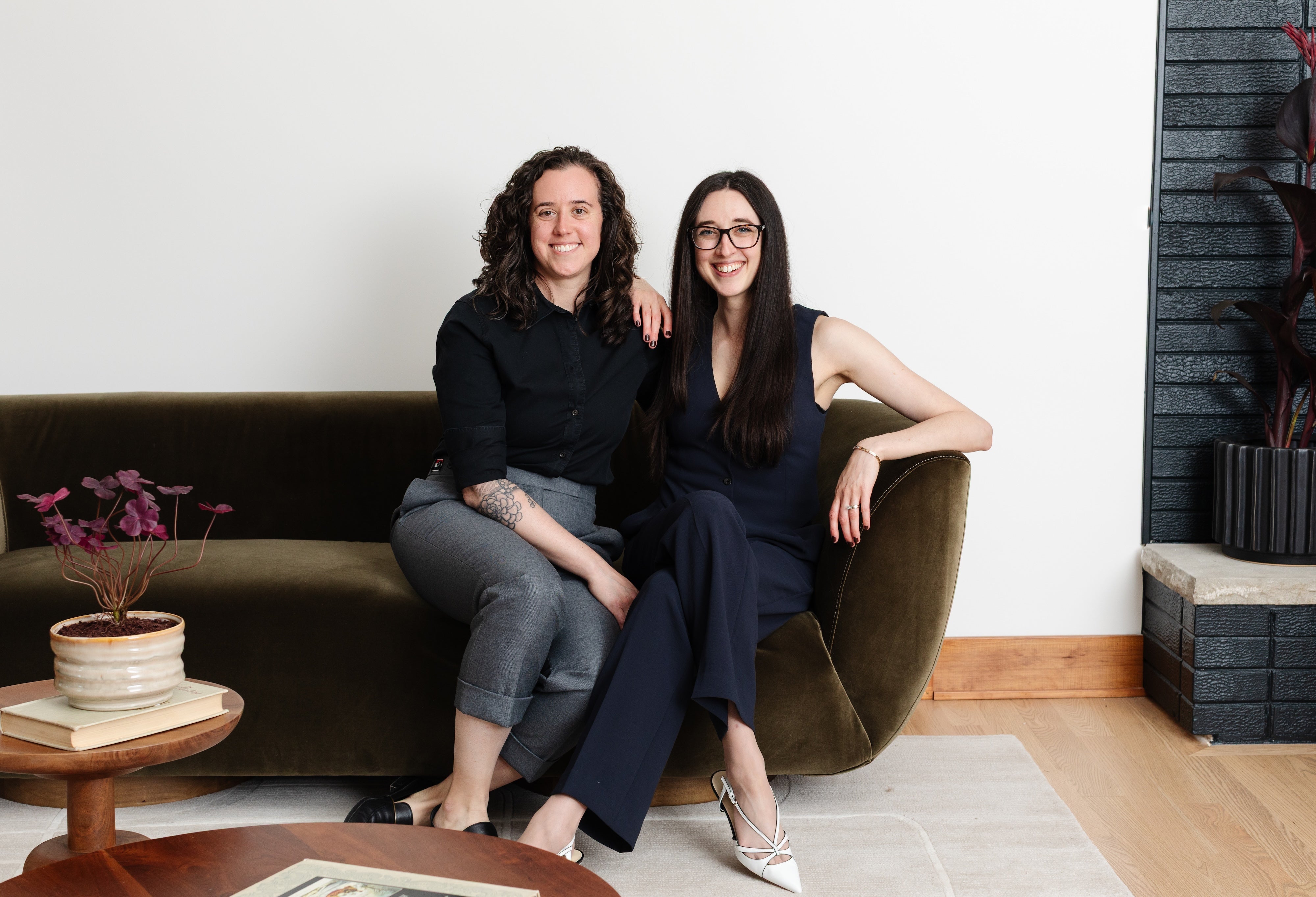

All design firms are unique; Goesling Group is more unique than others. A collaboration between sisters Becca and Sarah Goesling, the Park Ridge, Illinois–based company is split between a traditional design practice that executes residential and commercial projects, as well as a boutique trend forecasting agency that specializes in working with brands on CMF (color, material and finish) strategy.
It’s a hybrid that Becca—who as director of design leads the CMF design and trend forecasting side of the company—says is fruitful because the different parts of the business feed each other. “We’re working for brands like Brizo, for instance, and supporting their product development in hardware,” she explains. “But we’re also pursuing projects in rugs and tile and textiles and all sorts of material that gets put into the home. It becomes a symbiotic relationship where we are helping to provide research for the products that Sarah will eventually be specifying.”
The world of trend forecasting tends to be dominated by large agencies that have crowded out the competition—for example, London-based giant WGSN, which has hundreds of employees. Becca says that as the industry consolidates, small operators can still carve out an edge. “[Huge] companies have become so heavily relied on that they are no longer differentiators,” she explains. “When every one of your competitors are looking to the same resource without any secondary layer of interpretation on a more boutique level, you’re all just coming away with the same information.”
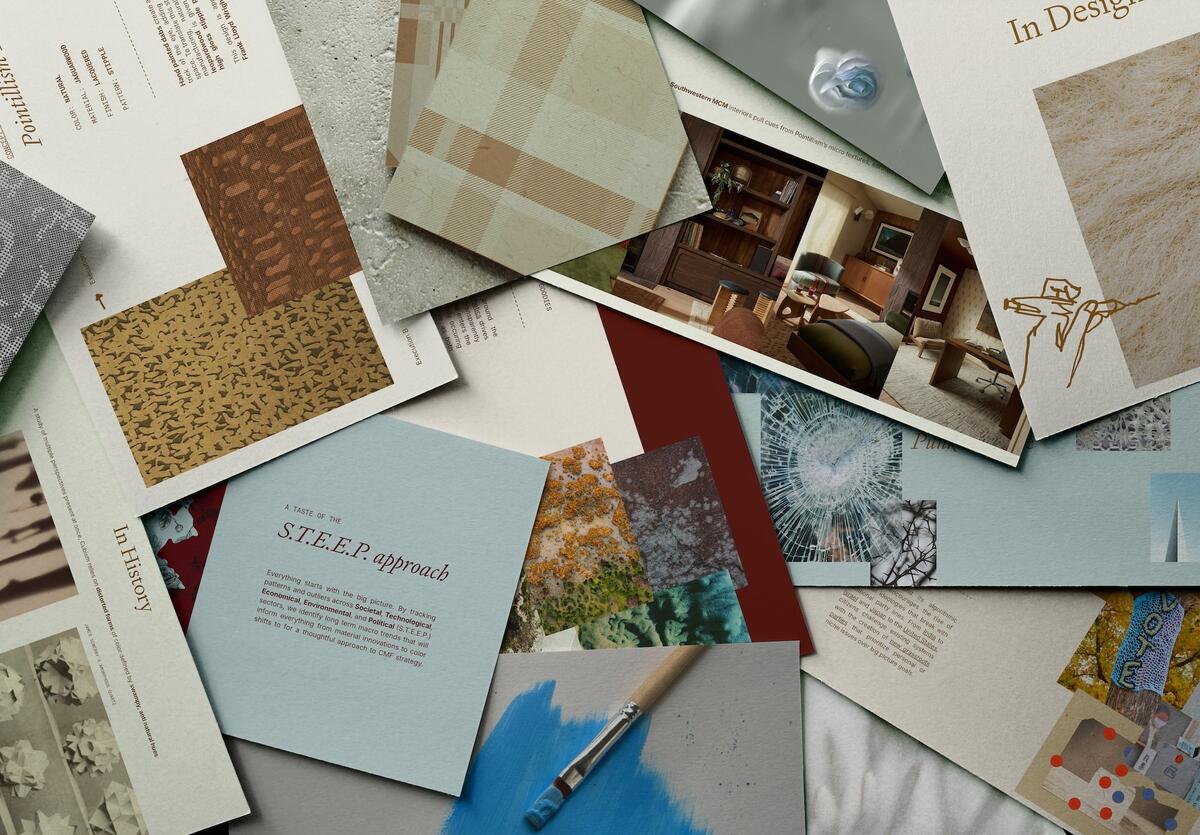
That individualized approach has been Goesling Group’s MO. Becca works directly with brands, compiling research that combines historical precedents, cultural currents and bleeding-edge technological developments into a document that helps shape material development. (For example: A recent report combined an analysis of the Postimpressionist movement with contemporary digital detoxing, all in service of a series of recommendations on hardware finishes.)
Input from Sarah’s real-world projects helps shape the work as well. “We’re able to get real-time feedback from the homes that these things are being placed in,” says Becca. “[It’s been] a really fun way to leverage each other’s resources.”
Now Goesling Group is introducing a new way to access its research, a subscription product called Deep Cuts. For $22 a month, subscribers can unlock monthly marketplace trend reports, and apply those takeaways to color, material and finish specifications. The inaugural reports will include “Deconstruction-Reconstruction” and “Punk in Love.”
Sarah—who founded the design studio in 2019—is hopeful that making future forecasting available at an accessible price will be helpful to anyone in the industry, including boutique textile brands and solo interior designers.
“A lot of us are all reading magazines and looking at Instagram and being fed a lot of the same material,” she says. “And quite frankly [much of it has] aged to a point where it’s no longer relevant for new development. The time that it takes to develop that project, and build it, photograph it, pitch it and publish it—[when it’s out there] it’s years old. If we can create more innovative and accessible materials for designers and people in this industry to have access to, we can all collectively be better.”
One of the hurdles the Goeslings will have to overcome is an industry-wide allergy to the concept of—or perhaps just the word—“trend.” Designers in fact often go out of their way to point out that their work is divorced from contemporary whims, and that their projects are rooted in the particularities of the client’s taste, or a general kind of difficult-to-define timelessness.
“We’ve had a lot of issues even saying the words trend forecasting out loud, [so] we’ve been calling it ‘future forecasting’ in the design space,” says Sarah. But the Goeslings point out that a knee-jerk reaction to the t-word is shortsighted.
“Whether or not you say you like or believe in trends, they are happening,” says Becca. “What we are hoping to do is demystify some of that and give the answers behind why, and then force someone to think a step further. … A ‘trend’ is more than a TikTok dance; it could be a 10-year movement that is going to impact your customer base, and [even] if you ignore it, it’s still going to happen.”







 Withdraw Consent / Manage Privacy Preferences