














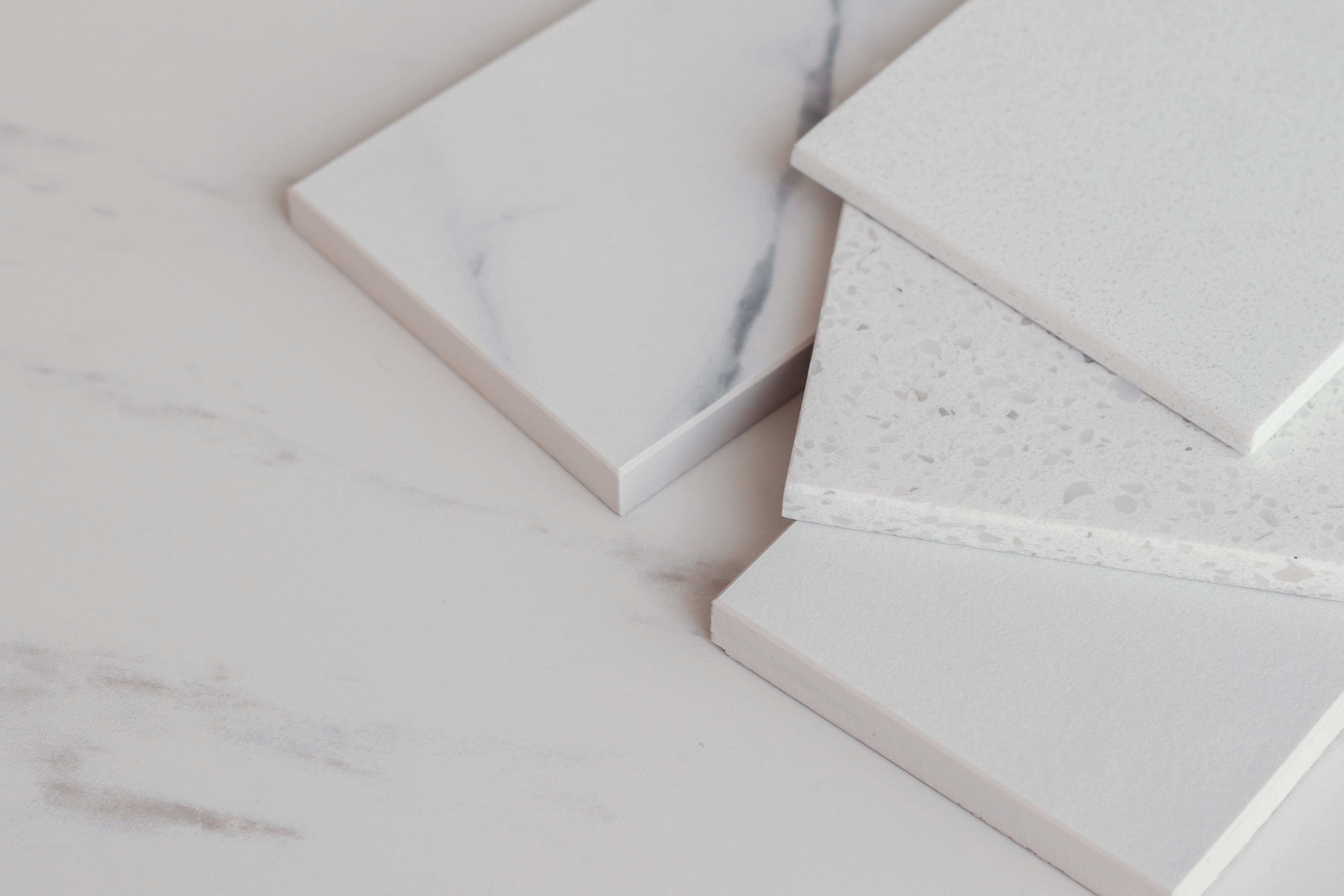

California is set to rattle the countertop sector later this month when a proposed ban on the manufacturing and installation of quartz countertops is expected to pass.
The emergency regulation, sponsored by California’s Occupational Safety and Health Standards Board, would center on manufactured stone that contains more than 1 percent of crystalline silica—a material that’s released as dust when the stone is cut. The silica can lead to a sometimes fatal condition called silicosis. In California, there have been 657 confirmed cases of silicosis and 35 silicosis-related deaths among workers in fabrication shops since 2019. Officials estimate that, without a prohibition, about 1,000 more cases would develop over the next two years in the state.
The ban would be the first of its kind in America, though Australia notably voted to prohibit the use, manufacturing and importing of engineered stone in 2023. That regulation is likely to face legal challenges from manufacturers, which have long argued that the silicosis crisis is the fault of fabrication shops that fail to sufficiently protect workers.
“It’s crazy that we’re even having this conversation,” says Micah Aberson, executive vice president of government and business affairs at Cambria, the Minnesota-based quartz manufacturer. “Cambria natural quartz surfaces are perfectly safe when they’re made, when they are installed into your home or commercial application; and they’re fabricated appropriately per OSHA rules and regulations, as they’re done across the country by nearly 10,000 fabricators. What we are seeing is a unique problem in the state of California, where bad actor shops are cutting the product—all products, including natural stone surfaces—in an unsafe way.”
Many of the state’s dealers and fabricators also oppose the ban, arguing that it will punish reputable businesses while doing little to slow down under-the-radar shops already skirting state regulations. Some also protest that the accelerated timeline (180 days from the date a final rule takes effect) will leave them holding millions in inventory. Still, there’s a growing sense that, like it or not, restrictions on quartz are coming.
“I think it’s pretty inevitable,” says Peter Dominguez, the president of Santa Fe Springs fabrication business California Surfaces. He has been prepping customers in recent months to expect a coming ban, and has been exploring alternative materials. “I think a lot of [the quartz market] will be taken up by glass-based or amorphous low-silica engineered materials,” explains Dominguez. Natural stone, granite and acrylic surfaces will also likely become more popular. “It’s going to be a big void,” he adds. “There’s going to be a lot of throwing up hands and pointing fingers. Our margins are going to change too. But at the end of the day, we’re going to have to adjust and adapt with our customers.”
California’s designers are experiencing a range of reactions. While all agree that worker safety is paramount, some, like the quartz manufacturers, say the focus should be on fabrication shops. “I find it suspicious that the [state] is targeting manufacturers and doesn’t seem to be principally focused on the health or rights of the laborers,” says Noz Nozawa, of San Francisco’s Noz Design. She also feels that the ban will squeeze consumers in the middle of the market. “We’re taking this affordable option away from homeowners,” explains Nozawa. “Meanwhile, the government is not doing anything to create legislation that makes the labor class safer. They’re just putting the burden on the individual. We’re just banning an affordable product, which [ultimately] makes homes less accessible for people who want to remodel and have a really nice life.”
Linda Hayslett, a designer with offices in Los Angeles and New York, often specifies quartz when clients are hoping to save costs while still getting the look of natural stone countertops. “It’s a good material to use when budget is an important factor, which it increasingly is,” she explains. But Hayslett says that she has often visited fabrication shops and been stunned by the lack of personal protective equipment (PPE). “I look around and maybe someone has a cloth over their mouth and nose, but usually no one is even wearing a mask,” she says. “I don’t even want to walk in there without an N95 on, and I’m only going in for a few minutes. Of course, some facilities are better than others, but I do wish the safety component was more at the forefront of the conversation.”
While residential designers do have an array of other countertop options—from natural stone to stainless steel or tile—the prohibition of quartz will have a bigger impact on developer-led projects, says Lauren De Meules Daley of Alameda-based Sand & Stars Design. “For commercial work, this is a much bigger deal—we almost [exclusively] specify quartz in those projects,” she says. “If you need to update 50 units in a building, [meaning] you need 100 slabs, and the material has to stand up to tenant use, and be consistent between units and require zero maintenance—quartz is king.”
While De Meules Daley has been aware of the silicosis lawsuits for a few years, the demand for quartz in multifamily buildings hasn’t slowed, and she trusts her general contractors to use reputable fabrication shops that follow safety procedures. “Designers do not often get to dictate which fabricators are used, so we can’t always vet the workshops,” she says, adding that the ban feels heavy-handed, forcing a universal framework instead of a more nuanced one. “It’s like the proposed ban on gas cooktops in certain cities, or requiring all vehicles to be electric. Let the consumer be educated and choose a good fabricator through their trusted GC.”
Quartz manufacturers seem to have seen the proverbial writing on the wall: Several have already begun releasing low-silica quartz that falls into the 1 percent category that both Australia and California have dictated. De Meules Daley has looked at specifying the Caesarstone Icon low-silica line, but Hayslett wonders if the reputational damage from the lawsuits and ban will erode customer interest in the product altogether. “It’s getting harder to [specify] it because clients have heard about these issues and don’t fully understand that it doesn’t pose a threat once it’s installed,” she says. “I’ve had clients say, ’I don’t want my kids to get sick.’ And I’ve had to explain that there’s not a threat of that. But the stigma is there for some people.”
L.A. designer Laëtitia Wajnapel concedes that for aesthetic reasons she doesn’t often specify quartz, thinks the ban is a net positive. “If we can’t implement safety precautions at every step of the process, then we probably do need a ban,” she says. “It makes sense to me. We’re all talking about longevity and creating healthier homes, but someone might die of a horrible lung disease because they made your bathroom countertop? I know people feel it’s political, because any time we have the government making a blanket decision like this, it is political. But, ultimately, people should be safe. It’s more important than having a specific finish in your home. We don’t use lead in paint anymore—everyone got used to that. This can be the same.”







 Withdraw Consent / Manage Privacy Preferences