








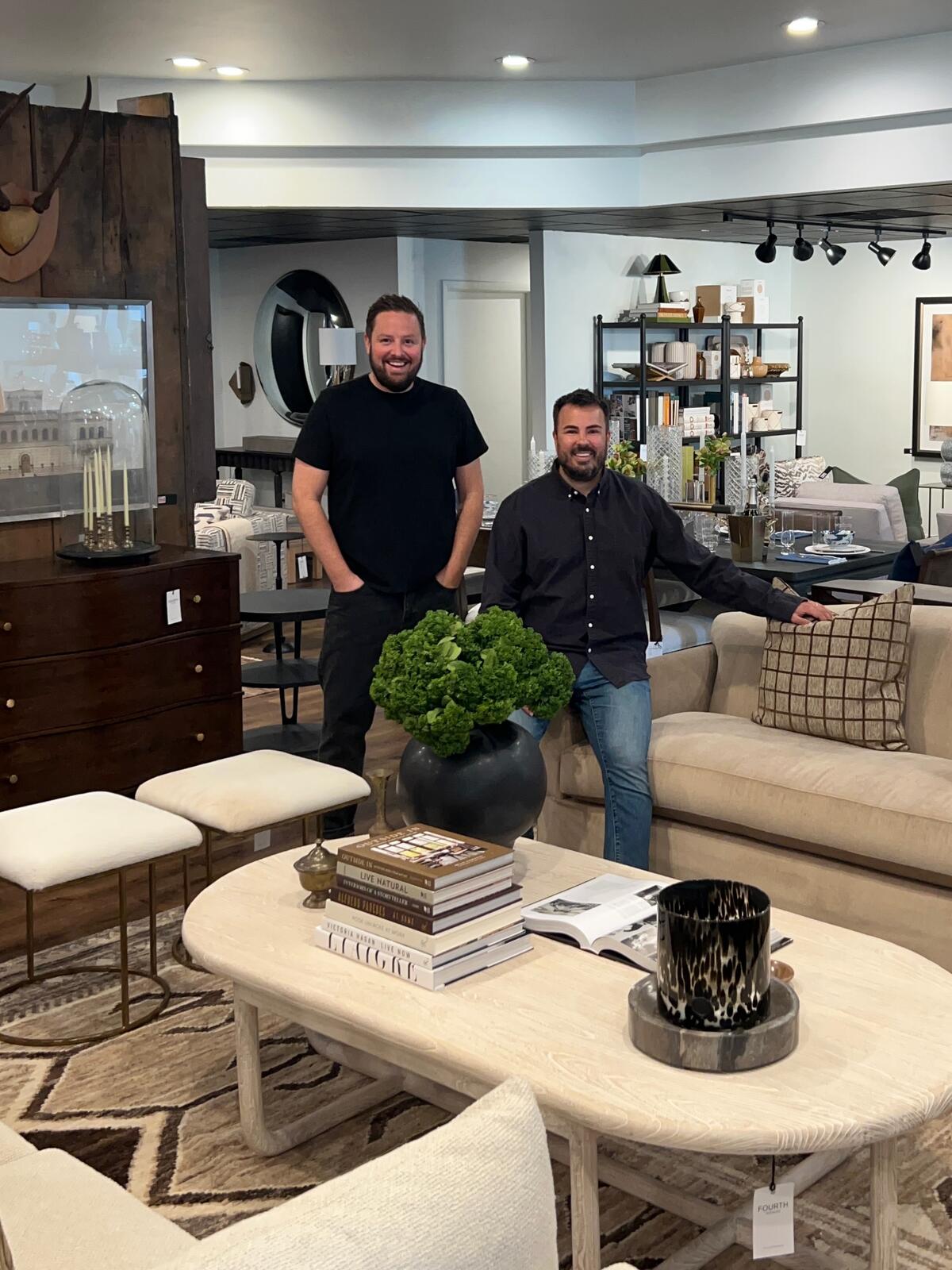
In Business of Home’s series Shop Talk, we chat with owners of home furnishings stores across the country to hear about their hard-won lessons and challenges, big and small. This week, we spoke with Justin Kingry and Mike Starr, founders of the design firm and retail boutique Fourth Interiors in Columbus, Ohio.
Both Columbus natives, the couple met on a dating app 13 years ago, and their professional lives have only become more intertwined over the last decade—starting with their launch of Fourth Interiors and culminating in Starr pivoting from his real estate work to join the business in a full-time capacity this year. Kingry, meanwhile, has design retail in his DNA, following his mother’s footsteps into the industry and traveling the world before opening up his own business back home. Ahead, the pair discuss their specifically masculine aesthetic, the Sisyphean struggle of e-commerce, and a desire to expand beyond their beloved hometown.
Justin, what brought you into design?
Kingry: My mom was a buyer for a huge chain of retail stores, so I grew up in the design world. I got to play in a 10,000-square-foot store, and started working with customers and merchandising. Then I helped her buy product for the showrooms. I always had [design] in my pocket while I was doing my corporate America stuff. I worked for Frontgate in China for five years doing product development. When I met Mike, I realized I no longer wanted to be in that part of the design world, and wanted to do residential interior work. I didn’t want to be gone for months at a time. That was getting boring.
Why go into retail when you did?
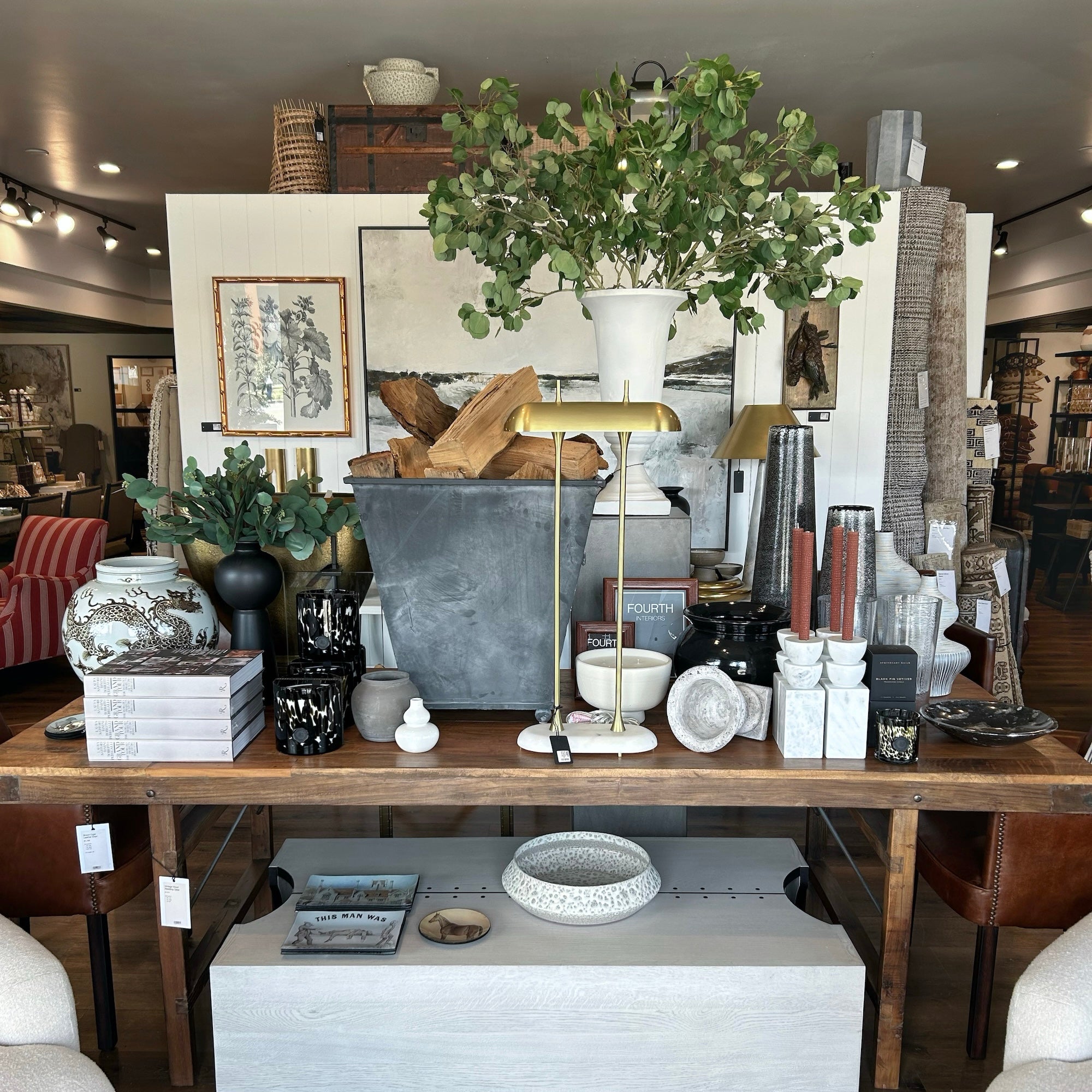
Kingry: I needed the product for my clients to see what I was putting on their mood boards or wanted them to purchase. We opened a smaller showroom to have inventory for me to use for installs, or to have a client come sit in a chair or a sofa and see the fabrics. And it just kept growing: Within the 10 years operating the retail side, we’ve moved to bigger locations three times. Retail became 50-50 with the design. We started working a lot to the trade, and [realized] there was a hole here in Columbus. Now it’s 6,000 square feet. We work with customers and clients all day. Also, the retail side is just a passion of mine, from how I grew up. I missed it!
Will you describe the aesthetic of the store, and how it relates to your design aesthetic?
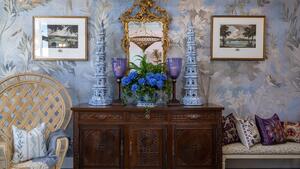
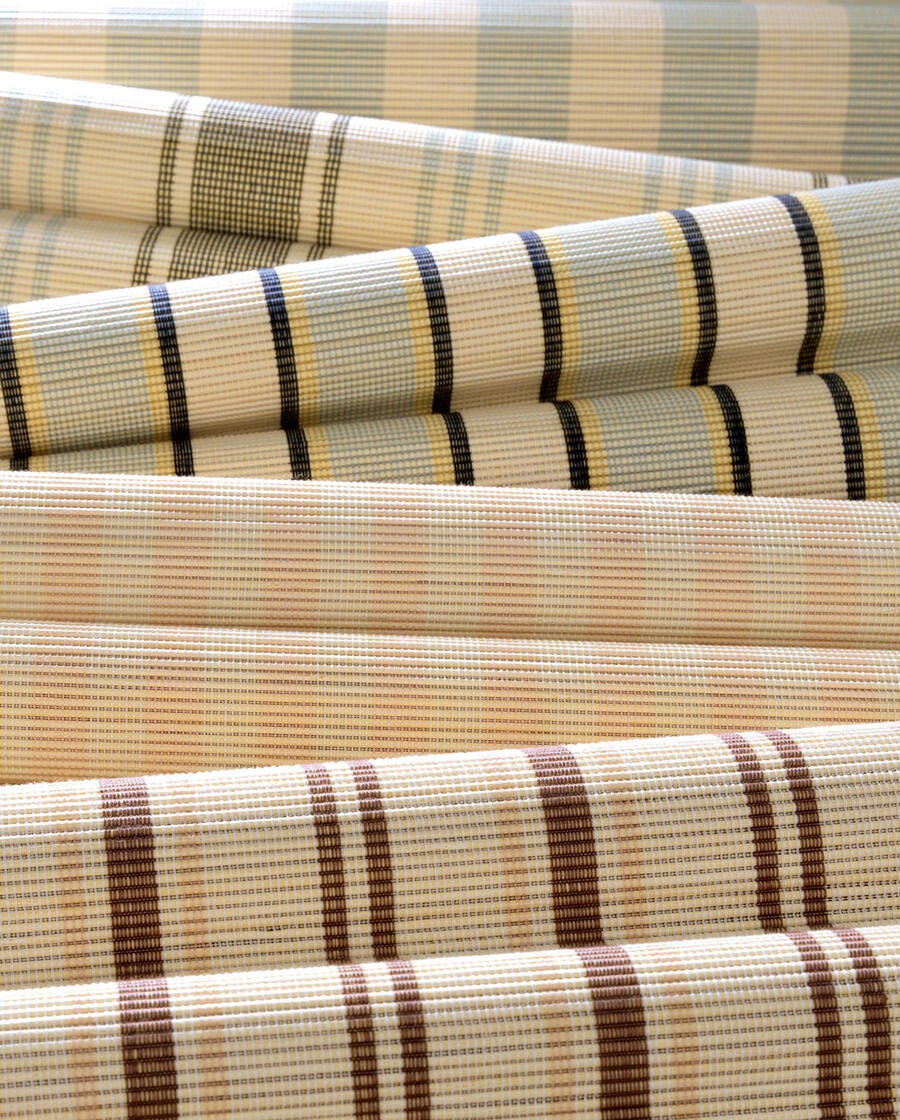
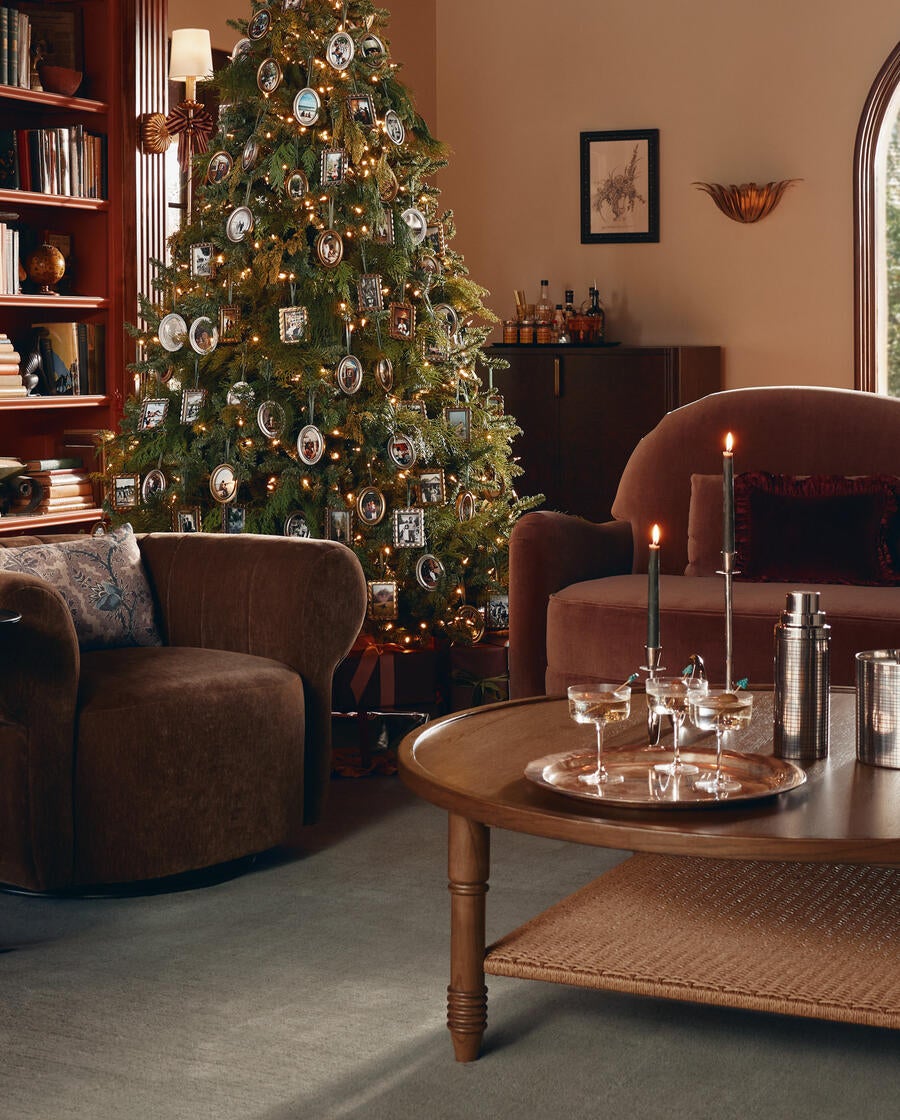
Kingry: We’re definitely more masculine and moody, but the retail side is eclectic, and that does carry over to design. I love working with all types of style—traditional, contemporary, soft, casual. The showroom is a good portfolio for the design side. A lot of fabrics, a lot of texture. Of course, if someone’s more feminine, we can do it.
Starr: We get a lot of design clients through the showroom. They like what they see, but may not necessarily have the skills to put it together. When Justin first opened the store, people would come in and ask, “I’ve got a crazy question, but did you ever work at this other store?” People in Columbus had a hunch [that what he was doing was connected to] his mom’s store. They’re not even in the same vicinity! They’re 40 minutes apart. But people liked his aesthetic, so I think they were excited to see that he had landed somewhere and opened his own store.
After this minimalist, neutral decade, you have a more traditional look with sturdier fabrics and a lot of darker tones. Will you tell me a bit about riding out the trends and staying true to your look?
Kingry: Trends come and go, and Columbus is just not that customer. Our customer is someone who is investing into their home, into their furniture. Trends are not investing. We always had a traditional base. That’s my vibe: I love a good antique or solid wingback chair. I just have to know my customer and my client and stay true to what Fourth Interiors is. As much as I love a minimalist, California-casual house, it’s not our look. We’re the Midwest, we have seasons. Heavier-weight fabrics work better for us. It’s cozier in the fall and winter. I do like to play with trends, but on a much smaller scale, in accessories or throw pillows I see at [High Point] Market. That Ralph Lauren vibe has started [to return], and thank gosh, because I eat that up all day long—the plaids and stripes and heavy leathers. We have a timeless customer who walks in and says, “This doesn’t look like page 45 from a bigger retailer.”
What is the demographic of these folks?
Starr: We’re trying to figure it out every day.
Kingry: We’re 40, and I thought our customer was younger—a 30-year-old who liked design. I have those customers, but really it’s 50 and up. Someone who has a corporate job and a busy life. She’s predominantly a female customer who prefers a darker vibe. They come in and they’re in a rush for a gift on the retail side, or say: “Yeah, let’s remodel these two bathrooms.” She likes really good stuff to invest in.
Starr: A piece that will last a long time. If someone’s going to invest in a nice piece of furniture, it has to be more timeless.
Kingry: They’re older, because it takes time to get to that point, where you can afford pieces that last forever, in a home you’re living in forever. It took me a long time to figure this out.
Starr: We opened when we were 30, so we thought it would be people our age. Our first week, we had a customer in her 80s who loved design and some of the contemporary pieces. We never would have expected that.
What’s your sourcing process like?
Kingry: To be honest, I’m never not working. Even at home, I’m sitting at the kitchen table constantly sourcing. That keeps me one step ahead. But it takes me a long time to pull the trigger. Are we far out there, or not far enough? It will take weeks for me to place an order with accessories or a new chair for the floor. I try to use the vendors we have, and then doctor it to match me more, like doing a COM fabric from one vendor on the frame from another. The showroom changes every couple of weeks, because we’re pulling for clients or selling off the floor. We do four resets every quarter. It keeps the showroom fresh, but keeps me constantly sourcing.
We just got home from a buying trip, which is a big deal for us. That’s my Super Bowl. If you want to catch me on a great day, it’s when I’ve been antiquing. When I hit the jackpot, I’m your best friend forever because I’m so happy.
Tell me about a vendor you love.
Kingry: Cisco Home. They were the first luxury furniture vendor we had when we started. I remember meeting our sales rep at Market, and I was in awe. I still am, 10 years later, with this vendor. They’re more than a furniture company; they are artists, and their fabrics are all insanely amazing in quality. They’re handmade by a company in Mexico, where these beautiful tapestries are turned into ottomans and chairs. Every time I get to see it in person, I still go, “Shit, this is so good.” The daughters who have taken over the company now, I consider them friends. I love to get coffee with them in their showroom. Mike will tell me, “OK, we’re going to be there for two hours, max,” and then we’re there for four. I will always back their brand, and they’ve always backed me.
What are each of your favorite categories in the store?
Starr: I love our art, and it’s the category that moves the fastest. Art is so subjective. Justin always asks my opinion at High Point Market, and I cannot formulate an opinion, usually. But I do appreciate when we get a piece that totally matches our aesthetic, and we see customers come in and just love it. Our art turns fast.
Kingry: Mine’s probably the upholstery. I love when fabrics get delivered, opening them and being like, “Oh, it’s so good.” But secretly, I love everything, I really do.
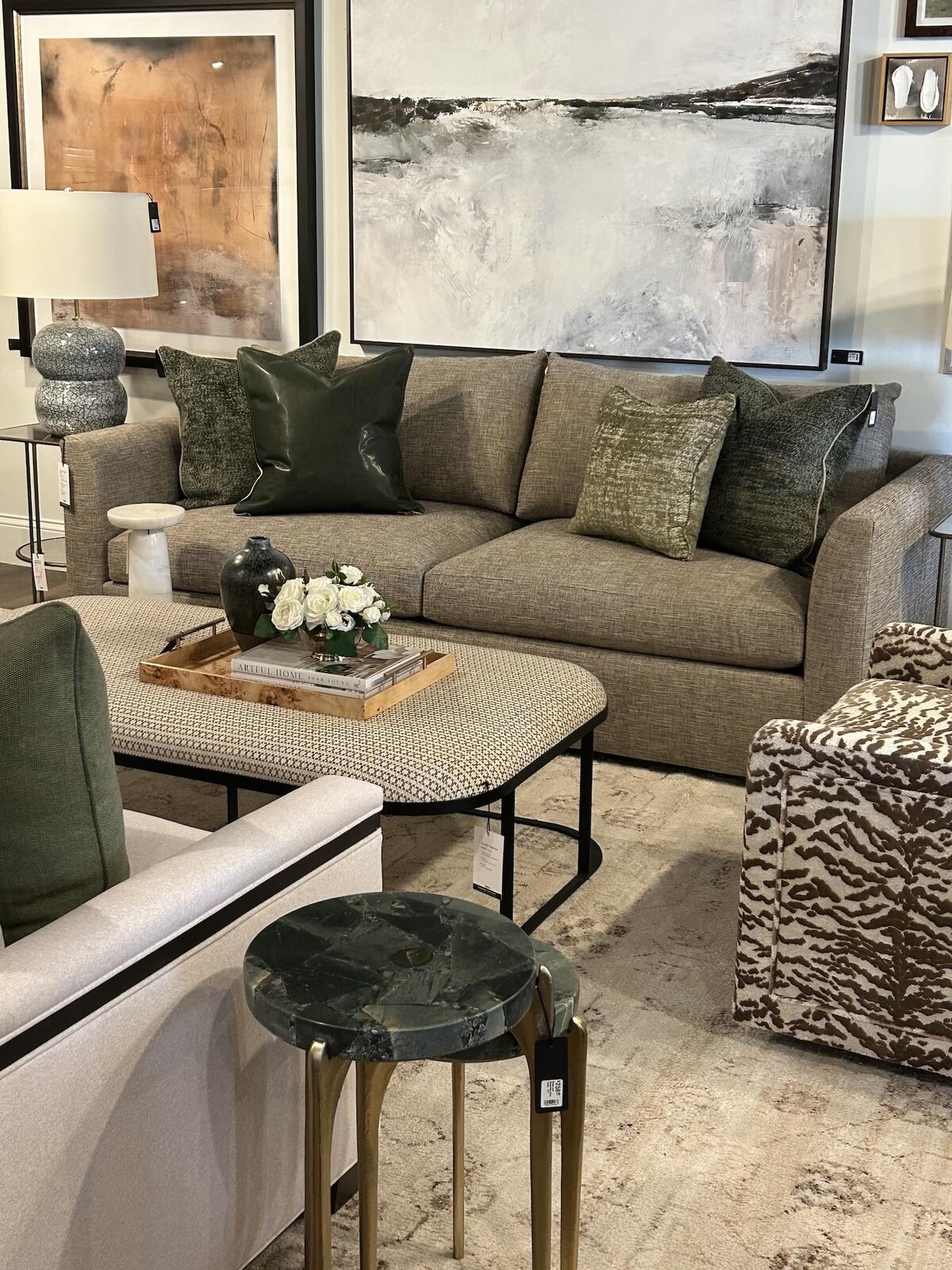
And you have custom upholstery services, right?
Kingry: Yes, I knew when we started the retail side that we had to have it. It’s a huge investment for us as a boutique retailer, but once we launched it at our first location, that’s when people really started to come to us—whether for that vendor and brand, or the vibe. Cisco was our first launch of upholstery, and we’ve carried it since. Over these 10 years, I’ve dropped lines, either because they were too saturated in the market or I was having issues with them. I knew we needed at least one good vendor in the beginning. [Columbus is] a small town, and you get one chance. If you’re not backing what you’re selling, it’s scary. But we launched and it crushed, and now we carry multiple upholstery and furniture vendors.
What’s your general approach to e-commerce?
Starr: Our plans for this year and on is to grow our e-commerce. Justin’s approach to brick-and-mortar is so different from an e-comm model, because he’s always sourcing and it’s always changing. We don’t buy deep on one item. In e-comm, if you’re ordering a wide variety of products but shallow in each, then every product is more work—photographing it, getting it on the site. By the time search engines are starting to index it, it might already be out of stock. You’re constantly chasing this cycle. We’ll have to tackle it in phases.
Mike, tell me about deciding to join the business full-time. How has your involvement evolved over the years?
Starr: The involvement has been heavy from the beginning. We’re a small team; it’s Justin and I and one to three other staffers. From an external perspective, sometimes people think we’re a lot bigger than we are. But I’ve always been heavily involved. [Keeping] my own income was nice for a long time, as we were starting off. Design is not really my background or my expertise. For a long time, I was worried that by giving up a corporate career, I’d lose some of the enjoyment in my day-to-day. But since joining the business full-time, I haven’t looked back once. There’s so much to do when it’s your own company! So many avenues to explore, and you can make it whatever you want. I didn’t grow up in retail. Columbus has a lot of big retail headquarters, like Victoria’s Secret, and a lot of our friends work in fashion retail, but I never did that, so I’m constantly learning.
Will you tell me more about Columbus? What’s the design scene like?
Kingry: It’s a small network. There are probably three stores like us, independently owned, in the whole city. When I grew up, we had little pockets throughout Columbus that were filled with independent stores. They were not always good, but they were there! With the world changing, there’s just not many left. That’s sad. There is still a retail customer—a person who wants to see things and touch them and get a cup of coffee and go into stores. The customers we have are loyal and amazing, and have been with us from the beginning. That makes my heart really happy.
As for the design scene, there’s a handful of designers, and we’re fortunate enough that we see them weekly. They come in to order, or just chitchat about the industry.
Columbus is a growing city. The industry is still really small here. So [our job] is teaching people: It’s OK to invest in a chair that’s not going to break when a friend sits on it. I’m thankful that we have the design side and the retail side, because they’re different customers and we need to have options for both. No matter how much marketing you do, it’s a small town. A small town with a lot of apartments.
What are some of your dreams for the future of the business?
Kingry: Short term, getting the e-commerce up. Long term would be moving to a bigger city, and seeing if we can hang with the big dogs. I think we can do it.
Starr: Yes, e-commerce would open us up not to have to focus so heavily on the Columbus market, which can be a bit small. I have lived within a five-mile radius my entire life, and that was never my plan. So I think we’re trying to figure out where we want to go that would support the business but also be where we’d want to land personally.
What are your favorite days at work?
Kingry: I have two versions. I love a day when the whole team is in our design office and we are just laughing and talking about life and projects and clients, watching the smiles of friendship on everyone’s faces. But I also love a day on the floor, when all my favorite clients stop in throughout the day. They stop in when you need to see them, like [on days] when you’re doubting yourself. It’s funny how the world can sense it, and sends them in.
Starr: Yes, we have some loyal customers who are just positive people, uplifters. They keep us sane. For me, the most fun day is when we get customers who are just excited by the store. There are some days when it all happens at the same time—it’s busy, and people are excited about the store itself—and that’s rewarding.




 Withdraw Consent / Manage Privacy Preferences