





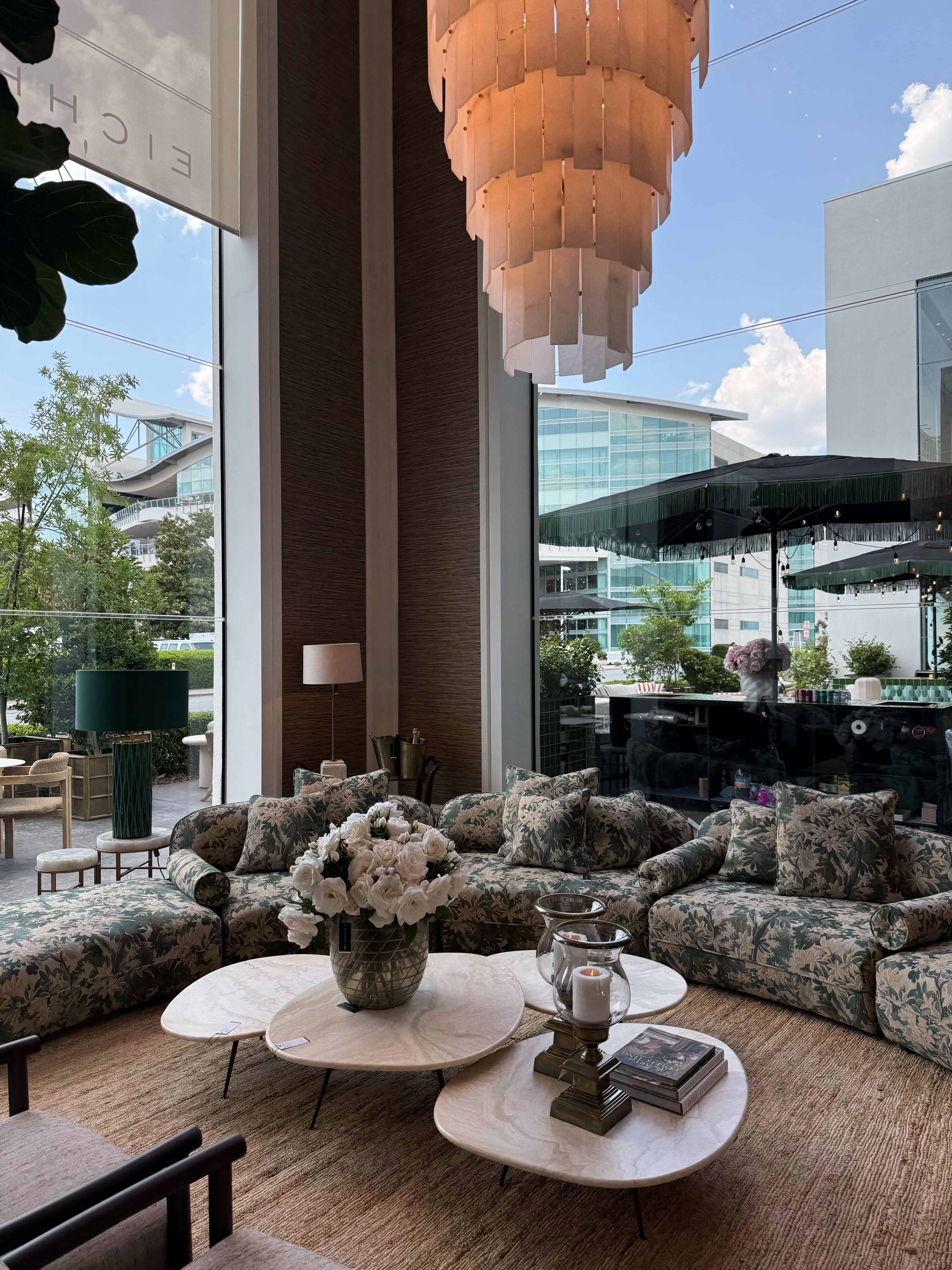
If you’ve been keeping up with industry headlines, you’d be forgiven for assuming this spring’s High Point Market would be a doom-and-gloom affair. Tariff headwinds, surging freight costs and designers with dwindling pipelines have all been hallmarks of the past six months—how would they shape the market season? But as the design world touched down in High Point, North Carolina, something surprising seemed to take hold. The mood on the street was far more upbeat than Markets in recent memory, the introductions were more buoyant, and the weather was mostly sunny—a soothing balm in troubled times that sent attendees home with a bit of inspiration for the months to come.
Traffic Report
While everyone loves to complain about foot traffic (“It’s a little slow this Market, don’t you think?” is a perennial refrain), many showrooms were singing a different tune midway through the event. Despite the widespread perception of a slow start, several brands reported scanning a record number of badges by Tuesday. That was especially true of showrooms along the Hamilton Street corridor, which has become a hotbed for designer-driven brands, and some of the showrooms positioned front and center near the main entrance to IHFC’s InterHall.
Official registration numbers from High Point Market Authority indicate that attendance was more or less even with last October’s. The number of companies registered was down 1 percent, but the firms who came brought larger teams—the number of individuals who registered was down only 0.1 percent. There were some losses among larger retailers (4 percent down), which jibes with the current retail climate, and the show saw a slight uptick in international buyers (up 1 percent). Perhaps most exciting is the arrival of 1,200 new buyer companies this spring—firms that had never before attended High Point Market.
Some would-be attendees may have skipped the trip to North Carolina in light of the show’s overlap with Salone del Mobile in Milan—though a handful of jet-lagged editors and executives managed, perhaps miserably, to attend both. National and global politics likely played a role as well. The 44-day Department of Homeland Security shutdown that triggered massive airport delays from mid-February through March fell right at the time when most Market-goers buy their tickets; at the same time, surging fuel prices caused by conflict in Iran began to impact flight prices. Together, they created new hurdles to booking travel and likely made it far easier to sit out a cycle.
But by all accounts, the designers who did attend were actively shopping for projects. Last fall, several told me some version of, “I don’t actually have any clients to shop for right now—I don’t know why I’m here.” This time, the story was different. Designers were more candid than ever about how challenging 2025 had been—but said that the slowdown was decidedly in the rearview mirror for their firms, with many new projects in the works. While no one could pinpoint a clear tipping point, some suggested that after a protracted period of global instability that kept clients frozen, many had simply decided, in the words of one designer, “It can’t possibly get worse,” and began planning projects again.
Tariff Talk
That same attitude seems to be the approach designers and manufacturers alike are taking when it comes to tariffs. While domestic manufacturers continue to tell a “made in America” story, the tariff narrative seems to have lost its bite. Importers also responded to the notion of a forthcoming refund with little more than a shrug. Many expressed skepticism that they would ever see the funds, and none had big plans for the potential influx of cash.
If anything, the refund process had sparked new headaches—especially for brands that clearly labeled a “tariff surcharge” on their invoices, some of whom reported a rush of customer requests for their own refund. While a few brands that had baked the duties into increased prices are mulling some sort of giveback to loyal customers, most executives said they’d figure it out if and when a wire transfer appeared—and that if anything, the funds would be a welcome salve for their balance sheet after a year of pinched margins, rather than a springboard for major initiatives.
The Early Shift
Market is clearly expansionary—especially when you take a look at the calendar. Attendees are arriving ever earlier, with some touching down on Tuesday or Wednesday to get first pick of the town’s antique and vintage wares. At a Thursday night dinner, I met several designers and retailers who say they now regularly shop for antiques on Wednesday, make appointments to visit their vendors on Thursday, and leave town by midafternoon on Friday—all before Market officially opens on Saturday morning. (Many designer-focused showrooms I quizzed throughout the long weekend confirmed that they had a healthy roster of customers who regularly request tours on Thursday.) By the time Tuesday morning’s rainstorm rolled in, the streets were sparsely populated; showroom staff readied themselves for an agonizingly slow Wednesday before they could pack up and go home.
While showroom operators are unlikely to turn away key customers who turn up early, the widening span has put increasing pressure on brands to be Market-ready far sooner than expected, which means everything from earlier load-ins and longer hotel stays for sales reps, to extra visits from the florist as arrangements wilt mid-show—and a more grueling Market experience overall.
In With the New
This season brought several exciting new outposts that pushed at the perimeters of Market’s borders. Perhaps the most notable was the debut of the Amadi Collective, which featured Amadi Carpets alongside dozens of boutique lines—including 27 exhibitors from The Design Social Pop-Up. Located in the rustic former Schwung space on South Centennial Street, the raw setting was a striking backdrop for a maker-driven assortment of textiles, lighting and accessories—most of which were making their High Point debut.
The Amadi Collective concept builds on the buzz around 313.Space (located only two blocks up the road), which houses its own unique mix of artisan and established exhibitors and continues to reign as one of the design community’s favorite destinations. The traffic at the fourth showing of 313.Space demonstrates a clear demand for the opportunity to discover boutique lines, anchored by Schwung’s enviable assortment of one-of-a-kind and artisan-made goods on the first floor. (They also have a great harvest bowl if you’re in the area at lunchtime.)
On the other side of town, Odette debuted a new showroom on West Green Drive, close to Market’s southwest border. The outpost is the perfect example of how finding the right space can transform a brand. In this setting—smaller, more intimate and layered—Birmingham, Alabama–based Laura Vogtle’s curated assortment of antiques, art and seating reupholstered in textiles from boutique brands truly shines.
Finally, several brands offered surprising line extensions that showcased the allure of a whole-home assortment. This phenomenon was perhaps most apparent with Century’s first foray into the lighting category, with 48 new pieces, including the architectural Cathedral lantern, the interchangeable Halo pendant and the cylindrical Torel sconce.
MORE GROWTH IN KITCHEN AND BATH
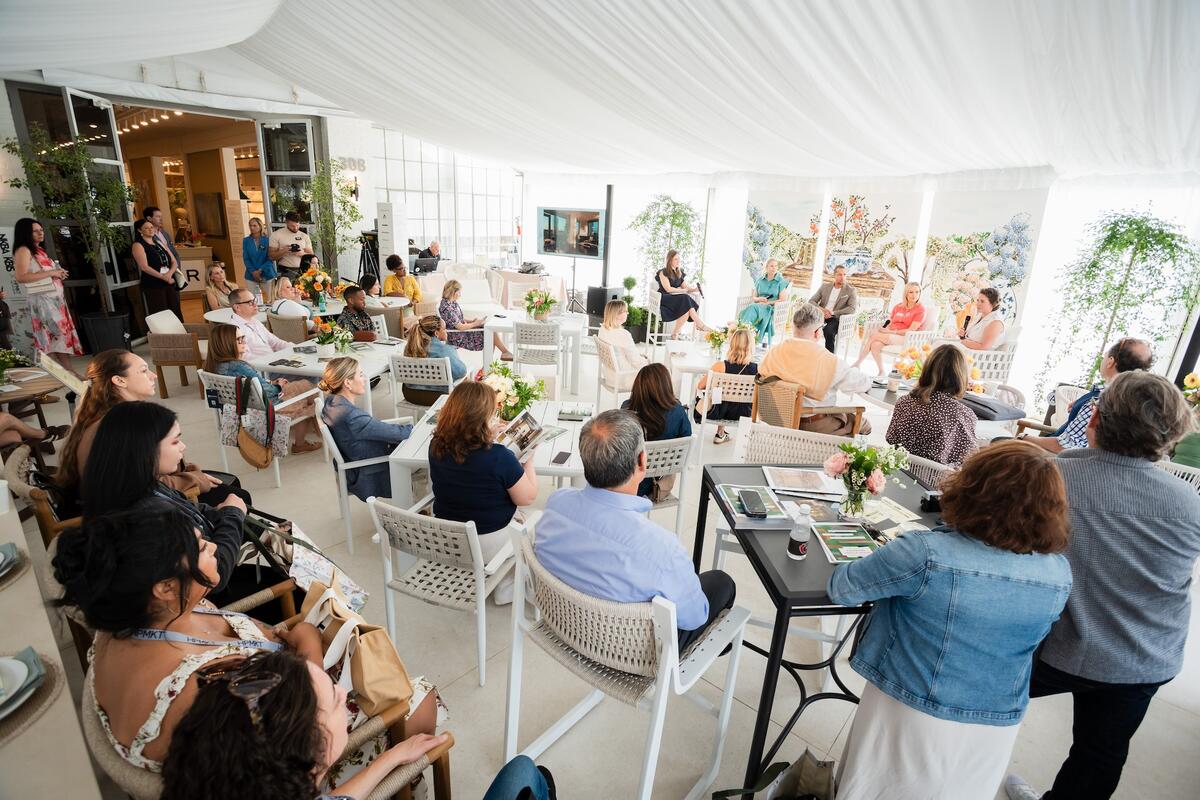
In its second Market season, the National Kitchen & Bath Association’s activation on the first floor of Broad Hall continued to serve as a hub for the show’s kitchen and bath brands. While the interior layout itself was similar (expect a fresh look in the fall), the alfresco space got an evocative glow-up under a large tent. That’s where the association’s programming unfolded against a painterly garden scene, with guests clustered around four-top outdoor dining tables for panels throughout the weekend.
While the concentration of kitchen and bath brands is one of the Broad Hall space’s greatest strengths, the category also continues to have a strong showing elsewhere at Market. Cambria’s booth in InterHall featured a buildout of Stoffer Home cabinetry for a kitchen display; upstairs in IHFC, Cooper Classics showed several Vanity & Co. vanities to bring its deep collection of medicine cabinets to life; Made Goods and Currey & Company both debuted new pieces in their growing bathroom vanity programs; at 313.Space, Unique Kitchens & Baths and Thompson Traders both showed their wares; and Visual Comfort launched shower-ready lighting.
Another category that may be poised for similar growth at future markets is closet systems. In InterHall, several brands were given prime real estate to build out immersive spaces that showcased their offerings.
A Season of Reflection
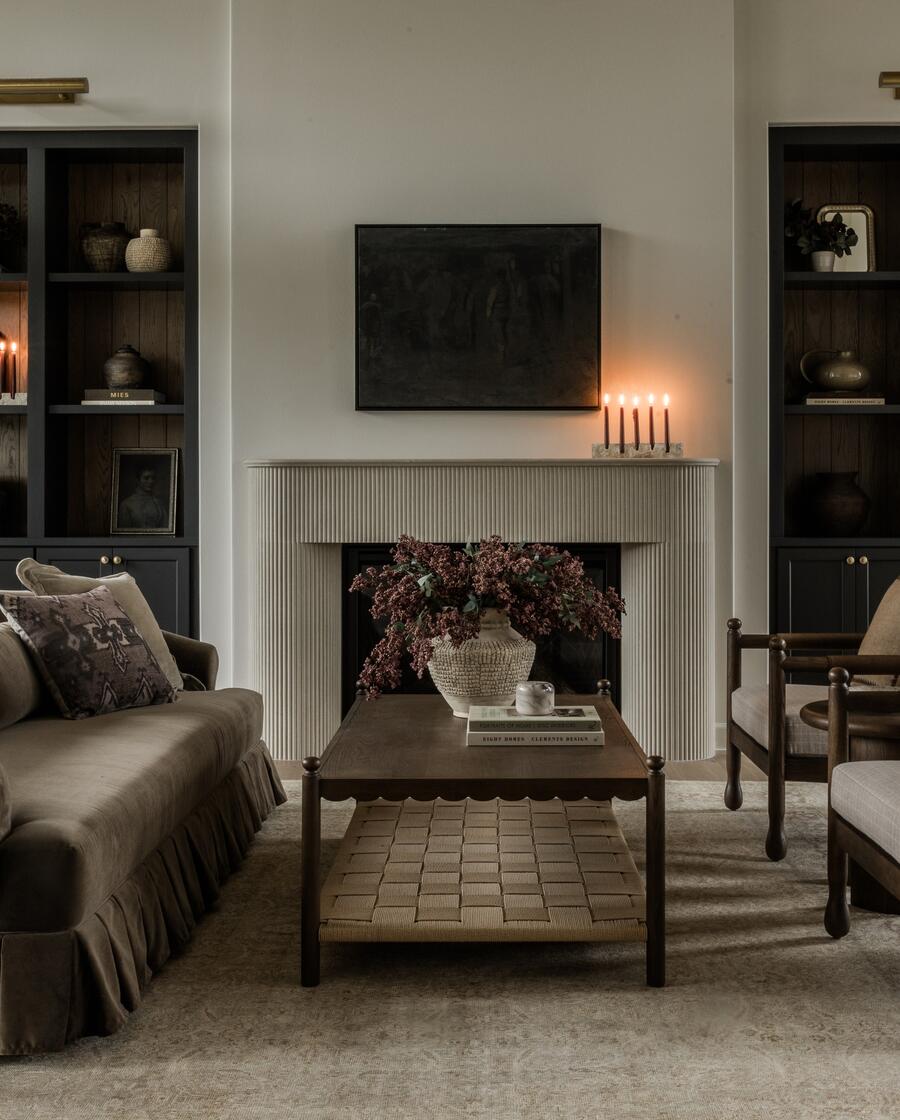
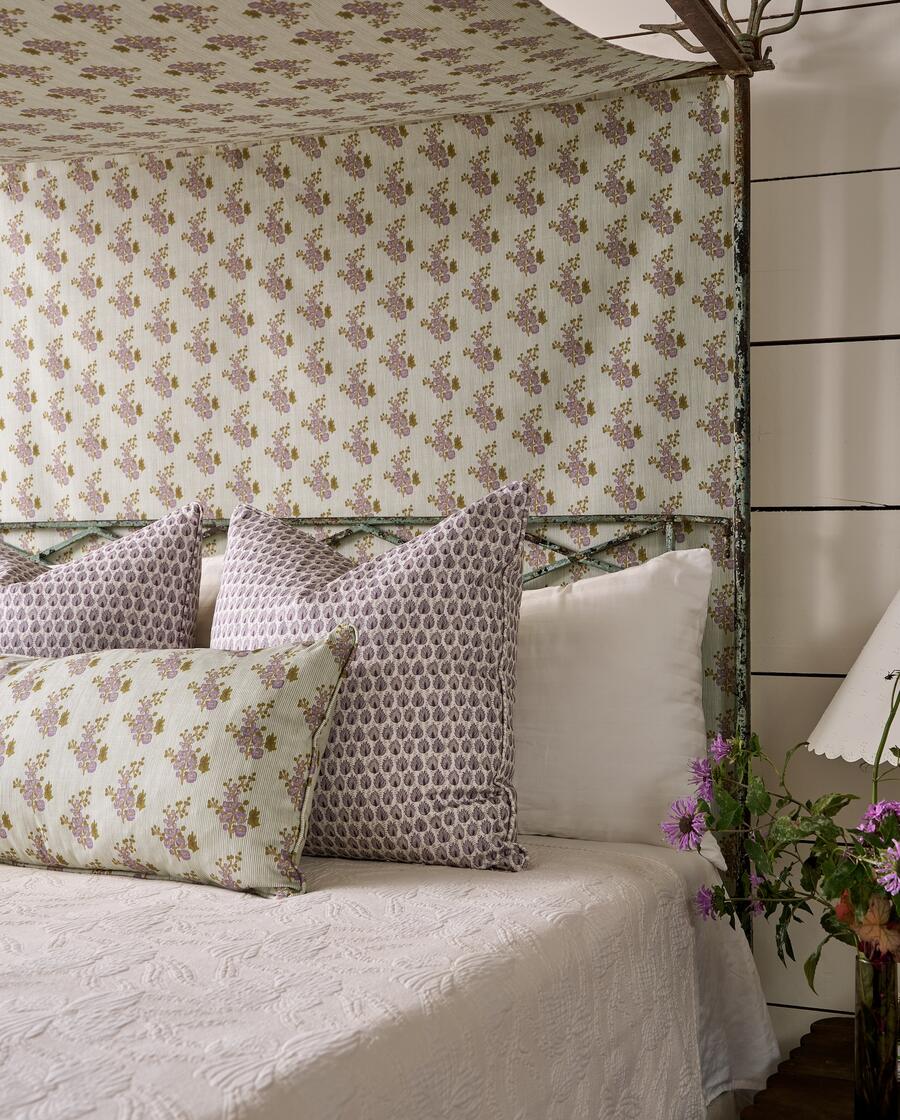
One of the clearest aesthetic through lines I discovered while walking the show: Traditional design is back in full force. That impulse showed up in everything from classical upholstery forms decked in skirts, scallops and trim to carved case goods and a decidedly old-fashioned suite of patterns and textiles that dressed showrooms throughout town.
In a delightful twist, many Market brands celebrated big birthdays—Lancaster turned 40, while Hickory Chair celebrated its 115th year—by reaching into their archives and resurrecting beloved silhouettes that had been gently modernized. At Hickory Chair, for example, the Westover sofa takes its cues from a piece with turned leg and arm posts that first appeared in the company’s James River Estate collection from 1941—and which was itself inspired by an antique from the early 1800s. For the modern-day reboot, the brand reimagined the exposed wood details in a wider scale, eliminated the piece’s inlay and fluting, and straightened out the top rail of the once-curved back so that the sofa can now be made to measure in 1-inch increments.
Theodore Alexander, meanwhile, commemorated the 20th anniversary of its Althorp collection, which is inspired by the storied English estate and designed in partnership with Charles, Earl of Spencer. In a nod to the occasion, Lord Spencer chose 20 pieces to revive from the collection’s rich archive of more than 700 reproductions—and was on hand to share the family stories of their provenance.
Star Turns
In general, designer collaborations were the launches that made the biggest splash this season. One standout was the collection from House of DuVäl, a new brand in the Sherrill Furniture family by DuVäl Reynolds. In three rooms on the top floor of the company’s Fred Alexander Place showroom, the designer showcased a tailored line of 35 upholstery and case good furniture that embodied his ethos—refined but relaxed, incredibly comfortable, and imbued with thoughtful details that make the pieces easy to live (or design) with. Some of our favorites included a petite end-of-bed bench in a purple plaid; dining chairs so low-profile the backs never disrupt a project with a great view; a square stool with a reeded base to add visual interest no matter how you upholster it; and a configurable sectional in the perfect bronzed green velvet.
Other showstoppers included Barrie Benson’s return to Highland House, where she celebrated her original line’s 10-year anniversary with an immersive display of new pieces and patterns (the roll-arm chaise in a crimson and teal floral was a favorite), and Charlotte Lucas’s first collection for Taylor King, which featured a stunning suspended bed canopy, a curvy fireplace bench, and detail-driven upholstery decked in bullion fringe. Noz Nozawa’s second collection for Corbett Lighting was an absolute delight, marrying jewelry-inspired motifs from her first line with organic forms—like the Hoshi pendant’s stretched silk shade suspended from a T-bar, which resembles the traditional Japanese method for drying persimmons.
Merchandising Marvels
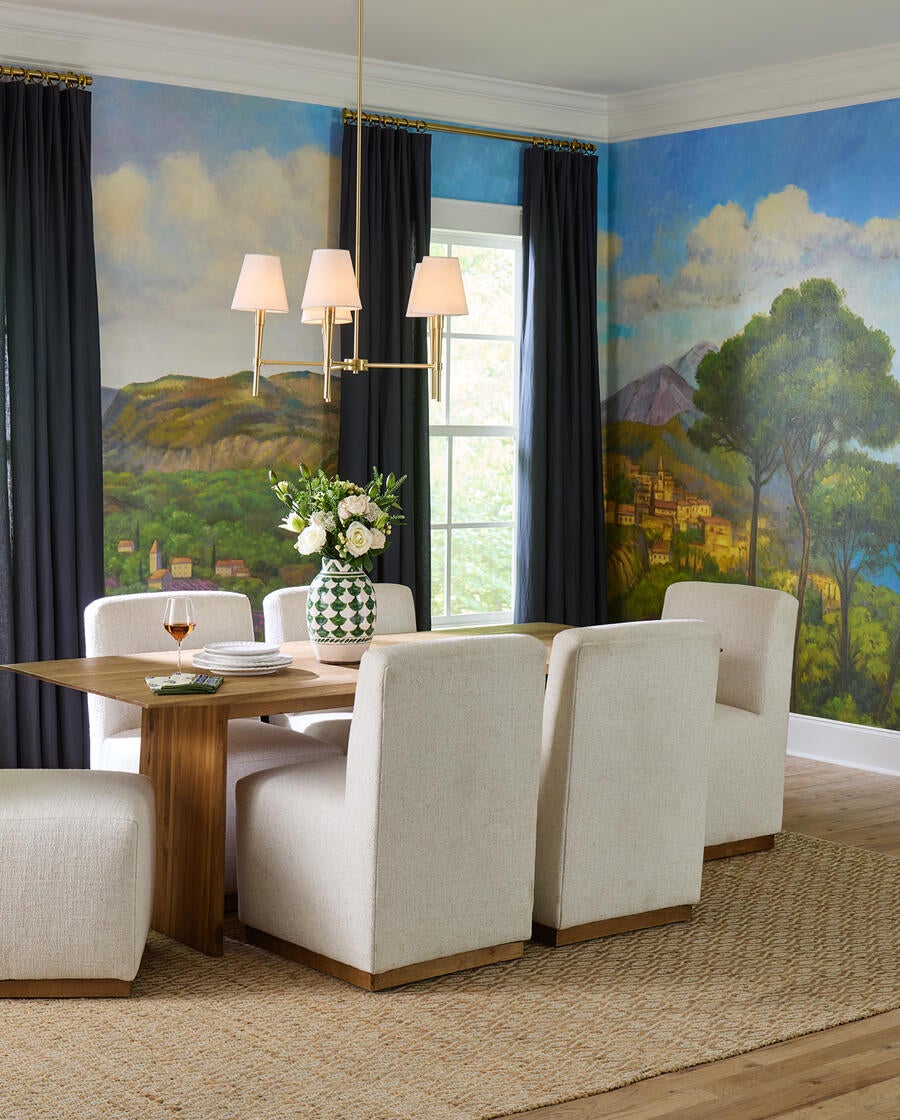
Last season, color began creeping into more displays. This spring, it was in full force, with bold and immersive styling that surprised and delighted at every turn. Take, for example, the way Kim Scodro and Suzanne Kasler reimagined their respective spaces within the Hickory Chair showroom. Scodro delivered a master class in “more is more” with an enchanting mix of gingham, floral and striped textiles paired with intricate applications of trims and fringe—a melange that showcased the refined details of her designs. Kasler, meanwhile, drenched a long corridor in her part of the showroom with a narrow pink-and-white stripe. With walls, upholstery and pillows all decked in the same delicate pattern, the result was a sublime sophistication.
Caracole took a different approach, but the effect was just as breathtaking. The brand floated its vignettes within large open spaces that gave the restrained, sculptural furniture arrangements an installation-like feel. The lighting throughout the showroom—and the simple act of giving each concept room to breathe—only added to its impact. And over at Baker and McGuire, Thomas Pheasant’s new outdoor line was artfully arranged in a garden-like setting atop rugs with motifs reminiscent of a hedge maze. To add to the effect, Pheasant clad his upholstery from previous collections in a mossy green velvet and placed them in the showroom spaces that surround the new line, which felt like being surrounded by a lush landscape.
Two other brands also made a splash spotlighting their custom capabilities. “We can do anything” is a hard message to communicate in a showroom, where it’s easy to internalize a singular piece on display rather than absorb a brand’s dexterity with the details. At Abner Henry, the solution was four designer vignettes, called The Collective series, to showcase the company’s impeccable craftsmanship. At Vanguard, visitors moved through an assemblage that showcased a variety of styles and moods—a different approach, but an equally effective storytelling technique that artfully illuminated the possibilities.
Change Is Afoot
Reinventing a home brand can be tedious, but the ongoing efforts of several companies made a lasting impact. With a bit of color and pattern in its Hamilton Place digs, upholstery brand Burton James had a fresh new look that was inspiring its designer customers; meanwhile, Fairfield Chair continued trending in the right direction with a great mix of new introductions, and Roger Turnbow’s latest releases at ART offered a fresh take on its traditional-meets-modern styles. Over at Arteriors, president John Hart’s long-awaited refresh (alongside a fun new collection from Barry Dixon) created a spark of energy that is sure to continue at Markets to come.
Other great showroom refreshes included Surya, which celebrated its big 5-0 at Market with a great assortment of releases at its Showplace outpost, but also a new approach to styling at sister showrooms Global Views and Mitchell Gold + Bob Williams over in IHFC. Phillips Collection shifted how it showcases its line, separating its sculptural forms from its more playful designs to clarify its range of offerings. And Kim Salmela’s creative direction at Norwalk Furniture continues to bring a welcome jolt of energy to the upholstery brand.
Trend Alert
One constant at many of the showrooms we visited: Designers keep asking brands to go bigger. Jamie Young Co. offered a great example of delivering on that ask, reimagining some of its bestselling mirrors at up to 60 inches wide. At Currey & Company, five new oversize table lamp styles also followed that trend. At 5 or more feet tall, they’re sculptural shoo-ins for designers who need height atop large console tables in rooms with high ceilings.
The ongoing demand for indoor-outdoor living was also clear. Rowe offered the most comprehensive debut to meet the moment with its new Allteriors line, which takes many of its beloved indoor styles and transforms them with upholstery and occasional tables that work just as well alfresco. Over at Gabby was another clever approach—an indoor chair and an outdoor seating line displayed near one another, both with woven details inspired by the webbing of an antique snowshoe.
There were also microtrends galore to discover. Bookshelf lights were a recurring trend, popping up in various forms at Pooky and Currey & Company and in the new Amber Lewis lighting collection at Four Hands. Bolster pillows inset into channels within a piece’s arms, or strategically placed where cushions join, were also popular this spring; hooved ferrules adorned many a table and chair throughout the show; and we spotted several brands taking inspiration from Greco-Roman antiquities, including an inspired hallway display at Currey as well as Eric Ross’s charming collaboration with Chelsea House.
Finally, perhaps the most exciting feature of the spring show: joy. As one executive told us, “I’ve never laughed more at Market.”


 Withdraw Consent / Manage Privacy Preferences