
















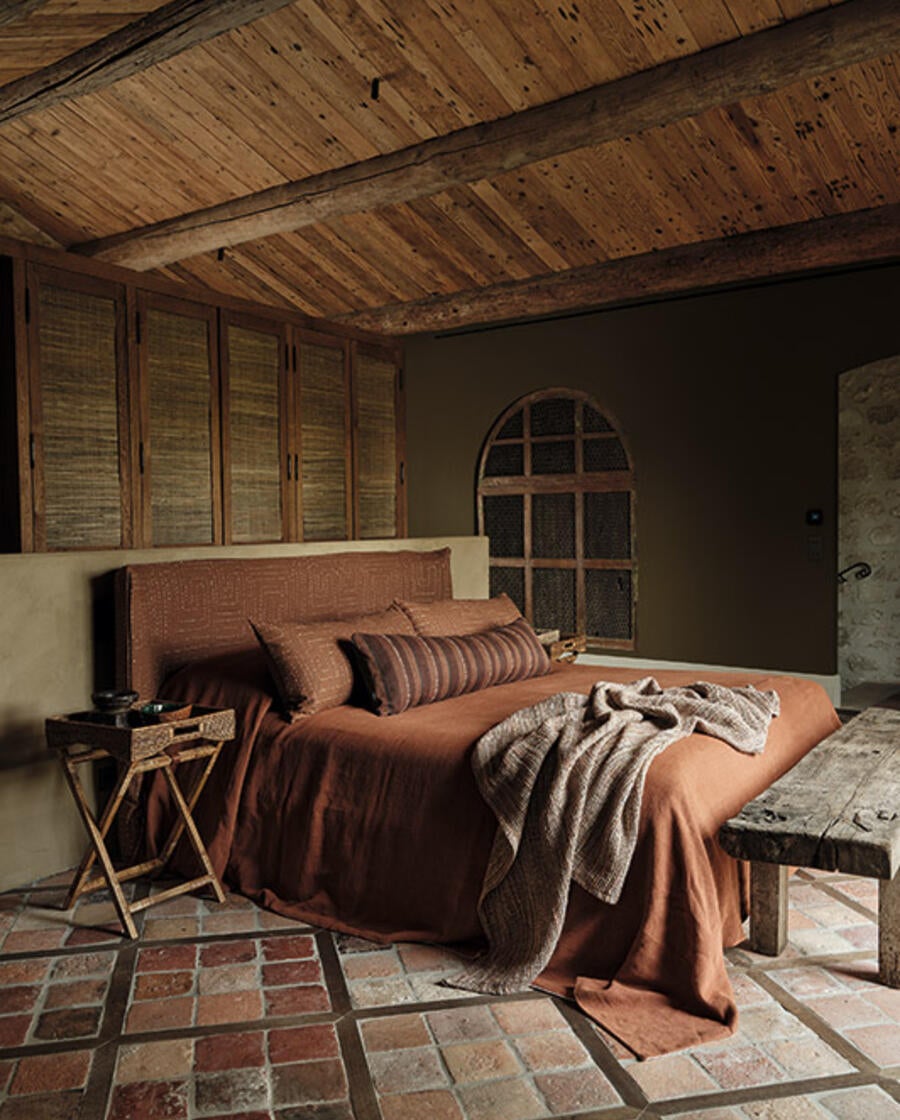
Charles de Lisle’s interior design career started with a lamp. Growing up in small-town Massachusetts with a machinist granddad and woodworking father, he was always taking things apart and putting them back together. That curiosity led him to studying ceramics and metalworking, and eventually blossomed into an obsession with interior design. The only problem? Without a portfolio, he couldn’t get hired. So de Lisle designed a lamp, and against all odds, it took off. “It’s really kind of just serendipity–my whole world and my life,” he tells host Dennis Scully on the latest episode of The Business of Home Podcast. “There was no plan.”
From there, he was introduced to designers Jonathan Staub and Marion Philpotts, who purchased some of the lamps for a hotel project, and the three of them eventually became the design firm De Lisle, Philpotts & Staub. In 2009, de Lisle went off on his own and has since landed on the AD100 with projects across the world.
Over the years, de Lisle has approached his business with the same openness to tinkering and experimentation that launched his career—even for the all-important question of how to charge. In the end, he’s found that hourly and markups work best for the residential projects his firm focuses on. “It allows the client to sit in the space where they need to,” he explains. “Some clients are more hands off and they trust you, and then other clients want to be involved in that process, and they know that there’s a certain cost involved with that. And then some clients want something that’s simple and plug-and-play, [while] some clients want to do it piecemeal and be part of that dialogue. The hourly plus markup allows each individual client to work the way that is best for them. That billing system may not work for everyone, but we need to have a consistent system on our side. I tried many different things, and this seems to work the best across the board.”
Elsewhere in the episode, he discusses his appreciation for the Bay Area, why he wants to keep his team small, and why he identifies more as a decorator than a designer.
Crucial insight: Despite many advances in technology over the decades, de Lisle prefers to work with his hands. “We don’t do digital renderings in our office, other than just elevations,” he says. “I feel like it takes away the imagination of what the space is actually going to be, and it creates something that’s too realistic. I’m trying to figure out how to retain the ability to enjoy looking at things and learning things and going to places and seeing them in person—and that you can’t get online. Even the difference between researching online and going through books, to me, is very different. When I start going through books, I see things that I didn’t expect. When I go through images online, I just see a lot of [the same things].” He tries to instill this mentality at his firm: “I am a very work-with-a-pencil person, and I try to get my whole team to draw more, because I believe that entering data in a keyboard is a different type of brain work that uses a different thought process versus holding something and working out geometries with your hand. I think your brain is connected to your hand differently than it is when you’re typing.”
Key quote: “I never really focused on a look—maybe to my downfall, because it’s been a challenging marketing problem. I love how things look, but I’m more interested in the constant learning and curiosity about this world that we’re in.”
This episode is sponsored by Ernesta and Kohler. Listen to the show below. If you like what you hear, subscribe on Apple Podcasts or Spotify.
The Thursday Show
Host Dennis Scully and BOH executive editor Fred Nicolaus discuss the biggest news in the design world, including a major move for ICFF, a surprise foam shortage, and why sleeper sofas are making a comeback. Later, Julia Haney Montanez joins the show to talk about New York’s design week.
This episode is sponsored by Loloi and Resource Furniture. Listen to the show below. If you like what you hear, subscribe on Apple Podcasts or Spotify.












 Withdraw Consent / Manage Privacy Preferences