







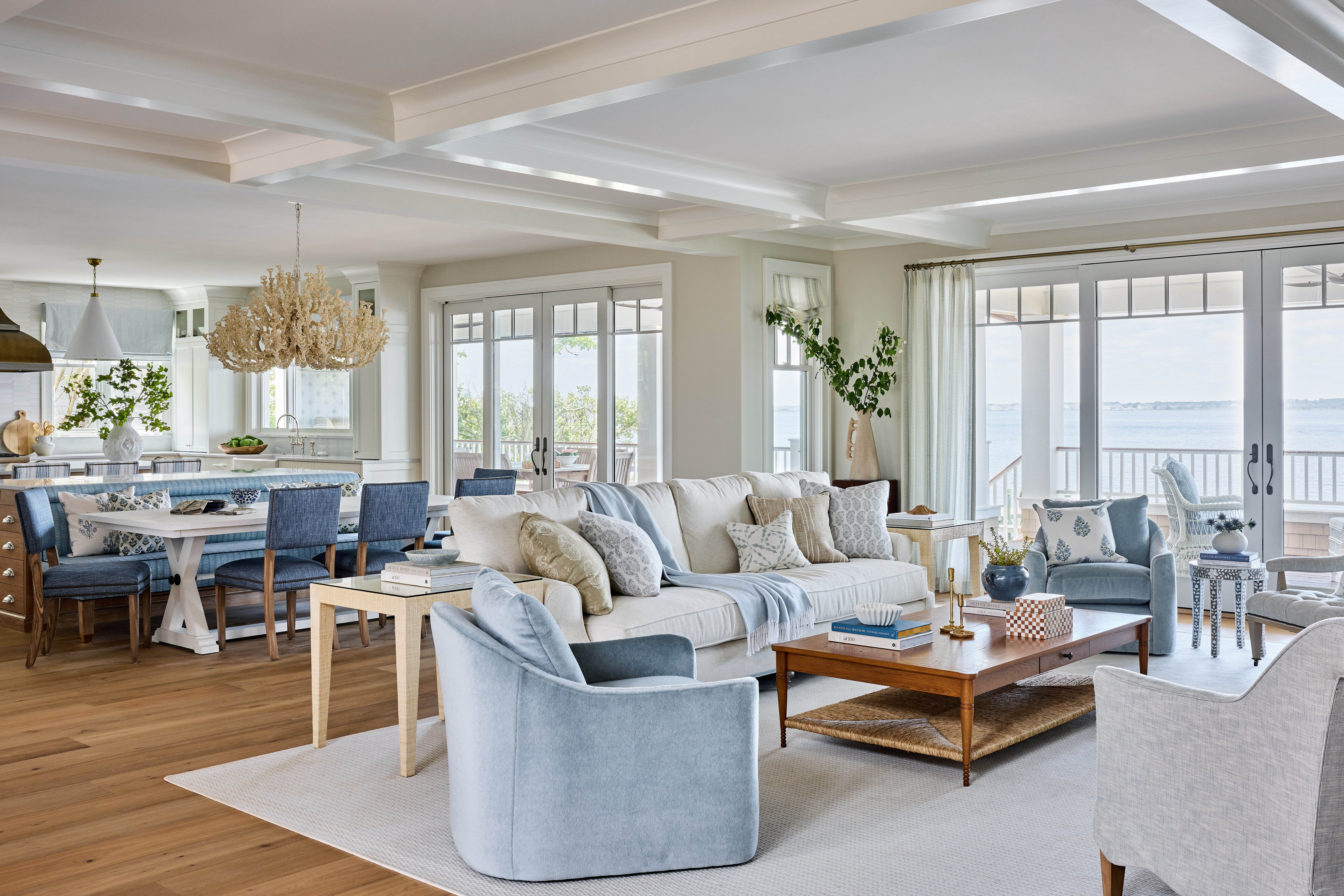
There’s a 6,500-square-foot house on the bay in Mantoloking, New Jersey, that interior designer Alma Russo lovingly refers to as 33 Grandbabies. At first glance, the moniker seems like a straightforward enough description of the family that lives there, but here’s the kicker: Some of the homeowners’ five children are still in college, and only a couple are married. The current grandbaby count is zero.
“They just really love the idea of having this respite for the family but also, culturally, there’s been a shift,” says Russo, whose firm, Sea Girt–based AR Interiors, specializes in multigenerational beach houses on the Jersey Shore. (Case in point: One of her clients employs a Google spreadsheet where family members can reserve dates to stay at the house.) “People have been living longer due to active lifestyles, have more energy, and are more conscious of being present for and enjoying that next generation,” she explains.
Enter the family compound. The concept isn’t new: Every elite group from the feudal lords to the robber barons understood the importance of consolidating property for future heirs, as well as the benefit of having a protective enclave of one’s own, far from the prying eyes of outsiders and the perceived perils of modern society. The Kennedys famously have one. So do the Bushes. The Waltons have bought up properties around Bentonville, Arkansas, making the town their home base. But multigenerational living isn’t just for political dynasties and corporate scions. According to a report by the National Association of Realtors, 17 percent of homes purchased last year were multigenerational, the highest number on record. On the lower end of the market, the decision is economical, as many purchases have been fueled by rising mortgage rates and home prices. Intriguingly, financial factors may play some role at the high end too.
Affluent clients are building family compounds partially as investments—land tends to hold its value—but also with an appreciation that the financial stability of future generations is uncertain. “You can’t ignore those economic influences,” says New York–based architect Gil Schafer, who is currently working on six multigen properties, including one in the Caribbean and another on “a couple thousand” acres in the South. “It’s harder for kids to buy their own homes, so there’s value in having parents who have a big place to come to. It’s this idea of the forever home. It’s not just for us, it’s for the next generation. It’s harder to see how the next generation is going to create that for themselves, so it might be more realistic to pass that down if the kids can figure out how to hold on to it.”
Still, for most high-income homeowners who choose to build these compounds, the impetus is less economically driven and more rooted in intimacy: They just want a place to gather—to make memories, strengthen connections, and maximize time spent with grown children and grandchildren. Many younger boomers are eager to entice adult children back home and create the kind of camaraderie that can be passed along—among siblings but also cousins and extended family—for generations to come. That’s a tale as old as time, but its resurgence may be a response to the pandemic and the complicated technological advancements that have defined the last decade.
“In the old days, you would hear about downsizing, and now everyone seems to want to upsize,” says Schafer. “I think that was something that was flashed on during Covid. You would hear stories of the generations coming back to stay with the parents, and I think parents thought it was fun to have their children around—like, ‘Wow we can have everyone around us; we just need more space.’ And people realized that they had to create their own entertainment in a sense, because you couldn’t go out anywhere. I have found that more and more people want to create these little worlds where their home is, that their children and their grandchildren will come to. It’s the idea that if you build it, they will come.”
Kevin Clark, senior principal at the Atlanta architecture firm Historical Concepts, who is currently working on a 300-acre family compound, says that the rise of AI and the dominance of social media may be pushing us toward connection. “At the root of it all, we’re still humans, and all of those things that have happened that have been pretty traumatic over the past decade have taken us away from our inherent basic natural instinct, which is to interact and thrive together. So it does not surprise me at all that people are yearning for this. The idea of creating pastimes feels so rich to all of us.”
Covid also changed attitudes toward time away, according to Matt Kelly of Kelly Builders & Developers in Oceanport, New Jersey. “If you look at the economics of how much you spend on vacations, people are saying, ‘We can put it toward a house, and even when we’re gone, this can be a legacy for our family,’” he says. “During Covid, no one was traveling, and they realized, ‘We don’t have to go to an island. We can be together at the beach and have a great time, and we can do that year after year.’”
Designer Jennifer Hoey of Suede Studio in Ketchum, Idaho, has also seen an uptick in requests for large family vacation homes throughout the Mountain West region. “I think Covid changed the mentality of a lot of people and how they work,” she says. “With that flexibility came an opening for more time being spent in other regions, such as the mountains. There’s so much outdoor activity that it’s attractive for people of all ages, and you’re just surrounded by so much beauty that people don’t have on an everyday basis. It’s pretty compelling for a lot of people.”
Her work centers primarily on high-end estates in private club communities, which often range from 10,000 to 15,000 square feet. Many of these properties are being built by a surprising number of people who fall into the Gen X and elder millennial categories, clients with disposable income who are increasingly seeing land as a way to maximize their wealth and create a legacy for their young children but also set the stage for family connections to take root. “Most of the work I do is larger houses that have places for everybody, and that’s primarily because families want to be together under one roof. They’re on vacation and they want to promote that intimate nature of why they’re there. They’re creating their own memories and experiences, surrounded with a lot of amenities that support that.”
To that end, many of these structures are taking on a resort-like quality, with luxuries designed to keep a variety of ages entertained—now and into the future. Pools, gyms and cabanas are standard, but the new family compound boasts wellness centers (think saunas, hot and cold plunges, and massage rooms), as well as specialty spaces like wine cellars and movie theaters. Schafer recently installed a bowling alley at one property and an entertainment barn at another.
“I think we’re just seeing a lot more variety of these kinds of properties, where 25 years ago it was more of those three-acre projects with one to two guesthouses,” says Clark. “In the last five to 10 years, they’ve become more multigenerational and amenity-focused.”
There’s also the hospitality component. Designers aim to achieve a level of comfort for a diverse roster of guests, from newborns with nap schedules to college kids with too-late bedtimes, plus in-laws, business colleagues, and friends who feel like family. For that reason, a family compound—a primary home with several secondary homes—is often preferable to a single massive home: Fitting all of those considerations into a series of structures linked by courtyards, meandering paths and outdoor gathering areas transforms the experience from a visit to a getaway.
“You can get creative about how you arrange the buildings,” says Schafer. “It’s better architecturally to have several cottages that are more scaled to the place so the buildings don’t overwhelm the landscape. You can nestle them into the landscape more easily if you can break the program into different building parts, and then it’s fun to go between the different buildings.” (Clark agrees, but adds: “That said, if somebody wanted to hire us to design the next Biltmore, we would say, ‘Absolutely, we can make that beautiful.’”)
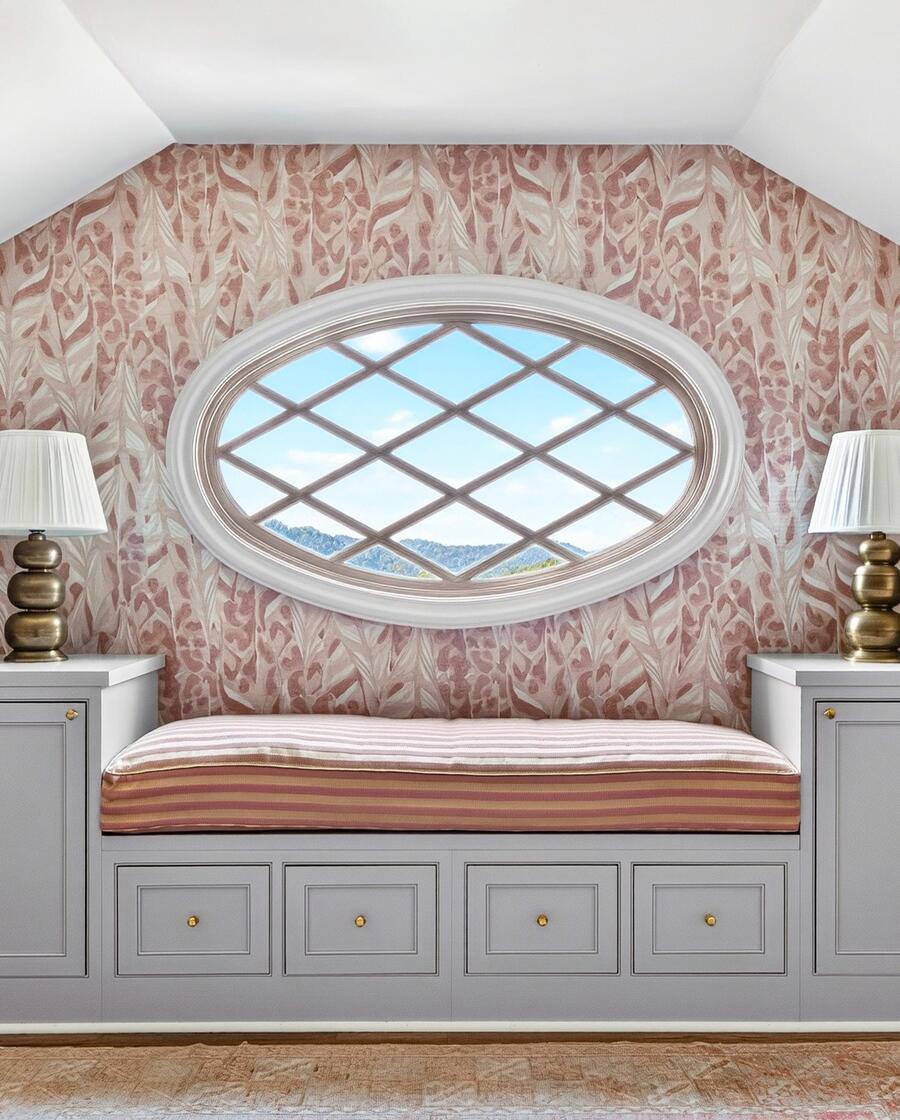
The more approachable scale also preserves privacy for residents, with designers establishing separate entrances, refrigerators, and coffee and beverage bars—the better to gather your thoughts before facing a table of 20 first thing in the morning—and tucked-away daybeds and window seats for when residents prefer quieter moments or alone time. “The benefit is that you get to have destinations that are speaking to different people at different times,” says Clark. “Not everybody has to do the same thing at the same time.”
“That’s part of the task of this,” says Schafer. “I want to be careful that it doesn’t look like a resort—it still has to feel like home. It should still feel personal and tailored to each family.”
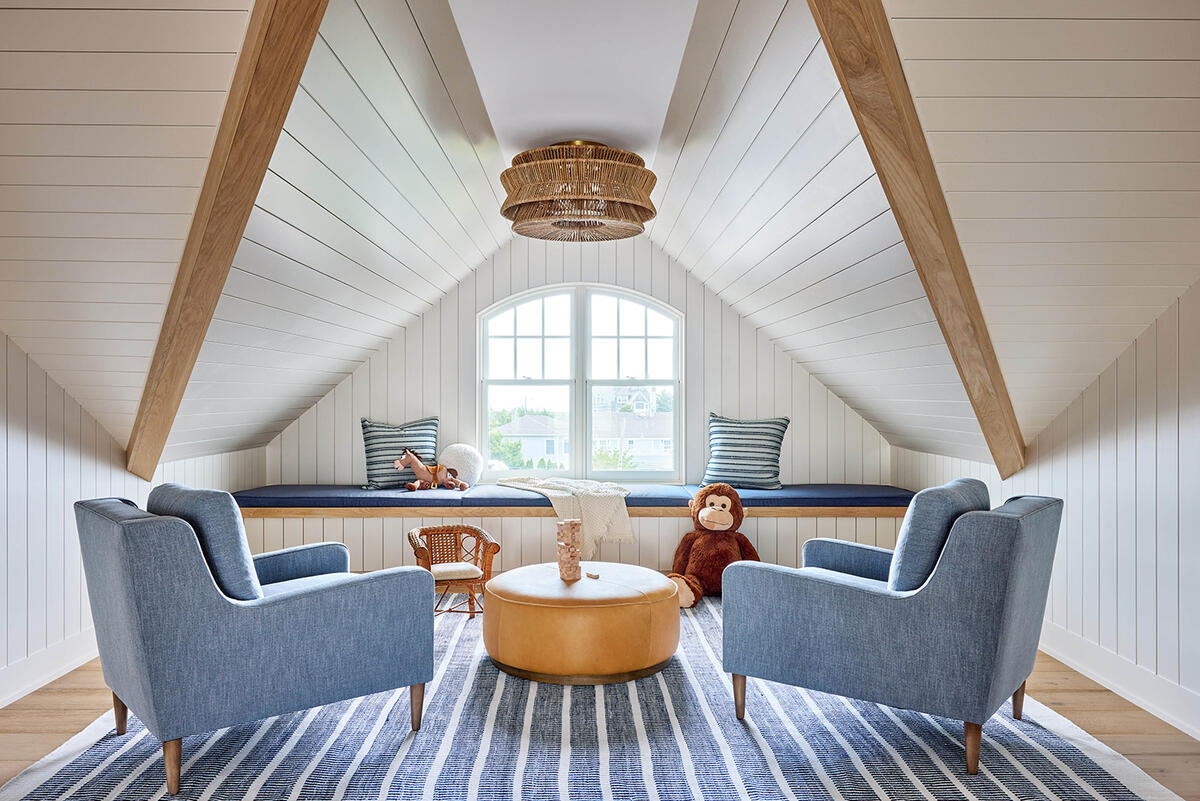
Yet the question remains: Given the variable nature of these homes, how do you design for a situation that is constantly in flux, and for residents who don’t yet exist? With flexibility and durability—everything is designed to transition into something else. “You have to appeal to all age groups,” says Russo. “In the playroom in 33 Grandbabies, a 12-year-old can sit up there with a book, or play games with [a] 10-year-old, but you can also have a 3-year-old with a tea set.” She incorporates bunk rooms to maximize sleeping quarters for children and, eventually, unexpected college-age guests.
Whatever the age group, the spaces are created with crowds in mind. Russo employs heavily textured or performance fabrics in stain-hiding patterns. Schafer installs beadboard in high-traffic areas like stair halls to conceal any dings or dents. Kelly adds increased insulation in private spaces to help isolate sounds and enhance privacy. And Clark positions alternative gathering spaces like screened-in porches away from bedrooms to minimize late-night disturbances.
“Everything is future forecasting,” says Clark. “Everything we do is through the lens of ‘How do you want to live? How do you want to entertain?’ The answers are really personal to each family. A kid is going to grow up, and maybe she’ll come back with a boyfriend, or a spouse. Maybe it’s a spouse that you like; maybe it’s a spouse that you don’t like. Maybe a future daughter-in-law might enjoy having a cup of coffee without having to get dressed and come down to the kitchen with everyone else. So many of those conversations result in design moves that we make to accommodate that future.”






 Withdraw Consent / Manage Privacy Preferences