




For a long time, the formula was simple: If you wanted to get your work published in magazines, you could hire a PR firm with a track record of landing projects in national shelter titles, with the expectation that within a couple of years you’d have a glossy print feature (or two) to show for all your efforts. The only problem? That’s not how it works anymore.
If you’re feeling like it’s impossible to get published these days, you’re not alone. “The opportunities were vast pre-recession, but it’s getting harder every day to land stories in print magazines, even in digital publications,” says Erik Perez, founder of Los Angeles–based public relations firm Hello PR Group. Now, the game has changed, driven by the one-two punch of a changing media landscape and a proliferation of talented designers. “There’s just so much great work out there,” he adds.
Designers across the industry are learning that the tried-and-true methods of landing traditional editorial placements no longer guarantee success. The truth is, what shelter magazines can offer is more limited—and demand for that real estate is more competitive—than ever.
Part of the reasoning is basic math. If a magazine has 10 issues per year, with eight home features in each, that means just 80 chances for placement. In the case of Architectural Digest, that’s not enough spots to account for everyone in the AD100, let alone every other designer in the industry. (And that’s a generous count. Over the past decade, most shelter magazines have reduced their publishing frequency and their pages, limiting how many projects they have room to feature.) The sheer volume of talent vying for attention means most won’t ever get their projects into print. And while editors may deny it, many of them have preferred networks of designer friends, some of whom repeatedly appear in their magazine’s pages, further narrowing the field.
There are also the usual editorial constraints. “It’s not just about having a gorgeous project,” says Jenny Bradley Pfeffer, a former shelter magazine editor and the founder of New York brand development and PR firm Domicile Creative. “You’re dealing with timing, seasonality, issue themes, geographic mix. There are so many beautiful projects you have to turn away as an editor. There just isn’t the space.”
Bleak as the realities of the publishing landscape seem, many designers haven’t given up on print. “In every conversation we have with clients, they all still want print—it’s everyone’s goal,” says Pfeffer. “We try to manage expectations. Before we sign anyone, we let them know that this is a long game: It takes a lot of patience, and there’s going to be rejection.”
To meet the continued demand for print placements, PR professionals are rising to the challenge in surprising ways. Pfeffer says the first step is to have an honest dialogue with clients to identify which projects have the most editorial potential. To give those homes the greatest chance for success, she encourages them to invest in photography and styling that tells a concise, compelling story—all with the knowledge that it may take years to land that project in a print publication.
The upside: That outlay is a good idea even if those images never appear in print, as they can be used on social media or in a book down the line. And in the meantime, digital publications and regional magazines offer a more timely vehicle for getting designers the attention their projects deserve.
Knowing your goals—why you want to see a project in print—is essential here. “Part of the conversation is to ask our clients if they’re looking for something that’s a brand-builder to legitimize their firm, or if they are looking for leads,” says Pfeffer. “If they’re really looking for leads, then there are alternatives to those national glossy spreads that we should discuss to get them out there a little faster.”
By all accounts, clients overwhelmingly come to designers through word-of-mouth, whether that be a recommendation from a former client, or a referral from a collaborator or industry peer. Social media and digital publications also play a key role in helping clients surface talent today; print, on the other hand, doesn’t have that same immediacy. (As most published designers and publicists will tell you, no one goes viral from being featured in print alone.) While a feature in the national shelter magazines is still ideal for building brand awareness, Pfeffer points to newspaper outlets like The New York Times, The Wall Street Journal and Financial Times as better lead-generating alternatives for her clients.
Given the climate, it’s understandable that some might opt to skip print placement altogether in favor of marketing strategies with a more obvious return on investment. “Digital is the new print,” says New York designer Vanessa Katzen. “It’s often the smarter play, and the reach is global, not local. A well-placed digital story can far outlast a print feature, and coverage on a strong domain is an asset that compounds over time.” That also often translates to accessibility when it comes time to make an inquiry. “When I think about the kind of client I’m trying to reach, that person is doing research online before they ever pick up the phone,” she adds. “I want to be findable in that moment.”
Some firms even prefer to be published in the digital version of an established print brand. “The landscape has changed, largely because of social media,” says New York designer Noha Hassan. “Very few people are buying physical magazines the way they used to, so we have had to adapt. For me, it’s important to be where our clients—past, current and future—are, as well as our peers. That’s largely in the digital space now. Being published digitally, especially by publications like Architectural Digest or Elle Decor, carries real weight and reaches a much wider audience almost immediately.”
The immediacy of digital is another selling point. Placing a project in print takes time—sometimes years—and not every firm is willing to wait. For younger designers who perhaps can’t afford to have a project shelved for two years, Perez advises clients to be strategic about how they share images on their social networks. “Don’t give away the whole pie—maybe share a vignette or just a couple of images,” he says. “We’re also asking our clients, ‘What are other ways we can use this content?’ Maybe they start a Substack. People are more open to that now because they know something that’s digital has a longer shelf life.”
But for others, a print feature continues to be a worthy milestone, even if it doesn’t immediately lead to clients. If great photography, expert styling and a compelling story still aren’t landing you a story, Perez says it’s time to get creative. “Years ago, most of what we did was print editorial placement,” he explains. “Now, it’s really about how we can find other ways to get our clients in front of potential collaborators or homeowners.” To increase their chances of being published, he encourages clients to attend industry and networking events to make more meaningful connections with editors, but also the architects, developers and vendors they’d like to work with. “The boundaries between PR and marketing are overlapping,” he says. “We’ll say, ‘Let’s do something at What’s New, What’s Next, or Discover ADAC, or Design LA.’ We try to find those opportunities for clients to be out there and preach what their work is about. A lot of times, the print opportunities come once their name is out there.”
That approach is putting PR professionals in an interesting position: at the intersection of traditional media placement, marketing and strategic consulting. “You really have to think outside the box, whether that means brand magazines, marketing materials, networking opportunities, video home tours—people are talking about Pinterest again,” says Pfeffer. “We’re looking for more nontraditional ways of promoting your firm versus strictly pitching projects to editors. People know that leads can come from a lot of different sources.”
It all raises the question: If designers are finding success in alternative marketing strategies, does being published in print even matter anymore?
Many designers think so. “I still subscribe to design magazines and love seeing the work of my colleagues in print and reading about the home, the design process and the clients,” says designer Rachel Sherman of New York–based Rachel Sloane Interiors. “I feel like it brings a project full circle to have it in print. It feels like it becomes part of design history—that something we worked on is now part of our culture’s design oeuvre is pretty cool.”
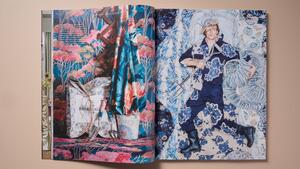
Longevity can be the deciding factor for a firm that wants to pursue print despite the obstacles: “Holding something in your hands is still the tops,” says Thomas A. Kligerman of Kligerman Architecture & Design in New York. “We embrace both the physical and the digital, but it’s wonderful when you walk into someone’s home, or into an interior designer or builder’s office, and see a copy of a magazine you’re in on a table or on a shelf. It’s just a reminder that in the real world, the printed page lingers.”


 Withdraw Consent / Manage Privacy Preferences