




The design industry descended on High Point, North Carolina, last week with low expectations. Amid ongoing tariff chaos, a troubled housing market and challenging economic headwinds, who could be blamed for thinking that Fall Market would be a dud? But those glass-half-empty prognostications couldn’t have been further from the reality. In fact, the prevailing attitude this season seemed to be—of all things—optimism.
TRAFFIC PATTERNS
Let’s start with the bad news: The event was not jam-packed, and most showrooms reported their attendance being down slightly or flat compared to Spring Market. The official registration data pegged the total number of attendees at down less than 1 percent from the April show, with large retailers and new buying companies up 6.9 percent and new buyers up 2.9 percent. Registration from non-stocking companies (that’s designers) was also up 1 percent. The most significant dip came, unsurprisingly, from international buyers: In that category, registration was down 10 percent.
The sidewalks were rarely bustling, and for once, it wasn’t a fight to snag a good parking spot—many lots, usually maxed out by 9 a.m., never filled. (One attendant said traffic in his lot was down 14 percent from April.) But that may also speak to the continuing spread of High Point attendance over a full week, with many of the big retailers showing up as early as Tuesday or Wednesday and rolling out of town by the time Market officially opens on Saturday. It’s not just retailers driving the trend: Designers who want the best antiques had scoured the show to tag their picks long before the weekend.
Even if showrooms scanned fewer badges, the designer customers they did meet seemed downright enthusiastic about the state of the industry. They had projects in the works, and they were at Market to soak up some inspiration. Most showrooms don’t base their success with the design trade on written orders during the show—but across the board, those keeping tabs on their retail clients’ orders said business was markedly up (often 10 to 20 percent) compared to spring.
Most exhibitors admitted that they had arrived in High Point with little hope of a great week. But the enthusiasm from attendees seemed like just the jolt the industry needed, and by midday Saturday, everyone seemed to have a spring in their step. It wasn’t the best of times—those economic headwinds are still on the horizon—but at least for the long weekend, it wasn’t the worst of times either.
TARIFF TALK
One word that was rarely on anyone’s lips? Tariffs. While landing on a strategy in the months leading up to the show put many brands through the wringer, by the time they opened their doors, the hard work was done: Prices had been assigned. That clarity was palpable, and exhibitors reported that most clients weren’t even asking about tariffs. They were just shopping.
How brands landed on that posted price varied widely. Many have been involved in extensive repricing exercises for the past six months—a laborious process that has gobbled up team members’ time and energy as they adjusted the price of each item to the impacts of global trade drama on production costs. Others raised prices across the board—3 percent here, 6 percent there—and hoped that better margins in some categories would offset the squeeze on others. Others still have continued to call out tariff surcharges as a separate line item, which is listed alongside the retail price. Reactions from the design community were mixed, but also muted. Some preferred the transparency a surcharge provides; most just wanted to know the final dollar amount and how long it would hold.
For domestic upholstery brands, wrestling with fabric grades was the biggest challenge coming into Market. Duties on China and India, especially, have caused Grade A fabrics (the most affordable tier) to all but disappear, and many executives were scratching their heads about how to round out their offerings as what was once a Grade D jumped into the more premium G category.
KITCHEN AND BATH MAKES A SPLASH
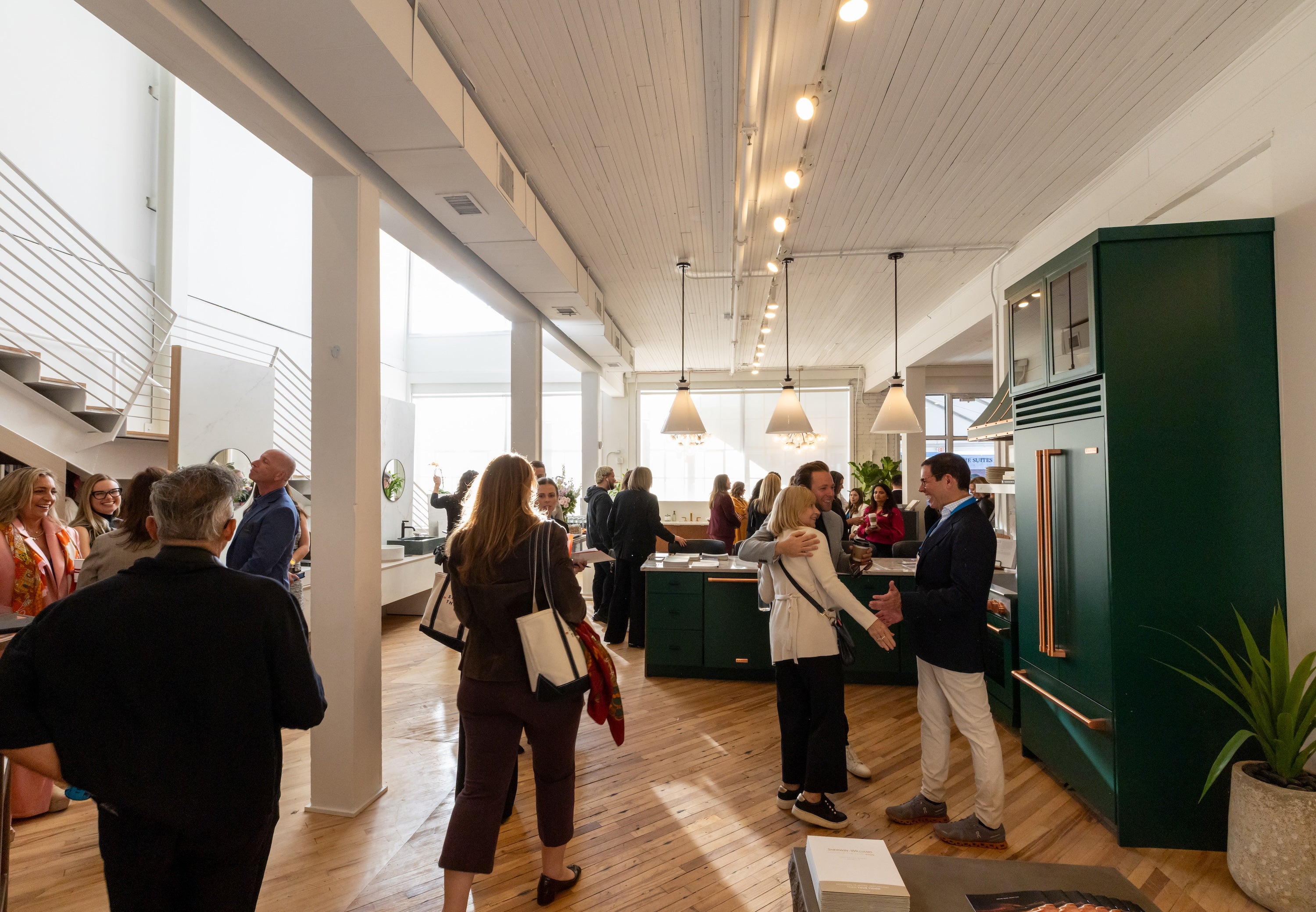
The buzzy news this season was the National Kitchen & Bath Association’s big move into Broad Hall, with a ground-floor takeover that showcased product displays from 16 exhibitors and a jam-packed programming roster. In addition to planting a clear flag for the category in High Point, the showroom space itself was a savvy cross-pollination of brands, with Lutron shades over a James Martin Vanities display, and a striking jade green kitchen that showcased appliances from BlueStar, cabinetry from Fabuwood, wash station organization from Blanco, surfaces from Cosentino, and countertop charging from FreePower.
That wasn’t the only place the category was popping up. Unique Kitchens & Baths built out several kitchen scenes at 313.Space, including its new line with designer Jess Weeth. Meanwhile, Cambria occupied prime real estate near the cafe in InterHall, where it showcased uses for its surfaces on everything from flooring to fireplaces, and vanity programs continued to be top of mind for brands like Currey & Company and buzzy British brand Buster + Punch, which have both recently entered the category.
ARCHIVE DIVE
Traditional design is making a comeback—and the trend saw several big-name brands dipping into their archives. This trend was most apparent at Baker, which brought back 24 designs from its storied past. For anyone who had attended the furniture maker’s Friday night parties back in the day, where new collections used to be unveiled with great fanfare, this assortment felt like a trip down memory lane, with the return of everything from classic Barbara Barry upholstered pieces to a statement chair from Laura Kirar with jewelry-like carved details down the back.
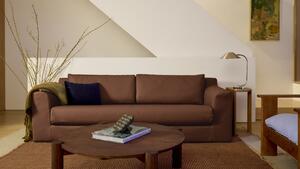
Hickory Chair revived a few designs of its own, rereleasing them with careful refinements for today. Often, that meant paring back some of the more ornate carvings and allowing the strong silhouettes to shine. And Mitchell Gold found some oldies-but-goodies in his archive over at Mitchell Gold + Bob Williams, including the charming London sofa dressed in a retro brown-and-ivory textile.
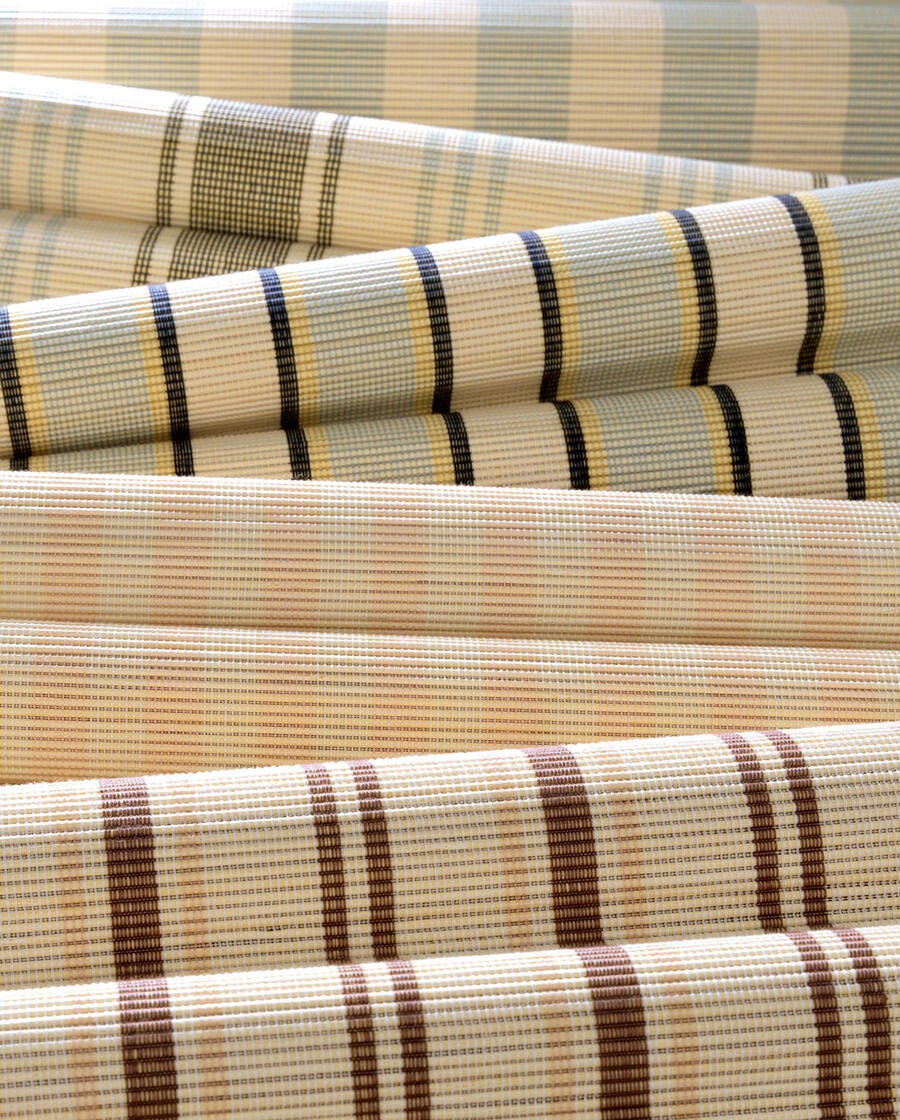
It wasn’t just the shapes that leaned classical this season: Menswear-inspired patterns were everywhere we turned. While showing us his new textile line for Trend, designer Vern Yip chalked up the phenomenon to the mood of the moment: “Clients are looking for something familiar that makes them feel secure, but that’s still fresh,” he explained. His designs answered that call, as did the new upholstery introductions from Burton James and Fairfield Chair.
HOT SPOTS
Hooker debuted its Margaritaville collection with great fanfare, including a ribbon cutting and a Coral Reefer Band concert at Center Stage on Saturday night. The assortment features four distinct lines that each represent a different expression of the brand: the playful, Parrothead-fueled St. Somewhere, with the most overt island inspiration; a coastal look with Island Reserve; a desert oasis of olive and beige textiles in Paradise Valley; and a more refined, neutral selection for JWB Signature, which was designed to represent Jimmy Buffett’s own style at home. While some items hit you over the head with vacation vibes (see: nesting coffee tables in the shape of a pair of flip-flops), the collection as a whole offers an approachable assortment of versatile shapes and breezy hues. Hooker also tapped several partners to round out the line, including a brilliant series of rugs from Surya that play with scallops and other wavelike motifs.
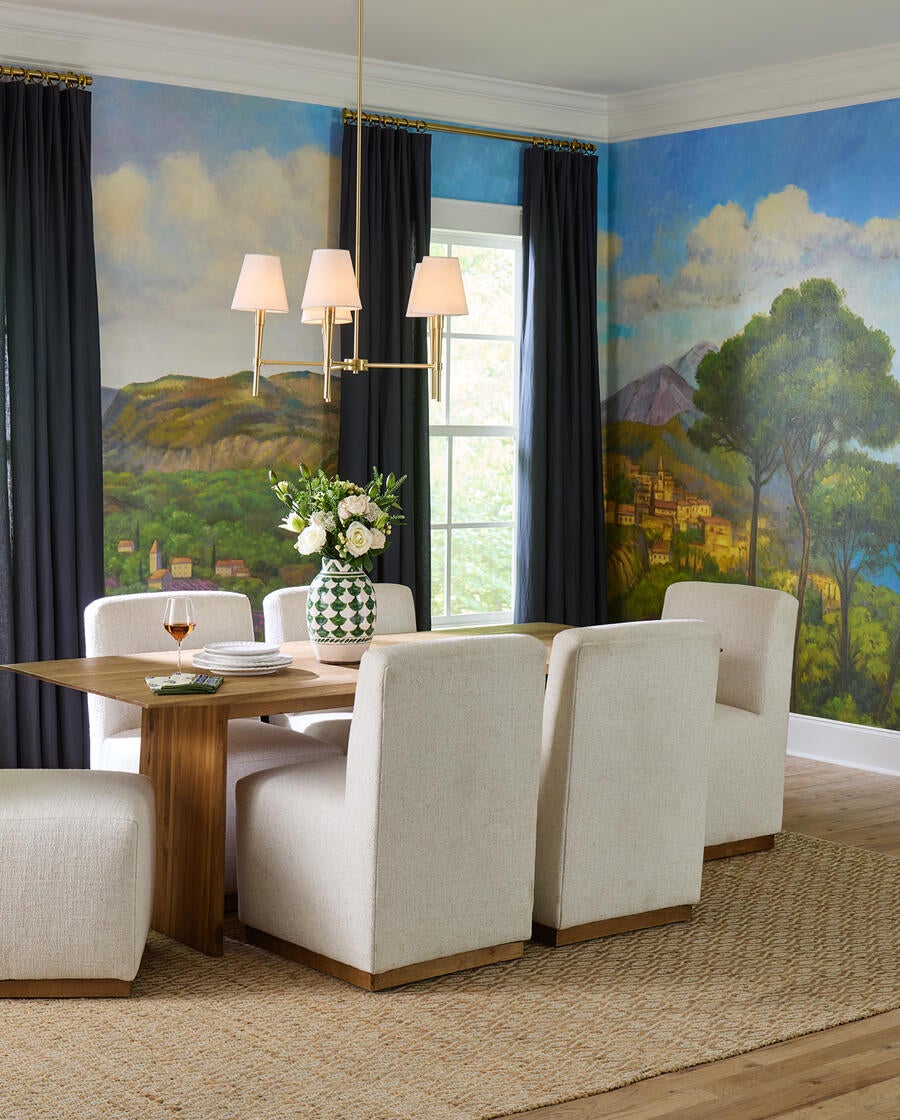
The best surprise of Market was hands down a series of sexy, 1970s-inspired vignettes at Vanguard, which featured low-slung upholstery in rich, earthy jewel tones and a series of mirrored accent tables. It was a master class in immersive merchandising, and our team was spellbound. We were similarly delighted by the joyful deployment of color and pattern at Taylor King. There, company president Nicole Bailey stressed that the industry’s Covid hangover had lingered far longer than we all realized—and that she had encouraged her team to push the limits with its displays in a bid to infuse the showroom with joy. It was an effective move, and she said customers had responded with gratitude.
Elsewhere, 313.Space continued to wow the designer crowd this season—this time with a more noticeable blend of large and small brands. The building’s cool factor has clearly attracted more well-established names as it opens for its third Market. Even so, several designers told me that they appreciated the way so many independent vendors are still included in the mix, and the booth-like open-air floor plan put all the exhibitors on more equal footing. The building’s continued evolution will be something to watch: Throughout the week, several brands in other multivendor spaces, like InterHall and Suites at Market Square, admitted they were considering a move to 313.
Noticeably absent from Market this season was Shoppe Object. After several seasons trying to gain a foothold on the third floor of Market Square, the High Point outpost of the beloved New York–based home and gift show did not return. Wayfinding had been a perennial challenge, and past exhibitors had grumbled quietly that the show wasn’t attracting enough foot traffic—those factors may have been enough for Shoppe Object to quietly call it quits in North Carolina.
WATCH THESE SPACES
Theodore Alexander opened its new showroom this month, putting the company squarely in the mix with its contemporaries, and further concentrating a designer-driven zone on North Hamilton. With a far smaller footprint, the brand now showcases primarily its newest debuts, and did so with great success—proof that sometimes less is more when it comes to showroom square footage. Other recent Hamilton Street transplants continued to settle in nicely: Bernhardt looked great for its second Market in the former Klaussner building (the brand, known for its all-white displays, even showed a few splashes of color this season); Burton James continued to shine at Hamilton Place; and inside 200 North Hamilton, Palecek showcased its prowess at transforming natural materials with a new dining table program, a deep outdoor assortment, and an array of fresh designs that showcase the company’s impressive attention to detail.
Over at IHFC, Jonathan Adler made its Market debut with a big corner booth in InterHall. Nearby, Williams-Sonoma also took over some prime real estate to tout its trade programs. Meanwhile, Barrett Bergmann struck a chord: The brand, helmed by designers Kyle Barrett and Dwayne Bergmann, returned for its second Market with a mix of hyper-customizable offerings in hard-to-spec categories like vanities and bedding, and had fine-tuned their collections (which also include fragrance and faux florals) to deliver designers a healthy margin. Upstairs, the glow-up continued at Moe’s—an elevated aesthetic shift perhaps best exemplified by an evocative display at the showroom’s entrance, a vibey cocktail lounge at the back of the space, and a collection of pieces in expressive, colorful marbles. Plus, a sleek refresh at Global Views—new branding, combined with a pared-back assortment and a fresh approach to its showroom display—heralds exciting things to come.
TREND SPOTTING
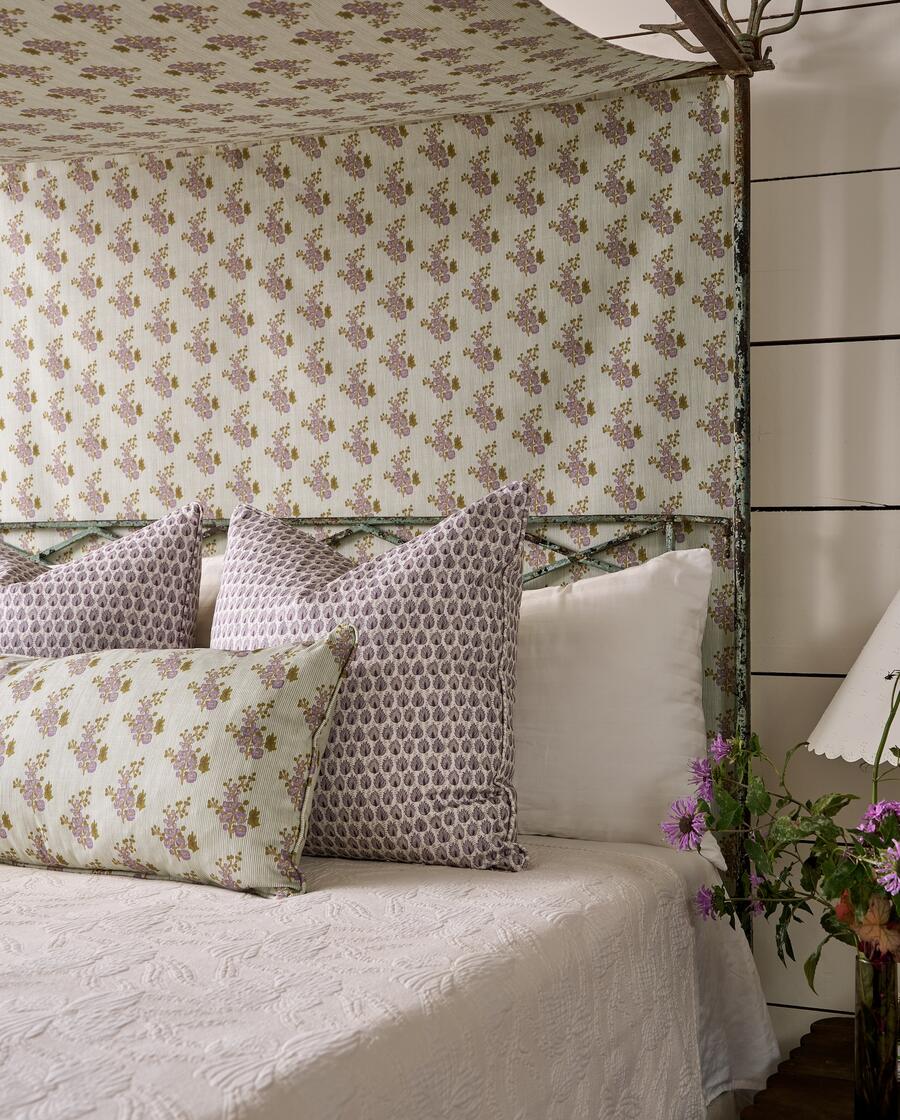
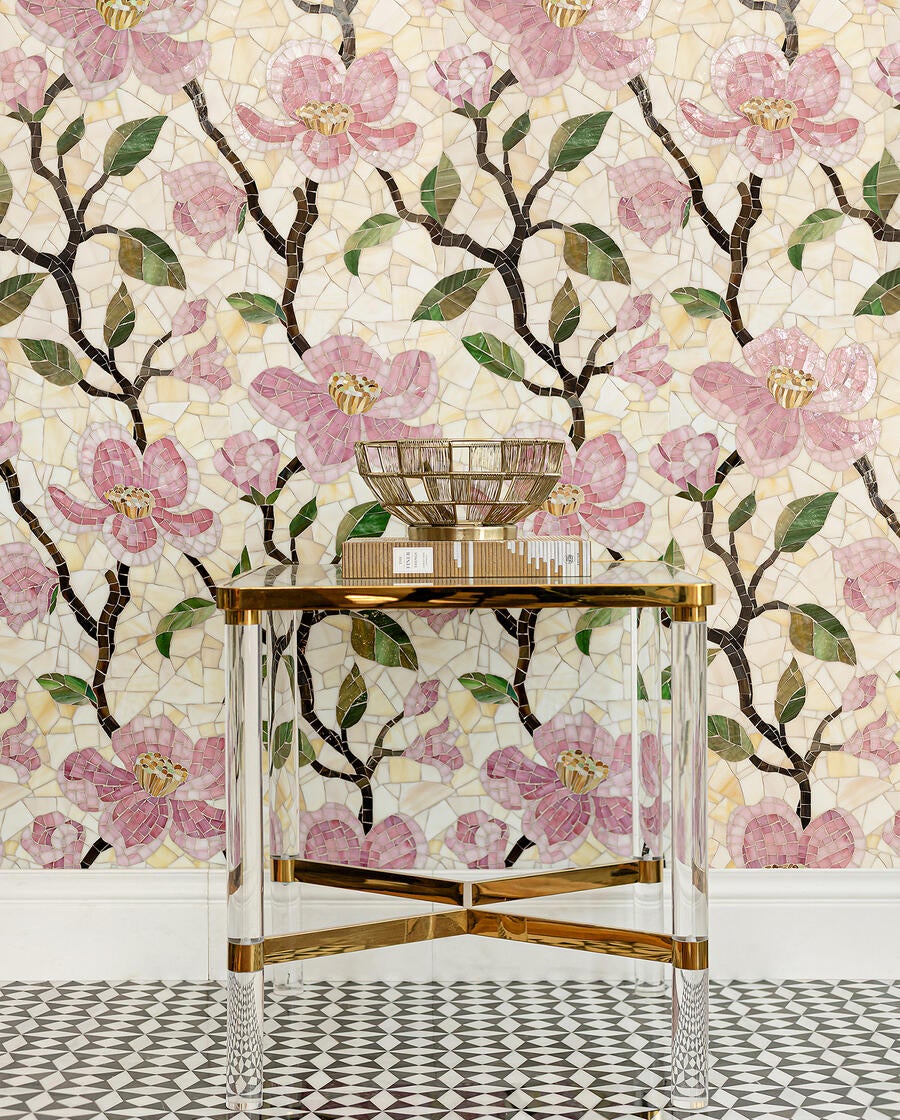
The biggest trend of all might have been mahjong. Driven by designer demand for game tables, manufacturers all delivered. Chaddock created an entire mahjong room, with its Bushmill game table lacquered in robin’s-egg blue and set against a backdrop of a playful floral wallcovering by Elliston House; we also spotted fresh takes on the hit game everywhere from Fairfield Chair and Chelsea House to Coley Home.
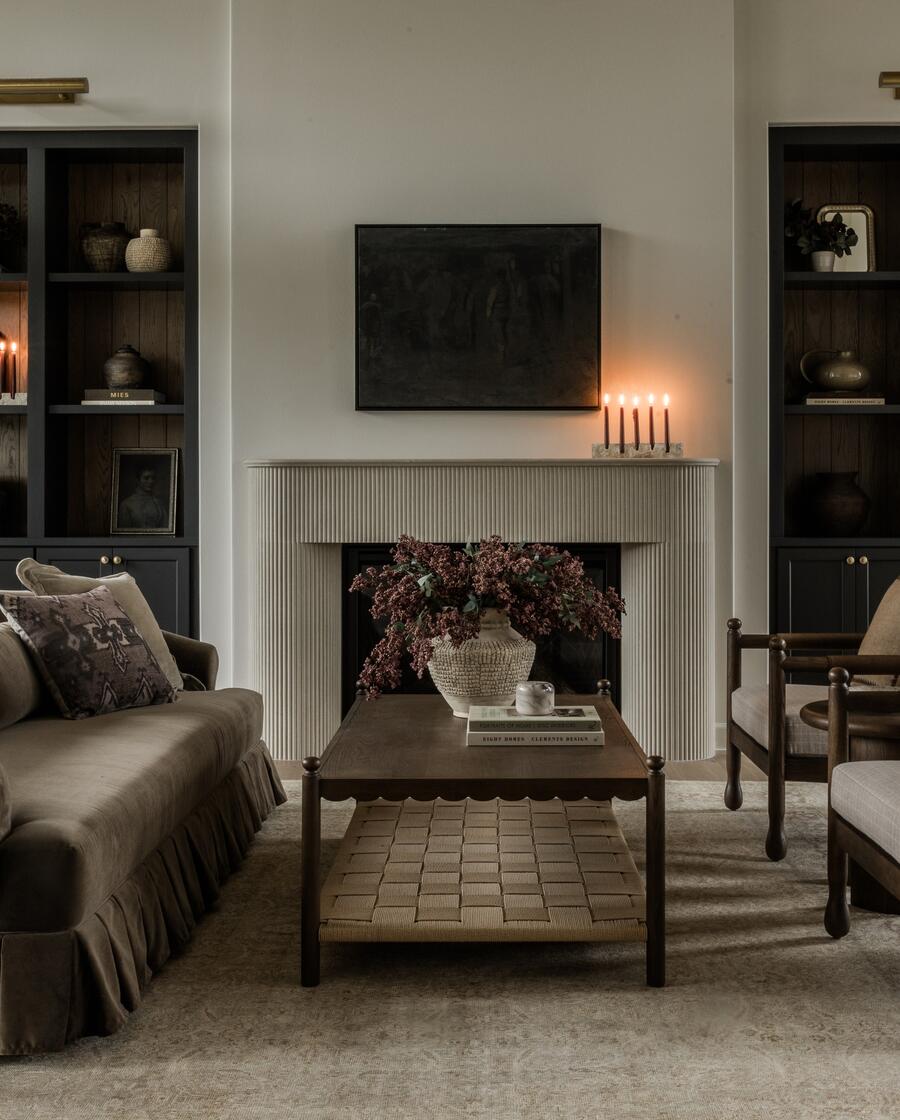
The feminine details like scallops, box pleats and ruffles that we saw in the spring were still abundant, but this time with more refinement and thoughtful details. A set of silk pillows with elegantly pleated corners at Highland House perfectly encapsulated the move toward elevated finishing touches; those motifs also appeared in surprising ways, like the scalloped cutout detail in Surya’s new outdoor woven line. Bullion fringe, tapestry-inspired textiles, and more traditional wood tones also made inroads; walnut is clearly mounting a comeback, and the burl details that have dominated the marketplace in recent seasons are shifting from yellow to warmer browns.
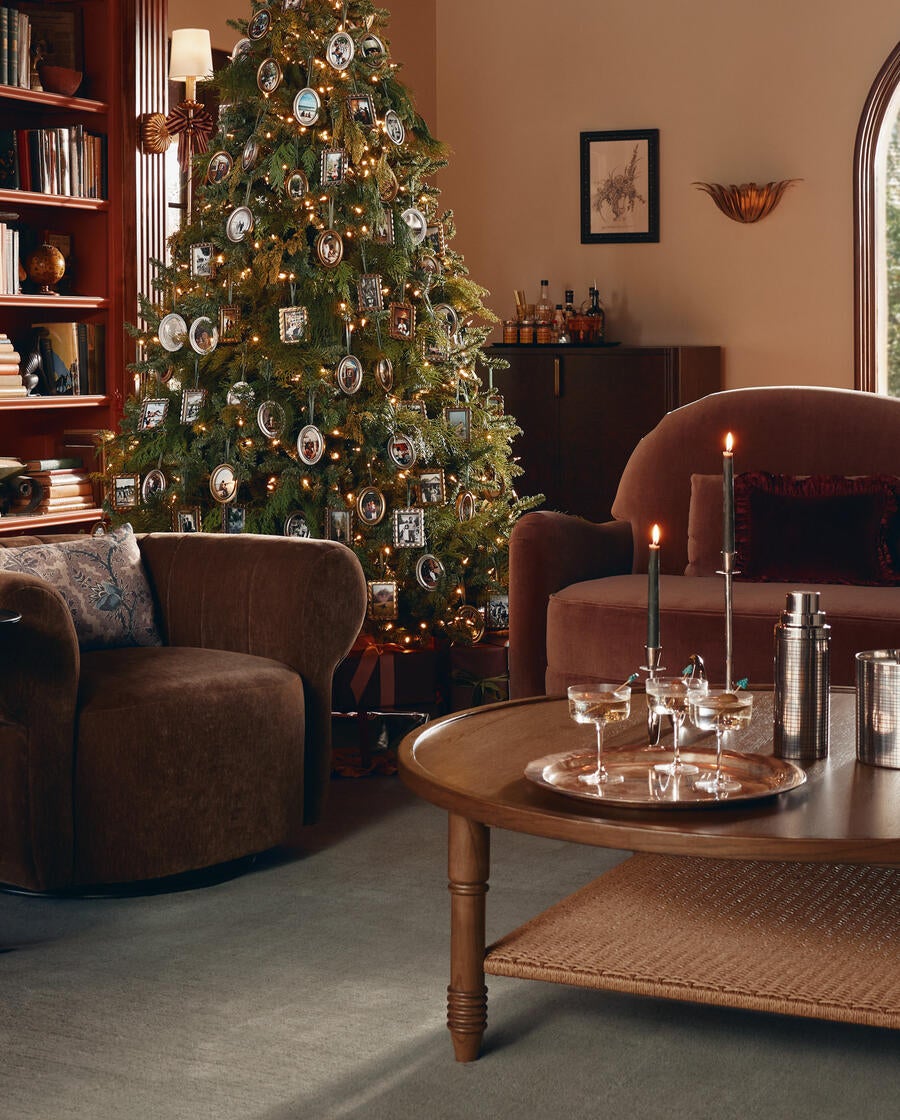
Warmth was trending in general, and so was color—saturated jewel tones and rich chocolate browns were everywhere we looked. All those TikTok videos extolling the virtues of “unexpected red” seemed to make an impact at Market as well, perhaps most notably in the aforementioned Moe’s cocktail lounge and Baker’s use of deep Bordeaux hues to showcase its new line from Orlando Diaz-Azcuy.
The other accent color of the moment was yellow. A sprawling living room scene at Verellen blended striking saffron textiles with nubby oatmeal textures; over at Lee, a series of dining chairs that traditionally might have been displayed in a natural linen were dressed in a citron hue instead, and splashes of the same color in velvet popped throughout the showroom. Caracole, too, leaned into the butternut hue of its logo with a stunning display in the showroom’s entrance, and Taylor King showcased the color with a lively floral banquette.
The ultimate takeaway? As one brand leader told me, “Designers are coming here to shop, but they’re also coming to be inspired.” Across the board, brands who leaned into that impulse were the ones that made a lasting impact.


 Withdraw Consent / Manage Privacy Preferences