











Two weeks ago, the surprise announcement of new tariffs on upholstered furniture sent the industry scrambling. Importers called their overseas factories, and analysts revised their stock market predictions. Many domestic upholstery makers on the other hand—the supposed beneficiaries of the policy—are reacting with a shrug.
Meganne Wecker, CEO of Illinois-based upholstery manufacturer Skyline Furniture, says the new tariffs have not changed “anything significant,” adding: “The volume of calls has increased this week, but I haven’t seen any programs shift over.”
The devil is in the details. After President Donald Trump’s social media post announcing the news, there was rampant speculation that the new 30 percent levies on upholstered furniture would stack on top of the existing country-wide “reciprocal” tariffs, pushing duties up to a staggering 50 percent on Vietnam and 80 percent on India. As details emerged the following week, it became clear that the new tariffs were not “stackable” (except possibly on China). What’s more, the U.K. and EU would only face a 10 and 15 percent duty, respectively, equal to what had already been in place.
All in all, the new tariffs raised import costs on some key countries (Vietnamese upholstery, for example, will ultimately come in at 30 percent as opposed to 20 percent) and slightly shifted the landscape, but the duties do not appear to be high enough to upend it completely. The result has been a familiar one for U.S. makers in the tariff era: lots of interested phone calls, not a ton of concrete business.
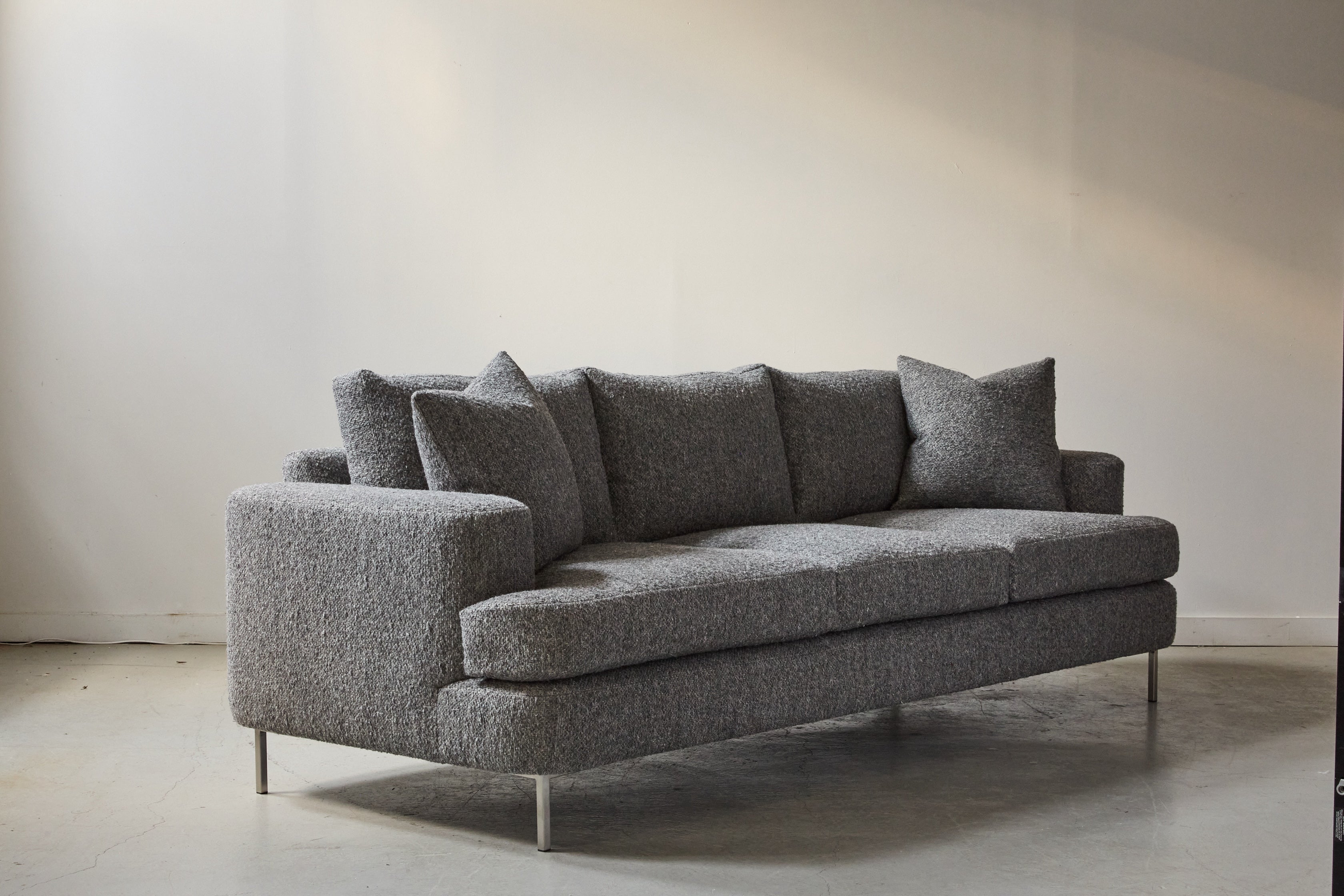
One of the underappreciated aspects of the global market for upholstered furniture is how segmented it has become. Unlike the case goods industry, upholstery has maintained a strong domestic manufacturing base. But U.S. makers tend to specialize in a more custom, higher-end product made in small batches for boutiques, designers and upscale retailers. By contrast, overseas producers often specialize in huge orders of mass-market sofas and chairs favored by giant retailers like Wayfair or HomeGoods.
Even with 30 percent tariffs layered in, many Asian producers would still come in cheaper than their American counterparts. Furthermore, the former are able to work at the volume that big-box sellers require. Even if domestic makers are able to match an import price, most would struggle to handle a rush of new orders.
If there’s a middle ground up for grabs, it’s the national “lifestyle” chains that import a lot of furniture, but often from pricier overseas factories. There, the main challenge is that the overall landscape is so volatile, no buyer wants to make a big switch. Many domestic makers face a catch-22: The tariff turbulence leads to interest from new customers, but it makes finalizing a deal infinitely more difficult.
At the very top, it’s almost as though the tariffs don’t exist. Local workrooms that specialize in completely custom pieces for designers are operating in such a different part of the marketplace that a slight hike on Southeast Asian sofas has the same impact as news of rain in Peru—none.
“Mid-market is going to get squeezed a lot more than our target market,” says Blake Anding, owner and president of New York custom upholstery maker Classic Sofa. “Clients that are willing to pay a premium for quality manufacturing and who are purchasing the best fabrics, from the silk mills of Italy to the wool mills of Scotland, are not blinking.”
Meanwhile, some domestic manufacturers say that they’ll become more price-competitive in light of the tax hike on European product. Some of the companies that were already doing white-label manufacturing for retailers say their order books are full. And all agree that it’s too early to assess the full impact of the tariffs.
But optimism is usually balanced against the worry that their marginal gains will be outweighed by the disruption tariffs bring to the broader ecosystem. That’s especially concerning for makers that—after two years of post–home boom crunch—had a surprisingly good summer, and want to see it continue.
“There’s a concern that all this noise is going to continue to dampen consumer confidence and hurt overall demand for furniture,” says Tim Stump of Stump & Company, an industry M&A advisory firm. “That’s the big question.”









 Withdraw Consent / Manage Privacy Preferences