










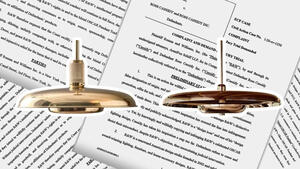
In news no one saw coming, Utah-based design power couple Shea and Syd McGee are taking the U.S. government to court. The subject of the lawsuit? Tariffs.
Submitted to the U.S. Court of International Trade in December, the complaint looks to do two things. First, have the court affirm that President Donald Trump’s global tariffs are unlawful. Second, secure repayment of “any such unlawful tariffs.” In plain English: McGee & Co. is suing for a refund. (Through a representative, the company declined to comment.)
In doing so, the McGees join a group of hundreds of companies that have filed suit against the U.S. in the hopes of clawing back some of the hundreds of billions in tariff money paid out since last February. The list is a diverse one. Large corporations like Costco and Revlon have sued, but so have small businesses, including a company that publishes board games and a children’s apparel brand called Princess Awesome.
McGee & Co. is not the only brand from the broader home world to sue the government—the full list includes a handful of lighting and tile companies, as well as plumbing and HVAC supply giant Ferguson and foam supplier Consolidated Foam.
The rush of lawsuits is the latest chapter in the long legal battle over the president’s trade policy. Many of Trump’s tariffs—including the country-specific duties announced on “Liberation Day” last April—were implemented under a 1977 law called the International Emergency Economic Powers Act, which gives the president broad authority to regulate economic transactions during a national emergency. At the time, legal experts were questioning whether IEEPA was meant to grant such sweeping tariff power to the president. Still, even as lawsuits piled up, most observers doubted the Supreme Court would ultimately step in.
Then, a surprise. In November, the high court heard oral arguments on an IEEPA case, and the justices seemed surprisingly skeptical of the government’s stance. Overnight, conventional wisdom flipped, and Trump’s tariff policy went from a sure bet to a shaky hand. Importers who had resigned themselves to paying high tariff bills began to wonder if they might even get their money back.
Though each lawsuit varies in its specifics, they all amount to roughly the same thing: a place in line. If the Supreme Court does finally rule that the IEEPA tariffs are unlawful, it will likely kick off a massive legal scrum as thousands of companies rush to try and recoup their losses. The companies who have already filed a lawsuit are betting that by getting a head start, they’ll be more likely to collect a refund.
McGee & Co.’s lawsuit doesn’t specify a dollar value to the tariffs it has paid; however, it’s no secret that the president’s trade policy has led to furniture companies across the country forking over millions in duties. Indeed, it’s somewhat striking that the long list of companies suing the government doesn’t include the big upholstery or case goods importers.
One executive of a large home goods importing business—who asked for anonymity to candidly discuss the topic—expressed a wariness about wading into the complex legal fray. “I believe [the Supreme Court] will find some middle way, and there won’t be big refunds. Plus, the president has other ways of collecting tariffs if [IEEPA] fails,” they said. “Even if you get a refund, what happens if your customers sue you to get back what they paid? It just becomes a mess.”
However, for some looking back at their 2025 tariff bill, it’s apparently a mess worth diving into.










 Withdraw Consent / Manage Privacy Preferences