














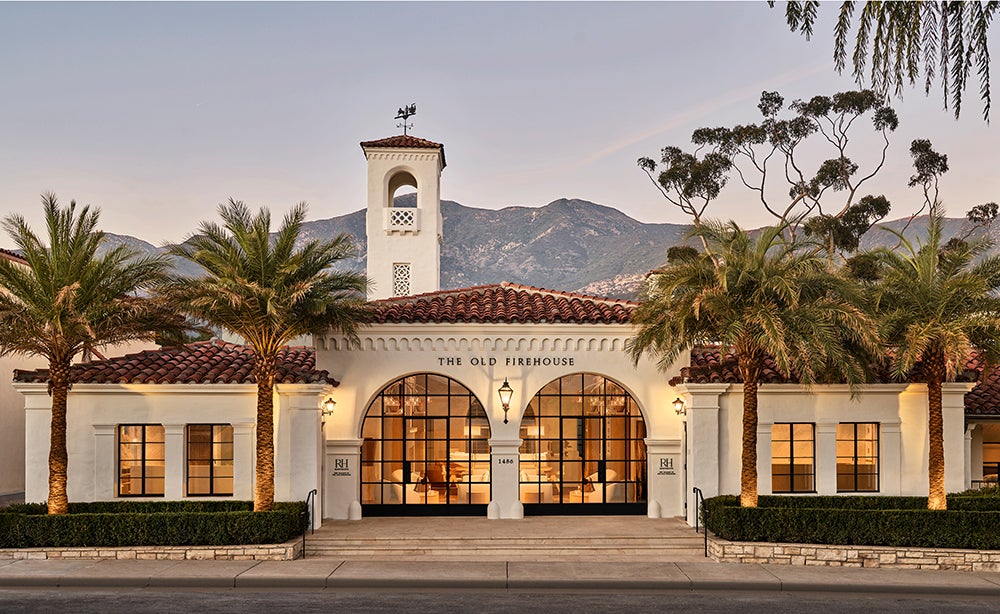

A longstanding industry feud has spilled into the open. Last week, Ohio-based retailer Arhaus filed a lawsuit in federal court against RH, claiming that the California company formerly known as Restoration Hardware had obtained and made use of Arhaus’s trade secrets. The case, first reported by the San Francisco Chronicle, asks the court to compel RH to delete the information and reassign a top executive.
The case is centered on Lisa Chi, Arhaus’s former chief merchandising officer, who decamped for RH in May. In a full-circle twist, Chi had worked for RH as a senior vice president prior to joining Arhaus in 2021. This year, she returned as president and co-chief merchandising and creative officer.
The lawsuit alleges that over the course of her time at Arhaus, Chi would routinely forward internal documents—some containing sourcing and financial information—to her personal email account. In Arhaus’s telling, earlier this year an employee sent Chi’s personal email a draft of the company’s Fall 2025 catalog, which the lawsuit refers to as “among the most closely-guarded trade secrets and pieces of Confidential Information” at the company.
The filing goes on to suggest that Chi shared the catalog with her new employers after she left Arhaus, and that “RH’s products and marketing materials [began] to resemble and replicate Arhaus’s products and marketing materials, including their product styles, collection selection, lifestyle imagery and catalog.”
Arhaus names Chi as a co-defendant in the case and accuses her of violating a 2022 confidentiality agreement. In addition to seeking damages, Arhaus asks the court to force RH to delete the data it allegedly obtained and to “place Defendant Chi in a position at Restoration Hardware in which she cannot utilize Arhaus’s Trade Secrets.” Both companies declined to comment on the lawsuit.
The practice of suing over the alleged transmission of trade secrets through a strategic hire is not an everyday occurrence in the home industry, but it does happen. RH itself, for example, drew headlines in 2017 for suing Crate & Barrel and two former executives who jumped ship, allegedly to help Crate start its own in-store restaurants. RH dropped the lawsuit in 2018.
As Arhaus has topped $1 billion in revenue and reached the 100-store mark in recent years, it has crystallized as one of RH’s key competitors for the upper end of the retail market. The rivalry is anything but friendly, and bad blood between Arhaus and RH has long been a poorly kept industry secret—vendors who work with both companies will, sotto voce, refer to simmering tension between the brands.
This is not the first time that tension has boiled over into a legal claim. Last summer, Arhaus filed suit against RH, alleging that the company had copied one of its popular chair designs, the Jagger (itself a reference to mid-century designer Dan Johnson’s Viscount chair). The complaint was not a dry rundown of copyright claims, but a charged accusation that felt almost personal: “After years of enduring RH’s copycats, RH’s recent launch of a facsimile of Arhaus’s highly popular Jagger chair design—which it named the “Arno” as a thinly-veiled challenge to Arhaus—is the final straw.”
RH never filed a formal response, but however the issue was resolved, it was resolved quickly: Arhaus filed to withdraw its case in October. As this new lawsuit demonstrates, it was only a matter of time until the next spark would come along to reignite the issue.







 Withdraw Consent / Manage Privacy Preferences