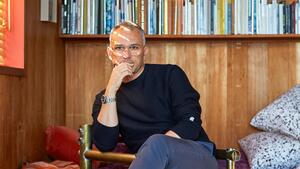







A lawyer by training with a background in banking, Sean Low was looking for a new job after 9/11. A friend connected him with event planner Preston Bailey, whose business was in debt, and Low quickly learned how to harness his unique skill set. “I figured out that I knew how to run his company and do things differently than he had ever done them before. … It started me down this road of saying, ‘Can we charge for creativity? Instead of making money on flowers, can we just get paid as an artist?’” he tells host Dennis Scully on the latest episode of The Business of Home Podcast. “I got so excited about the power of creativity, and thinking about different ways that artists can lead the world, that I just decided to start doing this for individual businesses.” After working with Vicente Wolf, he went independent as a coach, consulting with boldface names like Timothy Corrigan, Kevin Isbell and Nate Berkus. (He’s also BOH’s long-running advice columnist.)
Over his years working with some of the world’s top interior designers, he has noticed that no matter how successful they are, many firms let clients drive the bus—a habit they must break. “I’ve had really good fortune to work with so many women and gay men—I am incredibly prideful about that—and I think it’s something cultural in the idea that you have to somehow hide and be demure about what your needs are,” he says. “A lot of designers are really accustomed to being the moon, to being derivative to the power of their clients and whoever they’re working with. No, you need to be the sun. You need to go first.”
Elsewhere in the episode, Low discusses his hopes for AI in the industry; why designers should prioritize clarity, not transparency; and why they should charge for what they need, not what they can get.
Crucial insight: Low urges designers to set their pricing around their needs rather than endlessly tweaking their fee structure to maximize hourly charges. “What would make you feel: ‘OK, if I had this much money for myself, I would feel good?’ Everybody has a number, right?” he says. His philosophy is that designers should start there and work backward, letting that goal inform how many projects they take on, and what to charge. “It feels really grounded. … It’s ‘I’m entitled to live the life I want to live, and if I’m going to do this for a living, this is what I want.’ And I just think that’s a lot easier than, ‘I’m worth $200 an hour, and let’s see how many hours I can bill,’” he adds. “It stops you from chasing the dollar and trying to fit into these other things that never worked for you to begin with.”
Key quote: “[With pricing,] it’s not about transparency, it’s about clarity. … You would never walk into any store and say, ‘What’d you pay for it?’ … It feels so dismissive and patronizing to these amazing artists that it just feels self-inflicted. If I could rid the universe of that self-inflicted pain of ‘transparency,’ I would.”
This episode is sponsored by Ernesta and Resource Furniture. Listen to the show below. If you like what you hear, subscribe on Apple Podcasts or Spotify.
The Thursday Show
Host Dennis Scully and BOH executive editor Fred Nicolaus discuss the biggest news in the design world, including a fundraise for Ernesta, the ethics of AI, and whether Instagram has ruined interior design. Later, Chasing Paper founder Elizabeth Rees joins the show to tell her company’s story and talk about its new fabric line.
This episode is sponsored by Loloi and Newport Brass. Listen to the show below. If you like what you hear, subscribe on Apple Podcasts or Spotify.