







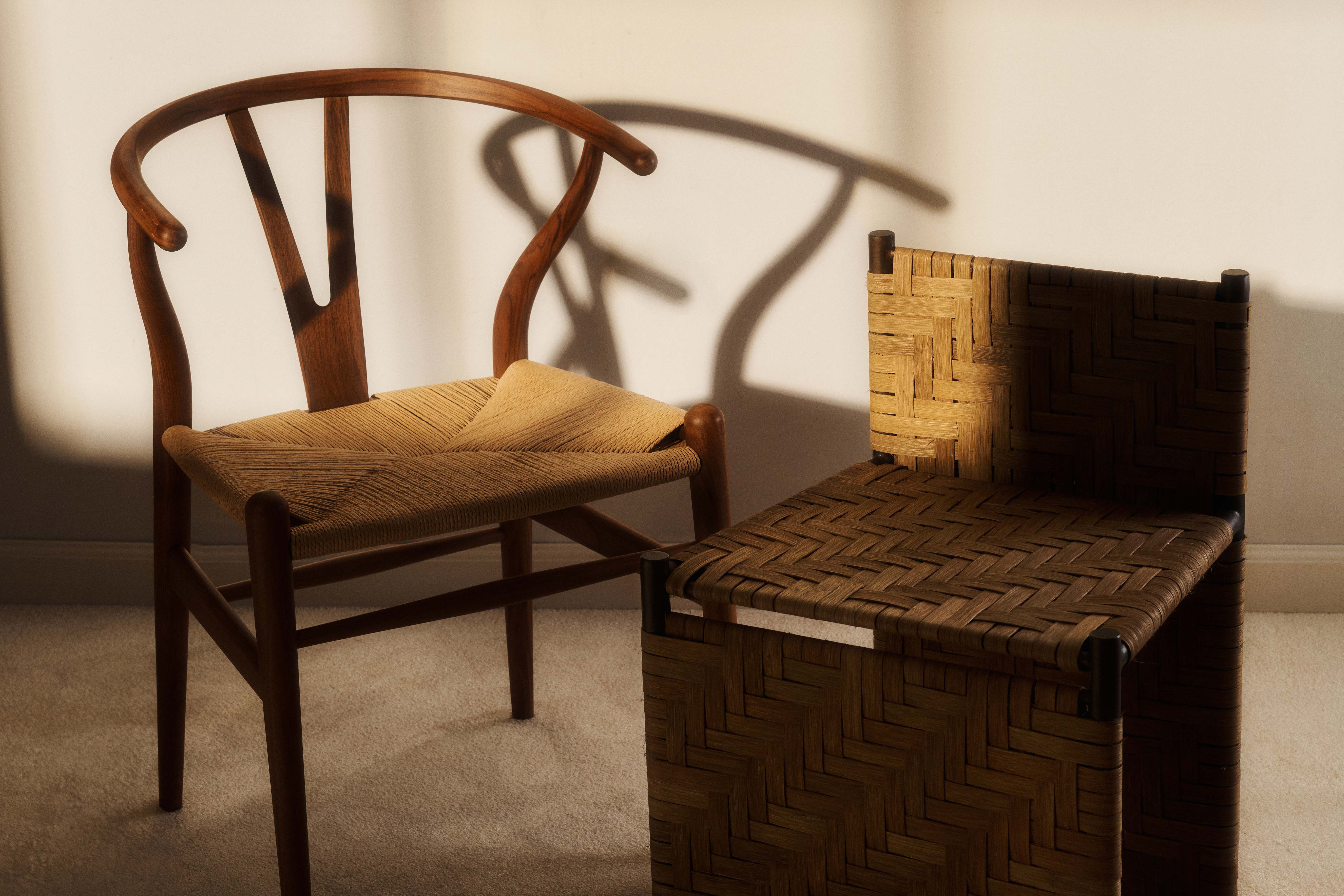

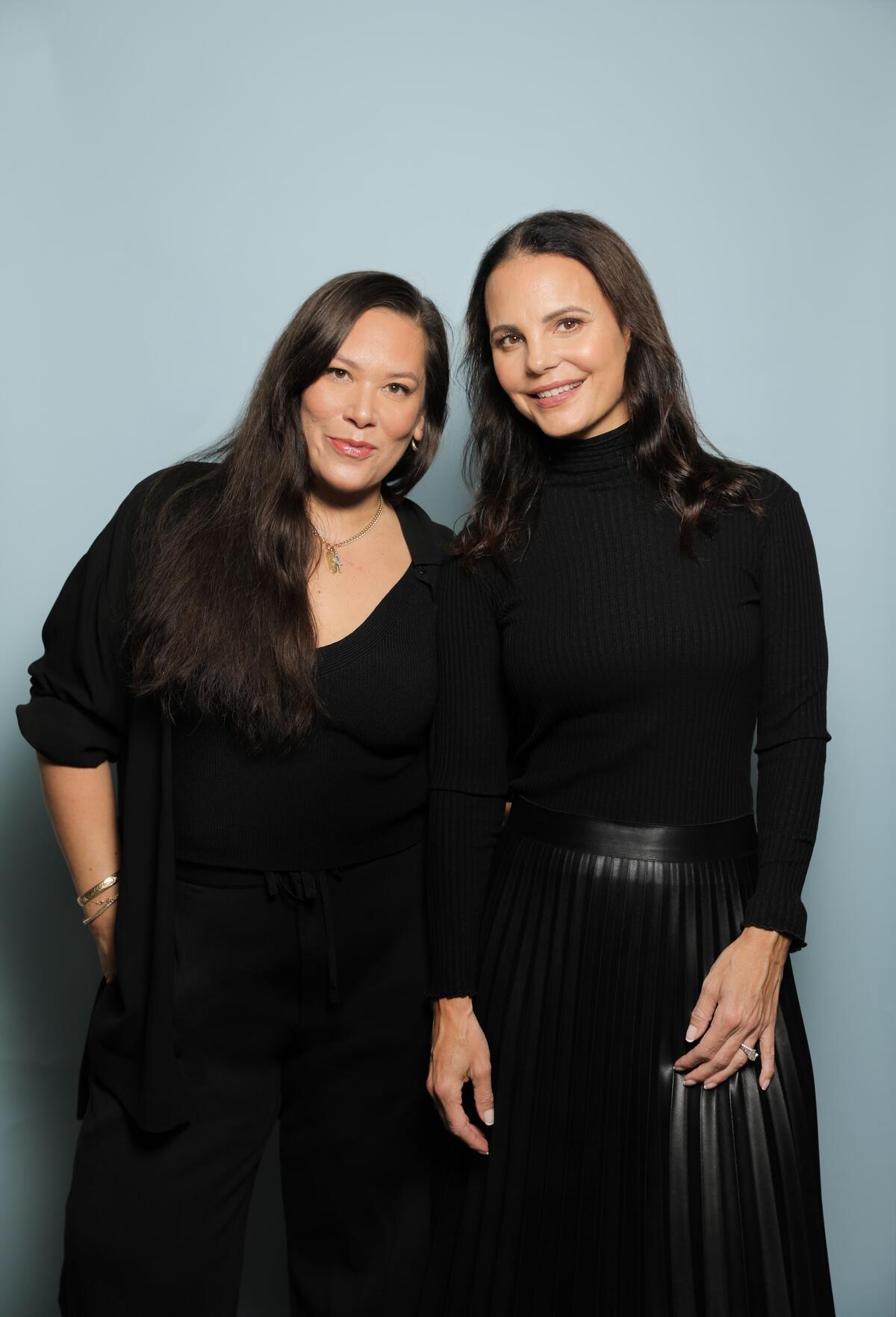
Last year, Afternoon Light’s debut brought fresh energy to New York’s design week with an independently minded trade show, situated just blocks from ICFF. The show is back (it runs May 16 to 19), and will feature a similar mix of up-and-coming makers, cool-kid brands and European favorites. Almost everything else has changed.
That starts with Afternoon Light itself. What was once an e-commerce marketplace with a trade show on the side is now the reverse: a trade show with a little bit of e-commerce in the margins. The founders, Shoppe Object alums Deirde Maloney and Minya Quirk, have also parted ways with Andmore, the design-world leasing and trade show giant that helped produce the inaugural show. Finally, there’s a new venue: Afternoon Light is downtown this year, taking over the fifth and sixth floors of WSA, a buzzy go-to for art- and fashion-world events.
Meanwhile, over the course of the last week, everything around the show changed too. ICFF announced a shift to the fall in 2027, removing one of the major tentpole events of New York’s springtime design week. At the same time, ICFF’s owner, Emerald, was acquired by investment giant Apollo.
Afternoon Light is staying put in the spring, and its founders argue that the Apollo acquisition is bullish for trade shows. (“Institutional capital is betting on live events because the more digital the world gets, the more valuable real-room gatherings become,” says Maloney.) But there’s no doubt that now is a time of flux in New York’s design landscape.
Maloney and Quirk spoke with Business of Home about what makes for a good trade show in this era, and what to expect from this year’s event.
What do you make of ICFF’s decision to move to the fall alongside BDNY?
Minya Quirk: It’s an economics question, at the end of the day. It’s expensive to produce a fair at that scale, and if it’s not performing, it’s not performing. You have another fair in November, and you have to make tough decisions as a show operator. We’ve been in this business a long time, and we understand that very deeply.
Deirdre Maloney: I think BDNY has been considered a lot stronger for a long time now, and more of a must-see. So putting those two shows together, since they’re part of the same organization, makes a lot of sense from a business perspective. Do I think it’s great for New York design [week]? No. Do I think it leaves a big hole? Yeah. It’s interesting, especially for us as operators who plan to continue to operate during that week. … We’re looking at it as a pretty big opportunity.
What do you think about the idea that New York’s design week suffers by coming in the middle of a crowded spring calendar?
Quirk: New York has suffered, but I’m not sure it’s because of the calendar alone. I think it’s an overstatement to say that everybody goes to Milan and everybody goes to Copenhagen—it’s not true. There are countless architecture and interior design firms in New York City who don’t have the budget or time to travel the world to see things. They need to see things here in New York, where their business is.
Maloney: It’s OK that people are making choices not to do New York—to do just Milan, or just Copenhagen, or both of those. But I do think that [some people] are making the opposite choice and just doing New York, and ICFF moving out of that week leaves an interesting proposition for everyone who stays. We’re not the only show that’s operating; there are a lot of smaller offshoot shows happening during that week. And NYCxDesign isn’t planning on moving, so I expect that they are going to do whatever they can to make sure that this week stays strong and viable.
Quirk: Looking at all the coverage of Milan and 3daysofdesign, it’s very hard to stand out as an independent studio. Let’s say you’re a small studio from Philadelphia, Detroit, New York or Pittsburgh—it’s a massive expense to go to Milan and try to get in front of the media, and try to get in front of people who will buy your stuff and keep you in business for the year. If you have some extra money, it’s certainly worth it: for the photography, for your socials, for your content. But for some of those studios, it’s a nonstarter, financially.
Maloney: Even bigger brands too. We talked to one brand that told us they were doing nine activations in Milan. The amount of money you have to invest is so high, I think there will be a tipping point where people have to decide if the ROI warrants it. The benefit of having a small trade show like ours—or even a midsize trade show as we grow—is that it’s very straightforward. You come in, you get your booth space, you get your walls. There’s no big build-out. You don’t have to do any sort of loud, flashy thing. You put forward what you want to sell, people come, and if they like it, they buy it. You very quickly know if you got your return on investment.
As Milan reaches this fever pitch, I’m curious to see if we won’t see a backlash toward all of that heavy spending. We’ve been doing trade shows for nearly 20 years, and we’ve seen that backlash—the big show, where people are spending hundreds of thousands of dollars on a booth or an activation, and then suddenly realize they’re not getting that back, or there’s no way to quantify if they’re getting it back.
What’s going to be different this year at Afternoon Light?
Quirk: The new venue is going to be a lot different. It’s going to feel different. We’ve got a really exciting exhibition in our entryway, which is the launch of the SOM chair from the Halston offices, by Ikonstudio. The Rarify guys are really working hard to build it out and make it really feel experiential. It’s going to be a nice razzle-dazzle moment when you walk in.
Another one of our real cornerstone beliefs in creating a show is that you have to have the tension between the small, emerging designers and the established brands, and I think we’ve really got that this season. We’ve got a hot DTC label, Keeps—they make a hardwood bed. We’ve got USM and Symbol doing an immersive sound lounge, where USM is premiering their soft panels for the first time in the United States. For all the architects and interior designers coming, they’ve never had a chance to touch and feel that product.
Then we have lots of emerging studios—people making furniture [who are] from Detroit, Pittsburgh, Philadelphia. They may have come from the interior design world; they may have come from the art space. A lot of them are showing for the very first time. That’s the kind of tension we really believe in, and that we think makes an exciting showcase. It’s not the same as going to a group show of emerging designers, and it’s not the same as going to a show at Javits, like ICFF.
One of the interesting things about Afternoon Light last year was the cash-and-carry component—people could walk out with something. Are you bringing that back?
Quirk: This year we’re publishing a little shopping list. We’ve got things ranging from $60 to $20,000—we want to make it clear that people are here to sell things, whether that’s to an engaged consumer or [designers and architects] working on giant projects.
Maloney: That was a big learning last season, because we did have [cash-and-carry] but we didn’t highlight it. I think maybe we were just too hands-off, and it was confusing for people coming in the door. So we’ve synthesized it in our guidebook, so that people know where to look for things that are cash-and-carry or [available to] order on the spot and have it delivered afterwards.
We’re in a strange moment for trade shows. What do you think about the fundamental model: What’s broken, what still works, and where do we need to go from here?
Quirk: There are a lot of things that are broken about trade shows in general. The big trade show operators like Emerald or Andmore—they’re big. They can’t be nimble. They have questions of economics at every turn, and it’s a hard business. A lot of times, they have people working on the show who are maybe a bit removed from the industry—I think that can cause disconnect.
Shows are a necessary part of business. Everybody needs to do business. And while there are a lot of complaints about Milan and oversaturation and the big brands, I think the good things about Milan are at the essence of why people do what they do and what makes work enjoyable. It’s being in community, being together, hanging out, connecting, talking, sharing—all of the things that sound kind of woo-woo, but are really at the heart of what makes an in-person experience worthwhile. And I don't think that's going anywhere.
Maloney: The macro trends that make it more difficult for these larger trade show formats are that: wanting to be in community, and people’s lack of attention span. The days of roaming the halls looking for a few good brands—people have no appetite for that anymore. They want to be in community. They want to be with their people, and find things that really appeal to them, and they don’t want to have to do the hard weeding-out work, right? So if you’re presenting something that is curated and targeted at a more specific audience, you have a higher chance of capturing that audience than [if you are] trying to be a lot of things to everyone.
There’s this other pressure on trade shows, which is that brands have limited marketing budgets. It seems like there’s a trend toward building up their own showrooms and hosting their own events.
Maloney: Yes, but we’re in a really different ballpark than [bigger shows] in terms of where our pricing is and what we’re expecting of brands. We even reduced our opening price point—we went from a $3,600 entry price to a $2,200 entry price. I feel like our brands are looking for clarity: What did I spend, what connections did I make, what did we generate from it, and do we think that this was a worthwhile investment?
It’s much more simple than somebody who’s taking a $25,000 space, plus union labor, plus spending money on every outlet. The bigger shows that require bigger spends in order to be seen are the ones that are struggling, whereas the ones that are smaller and more curated—it’s less of an investment and easier to recoup that investment. I don’t see people moving away from that.
Quirk: You have a lot of people in New York that pay a lot for their real estate, and they’re like, “We’ll just do a party at the showroom.” I think you should do a party at your showroom, but I also think you’re missing out by not being in the room. A showroom party can be a little bit “blinders on”—the same sort of people. Not to mention, can you get everybody there? The calendar for New York is insane. Are you going to be able to go to every single thing? Maybe not. So I think there are different reasons for different sizes of companies. If you’re a small studio, do I think you’re going to make a bigger impact at our show than you are at a group show in Brooklyn? Yes, I do. If you’re a really big company and you have a showroom in New York that you want to do a party in, do I think you’ll also find an advantage to being on the floor with us? Yes, I do.






 Withdraw Consent / Manage Privacy Preferences