












In Business of Home’s series Shop Talk, we chat with owners of home furnishings stores across the country to hear about their hard-won lessons and challenges, big and small. This week, we spoke with Matt Bass, owner of the Pittsburgh store Bass & Bennett.
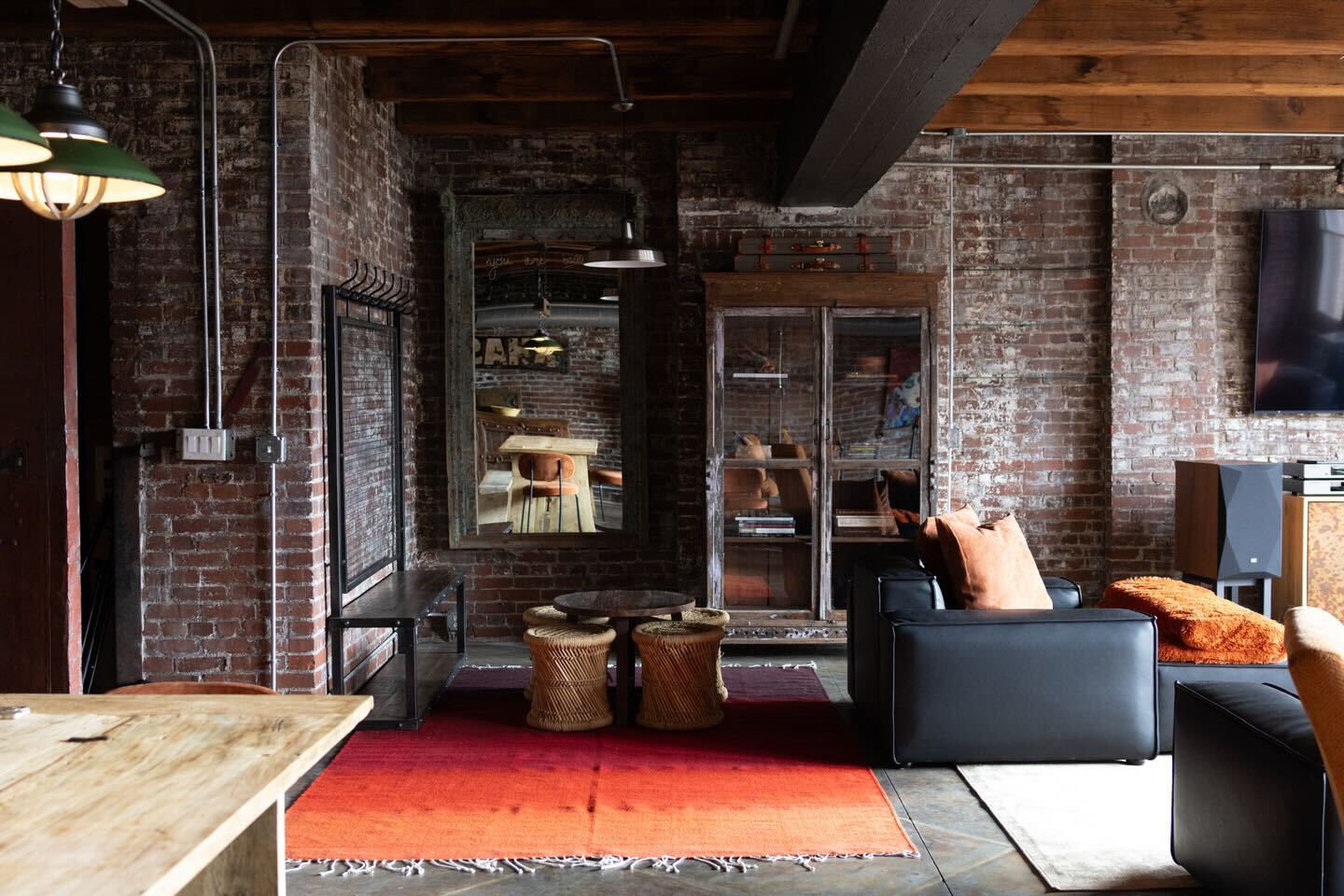
Bass leads with a refreshing humility when discussing his career pivot to the furniture business after decades working in technology and academia. In 2018, he decided to follow a long-buried dream of traveling around the world, bringing back beautiful treasures, and sharing their stories with people at home. His shop, which opened in 2022, offers items like hand-forged metal latticework gates he found in Rajasthan and zellige-tile tables from Morocco, all purchased directly from the artisans. Teaching himself about importing and exporting, furniture sales channels, and customer whims has been a journey. “It was a lifestyle choice, and to be honest, running the business is not always fun,” he says. The upside: “Buying the stuff is always fun.”
Ahead, Bass discusses learning a new industry, attracting and educating customers—and how he’s able to sell real antique teak doors for under $1,000.
What was your career background before launching the shop?
I have had a 30-plus-year career in the tech world. I was a software developer and engineer, and then went into academia and taught at Carnegie Mellon for 15 years or so, until I left in 2023. I don’t have a background in design or anything to do with furniture, importing, retail.
How did you come into this line of work?
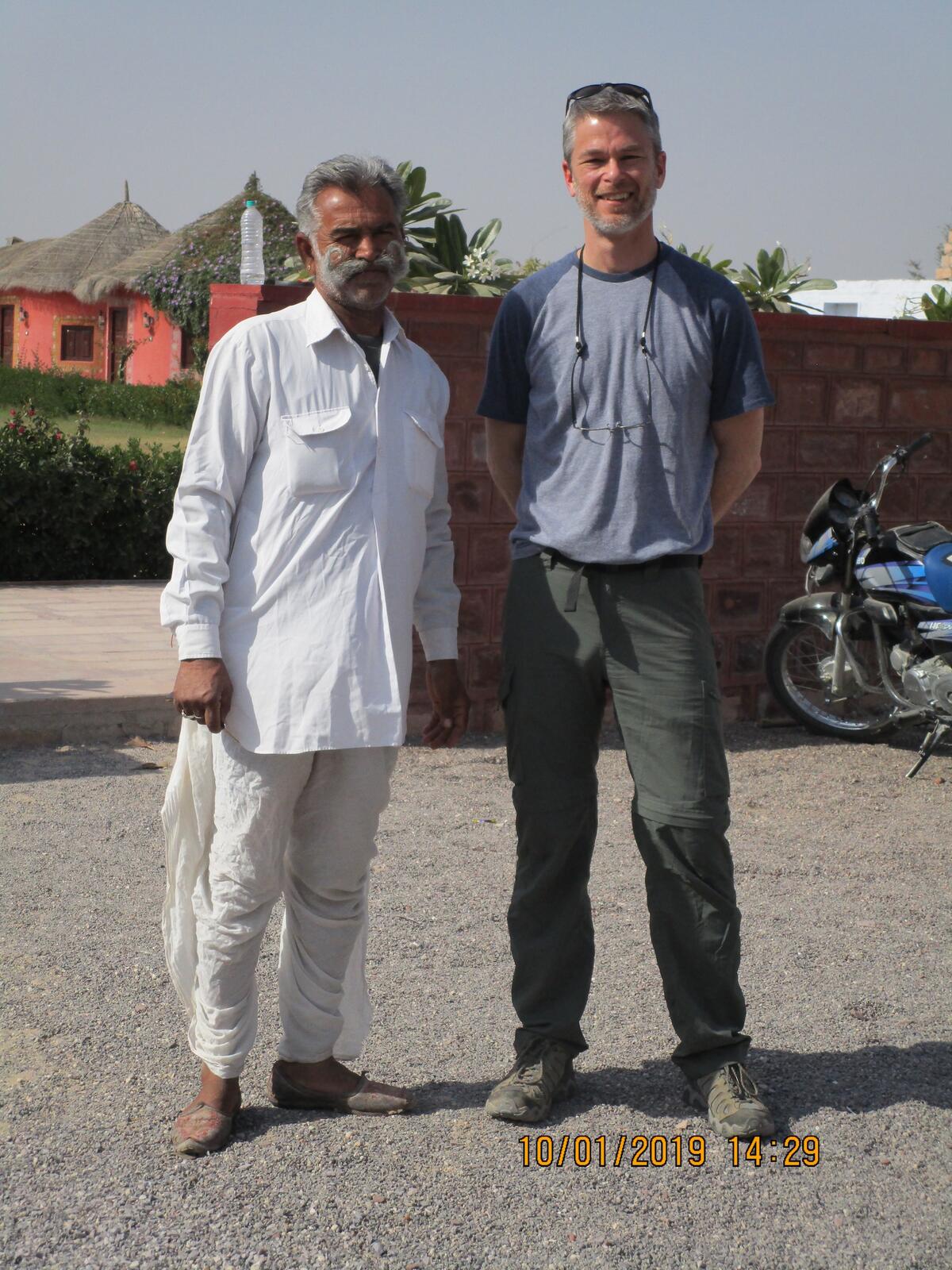
It was very much a lifestyle choice. I traveled a lot for my previous job, attending conferences and consulting around the world. Prior to that, I worked at Siemens, a global electronics company. I fell in love with travel very early on. But I accidentally had this experience: I brought a girlfriend who was an artist with an art gallery on a trip to India, and thought it would be cool if we tried to connect with contemporary galleries there. This was in 2000 or so. We drove around, exploring, trying to find galleries in Delhi, meeting people. We were in Jaisalmer, an old walled city in the desert near the Pakistani border, and we fell in love with the old architectural salvage places. It seemed like it would be the greatest life—if I could travel the world, find cool stuff, meet people and learn their backstories and culture, and bring those stories back. And try to make a living doing that. That planted the seed.
Years later, I gave this a shot, trying to design my career around the life I’d like to live. I had a friend from growing up in Pittsburgh who had never traveled anywhere. He had been on an airplane once in his life. But he was into antiques. I took him to India for his first trip [in 2018], with the idea that we’d bring back some pieces and sell them. We ended up getting two containers. Once you get a container, you need a place to land it, so we rented a warehouse. Once you sign a lease on a warehouse, you need to sell the stuff to pay for the overhead. Next thing I knew, I was in the furniture business.
How did the brick-and-mortar store evolve?
We started as wholesalers, but again, I had no background in this industry. I didn’t understand that the primary sales channel for wholesalers were places like High Point Market and Las Vegas Market. Our first container arrived in January 2019, and by the end of 2019 it was obvious it would be a long, slow grind to attract attention and entice people to Pittsburgh. It was difficult to get things online, because when your container has 2,000 pieces, the photography was more than we could handle.
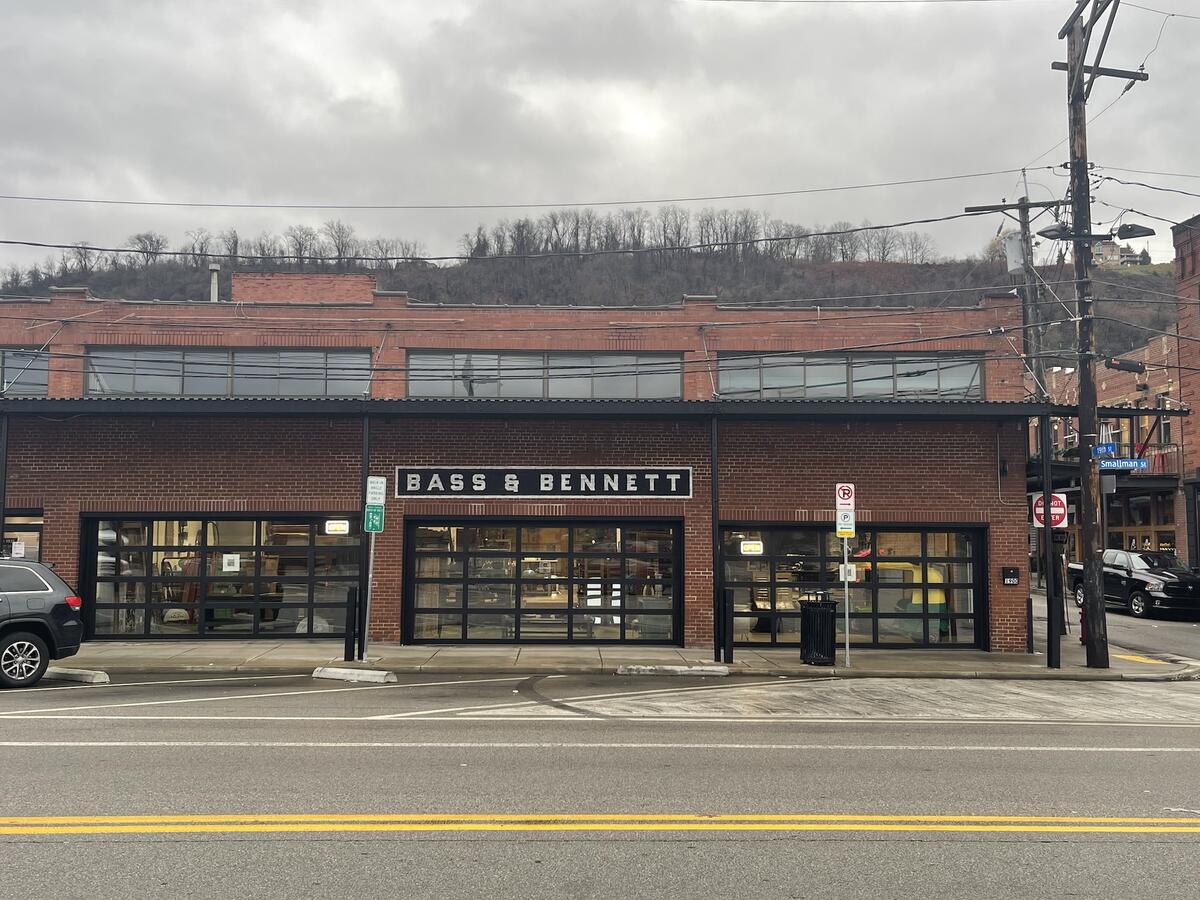
I decided to pivot to retail in late 2019. We entered a home show, got on social media, tried to promote the business. We were looking for a retail space when the pandemic hit. Instead, we moved to a 30-acre farm with barns and outbuildings. You couldn’t see anything from the road, so it wasn’t [attracting] walk-by traffic, but we were open on the weekends, and then we started to host dinners with the chefs in the area whose restaurants were shut down. It helped us get a little attention, and we were fortunate enough to be featured on one of Leanne Ford’s HGTV episodes. We ultimately opened in the space we have now in August 2022.
Who are your primary customers?
It’s a little embarrassing how long it took me to understand how people buy furniture, at least in Pittsburgh. Either you’re going to a place where the manufacturer does the design for you—from Ikea to Levin, where you have matched furniture sets—and you just buy that set; or you go higher-end, to a place that has design capabilities, like Arhaus or Design Within Reach. It’s a fairly small percentage of the population that is able to design a vignette. Our customers are those people who can take a piece of furniture and compose their own designs.
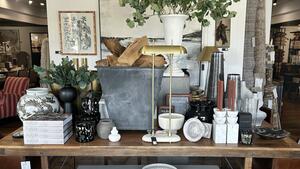
We have gotten more involved as we’ve recognized this barrier to entry. People come in and love our store—it feels like walking through a museum—but when it comes to buying a piece and incorporating it into their home, they need help. We’ve gotten more involved with a local chapter of ASID, and have a trade program to sell through designers. But we’ve also worked on creating vignettes and producing style guides that tell you, “This is how you get the look at home. Here is a way to think about composing the pieces.”
Now we are positioning ourselves to work more with architecture firms that do boutique hospitality, retail, restaurants and office spaces—to be a resource when they want some kind of statement piece. We have lookbooks and sourcing guides to work with these firms during the conceptual phase of their cycle, where it’s like: “If you want a moment when you step off the elevator, then you need an alcove on your floor plan.”
You also maintain a robust blog about your sourcing trips. That’s a lot of manpower. Who’s writing these materials?
We also [include] a story card when we sell something online. We try our best to allow others to see our enthusiasm. The blog is another way to do that. It’s about either reliving or communicating some magical experience we had while traveling, or some appreciation for the people or the craft behind the pieces. I hate when people come in and don’t care about the backstory. Our designer Kacie [Cope] travels with me on most trips. Kacie can outlast me—she never gets enough. So she does a lot of [the writing]. We try to share.
How often are you traveling now? Are you on every sourcing trip?
Yes. We were traveling about every six weeks, but it’s slowed down in the last year to once a quarter. Like I said, it was a lifestyle choice—if I could do it more often, I would! It’s my happy place. There may be a time when I’m not going on every trip, that we’re scaling to the point that we’re splitting responsibilities, but that’s the part I really like. We’ve brought containers back from India and Morocco, but from other places it’s [smaller shipments]. In Vietnam, I stay with a Hmong family and buy textiles through them, and air-freight them or bring them back with me. In Nepal, we get temple incense and felted wool slippers. From southern Mexico, it’s ceramics from Oaxaca that we truck back. So they’re not always large shipments, but we try to go as often as we can.
How do you find new relationships, or decide which country to go to next?
To some extent, it’s not that different from figuring out where you want to go on vacation next. You read an article about something, and it sparks an interest. If there’s a place I’m curious about, I will start my research and figure out if there are ways I can justify it. We had a difficult time getting a container out of Morocco, a place with a tremendous history of artisan craft. They export to Europe, but that’s a totally different ball game. Getting a container back to the U.S. is really difficult. You need some infrastructure and oversight to ensure you can reliably get what you’re supposed to get. India has a manufacturing infrastructure, as does Indonesia, Brazil.
We have our eye on specific destinations, with some combination of a place I want to go to and haven’t explored yet, and a place that can support business logistics.
How do you sniff out a good source and good partner? How do you do your picking in a new place?
It took a while, but I learned to trust my own judgment and taste. I never considered myself a creative person. I don’t have formal knowledge in woodworking or furniture production. But I do have opinions! Over time, I’ve learned to trust what I respond to. If it’s the right piece, it will grab me in a way that’s hard to resist.
There are some signs to look for. You need to ensure that the materials have structural integrity, that the doors open and close properly. Do they export currently? It’s not just production of the piece, it’s how they pack it. Are they in a position to provide documentation for customs? Are they able to stuff a container? If you don’t stuff properly, you’ll end up with half the pieces broken. If they can’t, it doesn’t mean I won’t work with them; it just means that I’ll need somebody else to help with the parts they’re lacking. Now I often do the quality check myself. I try to time buying trips so that I go and inspect everything when the previous order is ready for packing. I can even be there for stuffing, if need be.
What’s your favorite category? What type of shopping do you like?
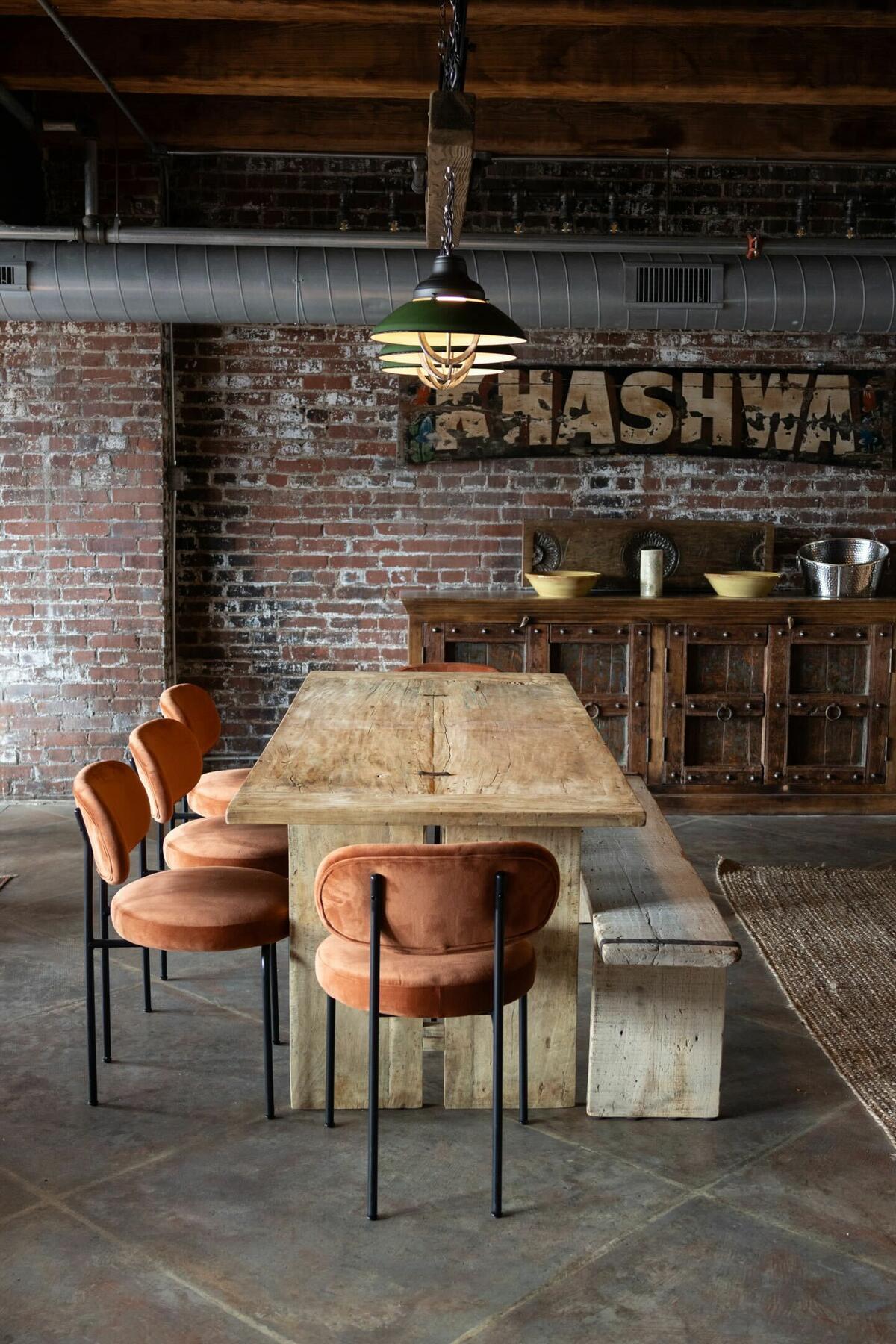
I love going to what looks like a junkyard. I like seeing the raw materials. There’s something about wood, about chipping paint. Old industrial pieces excite me, though many times I have no idea what anybody would do with it.
When I go to Hmong communities, they salvage what’s called story cloth from old wedding outfits and traditional clothing, usually made with batik. It takes years to produce a single outfit. One of the women I work with salvages story cloth to make
wallhangings, table runners, cushions. The stuff made today, with similar techniques, is nowhere near as intricate. It’s largely a lost art. But it was only after I’ve spent time with them and learned the backstory that I developed a real appreciation for it.
There’s also certain kinds of pottery I like, usually more utilitarian stuff fired in a wood-fired kiln, so there’s variation in the ash that landed on the pot. You go to these Zapotec communities, and there are three or four women making pottery in traditional ways. They are all utilitarian, so one pot will be designed ergonomically to work on the back of a donkey because the well was [2 miles] away. Another, the color of the sand is different because that’s the material within walking distance of the village.
We met a woman, Macrina [Mateo] Martínez, who makes red clay pottery, and people are paying attention to her. But she was also cooking mole in the back, and the pot she had been using forever was charred from fire. We had an interpreter ask if we could buy her old pottery, and she thought it was the funniest thing—that we wanted her old, used pots. She cleaned out her old pottery, all of it charred, and we brought it all back. It had such character!
How are your pieces so affordable? You have huge antique teak doors under $1,000!
We usually get that reaction from people who are more global or live in major cities, who know what they are looking at. I had somebody the other day who said, “There’s no way this is real teak. It’s priced too cheap.” Then we also get Google reviews saying, “It’s overpriced.” You never know people’s yardstick. But I appreciate you saying that. Part of it is recognizing how stores acquire product. [Some] places are large and have brand recognition and charge based on the strength of that brand recognition. [Major retailers] do that—they bring back the same mirrors we do, from some of the same places, but they charge four times what we charge. …
If you’re a small boutique, you’re going to buy from a wholesaler. Because we’re bringing containers back ourselves, we’ve cut out the middlemen. We’re buying from the source, and buying wisely. That’s number one [for pricing]. Number two, I still don’t fully understand the market. The only way I know how to price things is to buy a margin. Normally, in retail, people do what’s called keystone pricing, so [around double] what their cost of acquisition is. That will result in a [50] percent margin. Our margins tend to be better than that, and our prices are lower because we buy in quantity.
The challenge is sufficient quality. Your volume has to be enough to survive, because we do have additional costs: a warehouse; transport from the warehouse to the store; the truck; and labor. But largely, we’re buying direct, and it’s a heavy lift for people who haven’t done that before. There’s a lot to learn, a lot of infrastructure to have, and it’s usually outside the expertise of small boutique retailers.
What is the Pittsburgh design scene like?
Pittsburgh tends to be a pretty homogenous market. This is true not just in furniture, but for housing stock, clothing, even food. But I think there’s a lot of pent-up demand for something different. The demographic is changing a lot. We’ve gone from a largely industrial city to a more diverse economy. A lot of business is related to the universities here—Carnegie Mellon, University of Pittsburgh—and the hospitals. We also have some of the big players now; Google, Amazon and Apple have a presence in Pittsburgh. We have people moving in with a different design sensibility. When you do introduce new things into the market—like when Whole Foods opened, it was the largest-grossing Whole Foods anywhere. There was so much pent-up demand. Now we have Wegmans! When Tesla came here as just a kiosk; it did so well they built a dealership. Design Within Reach just opened, and it’s been doing very well.
Historically, it’s not the most design-centric city in the world. It’s pretty conservative from that perspective. But it’s changing. Even in the restaurant scene, more diverse, interesting restaurants are doing well, and that didn’t used to be the case. There’s more and more appetite for alternatives in almost any area.
I usually ask shop owners what their favorite day at work is, and it sounds like yours would be spent about 8,000 miles from the store. But what’s your ideal day on-site? When people come in and are interested in our stuff and the backstory. They have an enthusiasm and an energy that’s contagious, and my enthusiasm for the stuff grows when people are curious. They can be 12 years old, but when they’re engaged and equally fascinated, that makes it all worthwhile. From a business perspective, of course you need to sell stuff. But when somebody comes in to buy and they don’t give a shit, I’d love to be in a position of saying, “This store’s not for you. I don’t want to sell to you.” It almost hurts, because I know what went into making the piece. To have somebody treat it with disregard is not pleasant. But on the flip side, when someone comes in with a bit of reverence, it makes me feel good.




 Withdraw Consent / Manage Privacy Preferences