











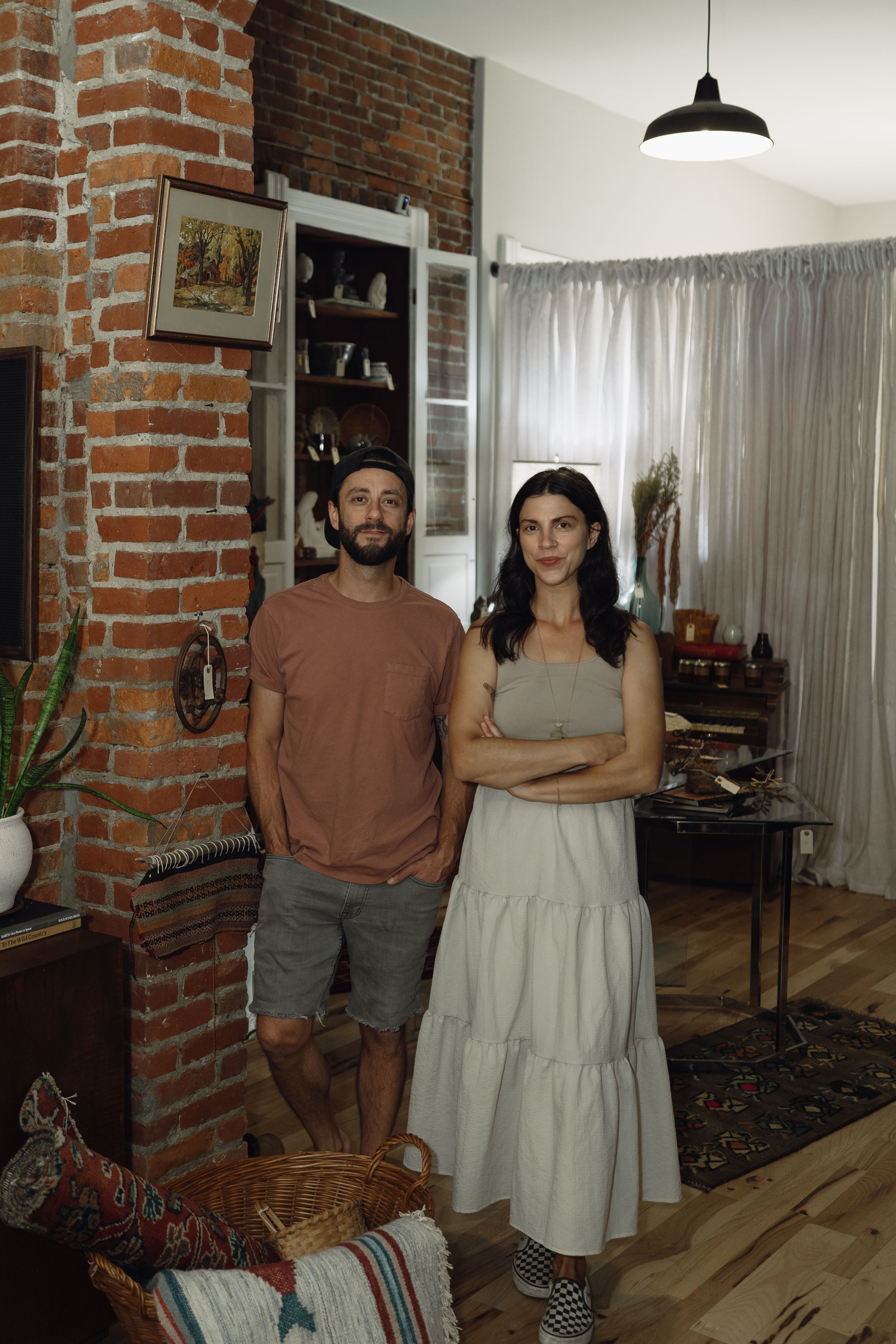

In Business of Home’s series Shop Talk, we chat with owners of home furnishings stores across the country to hear about their hard-won lessons and challenges, big and small. This week, we spoke with Chelsea Jancewicz and David Altier of the Cleveland vintage furniture store Table for 2.
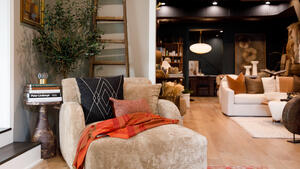
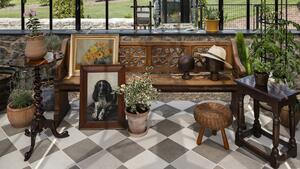
Many design stores are airy, bright, and so very white, an aesthetic that makes it easy for customers to examine the wares. From its walls to its website, Table for 2 offers something substantially darker, moodier, and altogether browner—an enveloping atmosphere that draws you in and imbues the eclectic vintage and refurbished pieces with soul. Four years ago, the self-taught furniture restorers took their hobby from an internet hustle conducted via Facebook Marketplace to a brick-and-mortar location, once they found the perfect spot—“an old building with old goods,” as Jancewicz describes the 19th century Ohio City storefront.
Ahead, the Ohio natives discuss figuring out that their hobby had value, why they’re on the hunt for cool new neighbors in addition to gorgeous vintage furniture, and why they’re so inspired by Gen Z.
What were your careers like before the shop?
David Altier: My background is in supply chain, and now I work in marketing operations.
Chelsea Jancewicz: I always loved interior design, but I went a “safer” route with health care. I’m an occupational therapist and worked with kids for many moons before the idea of the shop came to be. I was always collecting on the side, and did furniture restoration as a hobby. A few of my co-workers found out and commissioned pieces, and that was my entry point to a more creative endeavor.
How did you two meet?
Jancewicz: I was friends with Dave’s sister and worked with her for a long time. I moved to Chicago for clinical, and his sister said, “Oh, I feel like you guys would really get along.” I was not interested in that, but then I totaled my car the first week I was out there and needed some friends.
How did the transition to retail happen?
Altier: After a couple of years selling on Instagram, Etsy and Facebook Marketplace, we found a retail space in this old 19th century building that had a lot of great architectural features to it.
Why did you feel ready for brick-and-mortar?
Jancewicz: Dave and I are both longtime collectors and thrifters. We love shopping and interior design. I was doing furniture restoration, and we started doing markets. As our collection grew, we ran out of room in our house. It mostly came from a longtime love of shopping. Dave had worked in retail for many years too.
Tell me about realizing there was a market for this. How did you learn the craft, and then how did you realize people wanted this?
Jancewicz: In college, and moving out on my own, I didn’t have a ton of money, so I was trying to be creative—looking on the side of the road or at thrift stores, finding pieces with good bones. It was a lot of self-teaching. My dad also supported me, let me borrow his tools, gave me tips. It came to be that things that were more affordable, from big-box stores, just don’t last. The pieces I had lasted forever, and I moved them each year. I think a lot of co-workers around my age maybe inherited their grandparents’ furniture and said, “Hey, this color is not great, but I love the shape, and it’s special to me.” I realized my thinking wasn’t alone here. There are so many people who value good structure, good bones, and just the sentimental value.
What services does the business offer now?
Jancewicz: We’ve shifted a bit. The early years were very focused on restoration, and it’s not that we don’t want to do that anymore, but the shop has required a lot more attention, which has pulled us away from enough hours to allocate toward custom work. We still do it, but we’re more selective. The shop has become our main pipeline for restoring pieces—embracing the flaws in some of these older pieces but not putting too much work into them. Maybe it’s beautiful and charming! I think these pieces have dings and scars just like we humans do.
How do you decide which projects to take on?
Jancewicz: Timing is a factor for sure. If [clients] need a quick turnaround and we’re not able to accommodate that, we would refer them to somebody else. Also, reupholstery is not a strong skill of mine. I can do some, but a full couch is not something I would feel comfortable executing to the level I’d want to. But the woodworking and wood refinishing, we take on a lot of those. It’s a matter of time, what the customer is looking for, and if it’s within their budget.
Is there a certain style you get the most restoration requests for?
Jancewicz: I don’t feel we are era-specific. It’s very eclectic. What we mostly get is stuff with sentimental value, like “This was in my family for generations, and I want to preserve it.” We recently had a woman reach out with a child-size desk she wants to pass on to her grandchildren.
Altier: We’ve done a lot of midcentury type stuff, but I think that the stuff people bring us can be a little more challenging, like pieces with ornate details. We love watching those things come back to life.
Do you work with a team?
Jancewicz: It’s just me and Dave. I’ve recruited my dad a few times, when we had a big, big project, but since shifting gears and going more into sourcing and curating the shop, it’s been a nice balance. Focusing so much on restoration was taxing, because it was just us. Hopefully one day we’ll get a studio space, because we work out of our garage. So we don’t really have the space to hire somebody just yet.
When people enter the shop, how is it laid out? What’s the aesthetic?
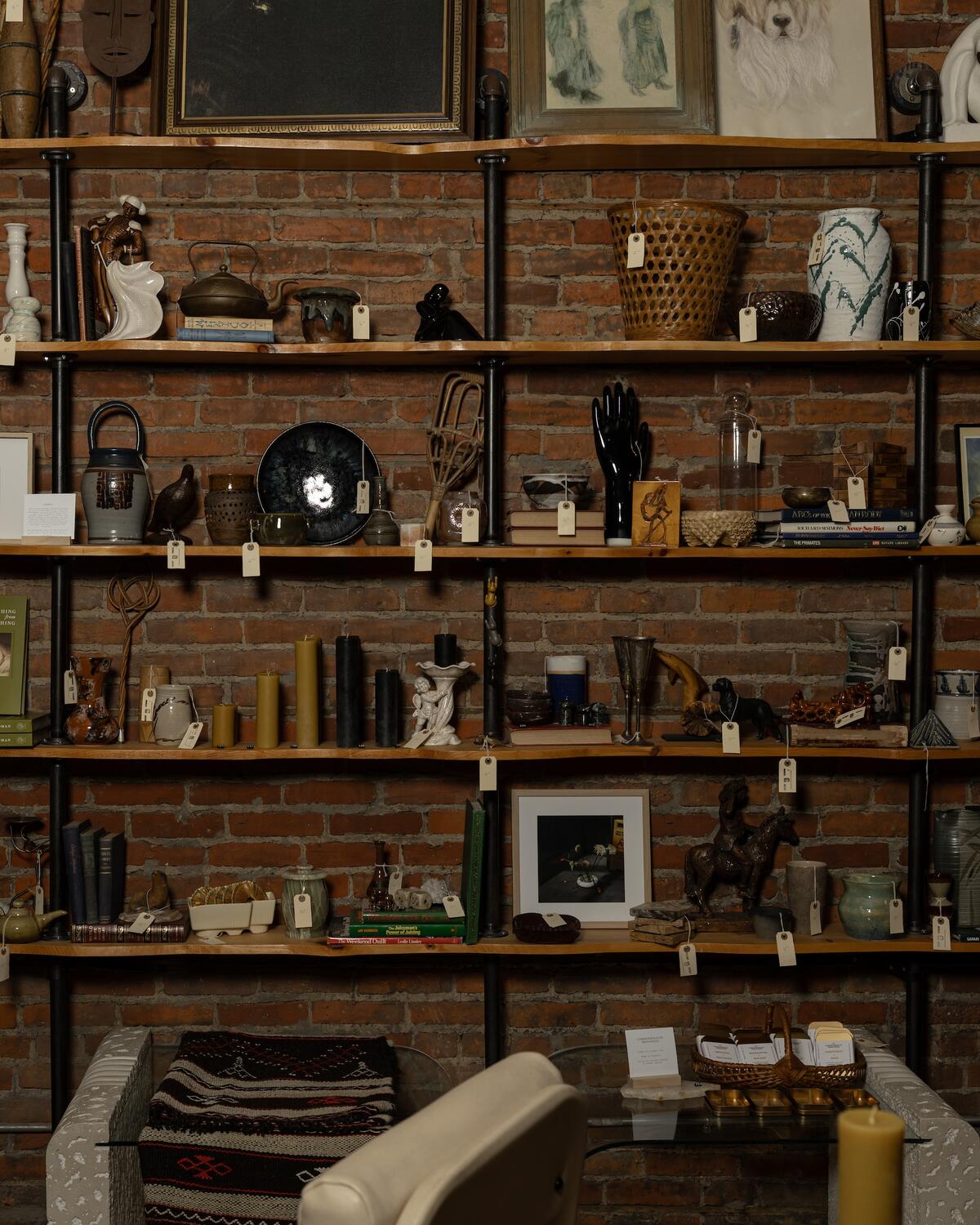
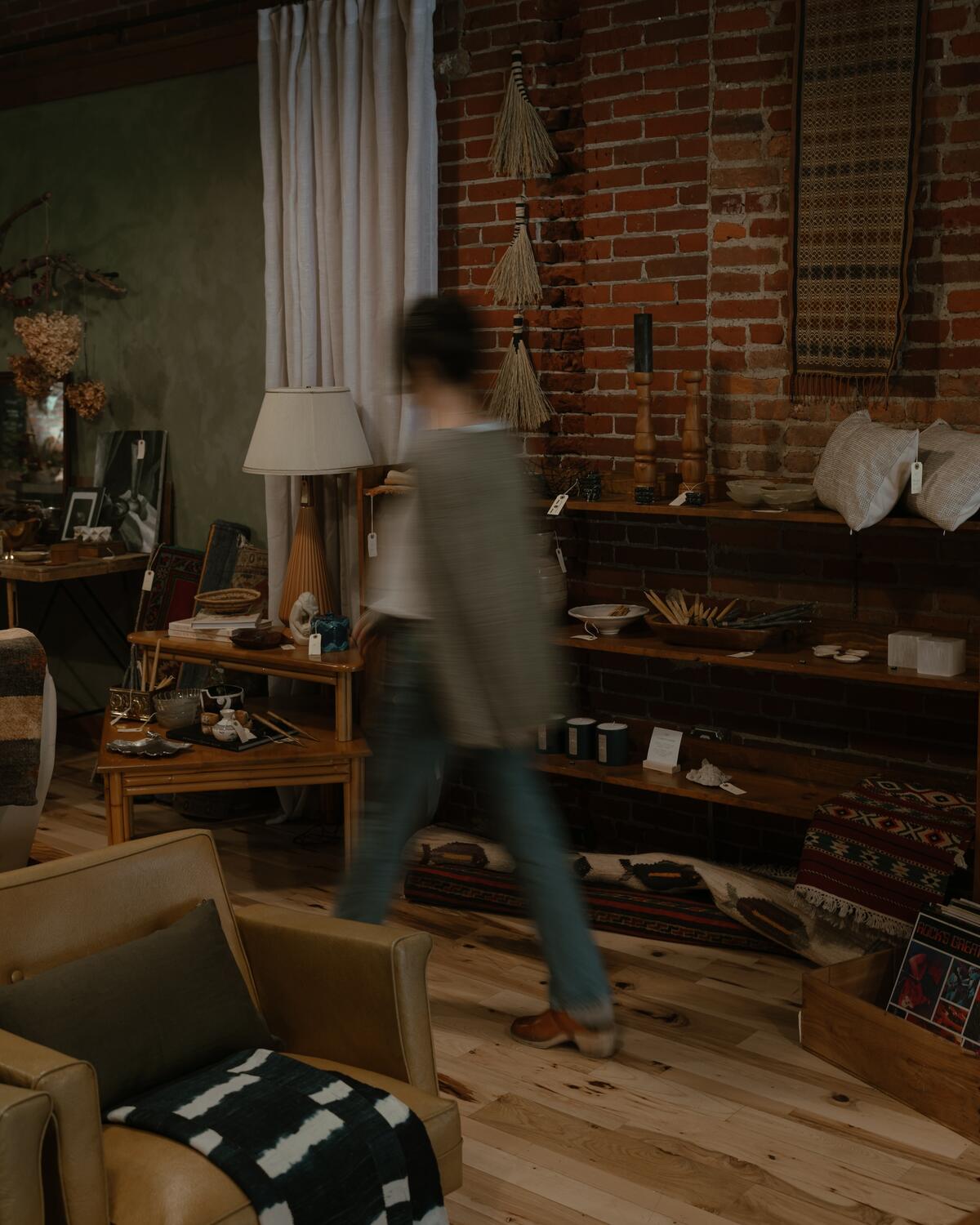
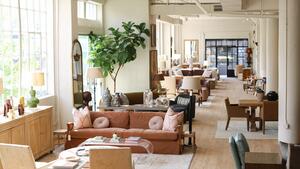
Jancewicz: The building is from the late 1800s, so it has a lot of architectural charm. There’s exposed brickwork, a beautiful arch, shelving that was once windows, so it feels cozy and homey straight away. It’s really hard to replicate that experience online, because it’s so layered. You can feel the years of history within. It felt like a good match—an old building with old goods.
Tell me about your typical customer. Are you getting foot traffic where you are?
Altier: We’re in Ohio City, which is a very popular neighborhood, but kind of in the west end. Since we moved in in 2022, our end of the street has grown with a lot of independent vendors and shop owners. [Foot traffic] has come more and more with each new shop and restaurant.
Jancewicz: Yeah, it’s definitely been steadily growing. A longstanding bookstore just relocated two blocks from us, and that’s been great because we have good synergy of customers. But there is room to grow!
Do you ever work with designers and the trade community?
Jancewicz: Yes, in fact, a local design firm has been our main source for furniture restoration. But we also have a trade program, where designers can get their “finishing touch” pieces. Some designers will reach out to ask for assistance with sourcing specific things, especially vintage rugs. They’re hard to come by in Cleveland, and we have a pretty good inventory. I love picking their brains. Talking design is always fun for me, and seeing their projects is one of my favorite parts.
Tell me about your sourcing process.
Jancewicz: Our shop is 90 percent vintage, and we source almost entirely in person. Estate sales, auctions, road trips stopping at flea markets. When we lived in Chicago, we would walk the alleys. Consistency is key, and you never know where you’re going to find a treasure. Our checkout/cash wrap station for a while was a really beautiful turned-leg, tiger-oak dining room table that we found discarded in an alley. We ended up selling that and reshaping our cash wrap. You just never know what people are going to get rid of!
Who is a vendor you love?
Jancewicz: We make custom candles with a female-owned company in Cleveland called Co-Create. They have candlemaking events at the shop. And we’re really excited about a collection coming up: A couple of years ago, we partnered with Co-Create and a local artist named Shelly, of Svona Studio, who makes ceramic vessels for us. We created custom scents and sold them in the shop, and we’re doing another collection that’s water-themed, very mermaidy. It’s fun. Working with friends and creating something beautiful—I can't believe we get to do this for work.
What are each of your favorite items in the store right now?
Altier: It’s hard to pick just one. We have this beautiful antique Japanese indigo textile. We’ve recently added a lot more textiles, and it’s added a different flavor to the rugs that are displayed up on the wall.
Jancewicz: Another thing is that, for a while, we were finding a lot of old midcentury stereo consoles. We had three or four, and none of the turntables worked. My dad and I went to the library to find the manuals and we restored them together. That was really fun!
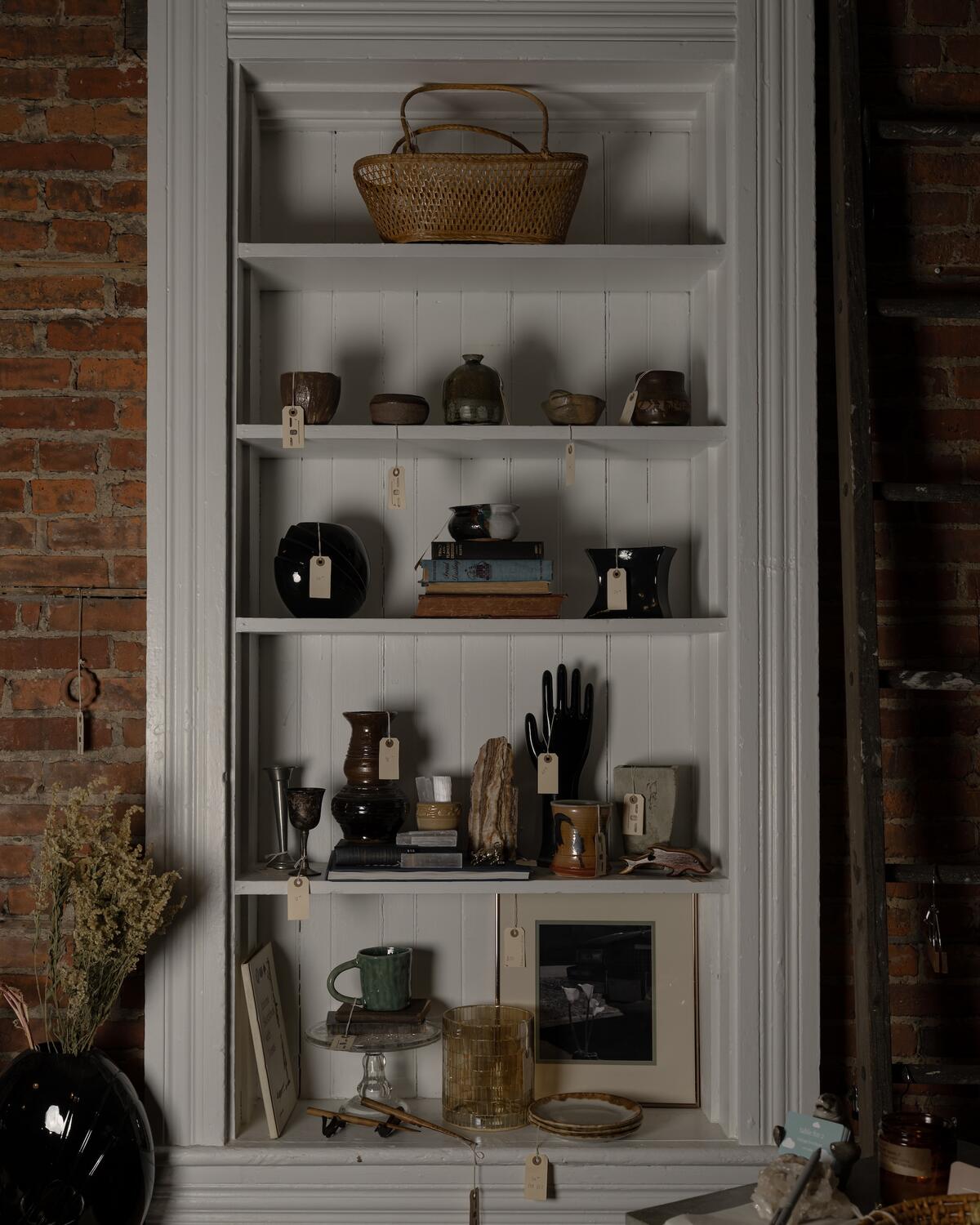
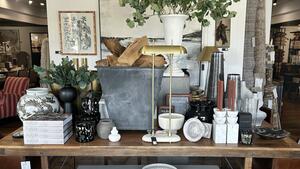
Altier: Our other favorite is studio pottery. That’s something we personally collect, and then we have a good plethora of it in the shop. We have repeat, regular customers who are also collectors. We also find novice studio pottery work from a high school art class!
Is there a category or a specific kind of object that flies out the door?
Jancewicz: Floor lamps. It’s hard to find a quality one, so as soon as we put one on the floor, it’s out the door within the next few hours. And the rugs. We can’t stop talking about the rugs.
Are the floor lamps a little more affordable? Do you have a theory of the floor lamps?
Jancewicz: My theory is we try to find structurally interesting ones in good-quality materials. But I think it’s just hard to find good lamps, and if you get them from a big-box store, they’re still quite expensive! Our pricing is comparable. People are looking for something different, and they’re sick of a traditional minimalist light on the floor. Maybe they want more of a conversation piece, or a standout piece. I think people are shifting away from that, wanting more ambient, soft lighting.
Altier: They can make a big impact for 120 bucks or less.
What is your e-commerce strategy? You have the loveliest product photography.
Jancewicz: It has been an evolution. We are so lucky that one of our employees is a professional photographer, and she’s been with us pretty much since we opened the physical shop. It’s been such a blessing, and we are so grateful for her. We started on social media—Instagram, Etsy—and now we have an e-commerce site for which we use Squarespace, which is very easy for a non-tech person like me. But it’s a challenge because we sell so many one-of-a-kind pieces that sometimes we’re not able to list before they sell, so we’re balancing what to hold back in order to build up our website. We’ve been trying this year to shift into launching small “collections” twice a month with furniture and rugs.
How do the collections work? Are you hoping to create some excitement around “drops”?
Jancewicz: Sometimes I'll get inspired as I'm collecting things, noticing “OK, I’ve got a theme here.” We did an earth collection, fire, water. I’ve been challenging myself when sourcing: What can I come up with that feels cohesive, and will draw people to our site? It’s hard to replicate the in-store experience, so we’re not trying to. We just want the site to stand on its own as a beautiful collection of things.
I wanted to ask about the design of your site. It’s so good. Why did you want to invest there?
Jancewicz: It has been a labor of love. When Instagram was first coming out, it was this artsy photography thing, and I still view Instagram as a showcase for art and inspiration. I love photography, and working with our photographer, Natalie, to come up with these fun, creative ways to showcase our pieces, getting lost in the creation of it. It’s been a collaborative process, and I definitely could not have done it on my own.
Have you noticed any generational themes among your customers? I keep hearing that Gen Z loves thrifting and “real” furniture.
Jancewicz: I was initially very unsure of who we were going to get. Who’s going to be our bread-and-butter customer? We do have quite an age range, but the theme is people who value sustainability and appreciate flaws, and Gen Z is a driving force in that. They are a generation that is more likely to shop secondhand as their primary option, and then look elsewhere. They are very mindful and conscious about trying to lessen their footprint. And they have more patience, it seems, than wanting that instant gratification.
What is the Cleveland design scene like, and what is it like to operate there?
Altier: Cleveland is still growing, but there’s a really supportive creative community here. Foot traffic is the challenge, and getting people out to our part of the neighborhood. But we’re doing a good job working with the other merchants in the area to develop the destination.
Jancewicz: Cleveland has that small-town vibe, and if you’re in that [design] scene, you know each other. It’s very supportive. Word-of-mouth within the community is everything, and it’s very easy to take each other’s recommendations if we have that trust.
What are some of your hopes for the future of the business?
Jancewicz: For me, and probably Dave too, the sourcing is our favorite part. We would love to be able to continue doing this forever—and to spread our sourcing net, travel more, bring more things back to Cleveland. Dave and I both lived outside Cleveland for a while—in Chicago together, and Dave lived in Nashville for a bit—and I’d love to see other cities and bring inspiration back, establishing roots and watching it flourish.
Altier: I also really liked the events early on. We did some candlelit music concerts, and just everything we usually love to do, in the form of events. We’ve tightened that up into whatever makes sense for the shop, and we have a good rotation of events and the community coming in. It’s really special.
What kinds of events are you holding now?
Jancewicz: We try to do at least one per month, and that might just be a pop-up with vendors who don’t have brick-and-mortars. We also do candlemaking, and did a flower-arranging workshop earlier this year. A friend is hosting a mahjong event later this month. It’s working with your friends who have businesses and just lifting each other up. We’re better together.
What are each of your favorite days in the shop?
Altier: I especially love when a personal favorite of ours sells at the shop. Or something that we worked or put a little bit of our effort into, and it’s brought it back to life. Those are big for me.
Jancewicz: Same. We’ll cycle through personal-collection items that maybe we no longer have the space for, or we’ve found something new. It’s so gratifying when you see [a customer’s] face light up with joy to find it, and you can say, “That was in my house, and I loved it too.” My other favorite part is rearranging the shop, restyling and reimagining things. I start thinking nothing looks right, and I take everything down and put it back together. Maybe I’ll spend a whole day doing that, but it’s so gratifying.

 Withdraw Consent / Manage Privacy Preferences