







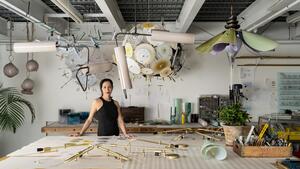
Alison Zavracky wants to improve daily life by way of design. The furniture designer at Shokan, New York–based Studio Hinterland uses age-old techniques and materials to craft contemporary pieces that stand the test of time. “I draw inspiration from historic elements and respond with a reimagination to create work that is referentially modern,” she tells Business of Home.
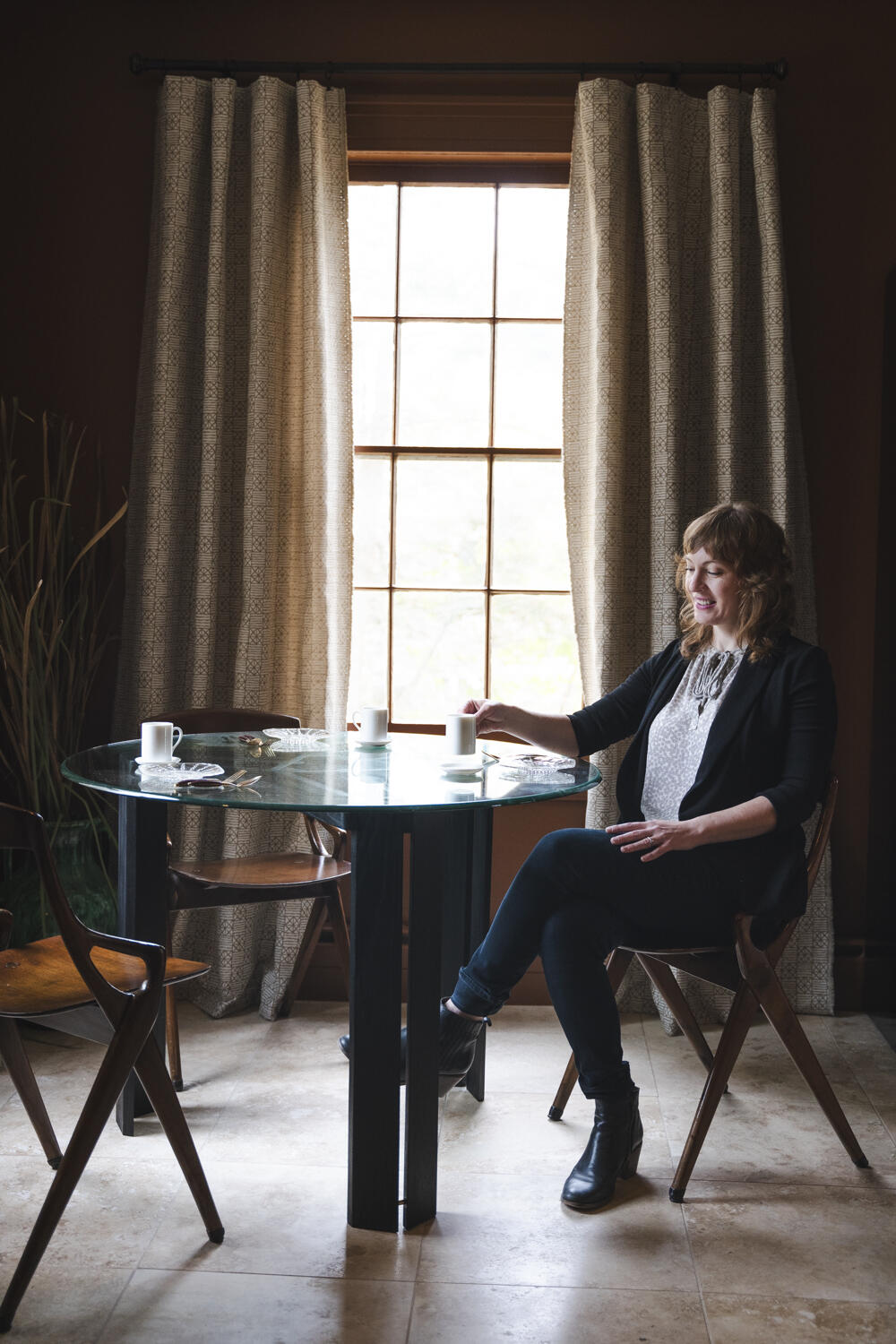
Growing up in St. Louis, Zavracky was immersed in art and design at an early age. Her grandfather was a design and manufacturing entrepreneur, her mother is an artist, and her father is a musician and engineer. “I was surrounded by creative thinkers during my formative years,” she says.
She studied painting and sculpture at New York University before landing a job as an administrative assistant for Vicente Wolf, where she helped create drawings upcoming collections. “I developed a passion for furniture and tabletop design,” she says. “From that point on, I sought a balance between art and utility; creativity and practicality.”
Zavracky enrolled at the Pratt Institute and went on to earn a master’s degree in industrial design. It was during this time that she first began experimenting with different mediums, such as woodworking and metal fabrication, while honing her skills in an assortment of traditional furniture-making techniques. After graduating, she worked at John Boone for more than seven years, designing and developing high-end furnishings for the New York–based brand. “I learned to design for the future while celebrating the past,” she says.
In 2016, she launched her namesake design studio in Brooklyn, offering a selection of handmade brass cabinet hardware. Two years later, she and her husband decided to relocate to West Shokan, a rural hamlet nestled in the idyllic Catskill Mountains. “I was looking for more space and more nature in my life after more than 20 years in the city,” says Zavracky.
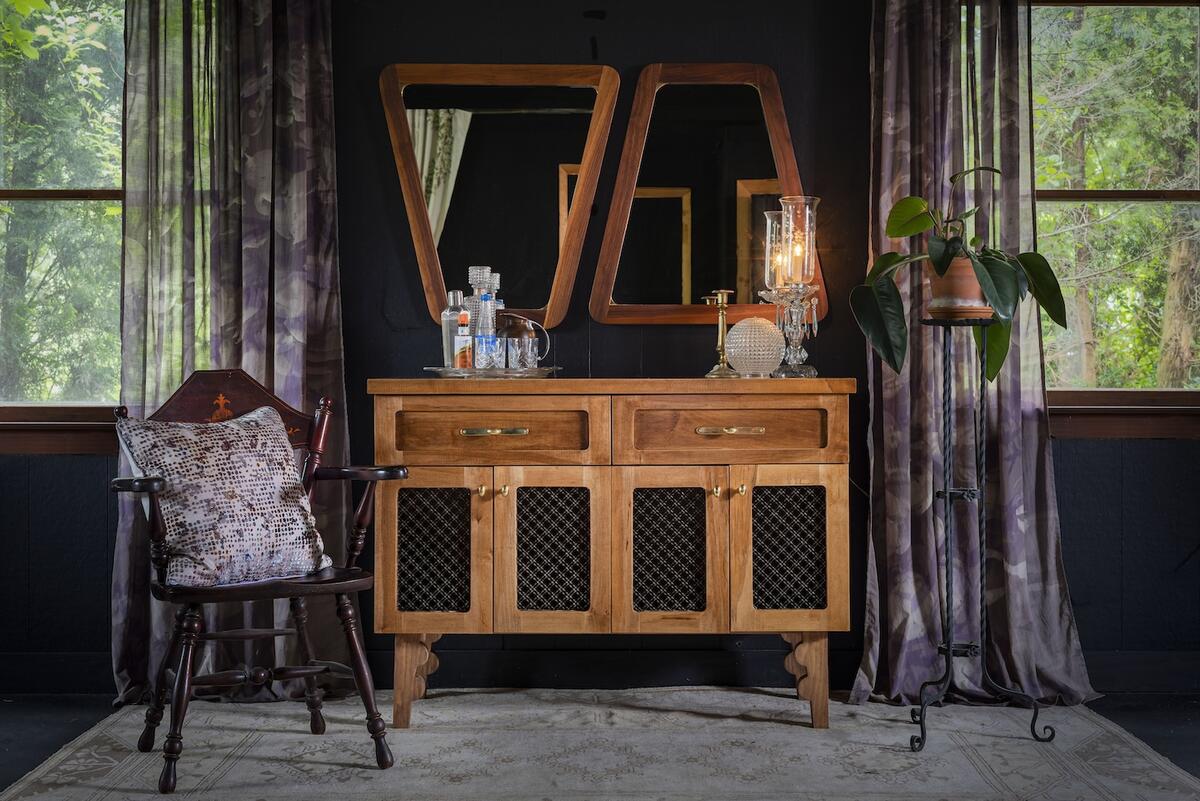
Everything changed in the fall of 2020, when she met upstate New York interior designer Jennifer Salvemini at the annual Kingston Design Showhouse. Salvemini had been percolating on the idea of opening a furniture collective of female-identifying artisans and asked her to join. “We spent a few years working together on collaborative projects and installations, which was always very creatively enriching for me,” says Zavracky. “The synergy of our perspectives and skill led to further developing our partnership into a brand that speaks to our shared passions and joys.”
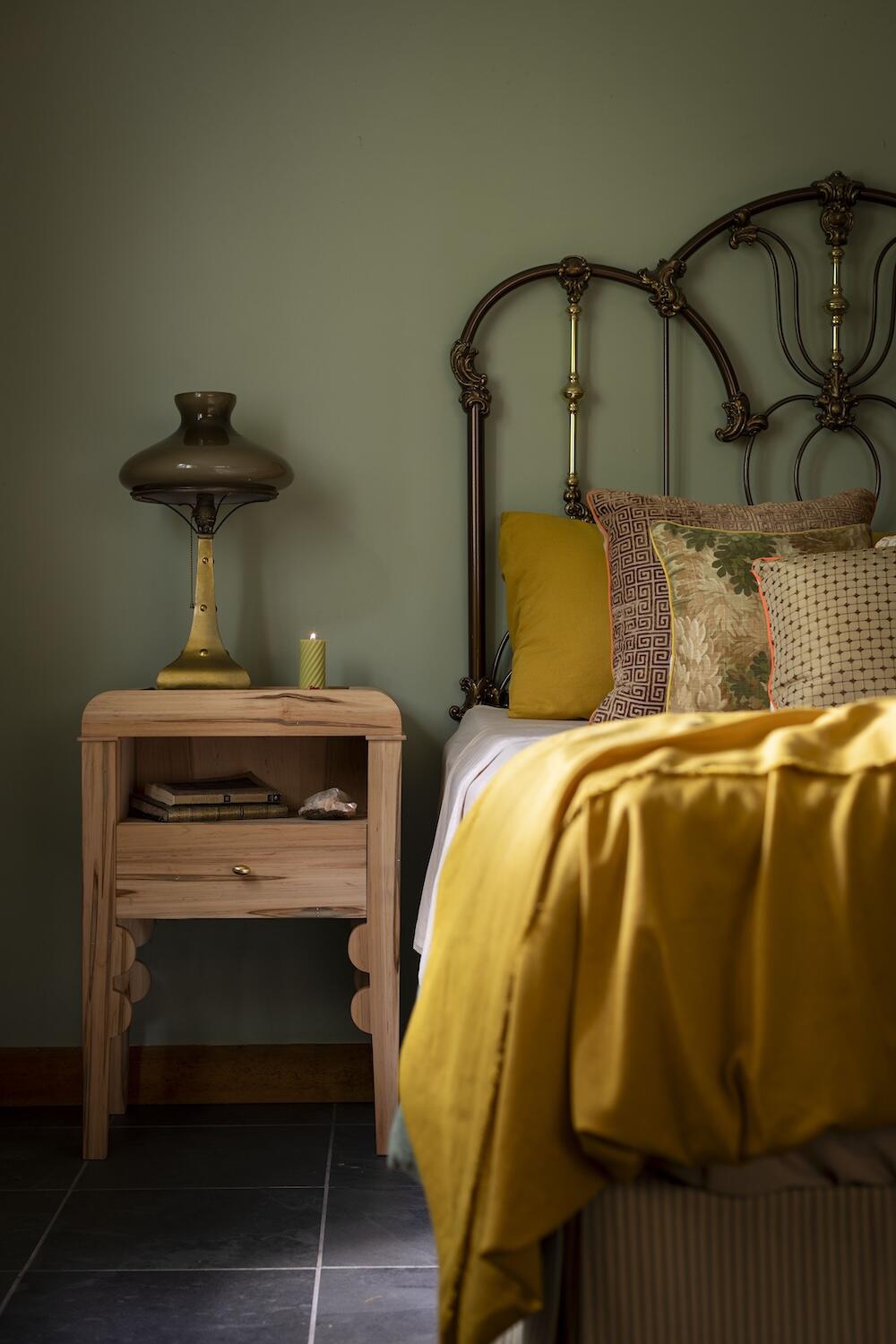
Studio Hinterland debuted in January 2024, featuring products by Zavracky, aromatics designer Barbara Mansfield of Phoenicia Soap Co., ceramist Demetria Chappo, painter and pattern designer Katie Westmoreland, and textile designer Nicola Whiteley. Zavracky’s inaugural collection for the brand, Clovelea, spans five furniture pieces inspired by a local Queen Ann Victorian mansion the group worked on renovating. “Jennifer wanted to create a custom tea hutch that drew from the original architectural details in the historic building, and the collection grew from there,” she says.
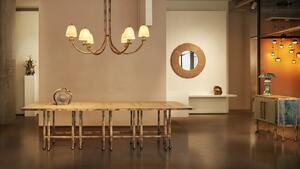
All of Zavracky’s furniture designs begin as sketches that evolve into technical shop drawings, and then a plywood prototype to test the stability and evaluate the proportions. She has a full woodshop connected to her home, where she uses locally sourced timbers and time-honored joinery techniques to craft her heirloom-quality furnishings. “I use more unusual joinery methods, like solid copper tusk tenons or brass pegs, for some of my more sculptural designs,” she explains. “I cut, shape, polish, brush and hand-hammer nonferrous metals from rough-cut bars and rods.”
Her Clovelea line, for instance, features details such as brushed brass cup-hanging rods and solid brass hand-hammered knobs. “Materials play a large role in my work,” she says, “and the conversation between the materials used in one piece of furniture.”
Currently hard at work on a series of two-tone pulls for Studio Hinterland, she recently custom-designed a bar cabinet with wine storage for a dining room in a home in the Brooklyn Heights Historic District. “The piece was inspired by a 19th century Georgian corner hutch with glass-paned doors, an heirloom the clients received as a wedding gift,” says Zavracky. “We mirrored the framing detail on the doors, as well as the faceted edges, and embellished the top with antiqued mirror details. Though the pieces throughout the space are distinct, they’re in obvious conversation with each other.”


 Withdraw Consent / Manage Privacy Preferences