








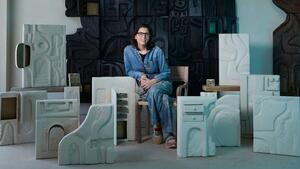
Gregory Beson has the soul of an artist. After beginning his creative journey as a musician, he got his start in the design world as an apprentice to a carpenter in his home state of Massachusetts. The apprenticeship eventually led him to Boston, where he developed an interest in historic restoration. “[It] involves a little more attention to detail,” he tells Business of Home. “That mixing of something new with something old, and where that handoff is and the poetics of that, is where it really started to come out for me.”
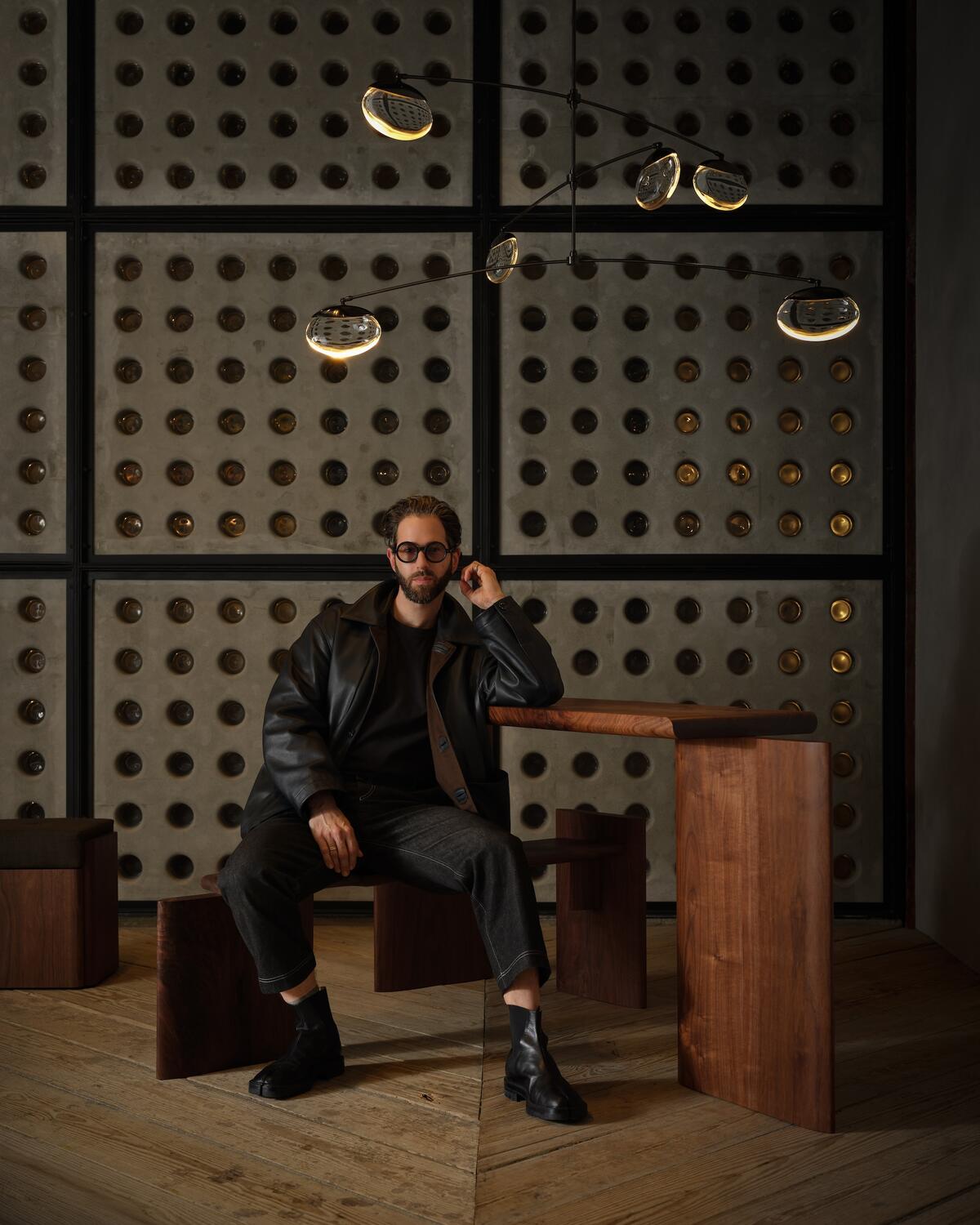
That fascination eventually brought him to Parsons School of Design in New York. Though he studied product design and then earned a graduate degree in industrial design, he still wasn’t sure how to channel his creativity. “I asked myself: Did I want to be an architect? Did I want to be an artist? I was interested in making functional things for people, and wood was the material choice, just given my background,” says Beson, who started a design studio out of Brooklyn in 2018, and began focusing on furniture in 2022. “I had lots of turns—pandemics and heartbreak and all the kinds of things that happen as a human—that led me to understand what my practice is, which, in a lot of ways, is an art practice. Friends and artists [tell me], ‘You’re really working as an artist, but you’re making functional collectible furniture.’”
Like many artists, his design process is visually inspired. “I can design a chair just thinking about it,” he says. “Whereas other people are more verbal, I tend to be way more photographic and picture based. I’m always sketching and noticing details and jotting them down. It almost feels like I’m an archaeologist, seeing parts of something, seeing the inspiration of something that could be from a song to a dance performance to some hairstyle to clothing—it all filters in through my lens.”
Despite never formally training in dance, he finds that the discipline tends to dominate his process. “[A piece] choreographs the space and people,” he explains. “[I think] about how you shape a table to choreograph how people come together. If it’s a circle table or a rectangular table, that would change the dynamic as a group, even just with side tables and beds and all this, right? They are all going to guide people on how they sit, how they move through space, how they interact. That’s a word that really comes up for me: choreography. I think that’s really related to the music side of my background—this lyrical movement, a jazzy improvisational side, but with some set parameters.”
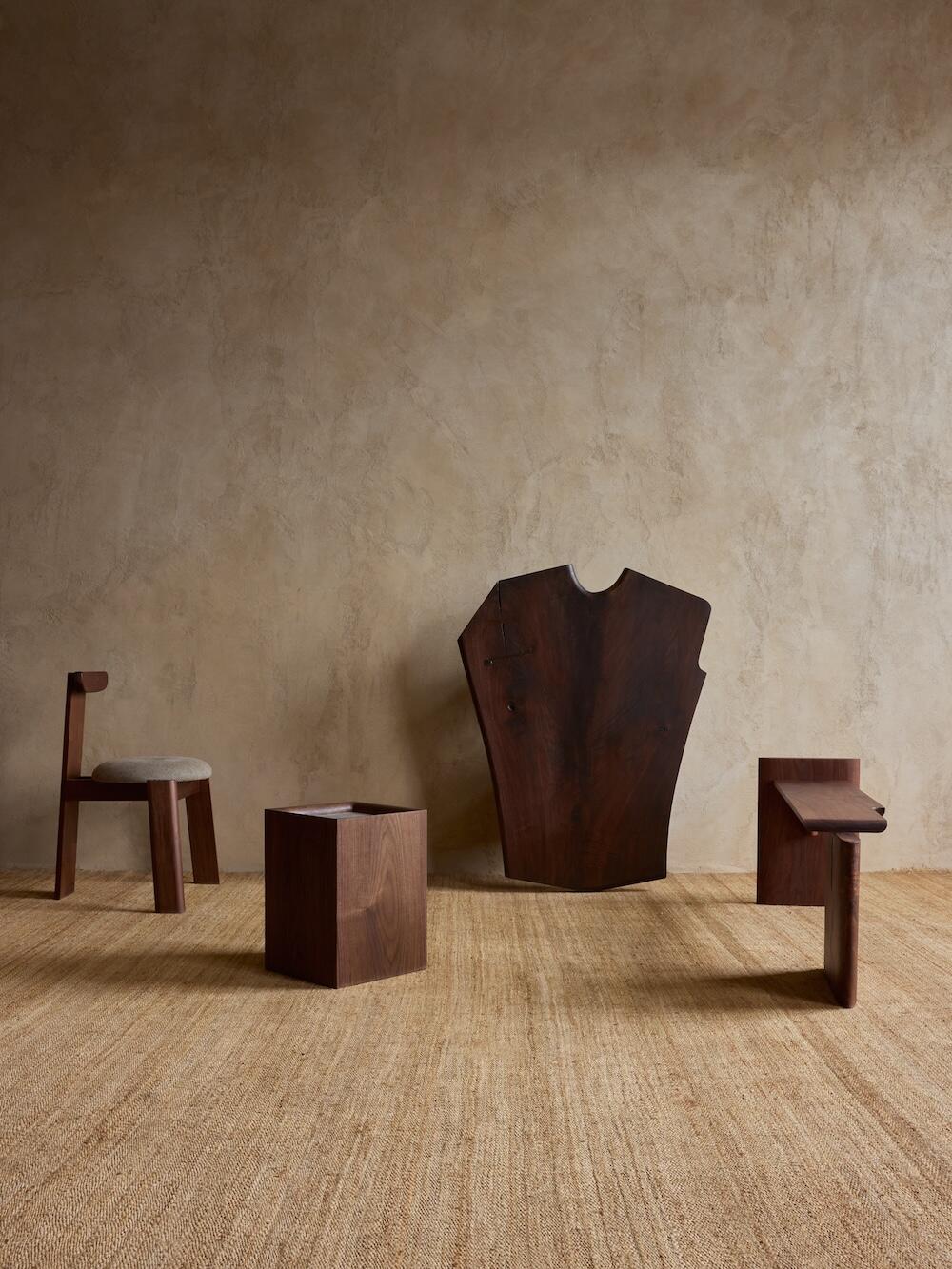
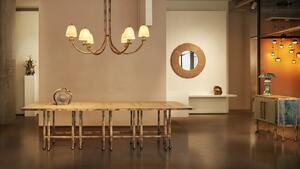
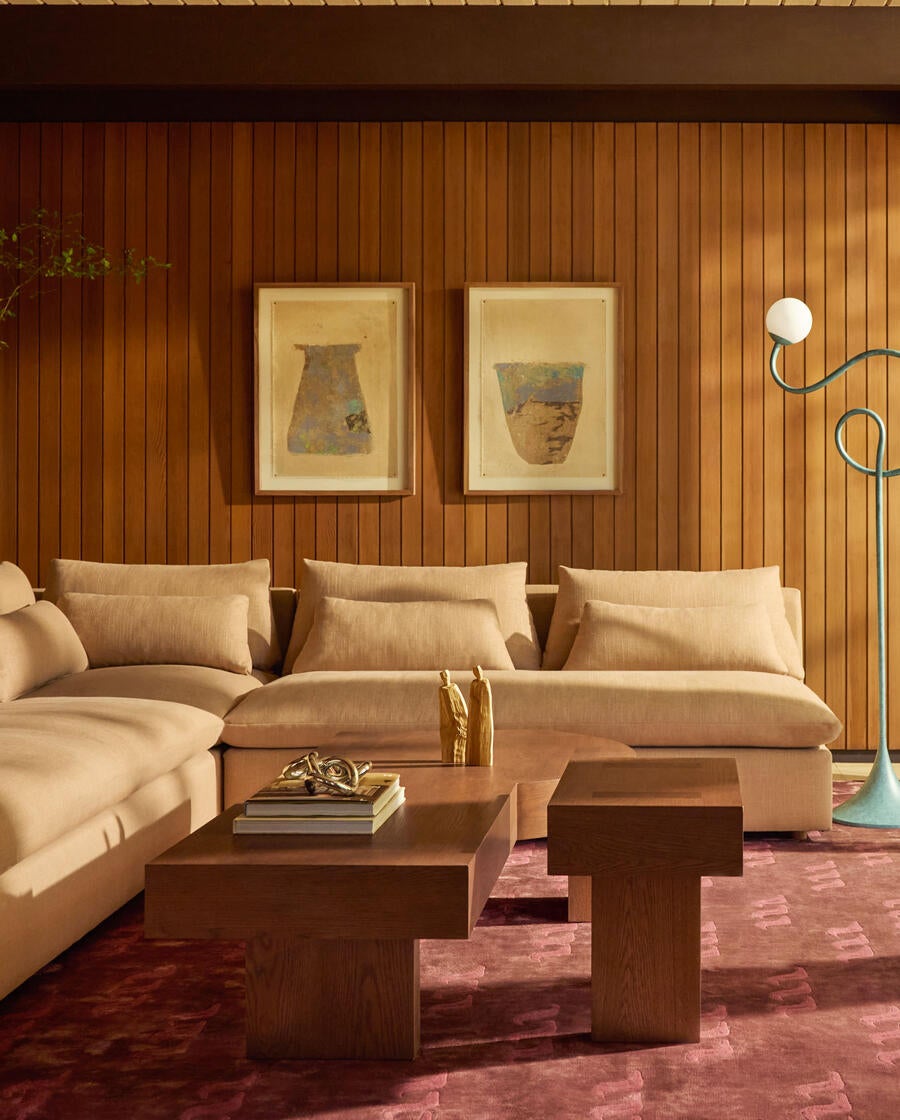
Beson’s products include the functional, the sculptural and everything in between. “I love making tables for people, so I’ve made a couple of slab tables that are really focused on family,” he says. “I love when I know the narrative: I know exactly what they’re going to be doing, they tell me how they’re going to be living with it. I select the wood, I select the shape, even sometimes the chairs for them. Those are really fun for me.” On the more sculptural side, his Liminal Bodies series features a bench, stool and chair with curved edges that the artist designed by observing the grain movement and coloration of various woods, including white ash, cypress and reclaimed redwood. Another of his favorites is the Raul coffee table, which is dominated by a large walnut slab. “You really have to look at a slab,” he says. “You have to take a day to think about it and draw, and it slows you down a lot. I like the process of that piece a lot.”
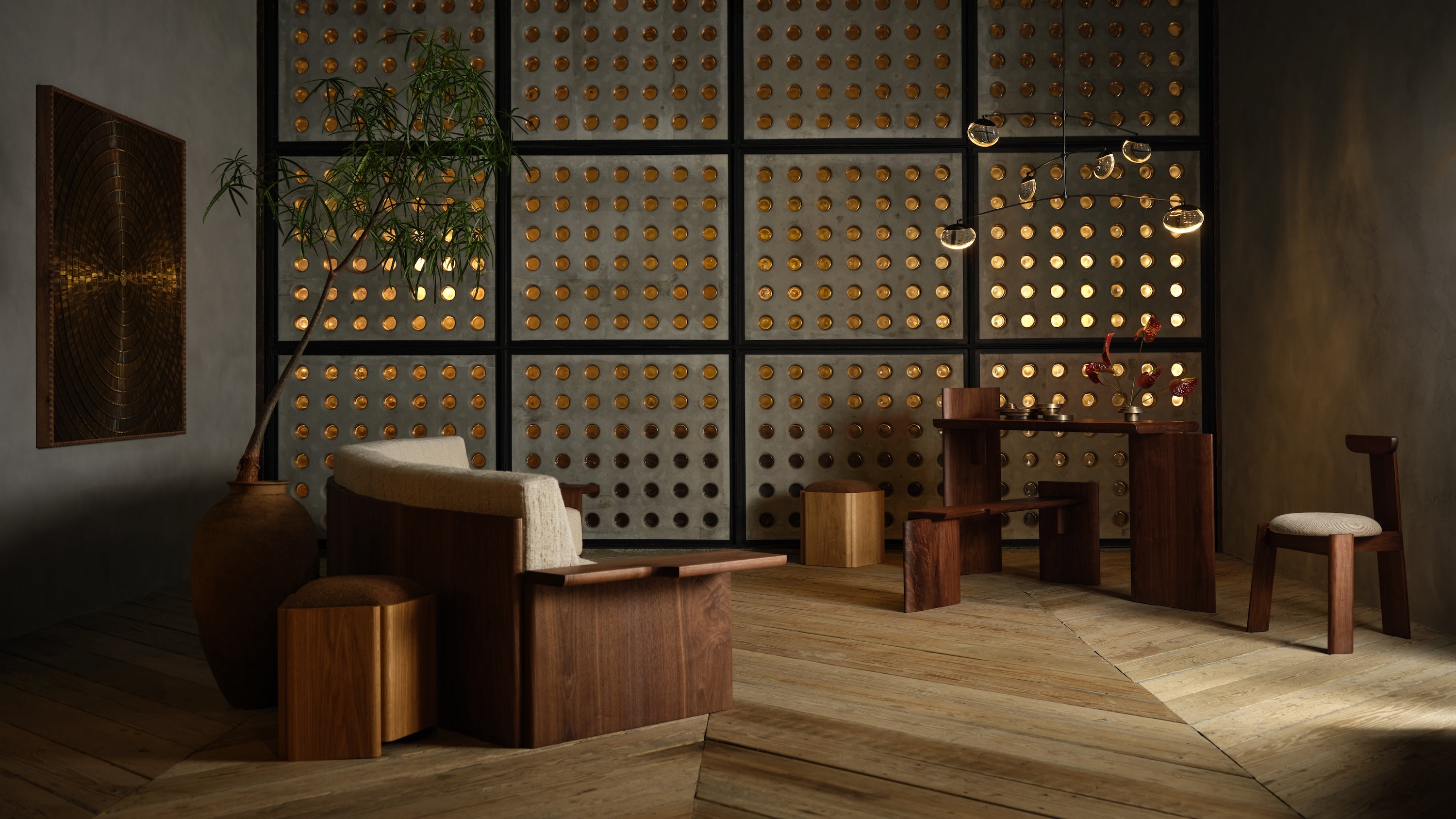
Yet he doesn’t slow down for long. Beson just opened a new show called “To the Ground: A Study in Material and Form,” in collaboration with the San Francisco gallery Coup d’Etat. It’s his most expansive collection of seating, consoles, credenzas and sculpture, all based on his personal and professional history, with some reinterpretations of his archival pieces. “We talked about different finish options, different textile options, scale, and the collection itself. It’s a lot of pieces from my catalog recontextualized specifically for the Coup showroom,” he says. “It felt really important to look back for a moment on where I’ve come from. It was beautiful to see 14 pieces from very different times in my life together, and to see the through line to help me project for the future. You can get lost in the old work, and I just want to keep moving forward. So it’s nice to take a beat, take a breath and say, ‘These [pieces] are good for people.’ And then also, ‘Now, what’s next?’”


 Withdraw Consent / Manage Privacy Preferences