








Kusum Das is inspired by her Indian culture. The Delhi-based artist looks to her country’s historic rituals, stories and handicrafts to infuse her work with heritage and meaning. “In today’s time, when technology and AI are becoming so dominant, I feel it is even more important to protect handmade traditions,” she tells Business of Home. “I do not want our roots to fade, or for handcrafted art to stop existing.”
Growing up in the Mithila region of Northern Bihar, Das was raised by a family of artisans. At a young age, she began practicing the ancient method of Madhubani painting, a traditional folk art form that originated in her hometown, and she hasn’t stopped since. “My mission is to preserve the authenticity of Madhubani painting and pass this knowledge on to future generations, so that this heritage continues to live through real hands, real stories and real devotion,” she says.
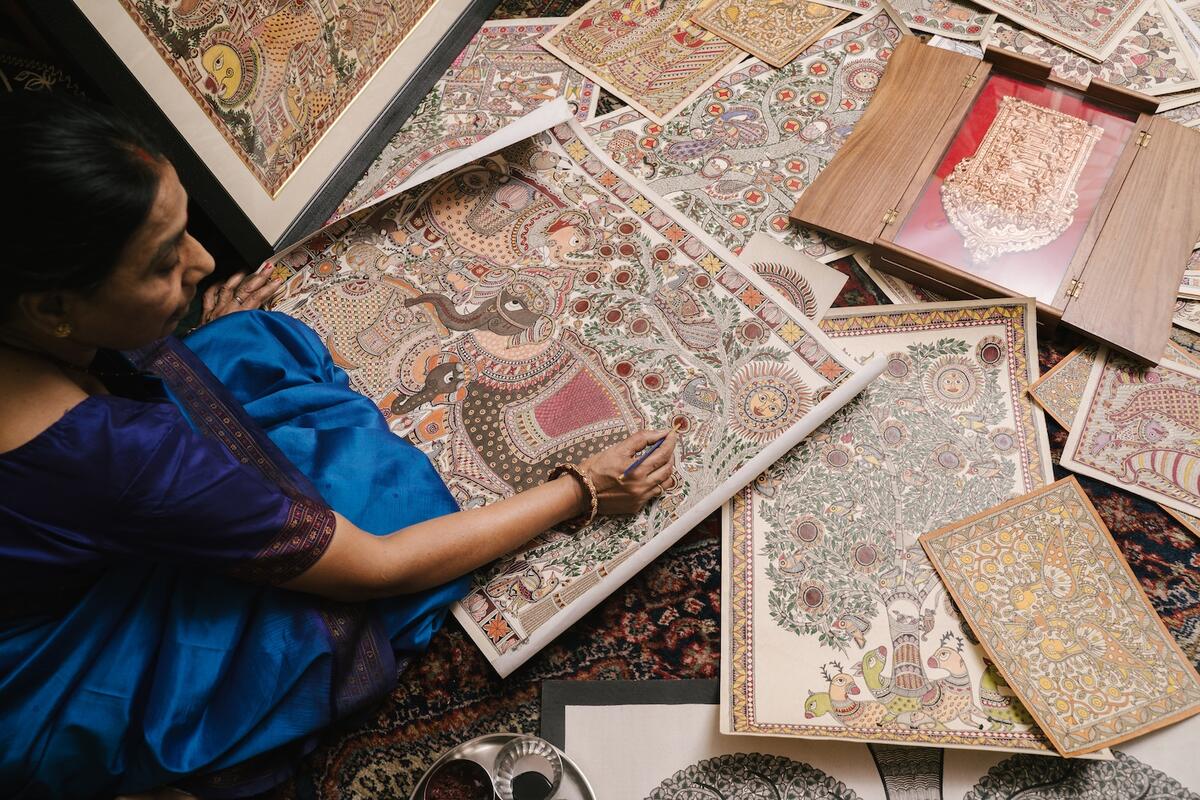
The painting style dates back to the early Ramayana period (around 700 to 400 B.C.E.), and typically incorporates symbolic cultural motifs—including deities, flora and fauna—that tell a story about the daily life of the locals. “What makes it unique is its detailed linework, bold outlines, flat application of color, and the way every empty space is carefully filled with patterns,” says Das. “There is rarely any blank space in a Madhubani painting. The entire surface feels alive.”
Natural materials also play a key role in Madhubani artwork. Traditionally cast on the freshly plastered mud walls and floors of village homes, the paintings are now crafted with plant-based pigments and handmade paper or canvas. “This keeps the process sustainable, while staying true to the traditional techniques of the art form,” says Das.
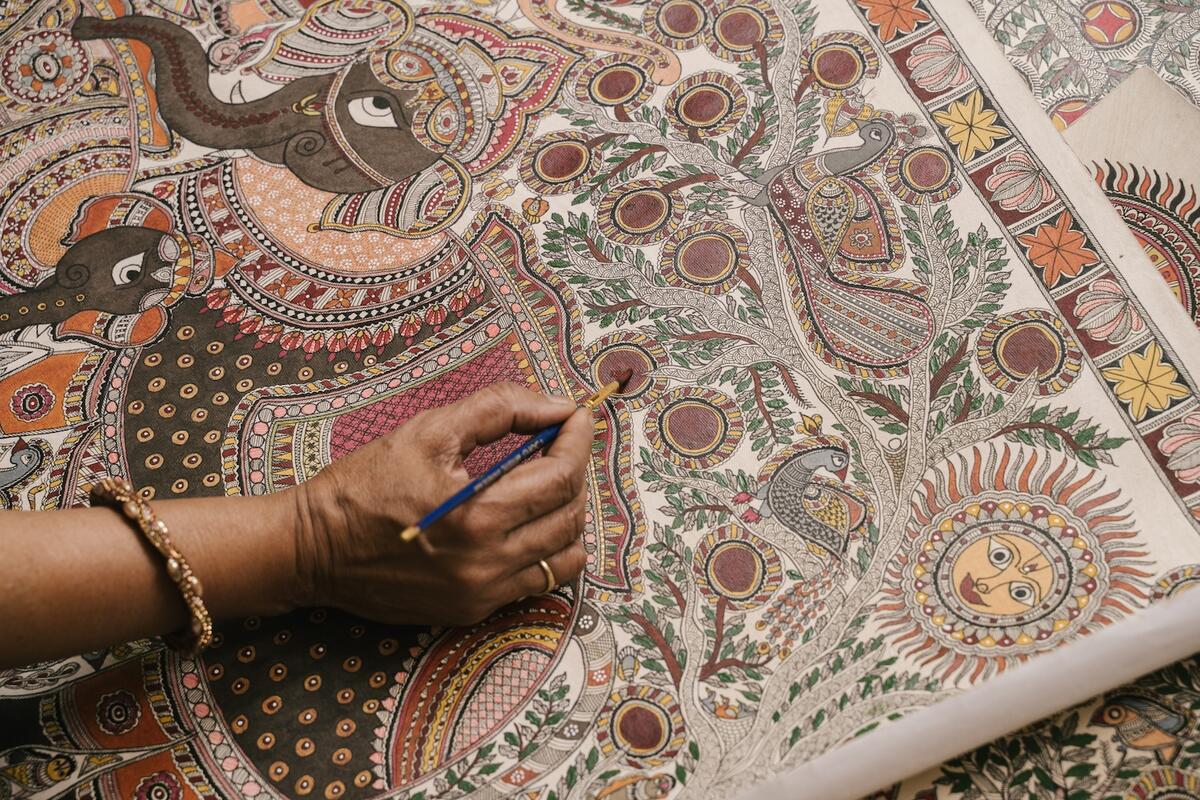
Before she begins a painting, Das decides on a narrative—such as the tree of life theme or a mythological tale—and then visualizes the full composition. Once she starts, she works slowly and methodically, filling every space with fine lines and patterns, allowing the story to unfold gradually on the surface. “Each painting is done entirely freehand,” she says. “There are no preliminary pencil sketches or measurements; the composition begins directly with the brush, guided by experience and intuition.”
The artist prepares her natural dyes from a mix of hand-foraged flowers, fruits, leaves and minerals. She often makes reds with hibiscuses and yellows from turmeric, and she uses clay for earthy tones. “Each pigment is hand-ground and mixed carefully,” she says. “It’s a slow process, but it keeps the work authentic and true to the Madhubani tradition.”
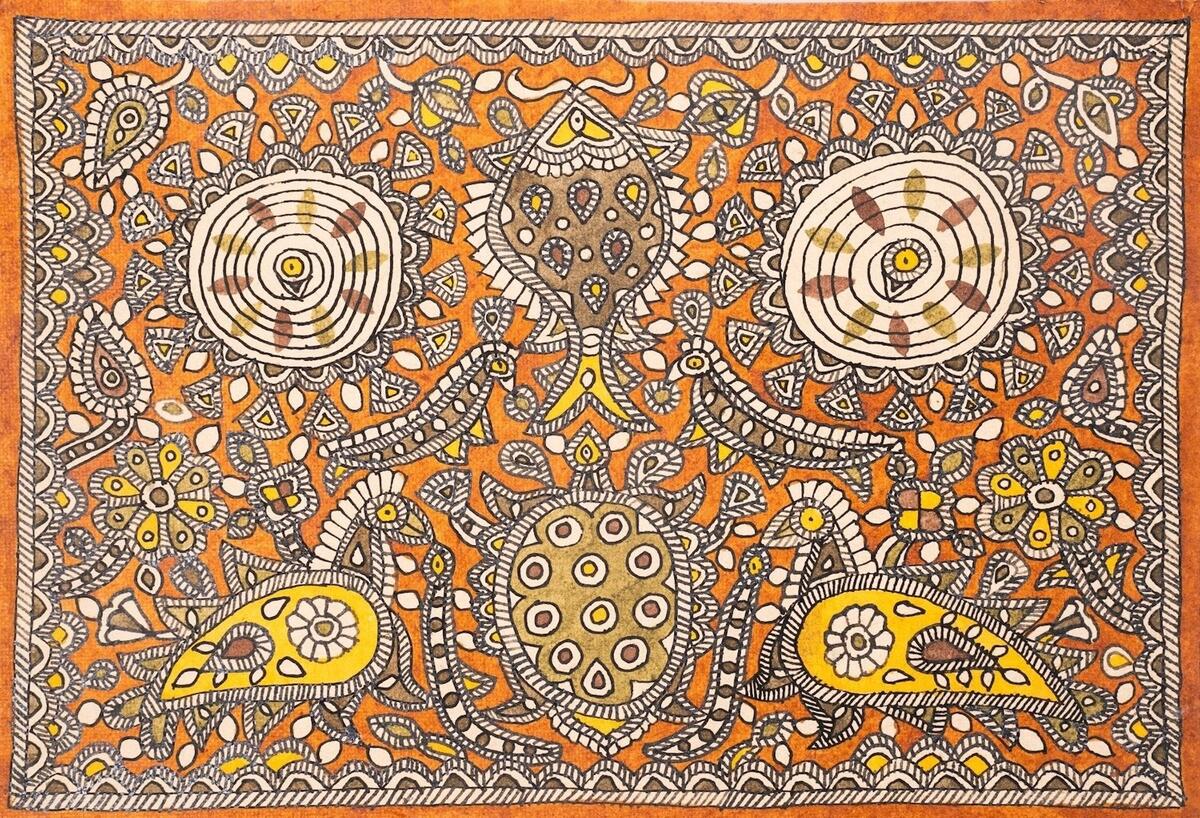
Depending on the size and intricacy of the piece, a single painting can take anywhere from two to three months to complete. “I use ultrafine brushes to achieve the linework and detailing that this style is known for,” explains Das.
About a decade ago, she relocated from Bihar to Delhi, where she opened her current studio, and was discovered by Soni Mehra, founder of South Asian–inspired online retailer Marble Lotus, which now offers both original paintings and commissions of her work. “These paintings are very special to me because they give me the opportunity to showcase Madhubani heritage and art on a global scale,” says Das. “They carry both storytelling and cultural legacy, while remaining timeless in their visual appeal.”




 Withdraw Consent / Manage Privacy Preferences