








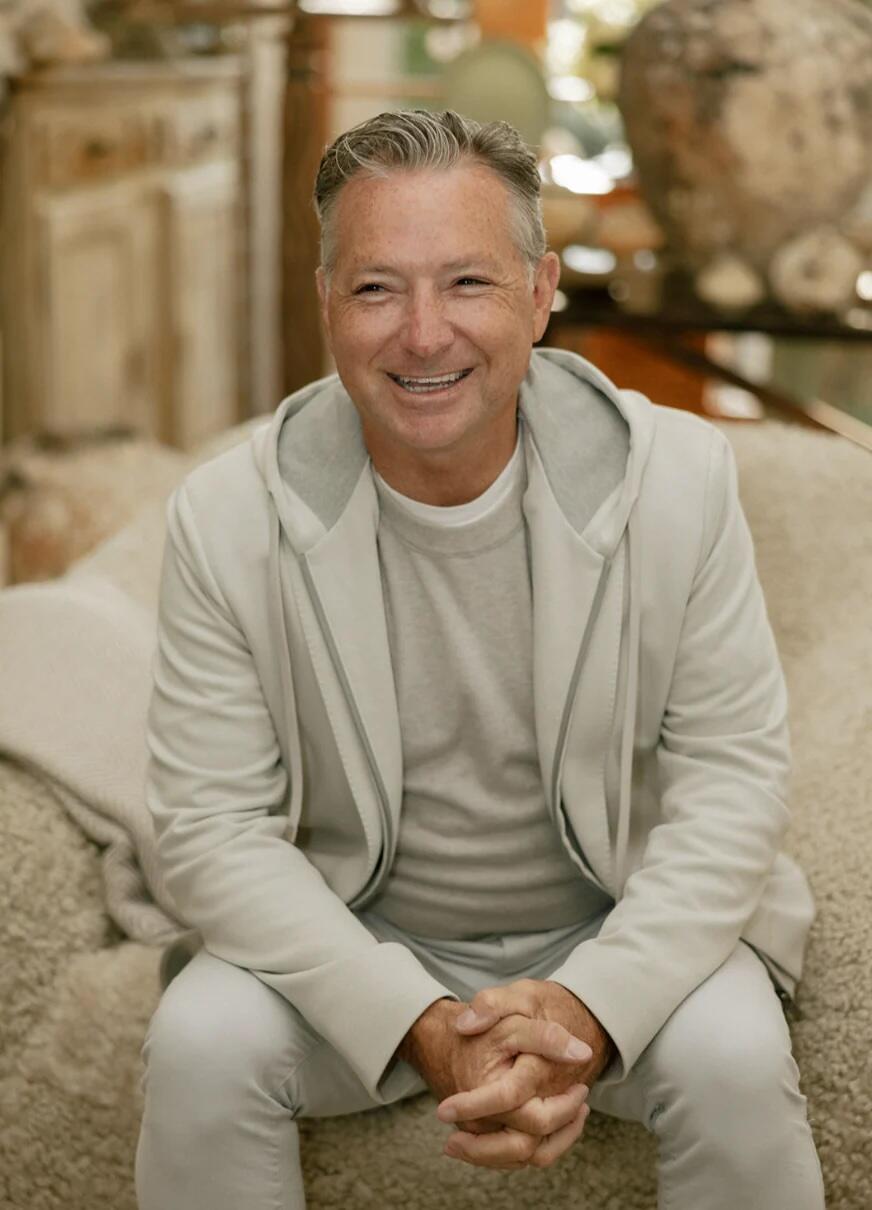
In Business of Home’s series Shop Talk, we chat with owners of home furnishings stores across the country to hear about their hard-won lessons and challenges, big and small. This week, we spoke with Shane Brown, who owns four home stores in Los Angeles and Santa Barbara counties.
Brown has been buying and selling antiques for more than 30 years, opening retail locations across the U.S. “Wherever I feel like opening a store, I do it,” he tells BOH. “If it does well, I stick with it. If it’s just OK, then I move on.” But Southern California seems to be his sweet spot: Big Daddy’s Antiques operates from Culver City, and in the last five years he has opened three locations of his indoor-outdoor home and garden store, The Well, in Summerland, Montecito and Santa Barbara. Ahead, Brown discusses cultivating a network of people who know your taste, how he’s shielding his bottom line from tariffs, the evolving celebrity status of Montecito, and where he’s headed next.
How did you get started?
I’ve always been really creative. My grandfather used to take me shopping. I had an eye to put things together. I landed a really huge account for this company I was working for, and at the same time, I was like, “OK, I can start a second business on the side.” I started small with $200, and now we … do more than that.
How would you describe the aesthetic of your brand?
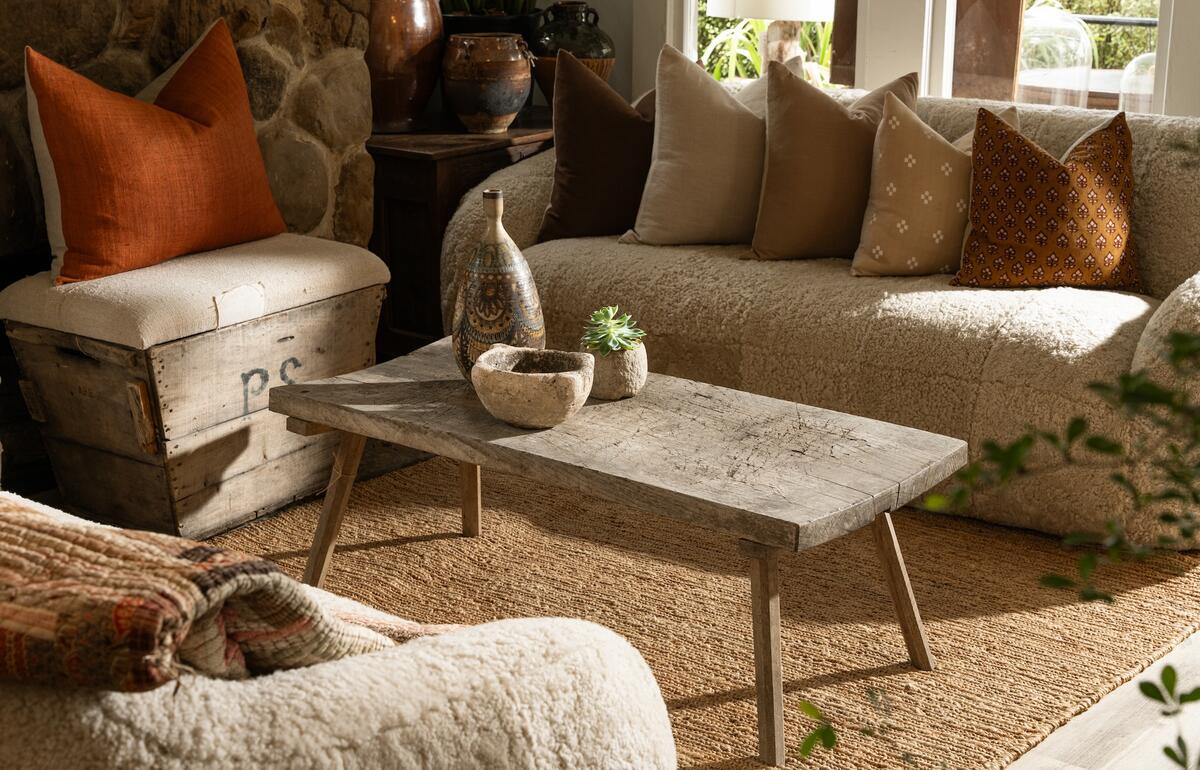
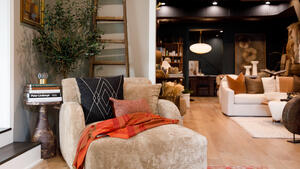
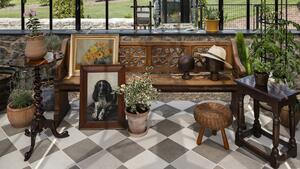
There’s definitely a Shane Brown look. At some point, maybe when I’m dead, they’ll say, “Oh, that’s Shane Brown.” But right now it sounds a little bit arrogant. I think it’s very—I hate the word—eclectic. It’s kind of Ralph Lauren meets coastal meets primitive. It depends on what I’m buying at the time. I try to buy the most unique things I can find, and I like to have something for everyone.
What was the timeline of opening and locations?
I had some smaller retail stores over the years, and then I was selling at flea markets. Every Sunday, I would do a flea market, and people kept asking, “Where can I find you?” All the set decorators, all the designers—they couldn’t always get to the flea market on Sunday, and they wanted to shop. So I opened Big Daddy’s in Los Angeles in 1994; we incorporated in 1996. We had a store in Aspen called Georgia Brown Home for four or five years. Then we had a store in Houston. We had one in Seattle. Wherever I feel like opening a store, I do it. If it does well, I stick with it. If it’s just OK, then I move on. What I enjoy is being creative. That’s part of the obsession with opening stores.
Do you have a favorite location?
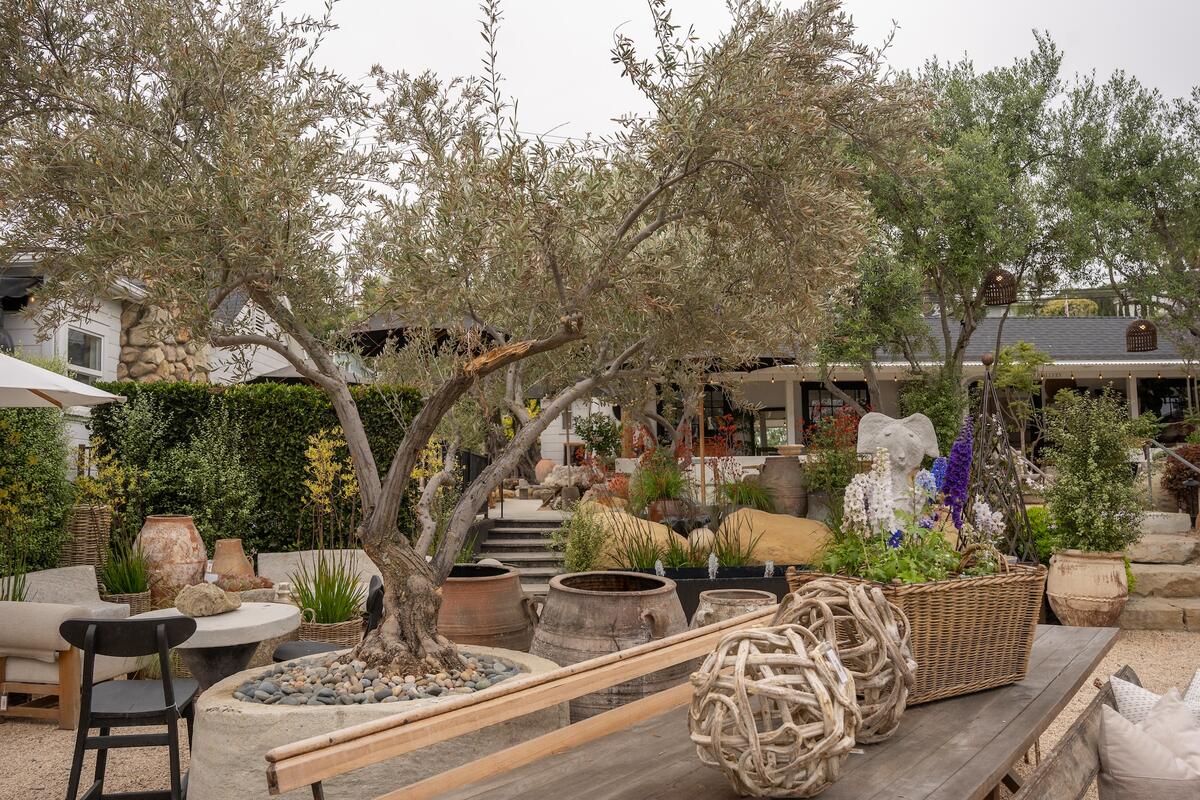
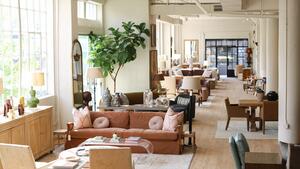
Summerland is really easy for me—[it’s] five minutes from my house. I can get there and start my day quickly. I used to sell to a store called Botanik. I saw [the space across the street] and thought, “God, what I could do with that space.” Twenty years later, I moved to Montecito, and I was driving through Summerland and it was available! I [opened] a month before the pandemic, and then we had to close and reopen. I bought the property next door, and that’s when we did The Well guest cottages. We are nestled in the Santa Barbara Hills overlooking the Pacific Ocean, right off the freeway. The mix between indoor and outdoor makes people feel comfortable, especially coming out of Covid; the olive trees helped. We have been super busy since then.
Tell me about your sourcing process and how it has changed over the years.
It’s definitely evolved. When I first started, I was shopping at garage sales, estate sales, junk stores and the Roseville flea market. I would get there early, set up my space, and then go out and shop. Sometimes I wouldn’t even get [a new antique] back to my space, and a person would buy it from me [on the spot].
Over the years, I’ve cultivated great relationships in Europe and the U.K., on the East Coast, all over. I would buy at Brimfield, Round Top—I still go to Round Top. I buy a lot in France and Parma, Italy. I’ll buy right here in Montecito. It’s getting easier. Now people know me and just send me photos. An hour ago, somebody sent me a video of a 12-foot table; it’s going to be here tomorrow morning. Montecito and Santa Barbara—it’s a pretty affluent area, so people have been buying from Europe for decades. People get sick of stuff or the people die, and then I get amazing things right here.
Who are your typical customers?
We do a lot with high-end designers in L.A. at Big Daddy’s. We also do a lot with landscape architects and designers, homeowners, celebrities—I signed NDAs, so I can’t tell you who, but I’ve been very fortunate to have the clientele that I have. I mean, you can only imagine all the customers or the celebrities that live up here. Most of them shop with me, or their designer does.
What’s your favorite thing to hunt for?
I typically like to buy stuff I’ve never seen before. The rarer, the better—that’s me. I even buy jewelry, which is crazy. And [then there has to be] a bit of money left in it, because typically when you find something really cool, it’s expensive. I try to always buy at a good price, and in bulk so that I can get the best price for my customers. I buy a lot of art. I collect vellum books and watches; I used to collect globes. A lot of different things!
Is there a category or type of object that’s moving quickly for you these days?
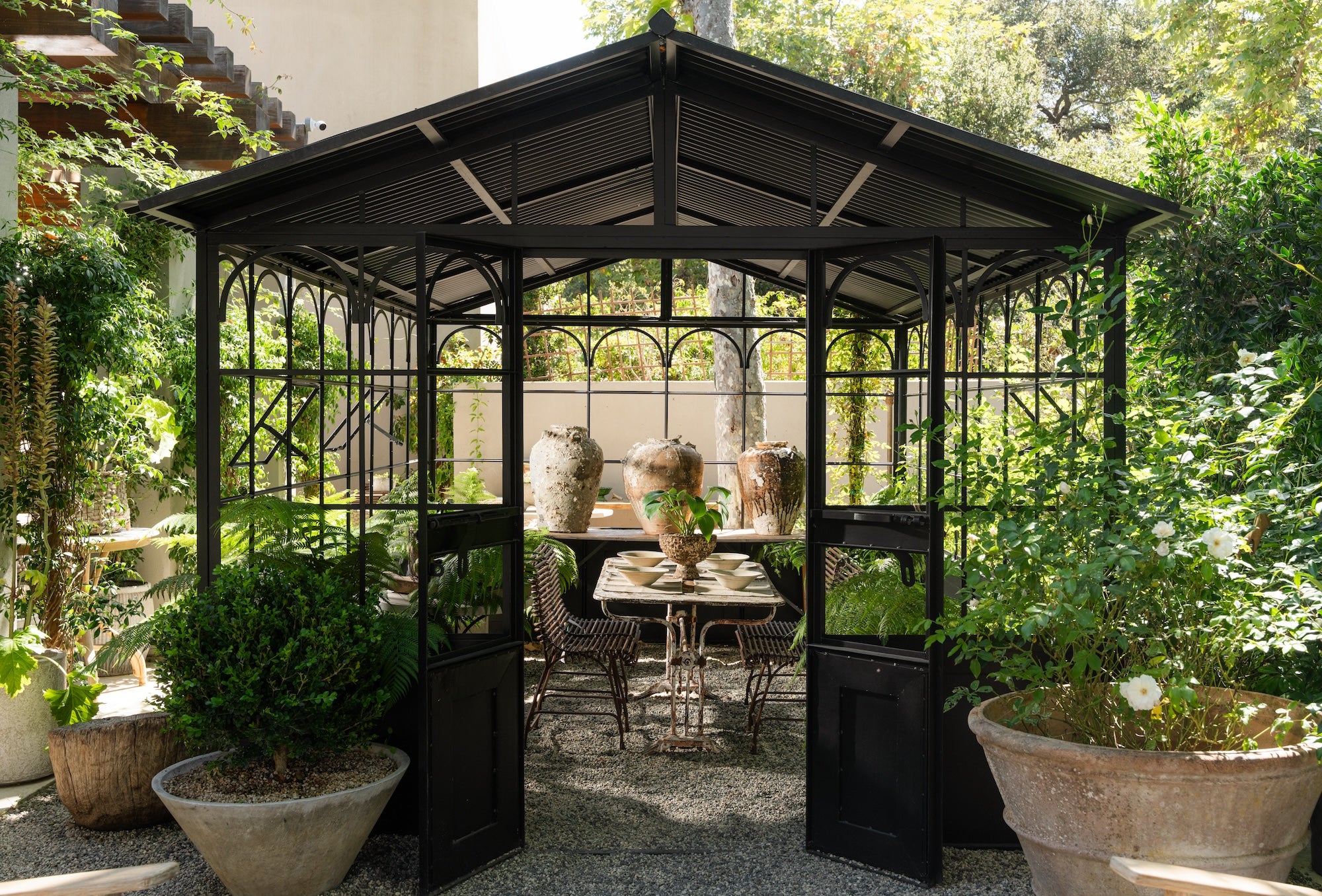
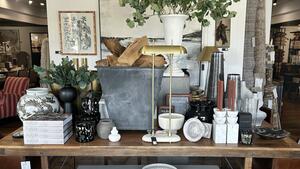
We sell a lot of fountains. As soon as we make a fountain out of a limestone pot, they sell quickly—that’s hard to keep in stock. Our greenhouses do well. One-of-a-kind objects do extremely well. Anything that you can stick a plant in, we do well with—pots, vessels.
How have the cities and areas you’re in changed since you began your business? I’m fascinated, of course, by Montecito becoming this celebrity haven.
L.A. has changed drastically. Big Daddy’s [is] still a destination, but Netflix and a lot of the big corporations moved in, so the traffic has made it harder for people to get around.
In Summerland, I changed this whole block when I purchased that lot, and neighbors and people come up to me and say, “Thank you for doing what you’ve done for Summerland.” With Godmothers and Field+Fort and Porch, it’s like a little design haven right now. It’s been really good for us. I always wanted to be a part of a community, and I feel like this store has given me a lot. It opened doors for me and my family. It’s very social. People have already “made it” here, so they’re not trying to impress each other. They’re just very low-key and easy to get along with. You could be having breakfast next to a billionaire and you don’t know who he is.
What has been your approach to e-commerce?
We’ve been extremely busy the last 30 years, and I’ve always thought, “I’ve got to get a website.” But it is a lot of work to have a website. It’s up and running and it’s great, but I can’t do it all. I’m still analyzing all the work that it takes—because you’ve got to stage the image, take the image, upload it, make it look good. It’s a lot different than working with [product] in an open environment, or in a retail space. We’re still learning. That’s the way of the world, though. I know a lot of people who used to shop with me that only shop online now because it’s so hard to get around L.A. If we can get everything online, our sales are definitely going to go up.
How have you weathered the issues of the last couple of years—the pandemic, retaining staff, tariffs?
It’s an interesting question. Having a business in California is difficult, so I’m kind of ready for anything. I get up every day and do as much as I can. As far as the tariffs, I’m trying to buy more locally. I bought seven containers of inventory in Round Top. I’m slowing down on my buying in France; I canceled the trip to Parma. I’m tightening up everything. The people overseas are scared just like we are, so they’re coming down on their prices. The shipping is a little bit less, because there’s not as many people shipping. It’s balancing! I want to keep my prices down so that my sales stay up. Fortunately, our numbers are still strong.
It sounds like you’re always looking for your next opportunities. What are your hopes for the future of the business?
I am going to supersize The Well in Summerland. I just purchased a nursery in Carpinteria, about three minutes away, and it’s nine and a half acres with 89,000 square feet of greenhouses. It’s going to be off the charts. My goal is to have people flying in from all over the world to shop at this location.
What’s your favorite type of day as a shop owner?
It’s the end of a $100,000 day. Half the stuff’s already off the floor, and [customers] picked up [their purchases or] took them with them instead of us trying to manage the deliveries. Or when customers come up to you and say, “Oh, my God, I bought this [piece] from you at the Rose Bowl 20 years ago, and we still have it. It’s our favorite piece in our house.” That’s a good day for me. When people walk in and say, “Where are we? I want to move in here!” Diane Keaton said that once when she walked in. It’s a special place. When people come in and really appreciate what you do, it makes you feel good.

 Withdraw Consent / Manage Privacy Preferences