










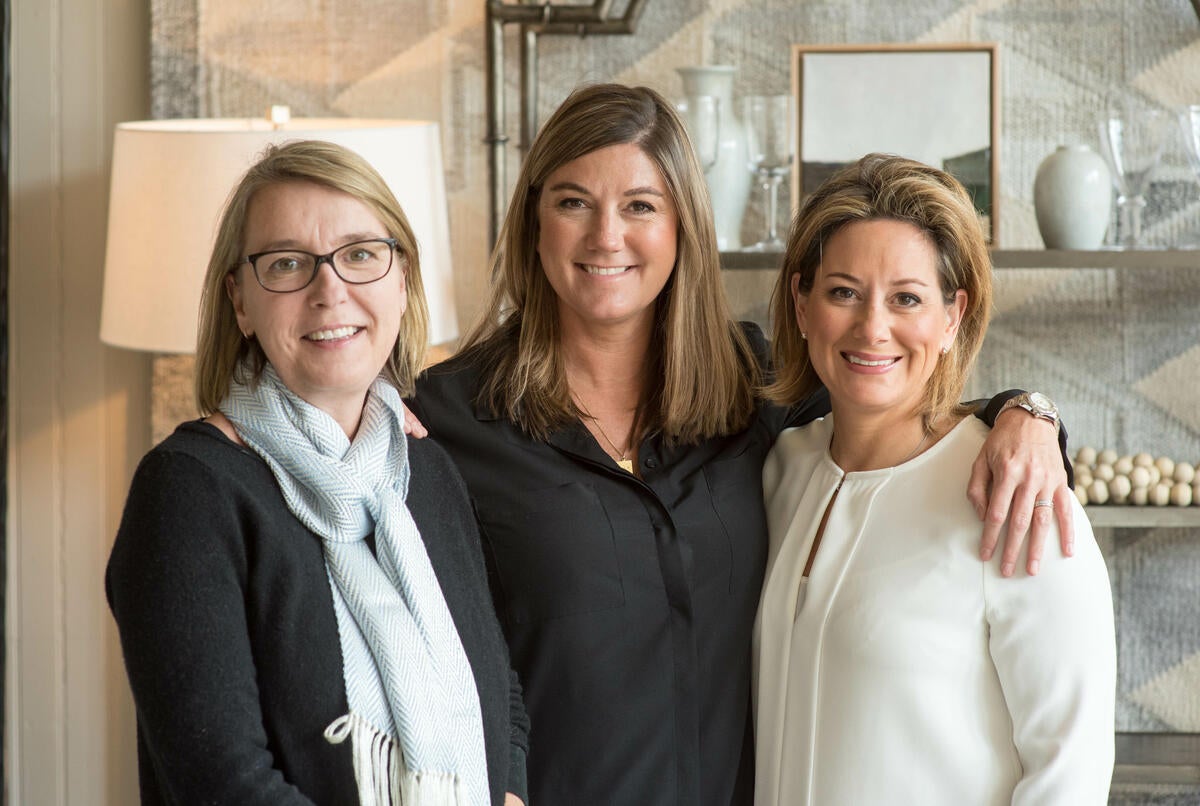
In Business of Home’s series Shop Talk, we chat with owners of home furnishings stores across the country to hear about their hard-won lessons and challenges, big and small. This week, we spoke with Bess Clarke and Stephanie Hall, who along with Becky Jusko Peraner run the Massachusetts landmark Nantucket Looms.
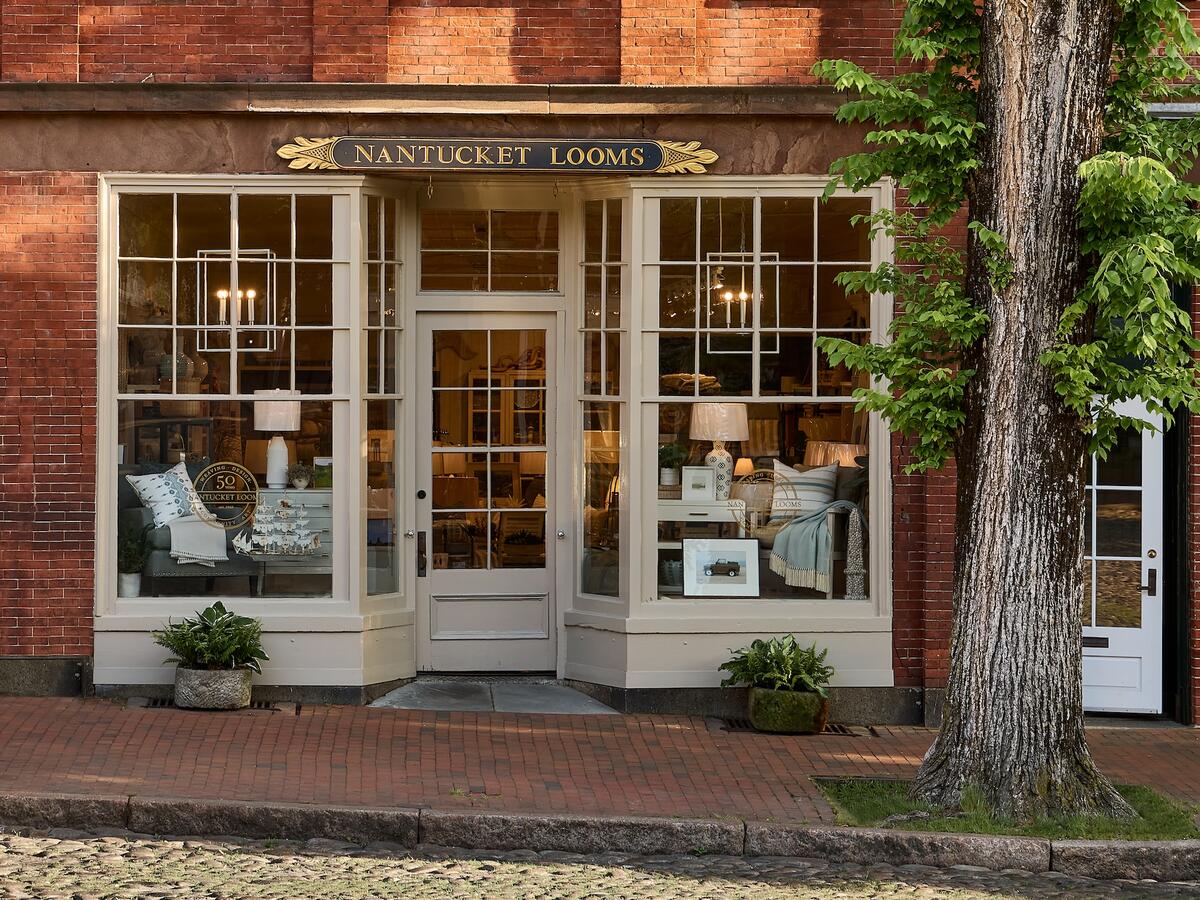
In 1968, William Euler and Andrew Oates founded Nantucket Looms—a textile-focused home store with its own weaving studio upstairs—in a historic building on its namesake island’s Main Street. In the early 1990s, they turned ownership over to longtime employee Liz Winship, who eventually passed the business to lead designer Stephanie Hall, Becky Jusko Peraner and her daughter, Bess Clarke, upon her retirement a decade ago. Both Clarke and Hall have been connected to the shop since their adolescence, and after gaining experience elsewhere, they returned to “the Looms” mid-career, with the former stepping up as CEO to build out the business for the future. It’s a history shared in their 2025 book, Nantucket Looms: A Legacy of Style. Ahead, they explain what pulled them back to the company, how they balance the seasons, and why romance is essential to creating a sustainable brand.
How have your roles and levels of responsibility changed over the years?
Bess Clarke: My mom started [working here] in 1974, and I was born in 1977, so I’ve always been around the business. I worked at the Looms in high school and throughout college, and then I had a career for 10 years in nonprofit fundraising. When I rejoined the company about 12 years ago, I came on as CEO, which meant [working on] more of the business development side of things. I did a lot of strategic planning and financial management in my previous job, so I took those experiences and applied them to the Looms. Stephanie and Becky became partners with me and my mom, and we implemented a plan to grow the business, add e-commerce and build out the interior design.
Stephanie Hall: I started as a seasonal shopgirl! I worked hand in hand with Liz for many years. I’m a tad bit older than Bess, so while she was in school and working in development, I was Liz’s right hand. At the time, Liz was the sole proprietor, so I was gaining the experience of all the creative parts of the business, but also helping her manage the finances. When Bess got more involved and we wanted to grow the business, we realized we needed to delineate some of these roles. It’s great that we’ve all had a hand in the different aspects of the business—Bess will go to buying shows, so she’s seeing that perspective while focusing on the business parts. And then when we’re budgeting, I’m thinking of the creative side. I think that’s helped us scale the business in an enormous way in a short period of time.
What made you want to return?
Clarke: Nantucket is such a special place, and our business is now in its 57th year. It is more than a retail shop or a production studio; it’s an institution. We’ve always been aware of how special it is, and we really wanted to preserve that. It meant putting more structure in place to protect and grow [the brand,] which then gave us tools to leverage our story. And we’re really proud! We were founded with the idea of being a year-round place of employment for weavers—teaching that industry and having a sustainability aspect to the business. We have a staff of 20 year-round, [in addition to] all the artists we represent, which over the years are in the hundreds or even thousands. When our business does well, everyone benefits. We’re involved in the community, whether through donations or helping organizations like the Nantucket Historical Association. We were involved in a recent exhibition. We are more than a gift shop on Main Street.
Hall: Before I moved to Nantucket, I worked for Benetton for many years, back in their heyday in the ’90s. One of the big philosophies of Luciano Benetton was giving back to the community, and they did a lot for AIDS and in Africa. It was nice to have that as a foundation. And that started my love of visual merchandising, because that was such a big thing there. Starting to work for Liz and having a relationship with the founders really grew my love of all things Nantucket.
What do you sell?
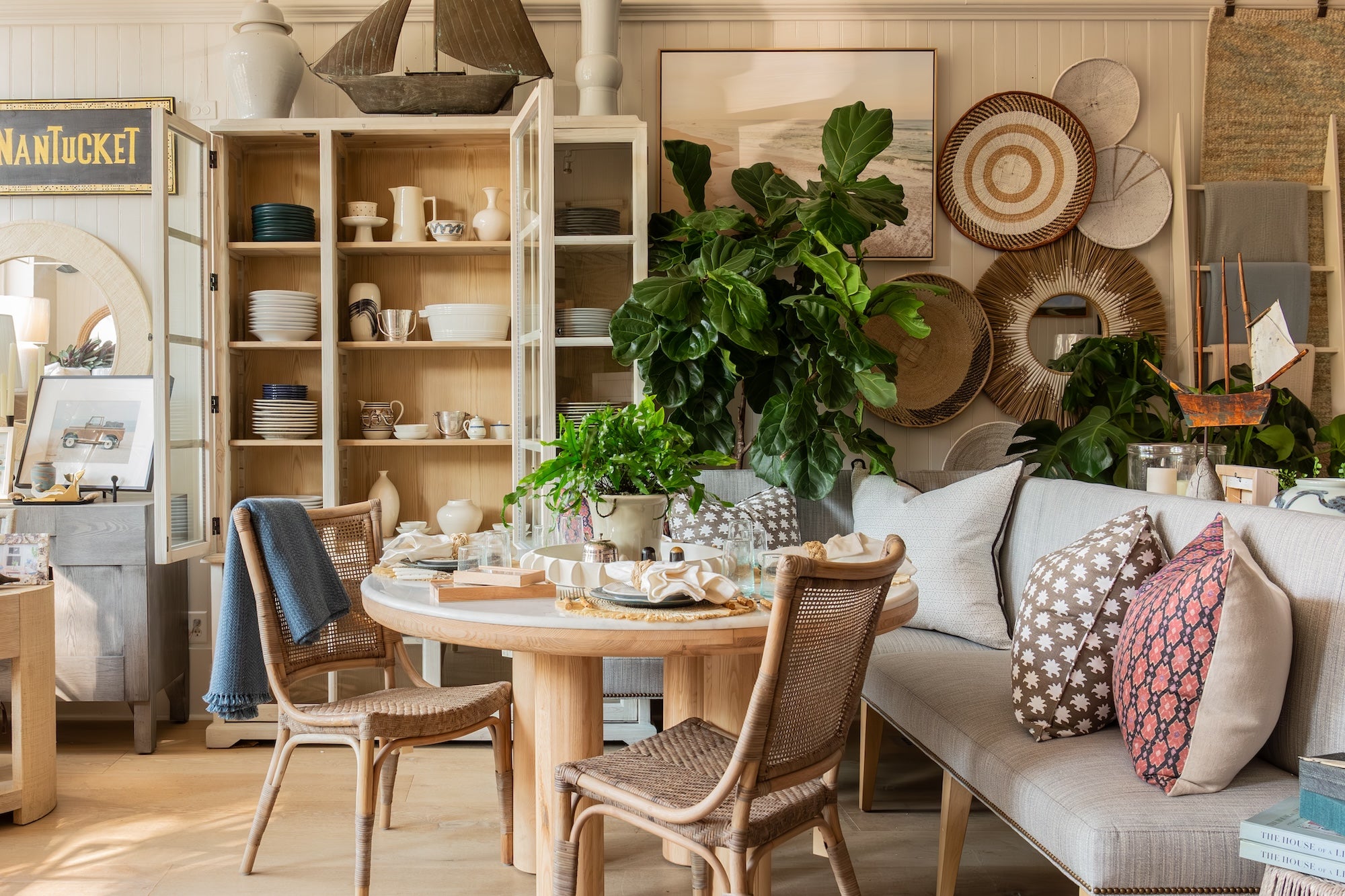
Clarke: Our merchandise offering is very eclectic. We feature all of our beautiful handwoven textiles, so that’s what we try to feature in almost all of our displays, and so much of the local artwork. With our summer clientele being very worldly and wealthy, it’s nice that we’re constantly hearing how we have such a unique shop. The goal is to have a little bit of something for everyone. We just buy everything that we love and that speaks to us.
I imagine some of these vendor relationships have probably gone on for decades. How much are you looking for new vendors?
Hall: We are always looking for something new. It’s one of the qualities that I learned from Liz. Even going to trade shows 25 years ago—you don’t pass by something; you always want to look for one little treasure. We have a really wide variety of vendors, and instead of always buying from a few big names, there are small companies that we get one or two things from. During Covid especially, we really learned to appreciate how much the in-person buying experience was critical [to] our look, and for putting our collection together. We just love to see it all in person. We are always trying new shows. We have done some things in Europe—not for trade shows, but antiquing—and then we try to hit all the shows throughout the country. We go to different antique and one-of-a-kind places as well.
What is the customer base?
Hall: We have a concentrated downtown area, so it’s very crowded and busy in the summer. Part of the philosophy of having the business open year-round is that we can be approachable in the off-season for local people to shop for gifts. And there are a fair amount of local designers, so we have a trade program through our e-commerce and locally.
Can you tell us a bit about how you structure the business around your seasonality?
Clarke: The off-season is when we go buying. It’s when we really clean everything out and start receiving new merchandise. We’re known for running a sale in the winter that the locals wait all year for. In terms of cash flow, adding interior design as part of the business has been a game changer for us—design picks up in the winter because everyone wants their projects done for the summer. We have the influx of cash flow for those projects, making us less dependent on credit [when] retail quiets down.
What are the holidays like in Nantucket?
Clarke: Last weekend we had the Christmas Stroll, which is in its 51st year, sponsored by the Chamber of Commerce. A lot of the businesses that close in November reopen, downtown is decorated with Christmas trees, and it’s very festive.
Hall: And the Chamber of Commerce for years has run this red-ticket drawing. For every $25 you spend at most of the island businesses, even our local grocery store, you get a red ticket, and then there’s a drawing on Christmas Eve for cash. It’s stripped down to mostly locals by Christmas Eve, and it’s a great opportunity for the community to come together.
Tell us about your weaving studio upstairs. How do you find your weavers?
Clarke: It’s open to the public. The weavers are up there mostly Monday through Friday, and people can come up and ask questions and customize whatever textile they’d like. The weavers typically don’t have experience [before starting here]. It’s people who are a little more inclined toward knitting, who are a little more crafty. The job is meditative and requires sitting for long periods of time. You have to have the disposition to zone out and do that for six, seven hours at a time. Sometimes we take on students or younger people who want to learn a trade. Our longest weaver started in high school, when she was 16, and now I think she’s 40 or 45. And Becky, our partner, went to RISD and is a master weaver.
What’s an item that flies out the door, other than textiles?
Hall: We definitely have a soap obsession. Well, we don’t, but our clients do. We have this wonderful soap, in bar or liquid form, that has an enormous following. It’s to the point where we ask, when we’re getting reporting from our different departments: “Leave soap off the report as the number one.”
Bess, you mentioned that adding e-commerce was a major focus. What did you learn in the process?
Clarke: There was no playbook. When we were first about to launch the website, we figured out that you couldn’t check out! It was a complete disaster. We had to replatform within 48 hours to get it off the ground. [Since then,] we’ve had to replatform twice—we’re now on Shopify—because we had a custom website. If you wanted to make any changes, you needed to know how to code.
It’s a huge undertaking, especially for Stephanie and Becky, because everything that’s on the website has to be styled. In-store, you can find something for $5 and something for $5,000. You want that reflected on the website, but then you’re spending just as much time photographing something that costs $5—you’re not getting as much of a return. Every year we ask ourselves: “Do we want to scale back and not have such a large product assortment?” But then something really great comes in. One workaround is we have outsourced some of the photography and styling twice a year, and then we’ll do smaller shoots practically every week in our own studio. Then you have to upload it, do the e-blasts, feature it on social.
And everything needs not only a product description, but a story behind why we pick them that ties into who we are as a brand. Before we took over the business, nothing was in writing. When you received one of our blankets in the mail, you didn’t know where it was made or what it was made of—it was missing the romance. We had to make a description for absolutely everything, and add a name, a color description, how it feels. And this is before AI! Going back to what we said about making the business sustainable, with longevity, it required us to tell our story so people understood the value of what they were buying. That is all putting words to paper. It’s just a lot of work.
You produce so many of your own products, but are there ways you’re protecting or preparing the business from the impact of tariffs and any economic downturns that may be coming?
Clarke: Steph has to deal with it in real time, because for design clients, pricing is changing by the day.
Hall: It’s just being more transparent, and having a conversation that’s a little more open: “This pricing is only good for 30 days,” or “Prices are subject to change based on tariffs.” Things have become so turbulent that you can’t say, “Oh, we’re going to make this across-the-board change.” We source things from so many different places, and it all might change tomorrow. We came up with a way to track things for our current design projects with our in-house finance manager, to make sure the changes are still fair to us and fair to our clients. It’s a lot of looking at the numbers.
What are your favorite things in the store?
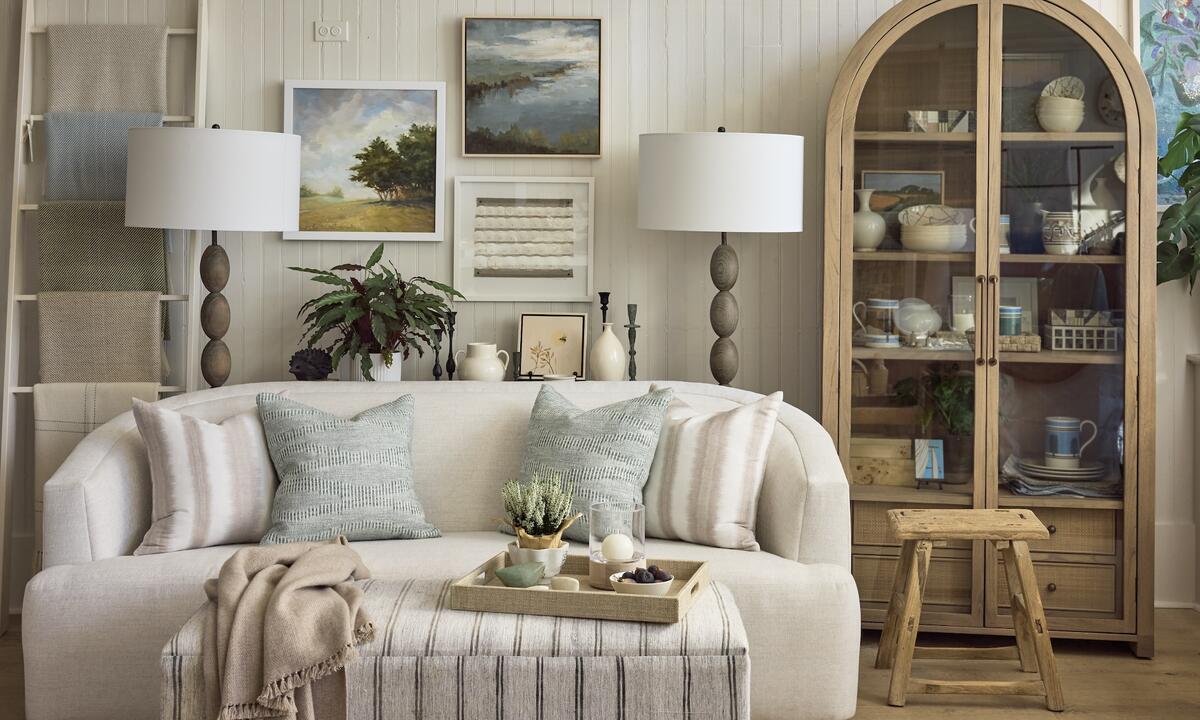
Hall: We all love the cashmere throw, because cashmere is king. As far as home decor, I love art. It’s really important in my own style at home. It doesn’t have to be expensive; it just has to speak to you and make you happy.
Clarke: Stephanie and Becky gifted me a purple cashmere throw for my birthday, and it’s become my favorite thing I own. I sleep with it every night. It’s so light and warm at the same time! It’s amazing how natural fibers regulate temperature so well. I love any heritage crafts that we sell, like the sailor’s valentines or lightship baskets, because they have such a story behind them. That’s what sells it—the history, and that it’s made by someone locally.
And what is your best day at work in the store?
Hall: I love March. It is typically the quietest month, so it’s when we really push to get the shop ready. Being open all year gives us the opportunity to do that earlier than some of the other shops, where maybe they go to Florida in winter. We capture the shoulder season since we’re here. And I love the very beginning of April, when we throw open the doors and everything’s brand-new and in the perfect spot.
Clarke: I help our warehouse manager with UPS sometimes, especially in the busy season, and it’s so gratifying to see all the orders ready to go out. That’s on the business side. Personally, I love when I sweep outside on the sidewalk in the mornings, and it’s really quiet and beautiful, and you see Ken from the pharmacy next door and the client that brings in her dog. It’s not the hustle and bustle of August; it’s when Main Street is a little quieter. It’s just so beautiful. It’s cobblestoned. There’s a church with a bell tolling every hour.
Hall: Becky, Bess and I really do feel like sisters, or best friends. It works because we are all obsessed with our aspect of the business: Bess loves a spreadsheet, I love the products, and Becky just loves her work. It makes you want to go to work every day. We still want to be involved in the day-to-day aspects of being a shopkeeper.
Clarke: We all started as shopgirls, so that’s always stayed with us. We’ve been there for so long that it’s just a part of who we are.







 Withdraw Consent / Manage Privacy Preferences