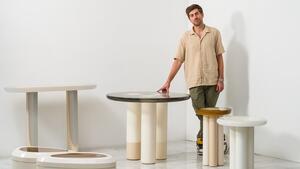





When David Haskell first started throwing ceramics on the wheel as a teen, he likened the experience to skateboarding or surfing. “You’re learning how to ride the force of the wheel,” he tells Business of Home. “You have to channel that movement into form, and make the clay become an extension of your torso, arms and fingers.”
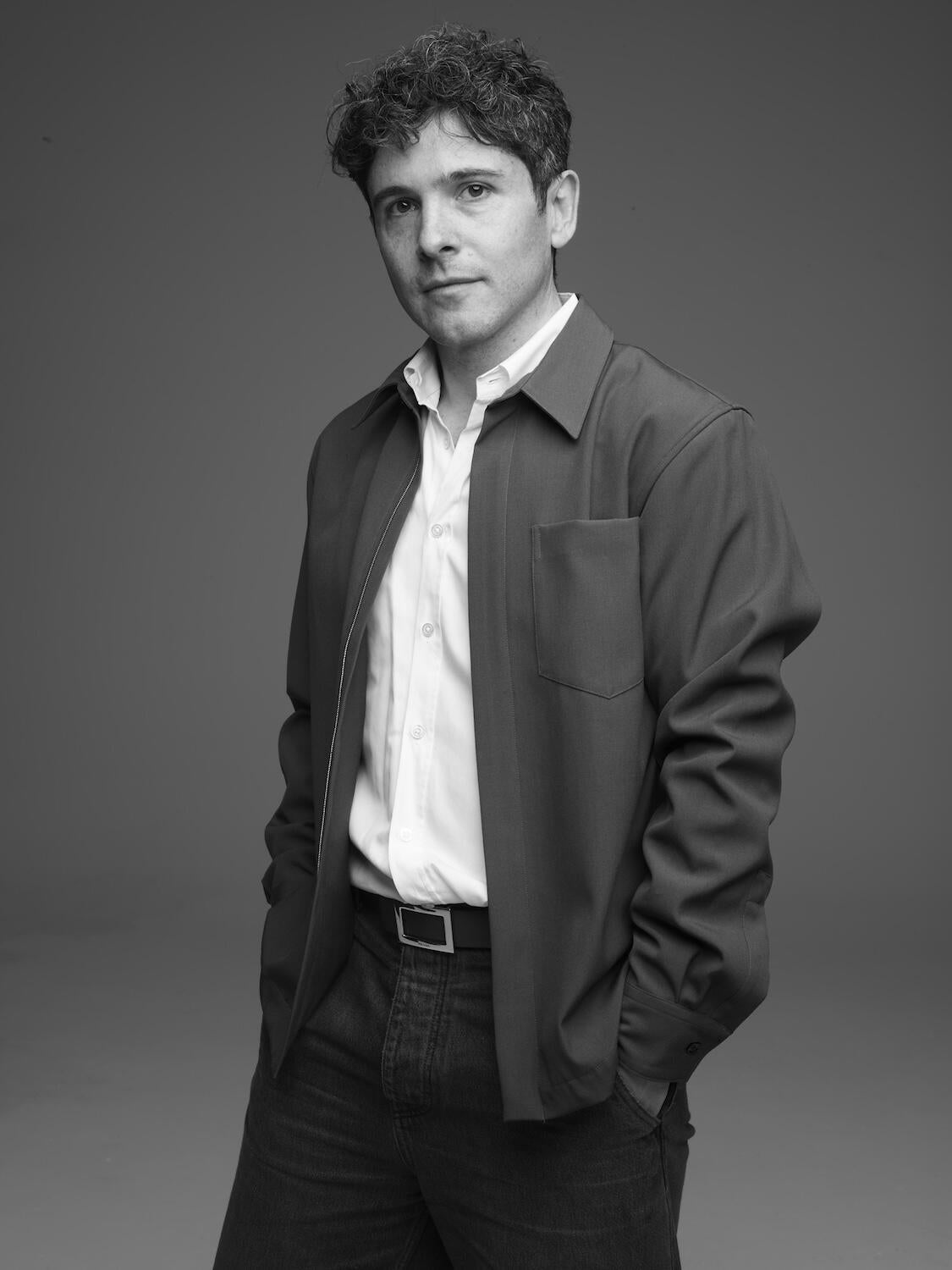
These days, the Brooklyn-based editor in chief of New York magazine turns to the medium as a creative release after a long day. “As a magazine editor, I’m always thinking about context, framing, throughline and narrative,” says Haskell. “Sculpting is my opportunity to turn that part of my brain off.”
Haskell attended Yale University, where he studied ethics, politics and economics and earned a Harry S. Truman Scholarship in 2000 for public service leadership. After graduation, he enrolled at Queens’ College in Cambridge, England, and founded a quarterly magazine, Topic, before receiving a Master of Letters in architecture.
He moved back to New York in the early aughts and continued his work on Topic while embarking on a career in media. By 2012, he was named deputy editor of New York, and went on to oversee the launch of the magazine’s wildly popular shopping vertical, The Strategist. Then, ceramics reentered Haskell’s life. “I started taking ceramic classes after work on Tuesday nights,” he recalls. “I had a particularly great teacher—Mark Davies [at Chambers Pottery]—who helped me pull expressive forms out of wheel-thrown work.”
Like the work of the artists who inspire him—including Louise Bourgeois, Isamu Noguchi and Costantino Nivola—Haskell’s abstract designs often examine the relationship between built cityscapes and the natural environment. “Usually, a piece starts with a single proposition: a particular curve I want to explore, or an idea about balancing two pieces in an uncomfortable resting position, or a twist in scale that I want to push to [its] physical limits,” he explains. “The rest of the piece comes together as a function of playing out that original idea.”
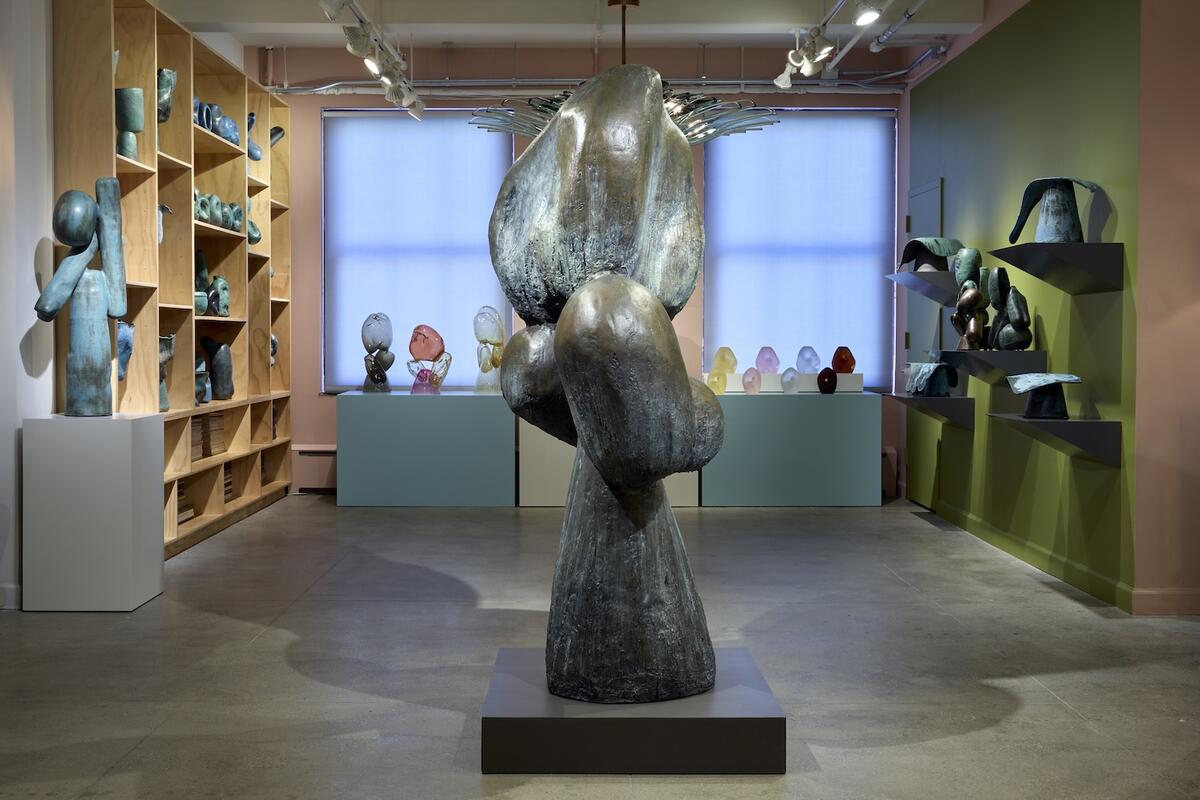
His pieces almost always begin on the wheel. “When they’re leather hard, I start manipulating them by hand, often joining them to each other,” he says. “It usually takes a few weeks of slowly drying and slowly sculpting—if you do too much when it’s wet, there won’t be enough structural stability for the piece to hold up; if you let it dry too quickly, it’ll retain water internally and explode in the kiln.” After bisquing them, he glazes every piece in one of two patina-like hues: green or blue. “I keep a narrow palette to focus the energy of the work on its form,” he explains.
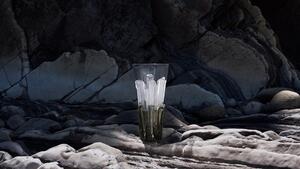
More recently, Haskell has been experimenting with new techniques and materials, including cast bronze and blown glass. “I love casting, because it lets me take a form I’ve resolved in clay into new emotional landscapes,” he says. “Bronze brings heft and brawn. It makes the work more assertive—these pieces will exist for eternity—and makes me feel both powerful and slightly melancholy. Glass brings light and weightlessness. It invites us into the center of the work, and through it. It’s porous and intimate and makes me smile.”
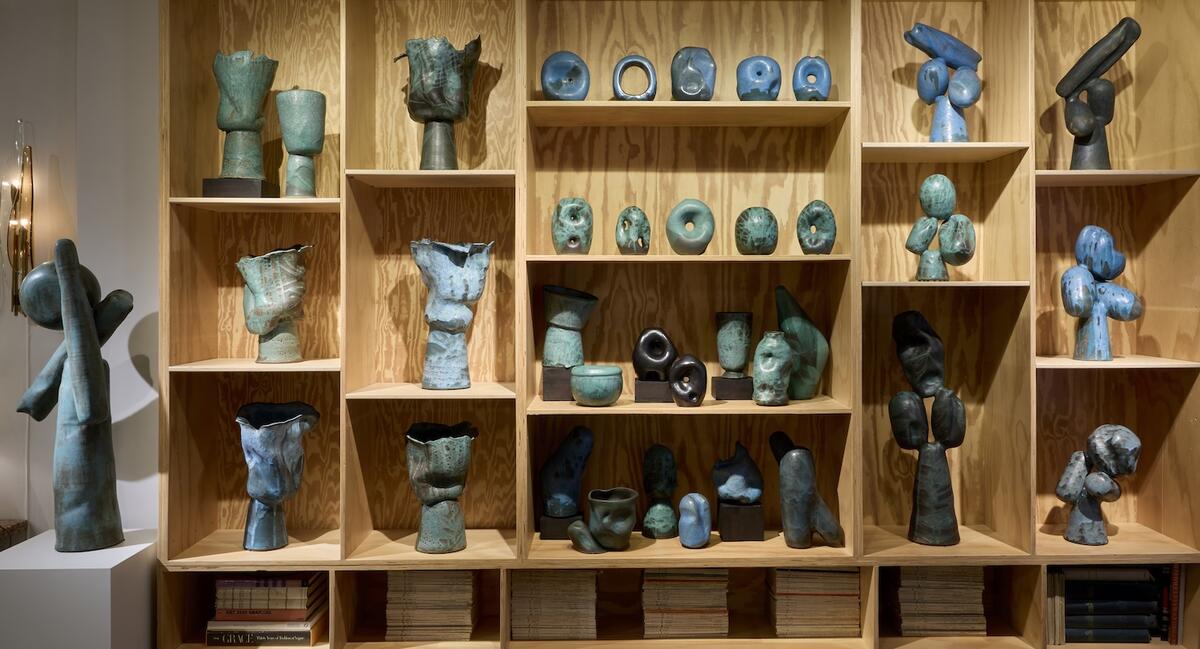
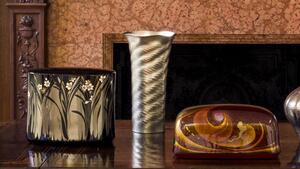
His first solo exhibition, “Boom Beach,” is currently on display in the Donzella Ltd. showroom at the New York Design Center through June 12. Spanning more than 60 amorphic works, the show features everything from asymmetrical glazed vases to freeform colored glass sculptures. “The newest piece is the largest I’ve ever made: a 6-foot bronze sculpture produced at Fonderie Chapon in Paris,” he says. “It was a race to get it to New York in time for the show.”
Haskell currently works from a studio in the Brooklyn Navy Yard, the location of Kings County Distillery, the whiskey company he co-founded in 2010. “I don’t have a mission, nor do I try to think too hard about what ‘the point’ of the work is,” he says of his ceramics. “I work all day with words and ideas and people, and this is my opportunity to get outside my head and into my body.”