





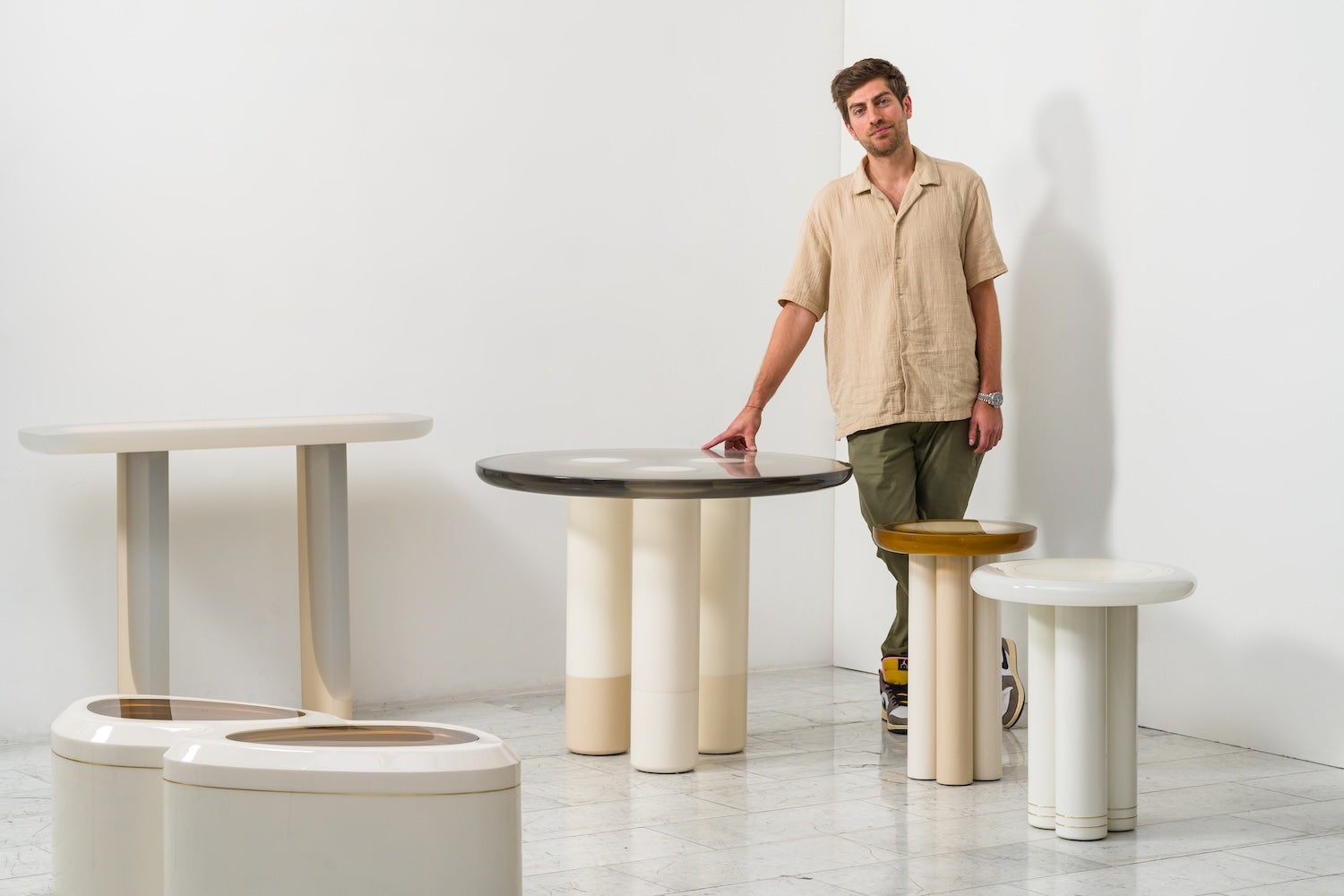

Djivan Schapira is driven by the tension between material and light. The Union City, New Jersey–based furniture maker creates objects that examine the relationship between color, depth and structure—and the unexpected ways those elements interact. “The mission is to push functional objects into a more emotional, almost atmospheric space—where design behaves more like art,” he tells Business of Home.
Born in France, Schapira emigrated to the United States at just 6 years old, and was raised in Hoboken, New Jersey. When he was a teenager, he worked alongside his father as a woodworking apprentice, learning firsthand how to make furniture. That foundation led him to study architecture at the Parsons School of Design, where he expanded his knowledge while honing a more conceptual approach to fabrication. “A lot of my development came from hands-on experimentation,” he explains. “I learned through building, failing and refining—and that process still defines how I work today.”
He began experimenting with various mediums, and soon developed an innovative technique of embedding small pieces of recycled wood in resin, a process he originally gleaned from his father. “I was drawn to resin because of its ability to hold light and depth in a way most materials can’t,” he says. “What I love most is its duality—it can feel liquid and solid at the same time. It allows me to create internal space within an object, not just the surface.”
In 2017, he launched his first studio, ABDB Designs, specializing in made-to-order furniture. “The concept was named for the French phrase au bout du bois, which stands for ‘at the end of the grain,’” he explains. “I wanted to create works of art that also acted as functional furniture.”
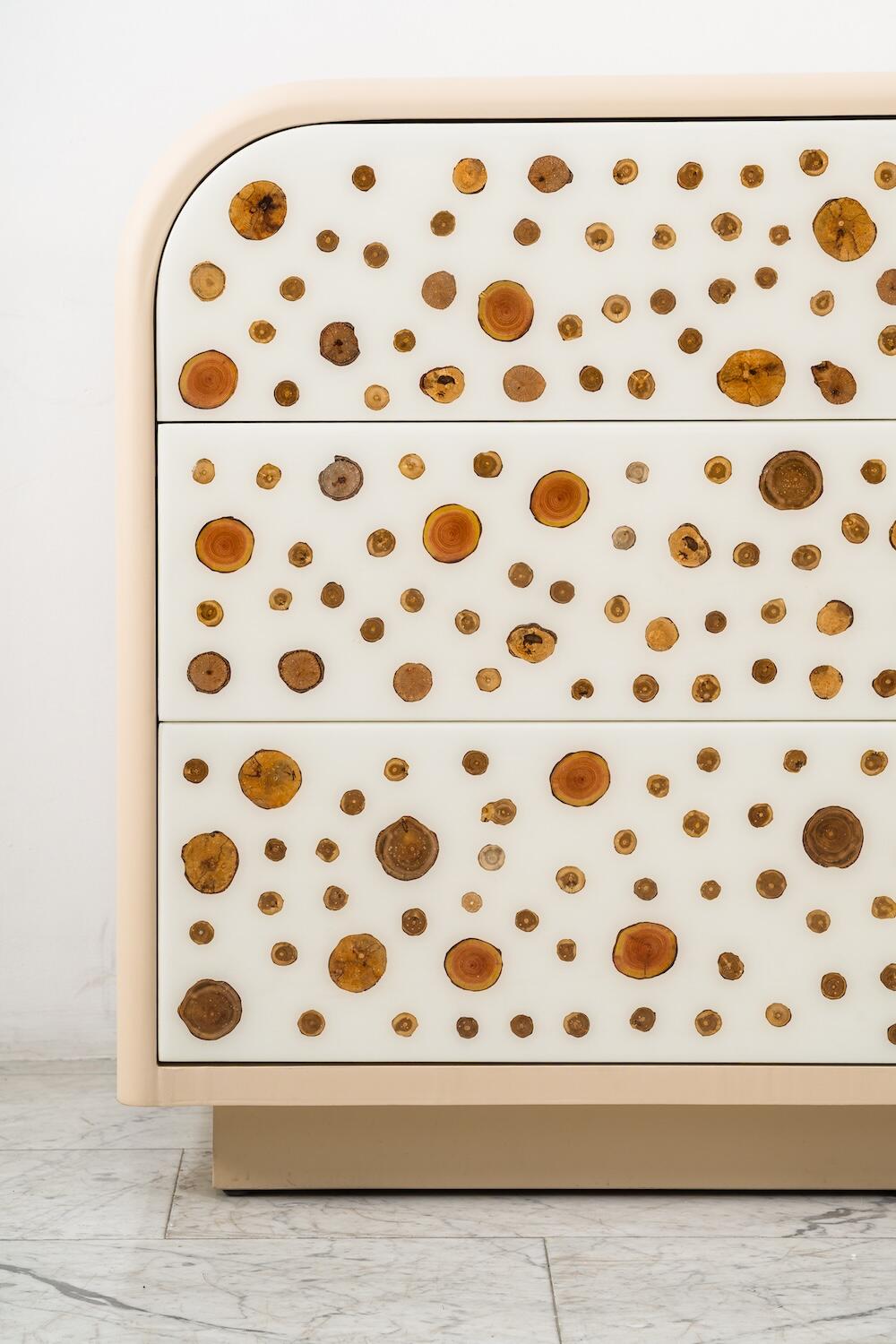
After years of research and development, Schapira secured a utility patent in 2021 for his unique method of embedding natural materials in resin. “In my work, resin becomes less of a coating and more of a structural, spatial element,” he says.
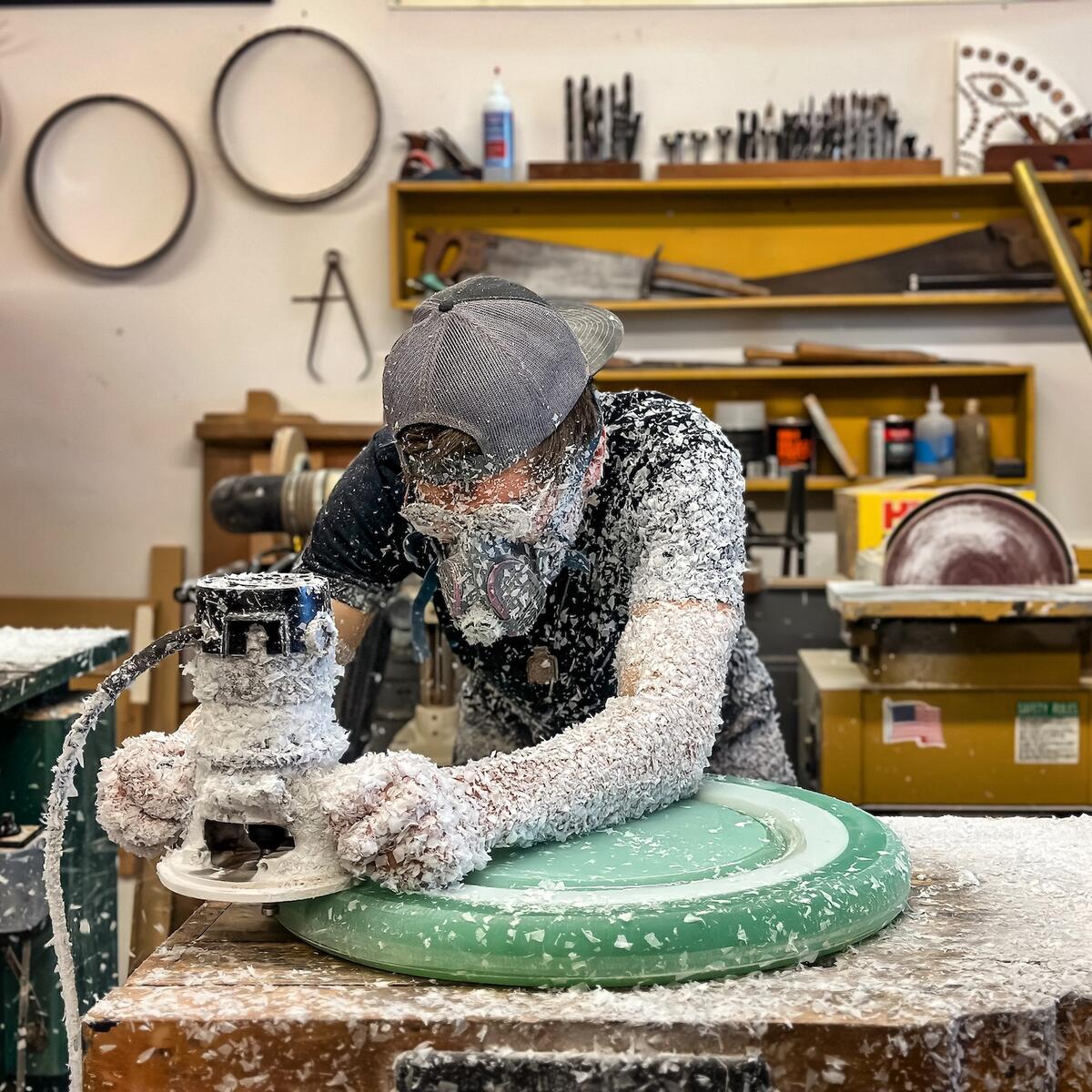
Each of his pieces is constructed through a combination of digital fabrication and hand-finishing. “For some tasks I use CNC machining to create precise structures, and then use them to build molds for casting resin,” he says. “There’s a lot of control, but also a lot of unpredictability—especially with large pours.”
Finishes play a pivotal role in the final product. “From sanding to polishing and coating, it’s an iterative process, where trial and refinement are essential,” says Schapira. “Depending on the scale, a piece can take anywhere from several weeks to a few months.”
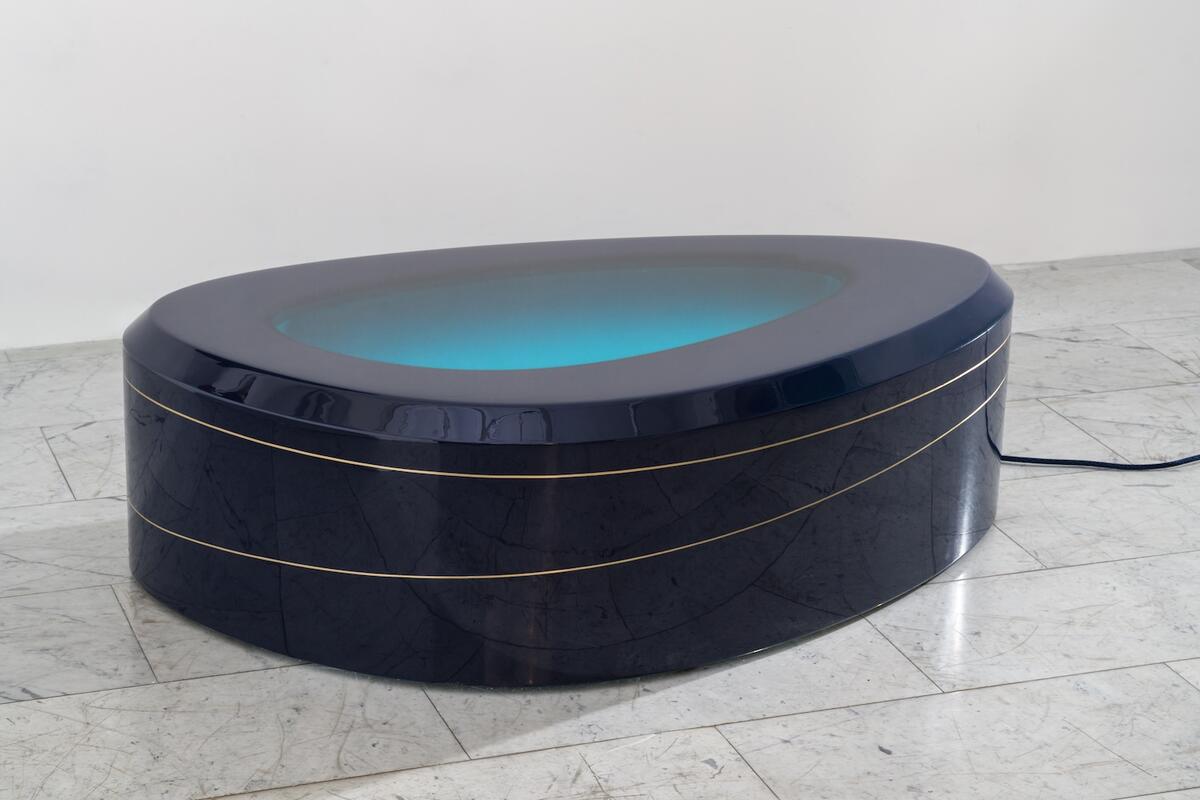
Today, Schapira operates under his own name, and is exclusively represented by Todd Merrill Studio. His latest collection, NovaForme, explores what he describes as a “more fluid, retro-futuristic” language and features everything from a three-legged breakfast table to a bronze-accented coffee table with an integrated LED light. “Forms are more amorphous, with deeper voids and more intentional use of internal light and color,” he explains. “Compared to my earlier work, it’s less about contrast between materials and more about continuity—where everything feels integrated into a single system.”
Currently developing his next line of furniture, he also works directly with interior designers on bespoke pieces. “I love collaborating with brands and designers because it allows the work to live within broader spatial contexts,” he says. “For me, it’s important because it preserves the idea that objects can carry narrative, intention and individuality—that they’re not just functional, but meaningful.”