






Onihira Keiji draws inspiration from trial and error. The Japanese urushi (lacquer) artist is motivated by his mistakes and the lessons he learns from them. “There is ‘pain’ in the creative process,” he tells Business of Home, “as well as ‘joy’ upon completion.”
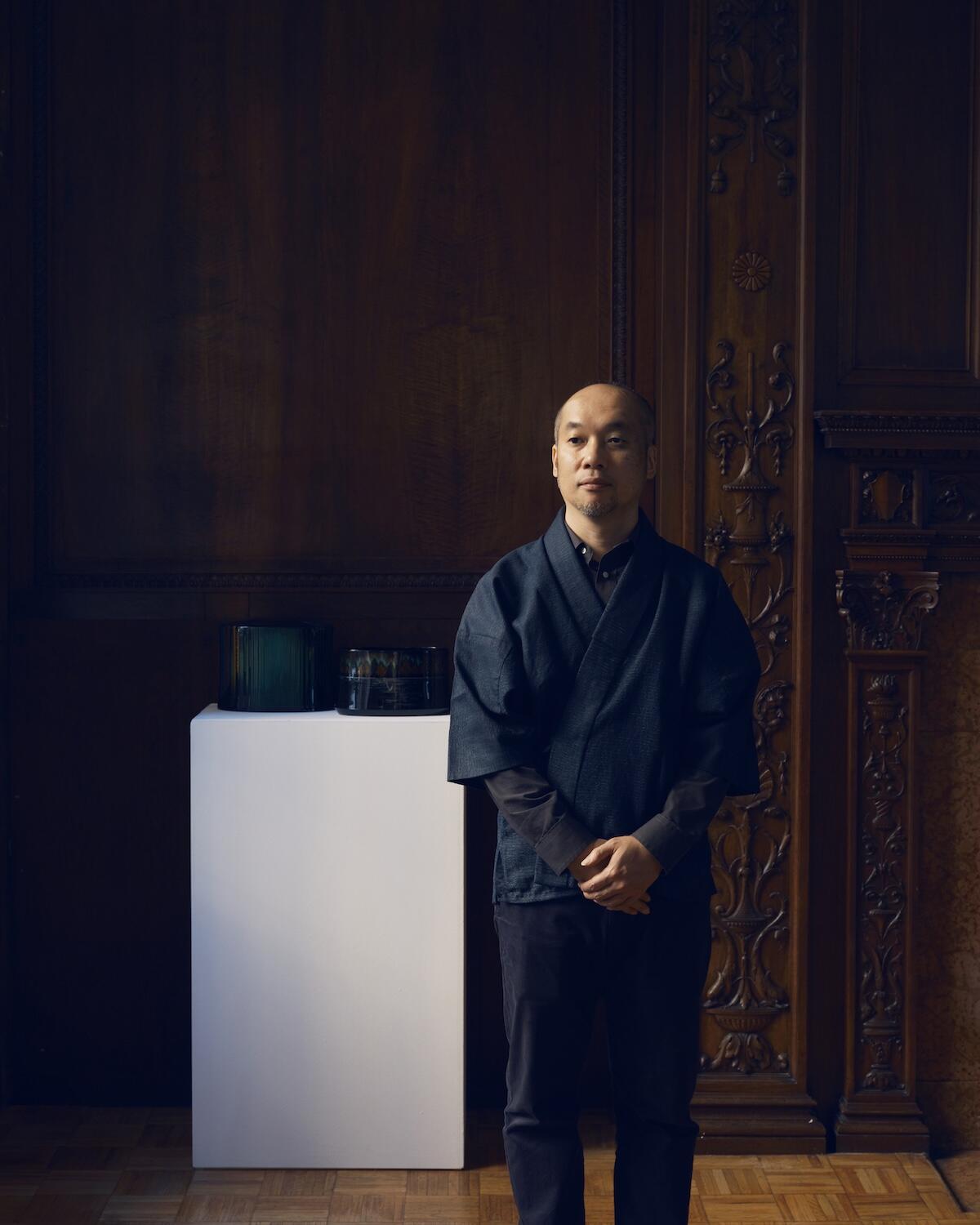
Keiji was born in Wajima, in Japan’s Ishikawa Prefecture, and traditional lacquerware was the family business. He began learning about urushi at a young age, alongside trainees who had traveled from around the globe to study the art. “Seeing their dedication and admiration for the craft made me realize—somewhat embarrassingly for my younger self, who had only ever seen it as a family trade—that lacquer art was something to aspire to,” he says.
At 18, he embarked on a formal apprenticeship under the renowned maki-e master Kumano Sadahisa, learning firsthand how to execute the ancient Japanese decorative art of combining lacquer with sprinkled metal powders. “At the time of my apprenticeship, the industry was still economically strong, but it gradually declined,” he says. “Realizing that something needed to change, I decided to continue my studies.”
He enrolled in the Ishikawa Prefectural Institute of Wajima Lacquer Techniques and continued his studies in maki-e. In 2000, his work was selected for the 47th Japan Traditional Art Crafts Exhibition, where he showcased his lacquerware for the first time. “I exhibited a box featuring kudzu, one of Japan’s autumn plants, as its motif,” says Keiji.
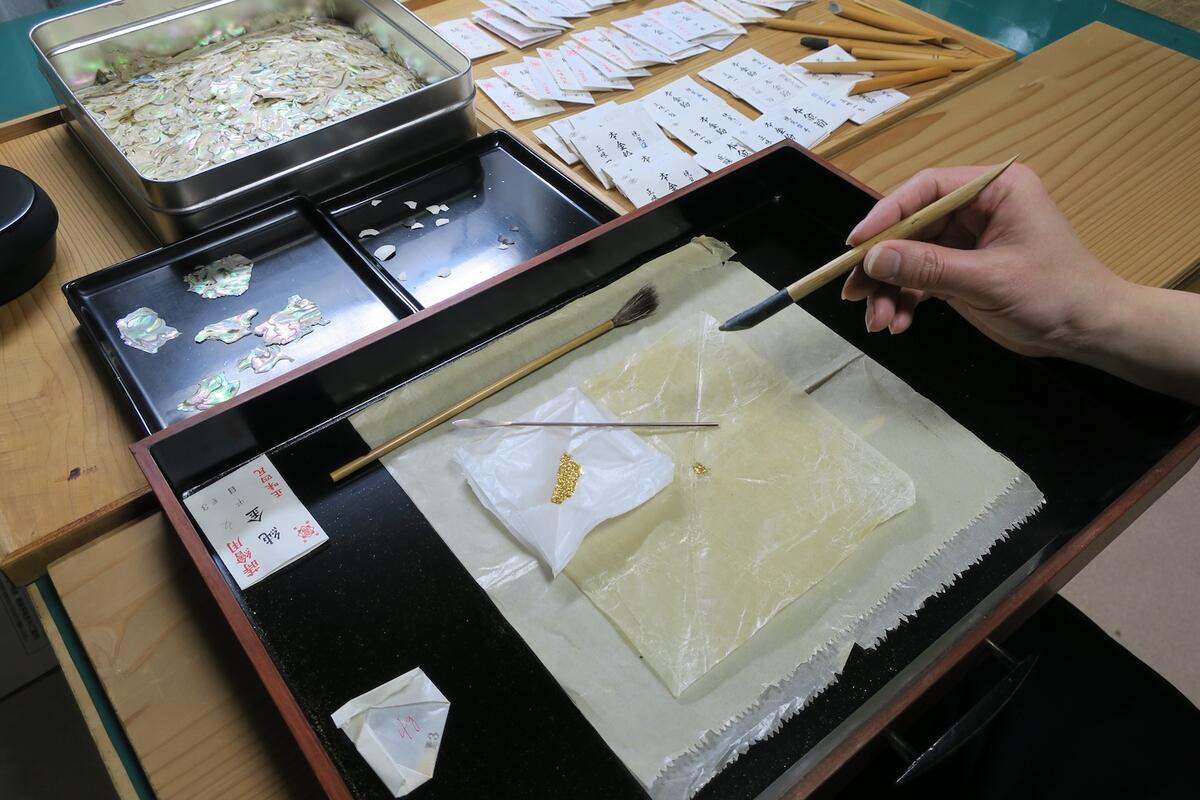
Today, he works from a studio inside his family’s home in Wajima, where his father and wife are lacquerers and Keiji focuses on maki-e decoration. “It is essentially a family-run, home-based craft operation,” he says.
Each of Keiji’s pieces is made by hand and can take up to five years to complete. After carving a vessel—usually a lidded container, box or tray—he applies thin coats of lacquer. “Urushi is the sap collected from the lacquer tree,” he explains. “It hardens through humidity, and has been used in Japan since ancient times as both a coating material and an adhesive.”
Inspired by celestial themes, such as auroras and crepuscular rays, he then adds intricate maki-e motifs using small brushes and blades dipped in metal powders including gold, silver and platinum. “The prices [for the powders] have been rising year by year, making them increasingly difficult to use,” he says. “Nevertheless, in order to pass on and further develop lacquer art techniques for the next generation, I intend to continue creating my work.”
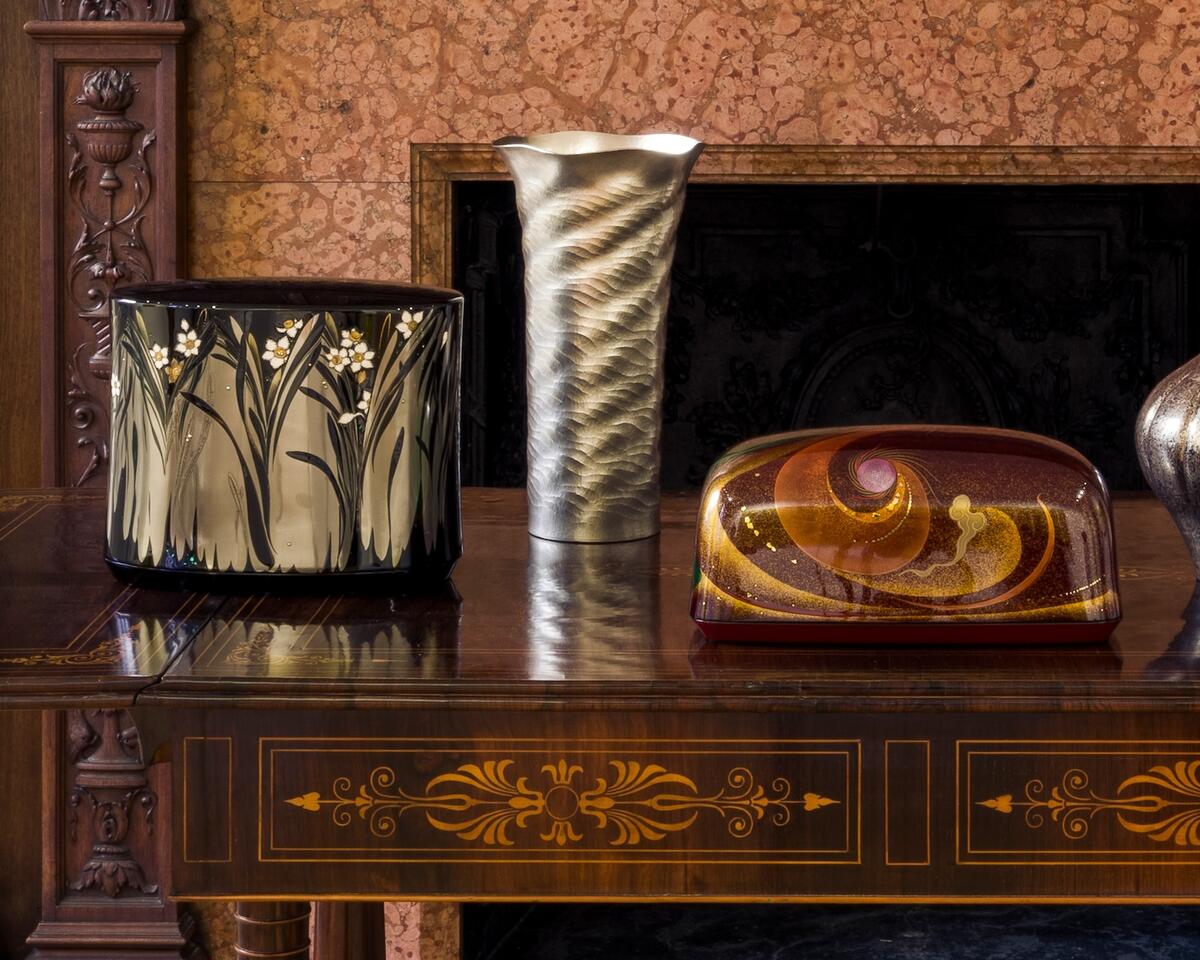
In March, Keiji showcased his latest work, the maki-e box A Ray of Light – Suisei (Comet), in “Kogei Exhibition: Metalwork and Lacquerware” at New York’s Onishi Gallery, which represents the artist. One of his lacquer boxes will be shown at Homo Faber Biennial 2026 in Venice this September, and he will be part of an upcoming museum exhibition in February 2027 at Minneapolis Institute of Art. Beyond those shows, he’s exploring new ways to present his work. “I’m also working on a collaboration with jewelry designer Silvia Furmanovich that will launch in the near future,” he says.


 Withdraw Consent / Manage Privacy Preferences