














Anil Sharma wants to craft pieces that live with people forever. The lead trunk maker at Jaipur, India–based Trunks Company creates heirloomworthy designs by employing centuries-old techniques with contemporary materials. “Clients often come back many years later and tell us that their trunk is still being used, and has an important place in their family,” he tells Business of Home. “It reminds me that we are not just making a trunk—we are creating something that lasts for generations.”
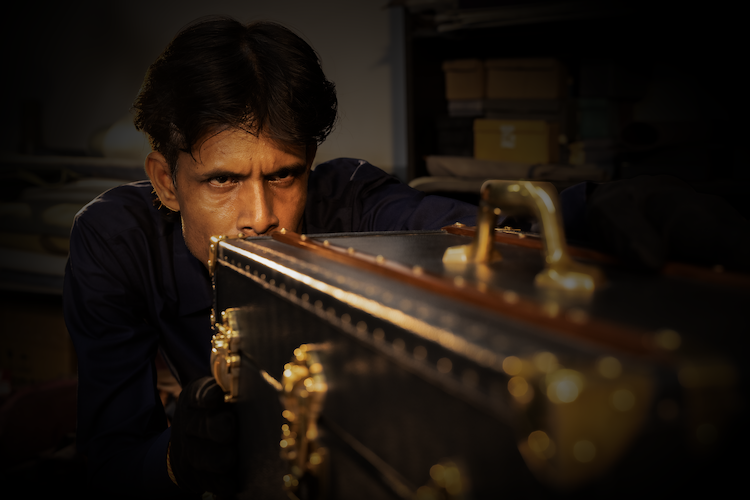
Born and raised in a small village in Rajasthan, Sharma moved to Jaipur when he was a young adult in search of better opportunities. He joined Trunks Company in 2011, in a supporting role—serving coffee and helping the team with day-to-day needs around the workspace—and quickly became enamored with the production process. “Whenever I had free time, I would spend it watching the craftsmen work,” he says. “I started speaking with them, asking questions, and slowly helping wherever I could.”
As he spent more time on the production floor, Sharma learned more about how to actually make each piece. Soon, he was asked to help make LED lights for the trunks, after which he moved on to hardware installation and eventually full-scale assembly. “I still remember how new everything felt and how much I learned just by doing, observing, and slowly getting comfortable with the process,” he says. “It really opened up a new way of thinking for me while giving me confidence in my abilities.”
Today, Sharma oversees every stage of the trunk-making process at the company, from on-the-ground execution to delivery and installation. “It has been an evolving journey,” he says. “Each stage built on the previous one, moving from support work to hands-on technical roles and finally into supervision.”
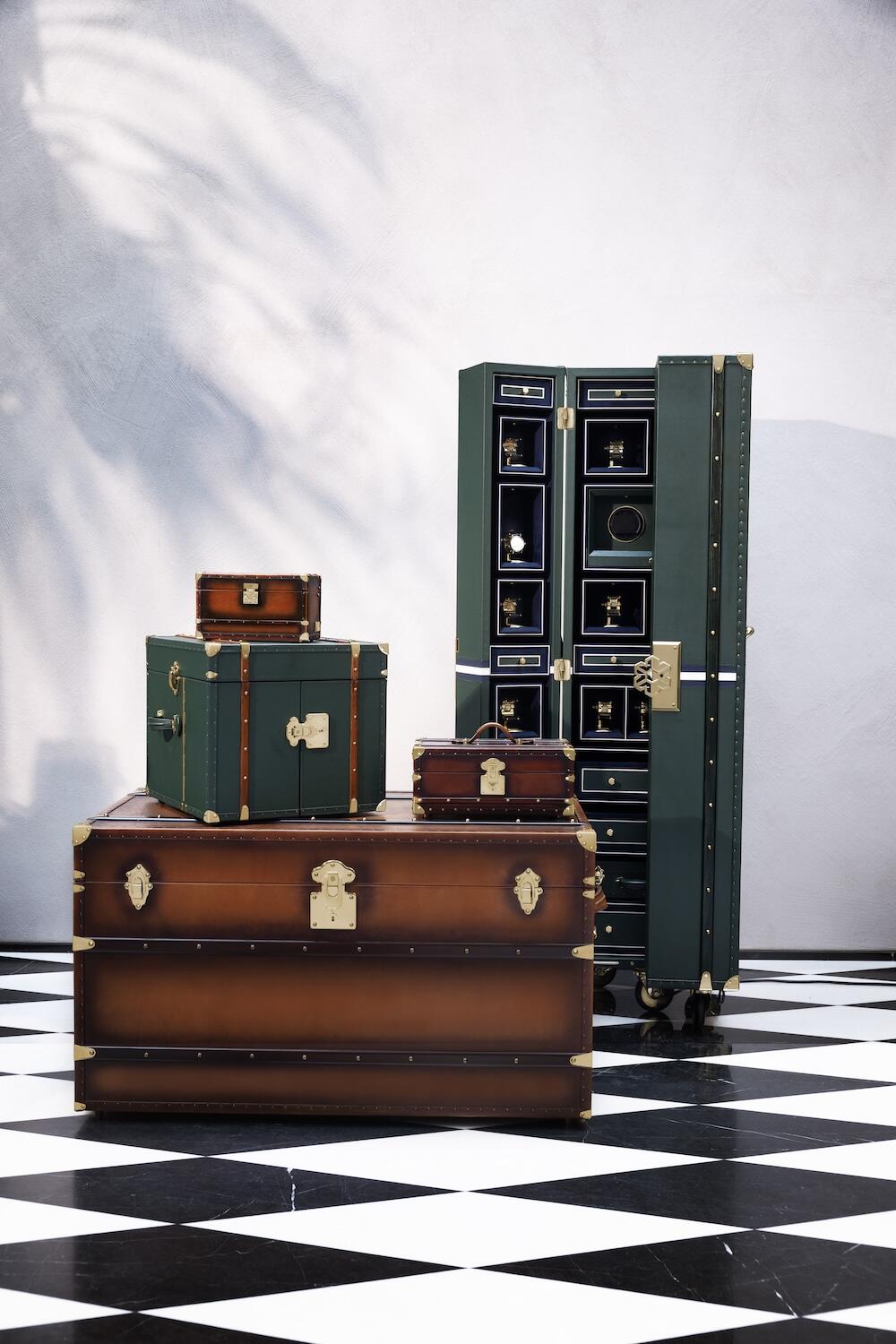
Whether designed for storing watches or spirits, every trunk passes through roughly 11 different workshops inside the brand’s atelier. The journey usually begins with drawings, and then moves through woodwork, sanding, leather-cladding, hand-painting, electronics, inlay, assembly, finishing and packing. “The time it takes depends entirely on the complexity of the trunk,” says Sharma. “Some can take several weeks, while others can take a few months, especially when there is a lot of detailing involved.”

One of the most exacting stages, hand-painting, requires applying color in thin layers using small brushes and sponges, slowly building depth rather than covering the surface all at once. “After each layer, the leather is left to dry, then buffed so the coating settles properly with controlled heat exposure,” he explains. “Then we do it over and over again until the desired texture is achieved.” Even the smallest details are given careful thought. “Every hinge, lock, corner and fitting is hand-cast in brass in a small dedicated workshop, before being checked manually to make sure everything moves smoothly,” says Sharma.
Currently hard at work on an assortment of bespoke designs for clients, Trunks Company plans to introduce a new design in 2027. For Sharma, every piece represents more than its finished form. “After a while, you stop looking at each trunk as an object and start feeling connected to it and everyone else who worked on it with you,” he says. “It is the result of many people, many skills and many stages coming together over time.”









 Withdraw Consent / Manage Privacy Preferences