












Robin Fernez is moved by the unpredictable nature of molten crystal. “There is something very powerful about starting from a blank page and bringing a form to life with your hands,” the glassblower tells Business of Home. “Every day is different and every piece is a new challenge.”
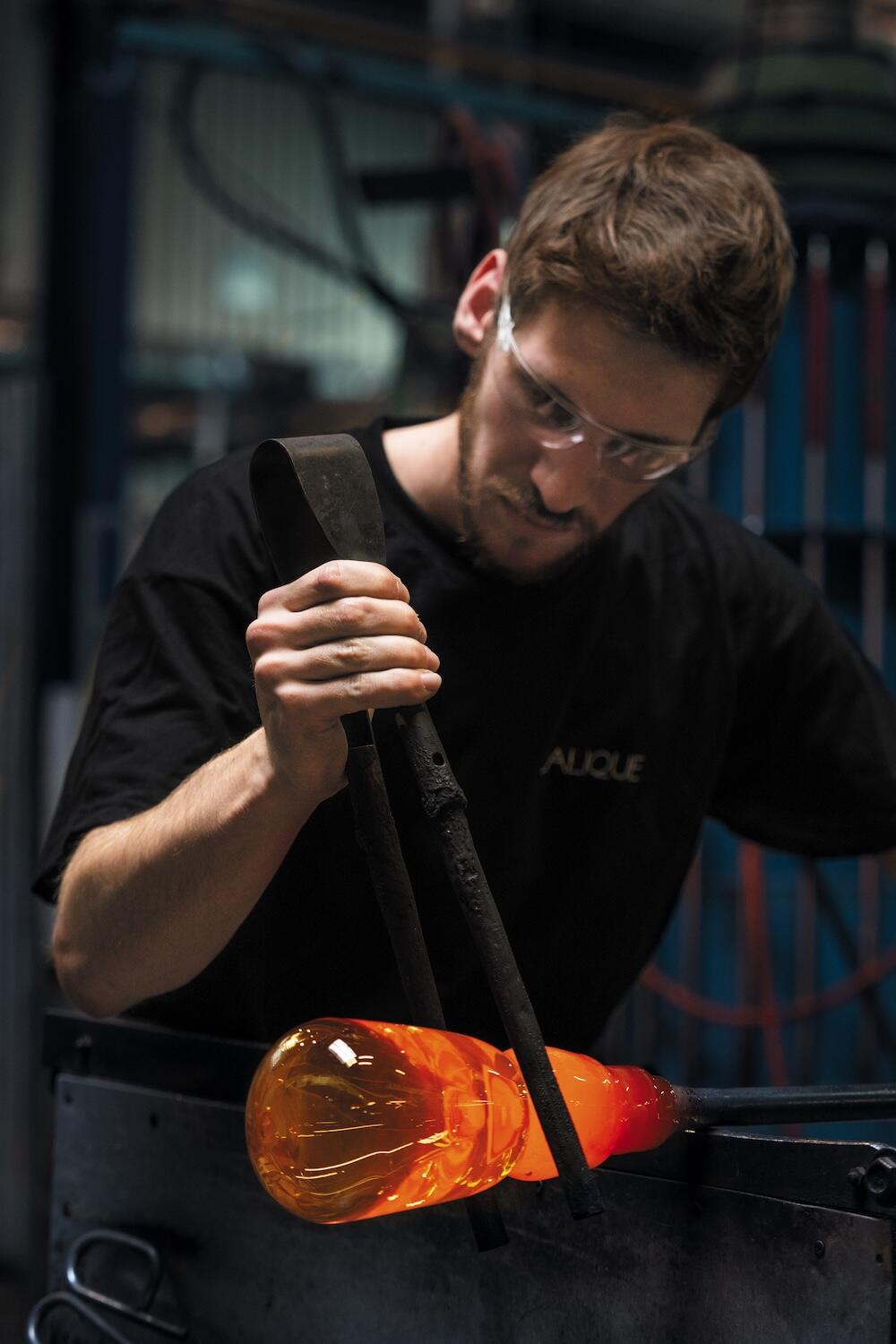
Born and raised in Mulhouse, in the Alsace region of France, Fernez was first introduced to glassblowing during a middle school internship with a local artisan. “There was an immediate connection,” he says. He went on to study glass and crystal arts at a technical trade school in Sarrebourg, where he earned certification in the field, followed by a brevet des métiers d’art, a national vocational diploma in arts and crafts. “During my training, I had the chance to do several internships, including six weeks at Cristallerie Saint-Louis, six weeks at Cristal Lehrer, and six weeks at Didier Saba,” he shares.
He was recruited to work for Lalique straight out of school, officially joining the team as a glassblower in 2018 at the brand’s manufacturing headquarters in Wingen-sur-Moder. “My work involves blowing pieces such as tumblers, carafes and large vases, but also gathering molten crystal for pressed glass,” explains Fernez. “It is very physical, very precise work, where every gesture matters.”
Every Lalique design is handmade by a small team of highly trained artisans. The process begins with gathering molten crystal from a furnace using a blowpipe, which is then shaped with tools such as wooden blocks and pontil rods. Next, air is blown into the glass, either by mouth or with a piston, to create volume. Then, each piece is placed into a bespoke mold, where it sets into its final form. “It is a very tactile, very instinctive process,” he says. “We need to find the right temperature, the right weight and the exact amount of crystal to achieve the desired thickness.”
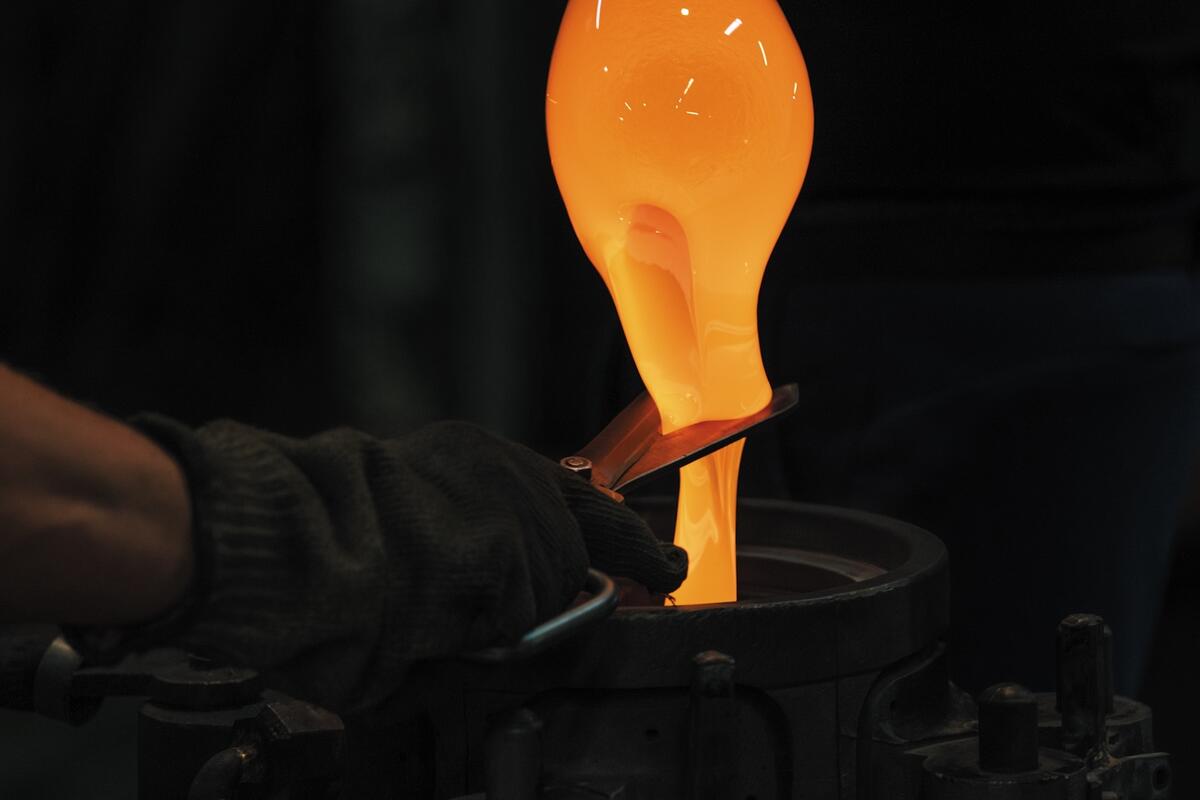
Molten crystal instantly starts stiffening when exposed to air, so timing is everything in the hot-glass workshop. An Alizé vase, for instance, takes around 15 minutes to form, and the larger Languedoc vase requires about 20 minutes. “It is a collective effort,” he says. “About seven people are working together in perfect coordination, almost like a ballet.”
The handblown glassworks are further refined using an assortment of specialized methods. One of Fernez’s latest creations, the Basalte vase, requires a dexterous double injection technique, while the Caldera decanter is formed by shaping molten crystal through precise cuts. “Each piece becomes unique, with its own character,” he says. “Even when the techniques are familiar, the result always brings something new.”
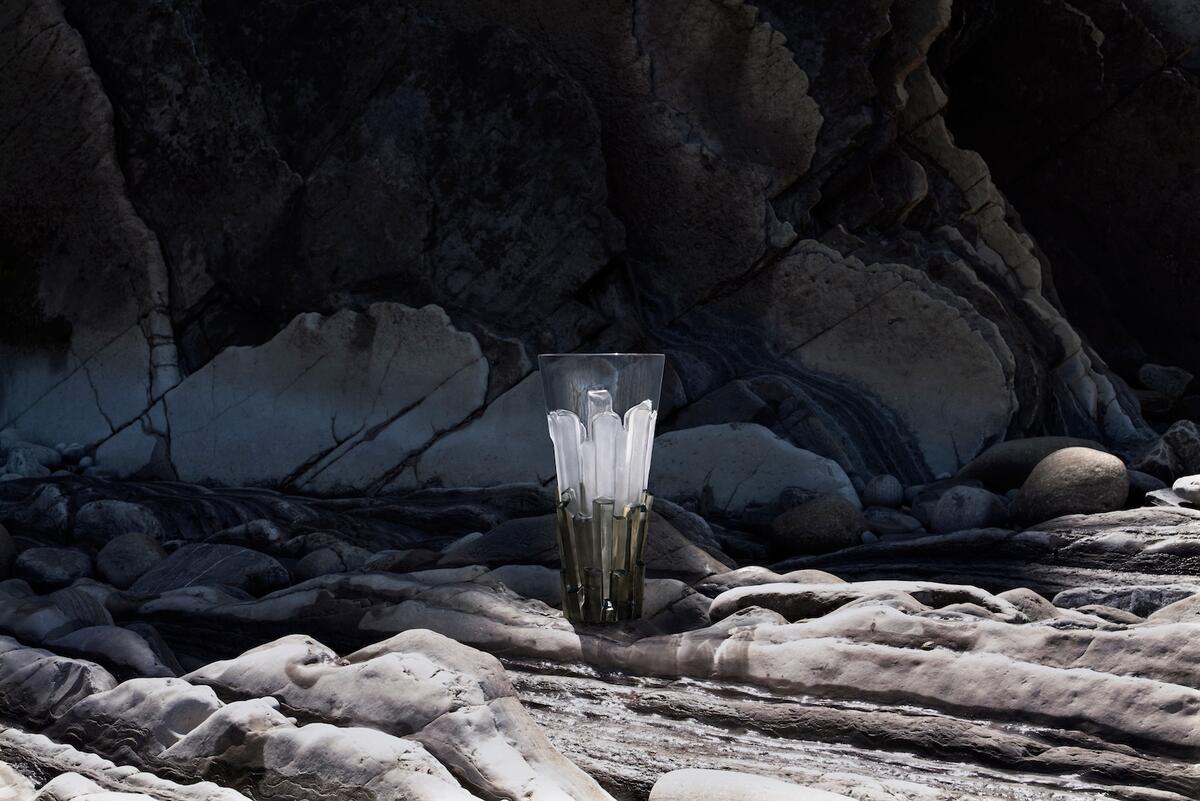
In addition to Lalique’s newly expanded Air collection, Fernez recently helped craft the brand’s highly collectible 505 Edition Branson Cognac decanter, a collaboration with Sire Spirits, the liquor brand founded by rapper 50 Cent. For Fernez, his craft is not just an art—it’s a way of life. “I have a torch at home and also come to the workshop outside of working hours to practice,” he says. “Glassblowing is demanding, but very rewarding.”



 Withdraw Consent / Manage Privacy Preferences