











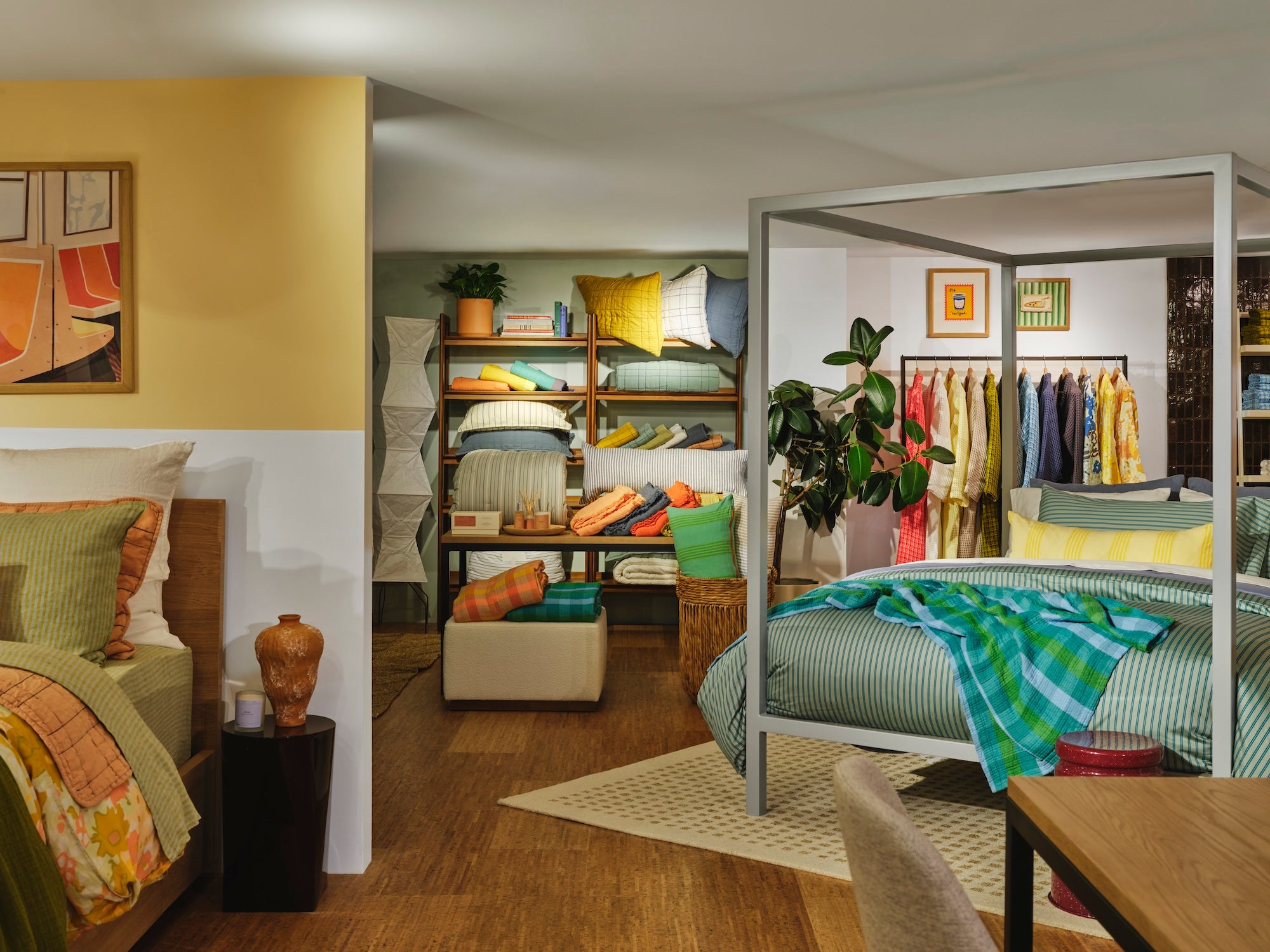

Brooklinen, one of the first companies to adapt the direct-to-consumer model for soft home textiles, has now been in the business for 12 years—which qualifies it as a grizzled veteran when it comes to DTC. Like many of its brethren, it has expanded in recent years into physical stores. Now, Brooklinen is planning another big shift with the revamping of its product line, the hiring of an outside retail veteran and a push to reach the trade.
“We think of it as Brooklinen 2.0,” says Billy May, who took over as CEO in 2023 when founder Rich Fulop stepped away from running the company. (Fulop remains on the board.) “It was important that we evolve and continue to focus on what we do best.”
That focus now includes an outreach to residential designers, anchored by the company’s first to-the-trade showroom, in the Pacific Design Center in Los Angeles—an outpost that joins three retail stores in California, four on the East Coast and one in Chicago.
While Brooklinen has been selling into the hospitality and hotel sector for years, this effort is new. “Interior designers are different from commercial customers, but we think they are similar to the consumers we sell to,” says May. “The showroom model is a way for us to reach those designers.”
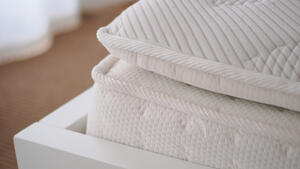
Another component of Brooklinen 2.0 has been in its products: 80 percent of them have been changed with a focus on softness and comfort across the collection. “When Rich started the brand, the market was different, so we felt we needed to make great products even better.” May brought in noted designer Chris Benz to head up the creative efforts.
Interestingly the brand’s fastest-growing product category is not bedding but robes. To that end, it is introducing a new Shorty version to go along with the more traditional length.
Brooklinen is continuing to use DTC as its main selling format, with its stores serving as a complement to the brand’s online efforts. Under Fulop there had been talk of opening as many as 25 to 30 physical locations; May says those plans have been tabled for now. So too was the sale of its Marlow pillow sub-brand through Walmart, an experiment that has come to an end. (Brooklinen continues to sell a limited assortment on Amazon.)
“We still believe stores are a key component of Brooklinen, but they need to be reflective of our brand,” says May, whose career includes executive stints at well-known retailers like URBN, Sur La Table, J.Crew and Abercrombie & Fitch. “We may look at 2027 for new stores, but we’re taking a more disciplined strategy right now.” Meanwhile, competitors have moved into larger physical store footprints and more third-party distribution.
Brooklinen has another major distinction from some of the original class of DTC brands: According to May, it’s profitable and debt-free. Privately owned, including by some outside investors, he says total revenues are “north of $200 million.”
Unsurprisingly, he is coy on what the eventual plan for Brooklinen might be: “Our focus is on growing the business and investing back into the company. The investors are happy and they are here for the long term, not to churn and burn.”
____________
Warren Shoulberg is the former editor in chief for several leading B2B publications. He has been a guest lecturer at the Columbia University Graduate School of Business; received honors from the International Furnishings and Design Association and the Fashion Institute of Technology; and been cited by The Wall Street Journal, The New York Times, The Washington Post, CNN and other media as a leading industry expert. His Retail Watch columns offer deep industry insights on major markets and product categories.






 Withdraw Consent / Manage Privacy Preferences