





This week in design, a rare opportunity to move into California’s last surviving “bubble house” has opened up in Pasadena, where a dome-shaped home by architect Wallace Neff has hit the market. Stay in the know with our weekly roundup of headlines, launches, recommended reading and more.
Business News
Berkshire Hathaway has agreed to acquire homebuilder Taylor Morrison Home Corp. in a $6.8 billion cash deal, The Wall Street Journal reports. The holding company will pay $72.50 per share, representing a 24 percent premium to the developer’s $58.50 closing stock price from last Friday. For Berkshire Hathaway, the acquisition is a step deeper into the housing sector, as the company already owns residential real estate broker HomeServices of America and holds stakes in several homebuilders. The purchase also marks one of the first major moves made under the leadership of CEO Greg Abel, who took over the top position from Warren Buffett in January.
Sales of newly built single-family homes fell 11.3 percent year over year in April, signaling continued stagnation in the housing market. New data released by the U.S. Census Bureau and Department of Housing and Urban Development last week revealed a continuing trend, as sales were down 6.2 percent year over year in March. While total housing starts in April were up 4.6 percent from last year, the share of single-family homes within that metric fell 9 percent from March. Housing completions and building permits also declined from last April. Meanwhile, the housing downturn is affecting professionals in related industries, with the National Association of Realtors recording a total of 1.4 million members in April, down from a record high of 1.6 million in October 2022, The Wall Street Journal reports. Additionally, 71 percent of agents surveyed in 2025 said real estate was their only profession—the lowest share recorded since the survey began in 2005.
The AI boom has transformed San Francisco’s housing market, sending the median home sale price up 10 percent year over year to $1.7 million—the highest median home price in the country, The New York Times reports. According to data from Redfin, the city’s luxury zip codes—represented by a $3.1 million to $7.6 million price tier—saw an average 13.4 percent increase in home prices in the two years after the 2022 launch of ChatGPT. That increase is more than double that of the tier just below the luxury segment, which saw a more modest 6.3 percent increase over the same period; in the most affordable zip codes, home prices actually fell 3.8 percent. According to Bay Area real estate agents, the proliferation of AI (major players Anthropic and OpenAI are both headquartered in San Francisco) and the resulting riches for employees and investors has led to increased competition for high-end housing, including a sharp uptick in all-cash offers and offers of millions of dollars over asking price.
Virginia-based commercial furniture manufacturer Mantra Inspired Furniture has acquired Created Hardwood, an Ohio-based manufacturer of hardwood furniture. The terms of the deal were not disclosed. Following the acquisition, Phil Hicks, CEO of Created Hardwood, will remain on with the company as it combines with Mantra. The purchase will pave the way for an expansion of Mantra’s customization and production capabilities.
In retail news, several local furniture resources are shutting down after decades in business. In Greensboro, North Carolina, Priba Furniture and Interiors is closing after 54 years in operation, Home News Now reports. Established in 1972 by Bob and Priscilla Knox, the business offered an array of home furnishings, along with in-house interior design services.
Meanwhile, family-owned Gustafson’s Furniture & Mattress in Rockford, Illinois, is shutting down after 98 years in business, upon the retirement of second-generation owner Dale Gustafson. The company is hosting a liquidation sale and putting its storefront on the market.
U.S. Customs and Border Protection has returned $20 billion to shippers and importers since the tariff refund portal opened in late April—and according to court documents filed last week, $65 billion more is on its way. As The Guardian reports, President Donald Trump has warned that he would “remember” companies that filed for the reimbursements, though that hasn’t stopped corporations like Walmart and General Motors from applying.
Launches and Collaborations
British Columbia–based e-commerce furniture company Article has announced plans to expand its brick-and-mortar retail operation in the U.S., Home News Now reports. The brand, which currently operates one location in Vancouver and plans to debut another in Toronto, will focus its expansion plans on the U.S.’s West Coast, and is expected to unveil new locations in San Francisco and Bellevue, Washington, this fall.
Brooklyn-based design and renovation duo Barry Bordelon and Jordan Slocum have launched the Brownstone Boys Real Estate Team. The pair will bring their existing Compass group—Bordelon, Allesandra DeLaCruz, Colin Turek and Marc Solomon—under the brand name, focusing on transactions involving historic homes.
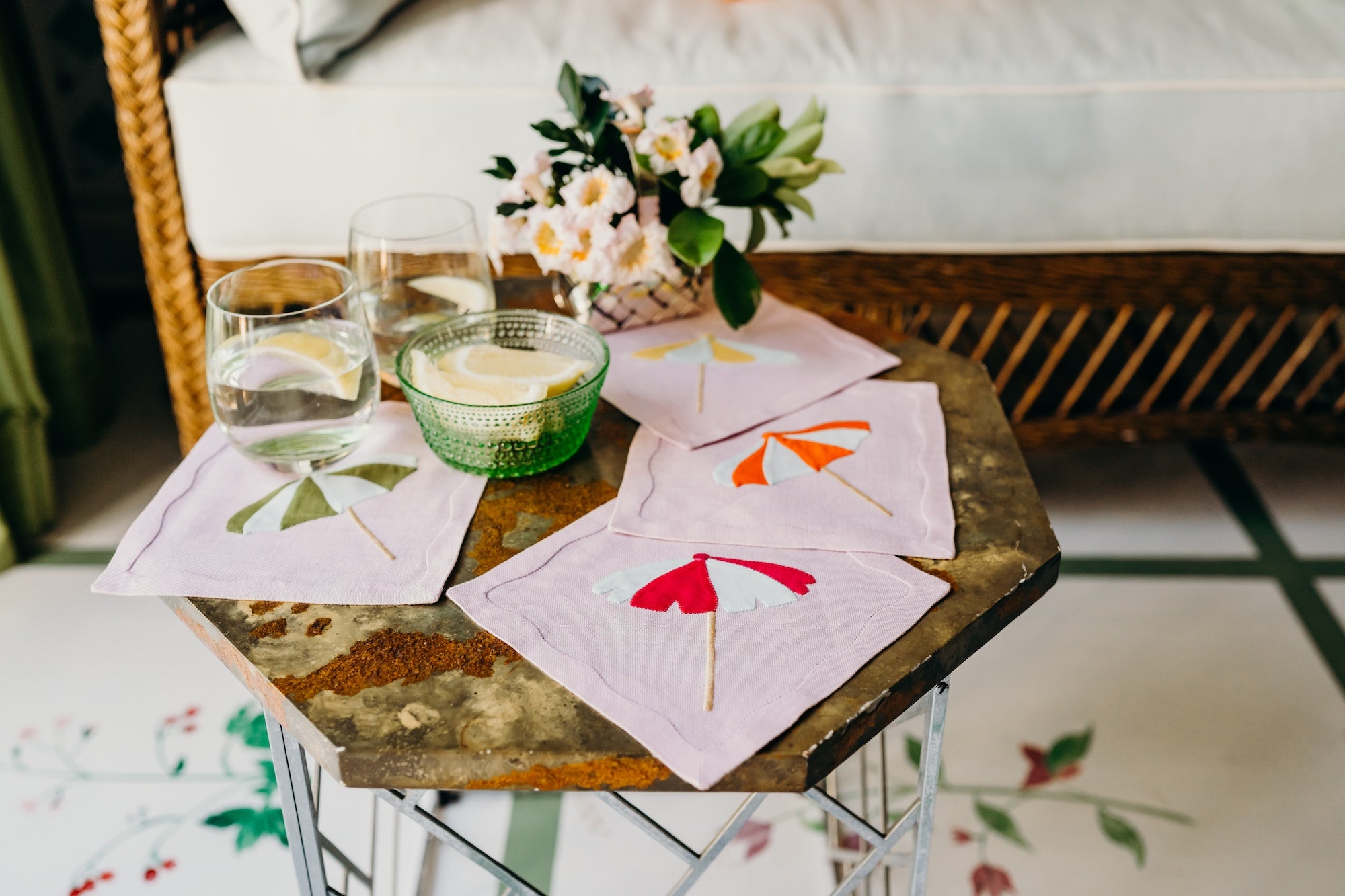
Luxury tabletop brand Elizabeth Lake tapped interior designer Cece Bowman to debut a new collection of handcrafted cocktail napkins. The assortment focuses on two motifs—Sun Umbrella and Champagne & Caviar.
Recommended Reading
As luxury developments vie for real estate dominance, one Manhattan high-rise is offering a hard-to-beat perk: longevity. For The Wall Street Journal, Peter Grant explores a new partnership between One High Line and Atria Health and Research Institute, which will give residents who hope to extend their lifespans access to the center’s genetic screenings, MRIs and advanced heart imaging.
In A24’s new psychological thriller Backrooms, the plot centers around unsettling tableaux of architecture and design—including an abandoned furniture showroom where the only decor is a pile of discarded chairs and case goods. For Curbed, Adriane Quinlan sits down with the film’s production designer and art director to discuss how they translated the film’s source material—a series of viral videos focused on eerie liminal spaces—into cinematic sets composed of the most disconcerting lighting, space planning and vignettes.










 Withdraw Consent / Manage Privacy Preferences