













This week in design, marathon runners have a new event to add to their bucket list: an Ikea outpost in Croydon, England, is hosting its own 26.2-mile race that will consist of 17 laps around the store’s showroom, market hall and warehouse. Stay in the know with our weekly roundup of headlines, launches, recommended reading and more.
Business News
This week, President Trump announced a new 50 percent tariff on most Canadian goods, set to take effect in 30 days, NPR reports. While the new levies would exclude certain items, including energy products and critical minerals, they would include goods previously shielded from tariffs under the United States–Mexico–Canada Agreement. The president claimed that the new tariffs come in response to Canada’s discrimination against American autos, alcohol and dairy products; additionally, a Trump official told reporters that the country was being held accountable for the retaliatory actions it took following the administration’s original tariff rollout. Canadian Prime Minister Mark Carney, meanwhile, has stated that his country is readying itself for negotiations.
Rather than downsizing, wealthy baby boomers are increasingly going the opposite direction with homes purchased for their golden years. As The Wall Street Journal reports, a growing share of buyers in the older generation are upsizing, either by purchasing larger homes or building additions onto current properties and outfitting them with accessibility features and guest spaces. According to the National Association of Realtors, roughly 7 percent of buyers aged 61 to 70 cited the desire for more space when it came to choosing their new homes—up from 4 percent in 2016. Meanwhile, Redfin data reveals that empty-nest baby boomers already corner the market on America’s largest homes, as the demographic owned 28 percent of U.S. homes with three or more bedrooms in 2024, exceeding the 16 percent owned by millennials with children. In fact, baby boomers currently dominate the housing market at large, accounting for 42 percent of buyers, and often operating at an advantage with deals made in cash.
As low inventory and high home prices persist in major cities, prospective buyers are turning to vacation or weekend homes as their entryway into homeownership, The New York Times reports. According to a recent Bankrate study, renting is 38 percent cheaper on average than owning a home in 50 of the nation’s largest metro areas. As such, many individuals are continuing to rent apartments in major cities where they live, with the goal of eventually making their purchased homes in lakeside and mountain communities into primary residences. The movement has even gained enough speed to fuel the launch of an online platform, Substack and podcast called Second Home First, established by Queens resident Katie Cline, who recently purchased her home along Lake George—four hours away from the city.
Spending on dorm and apartment decor is expected to increase 9.4 percent this year, Designers Today reports. According to an annual survey released last week by the National Retail Federation and Prosper Insights & Analytics, the uptick comes from increased spending across all categories—electronics remains the top expenditure, expected to bring in $24.6 billion in sales this year, with dorm and apartment furnishings right behind, predicted to hit $14 billion. Total back-to-campus shopping, meanwhile, is forecasted to increase 16.6 percent year over year, surpassing the $100 billion mark for the first time ever.
Georgia Furniture Mart is going out of business following a four-decade run in the Atlanta area, Home News Now reports. Established in 1986 by Michael Hall as Underpriced Furniture, the retailer operated out of its Norcross flagship, a 92,000-square-foot showroom space and a 20,000-square-foot attached outlet store, and rebranded to its current name in 2020. This year, amid a challenging retail landscape, Hall and co-owner Tim Padden decided to close permanently. Final sales are now underway at the retailer’s two locations, with Planned Furniture Promotions overseeing going-out-of-business operations.
Launches and Collaborations
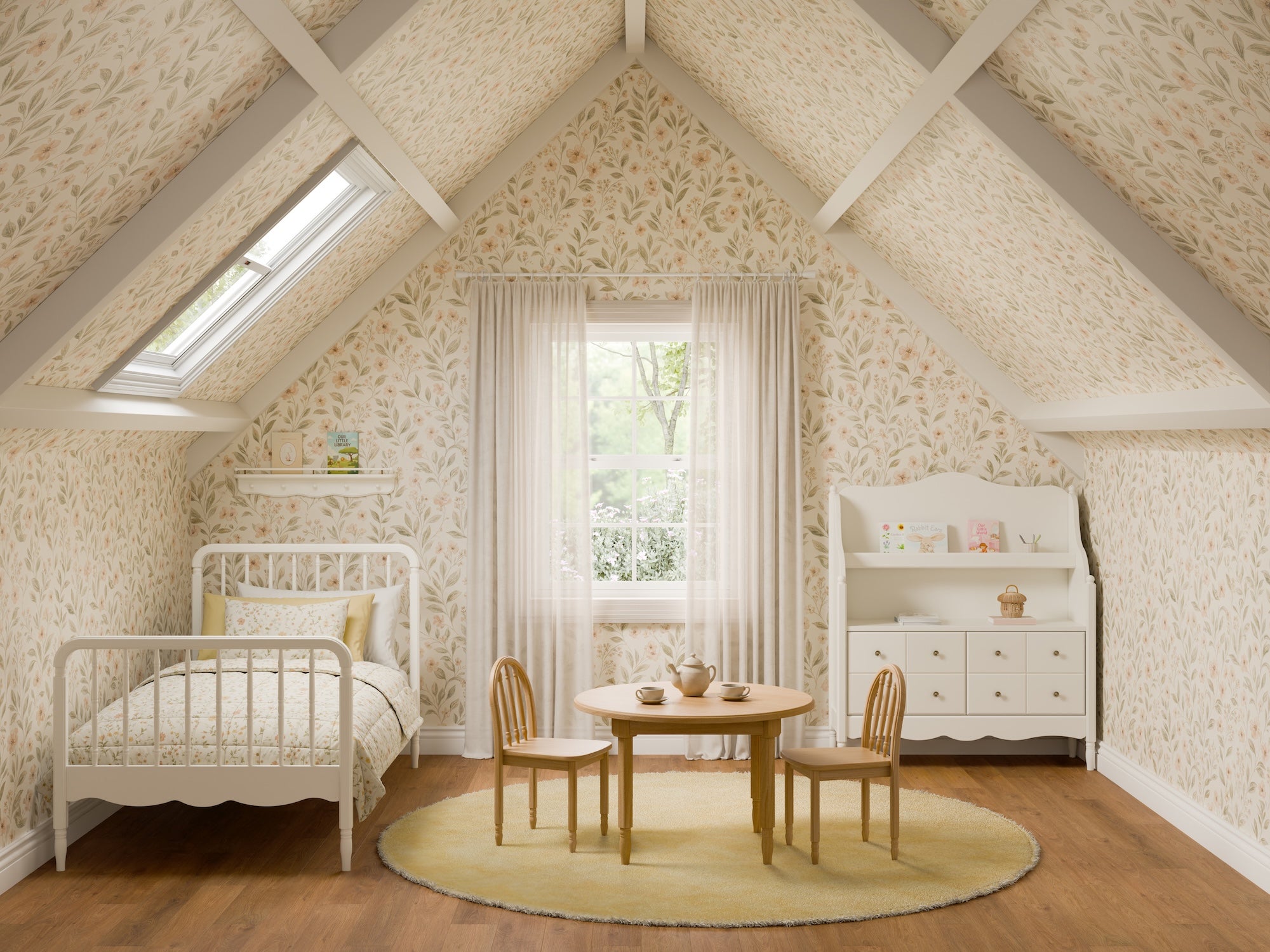
Nursery furniture brand Namesake has debuted its first array of items designed for a slightly older demographic. The Namesake Kids collection offers the company’s signature heirloom-inspired aesthetic in an assortment of beds, storage, shelving and play furniture fit for children’s rooms.
Recommended Reading
According to a recent report from Coldwell Banker, the newest trend among billionaire homebuyers is “landmaxxing”—that is, acquiring adjacent properties and creating a private compound of sorts around one’s primary home. As E.B. Solomont writes for The Wall Street Journal, searches for buildable land surged 97 percent year over year, and queries for distinct properties (like private islands and estates) more than doubled, reflecting a drive among the uberwealthy to build a bigger buffer around themselves, protect views, and create space for multiple generations of family.
In an essay for The World of Interiors, Michael Diaz-Griffith remarks on how design movements from history, whether it’s simplicity of Shaker design or the merging of craft and technology common in the art deco era, offer a clearer picture of modernity than new styles being produced now. Rather than simply making visual reference, he argues that today’s designers would be better off engaging more deeply with the philosophies that grounded those movements—a practice that might allow the industry to come up with its own vision for future living.
Toilet fixtures offering health insights, mirrors estimating physiological age, and mattress covers tracking REM sleep are just a few of the futuristic features that have hit the market in recent years—part of a broader self-optimization trend that has seeped into the home industry. For Dwell, Sarah Buder unpacks the ways in which biohacking—the practice of improving well-being by monitoring one’s health and adjusting daily routines accordingly—has infiltrated consumer culture.







 Withdraw Consent / Manage Privacy Preferences