













This week in design, a glimpse at the homebuyers who, instead of seeking properties surrounded by a thriving community, prefer far quieter environs—in the company of the no-longer-living. Stay in the know with our weekly roundup of headlines, launches, recommended reading and more.
Business News
Airbnb has announced plans to invest $250 million in construction projects to improve housing affordability, The Wall Street Journal reports. The funds will be distributed through the new Airbnb Housing Accelerator program, created in part to provide gap financing for developments short on funding. The initiative will prioritize affordable and mixed-income housing projects, with the first $6.4 million grant going toward a 200-unit development in Austin. CEO Brian Chesky told the WSJ that the program was created in part as a response to criticism of Airbnb’s role in contributing to housing affordability issues. The initiative will also support advocacy efforts around zoning and permitting reform; create an open-source data set tracking housing policies; and fund a competition awarding developers of technology that simplifies the homebuilding process.
Doug Bergeron—the activist investor leading the charge to oust Ethan Allen’s board of directors—has announced the launch of his search to find a new chief executive officer for the company. The saga began more than a month ago when Bergeron, who has built up a 5 percent stake in the home furnishings retailer, published an open letter to shareholders making the case for a massive overhaul of the storied brand. On September 4, he filed for a proxy vote with the Securities and Exchange Commission. Now, he’s hired an executive search firm and tapped one of his board nominees, former eBay chief strategy officer Kristine Miller, to oversee the hunt for a prospective replacement for current CEO Farooq Kathwari.
Neighborhood Intelligence, formerly Bed Bath & Beyond Inc., has canceled its agreement to acquire F9 Brands, the owner of Cabinets To Go and Lumber Liquidators, Retail Dive reports. According to a press release issued by executive chair and CEO Marcus Lemonis last week, Neighborhood Intelligence backed out after discovering that “F9 was unable to satisfy all closing requirements within the contemplated timeframe.” The purchase would have represented a major piece in the company’s ongoing acquisition spree, which has included the recently completed purchases of The Container Store, The Brand House Collective, and Installed Right and SFV Services, as well as a pending deal to buy real estate platform Fathom Holdings. The company did not respond to Retail Dive’s inquiry on the status of that agreement.
Virginia-based off-price furniture retailer The Dump has announced plans to greatly reduce its retail footprint, closing stores in Atlanta, Chicagoland, Dallas, Houston, and Tempe, Arizona, Furniture Today reports. Brian Woods, CEO of The Dump and its parent company, Haynes Furniture Co., shared the decision in a notice sent directly to vendors, adding that the outcome followed an “extensive evaluation of strategic alternatives,” without giving additional details. The affected locations will conduct final sales before officially shutting down, though the retailer has not yet announced specific closing dates.
Launches and Collaborations
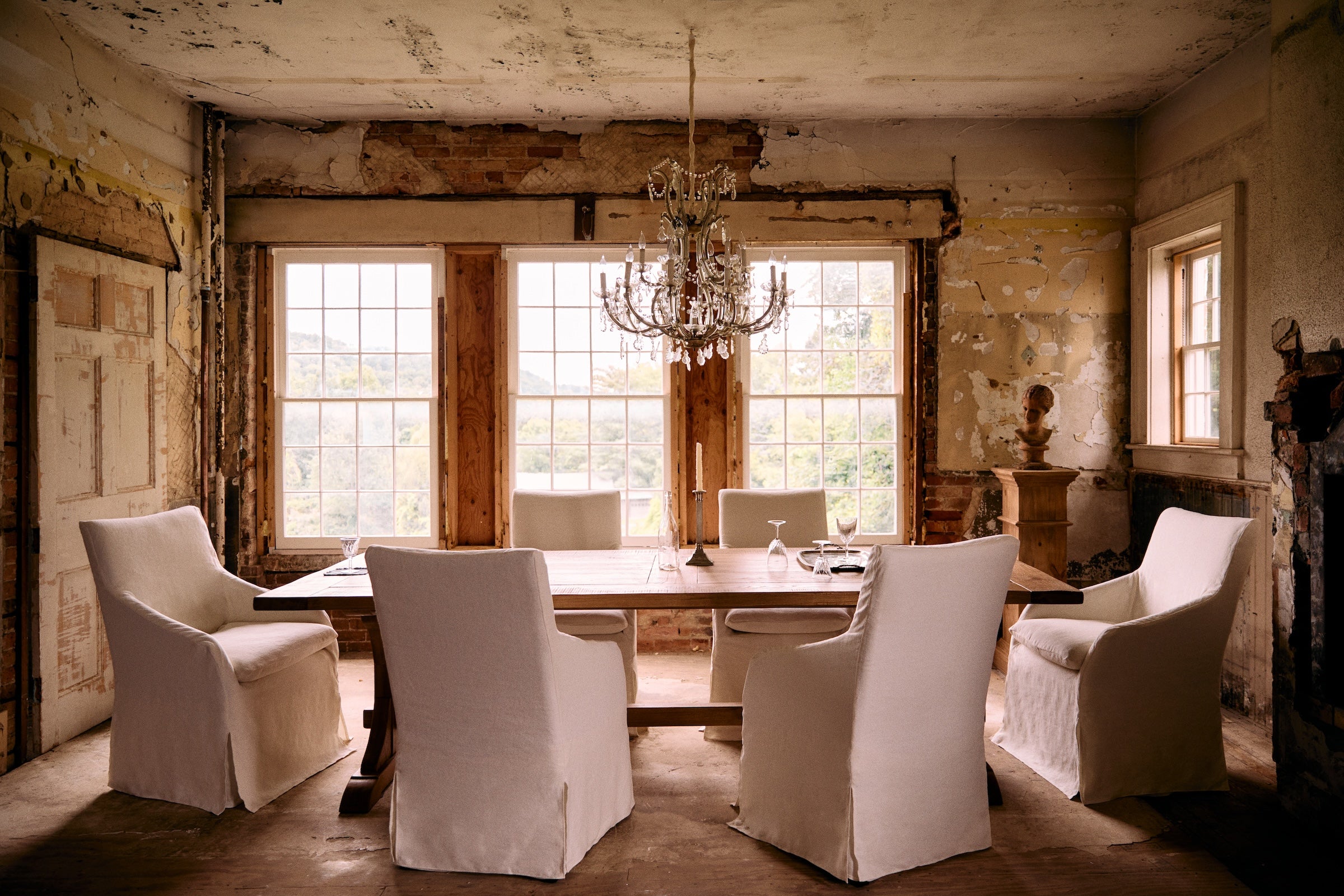
Los Angeles–based home decor and furniture brand Olive Ateliers has debuted the Poet & Painter collection, which includes the company’s first foray into upholstered furniture. The assortment draws inspiration from an imagined setting—a rural farmhouse in Normandy occupied by a poet and painter—to inform a 60-piece array of cabinets, sideboards, dressers and home accessories, plus new upholstered pieces: a slipcover sofa, ottoman, and dining and lounge chairs, each covered with classic ivory or cornflower blue linen.

Sustainable furniture brand Sabai teamed up with the Asian American Pacific Islander Design Alliance on an exhibition titled “Still Standing,” on view at the Fredericks & Mae design store in New York through September 20. The event showcases the work of eight AAPI designers who responded to Sabai’s open call to utilize excess production materials—in this case, the brand’s City table legs—to create one-of-a-kind pieces.
Recommended Reading
The humble chair has taken many forms over the years—and today’s styles are veering even further toward a playful and daring aesthetic. As Hunter Schwarz writes for Fast Company, that’s the promise of a forthcoming exhibition at Christie’s Beverly Hills, which will showcase the 50 most interesting chairs in Los Angeles—an eclectic assortment that includes an armchair made entirely of balloons, a chair with a stag’s antler as a backrest, and a sculptural seat that only becomes usable when two people sit on either side to establish equal weight balance.
The AI boom may have minted a new class of millionaires overnight, but don’t expect them to embark on a shopping spree—when these newly rich splash out, their purchases veer toward the practical. For The Wall Street Journal, Katherine Bindley explores the particular spending habits of the AI-wealthy set, who seem to view art and home decor as unnecessary indulgences, and instead invest in new cars, homes, tech gear and wellness amenities (purchases that align with an intense work schedule).










 Withdraw Consent / Manage Privacy Preferences