






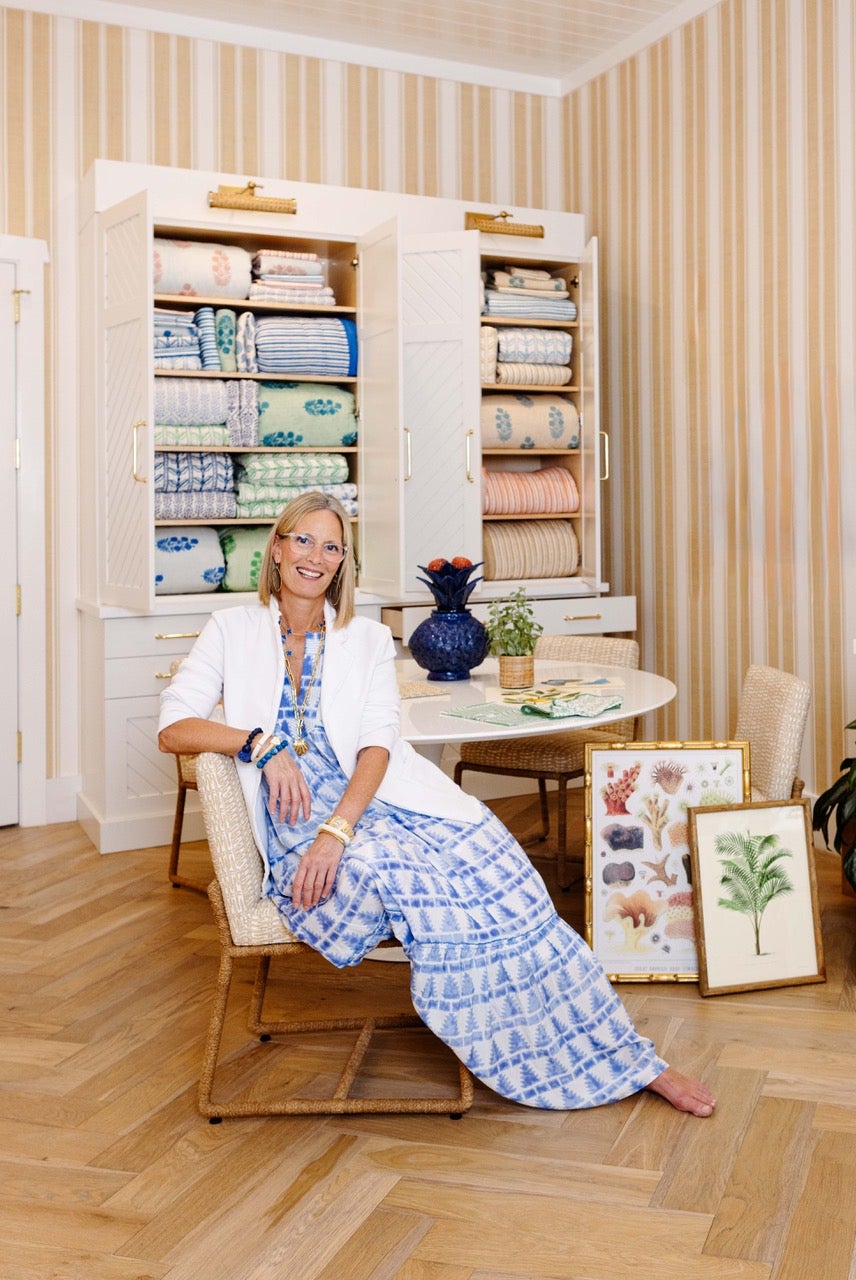

In Business of Home’s series Shop Talk, we chat with owners of home furnishings stores across the country to hear about their hard-won lessons and challenges, big and small. This week, we spoke with Dana Small, the principal of the design firm Dana Small Designs and owner of the boutique Matilda’s, both in the town of Stuart, on Florida’s southeastern coast.
Our conversation with Small wasn’t a typical one—but then, she hasn’t had a typical year. Last year around Thanksgiving, she was hospitalized with mysterious symptoms that turned out to be from an infection in her heart, leading to open-heart surgery and a monthslong recovery. Ahead, she shares the challenges of forced delegation, how it’s impacted her approach to business, and the notable ways she’s found success by identifying market voids.
When did you open your firm and the store?
I opened my store in 2007. It was giftables and things like that for the home, because I sold all the [bigger] stuff to clients through the design firm. Styling is such a big part of design now, but that wasn’t how designers worked 20 years ago. You’d have the lamps, but not the pillows, towels and candles. I opened a store based solely on the monogrammed notepads and tea towels! I was slowly [growing my] design work out of the store, but the store itself was my main focus because my kids were young. Design is very consuming, and I wanted to be able to turn the lights off, close the door, and go home to my kids.
I did design the whole time, but I would only take on one or two houses a year until my twins graduated from high school in 2021. By then, I had the time, passion and drive, and the store was running itself. I have an amazing team. So I opened my first brick-and-mortar design studio in 2021, but I’ve been designing for a long time.
Why and how have you stuck with retail all this time?
My husband would say I’m crazy, but I’m not. I go to Market and I see the same people shopping and we’re all like: “We’re slaves to the retail industry.” I never like to use the word average, but your average person isn’t a designer. It seems like the whole world can design on their own now because of Instagram, but I wanted to give people something in a retail setting that was tangible, and that didn’t cost $500. We sell a $50 to $200 pillow, not a custom $500 pillow. I wanted people to feel like they could take something home—the styling pieces that make a house a home.
I was doing freelance design work for a few years in Miami before I moved up to Stuart, which had maybe 10,000 people at the time. The other driving force behind my store was that there was nowhere to do a baby or bridal registry here. There was nowhere to buy invitations. The internet wasn’t what it is now, and I thought, “Why don’t I do that?” I was creating something so that people like myself didn’t have to go to Palm Beach or Miami or Fort Lauderdale to shop.
Is the store’s aesthetic similar to your design aesthetic?
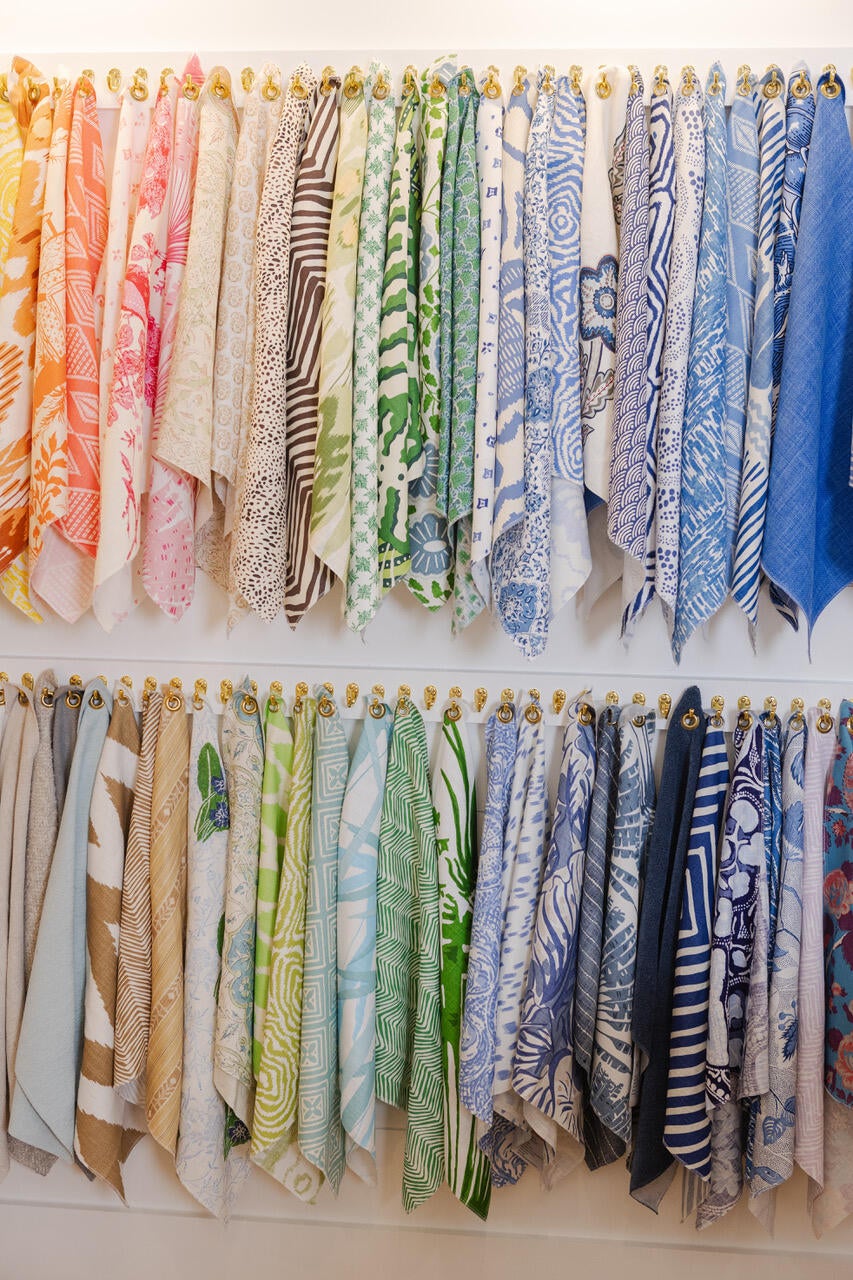
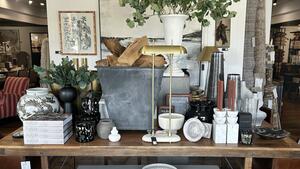
Definitely. I feel like any type of boutique with a single owner-operator, you’re showing your lifestyle. The store is called Matilda’s, after my daughter. I would say the aesthetic is “barefoot elegance.” [Our website says] “little shop of coastal wonder and inspiration and curiosity.” Back in the day, “coastal living” was a bit more tidal, turquoise, and those signs that say, “Welcome to the beach.” I’m not a big purveyor of things like that. We’re putting sophisticated fabrics and textures into high-end homes, but they still feel comfortable and approachable. My clients are hosting people. They want people to stay and kick their shoes off and have a six-hour dinner and drink out of beautiful glasses and sit on crushed velvet chairs even though you’re looking at the ocean. We definitely get some customers who love nautical things. We still sell the lobsters and crabs and pineapples and novelty kitschy stuff, because that is great around here, and I will do nautical when someone wants it. But we’ll do it with a little bit of a twist—brass, some Lucite, rich navy, lots of stripes.
What’s the design scene like in Stuart?
We have some local clients, and we have clients in Jupiter, Palm Beach, West Palm, Miami. We also have Michigan, Ohio, the British Virgin Islands and the Bahamas. I go wherever, but I’d say the Stuart client in 2026 is somebody who relocated here after Covid. They’re from New York, New Jersey or the Midwest. They’ve been coming here for years, they’re on the brink of retiring, or are empty nesters, and they’ve bought some condo or cute little bungalow home and we’re going to renovate it for them.
Tell me about the development of your bedding line. Why bedding?
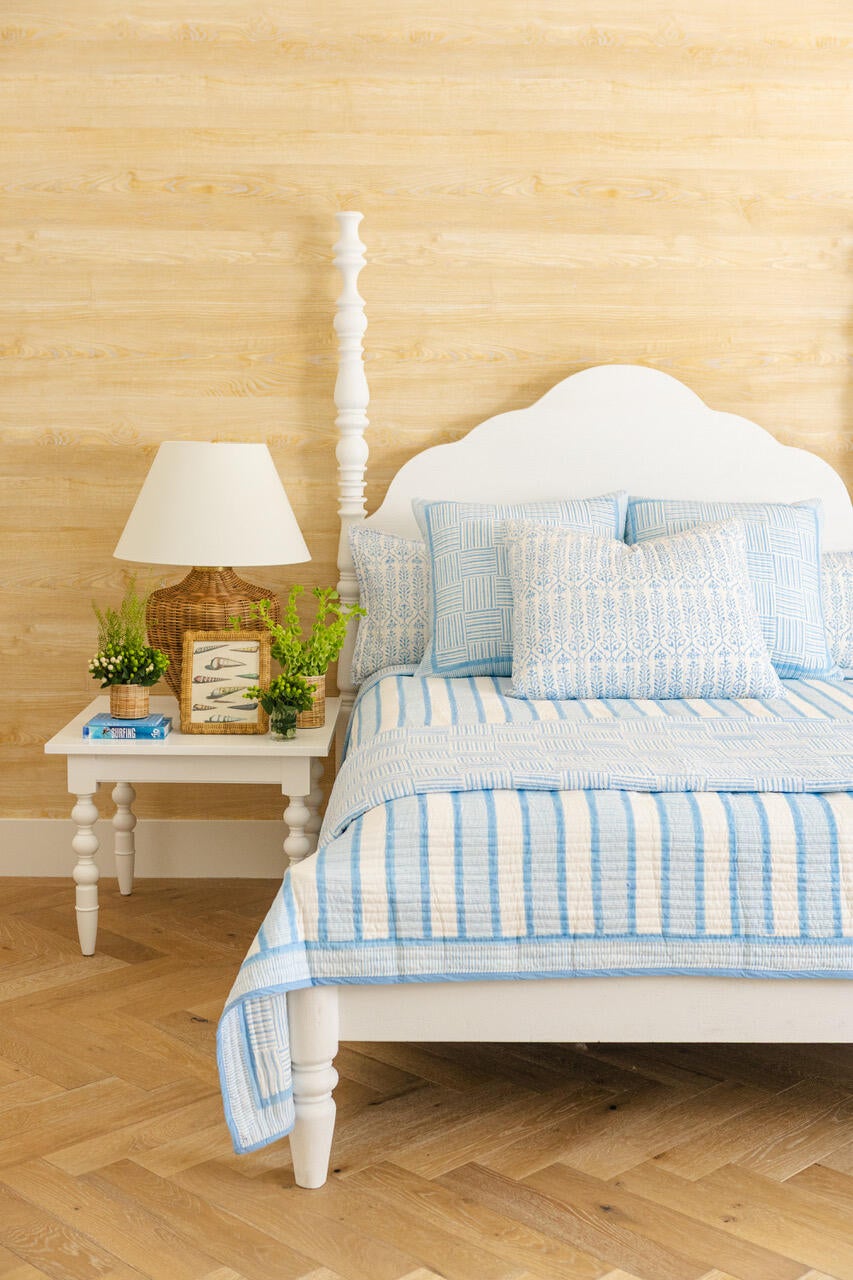
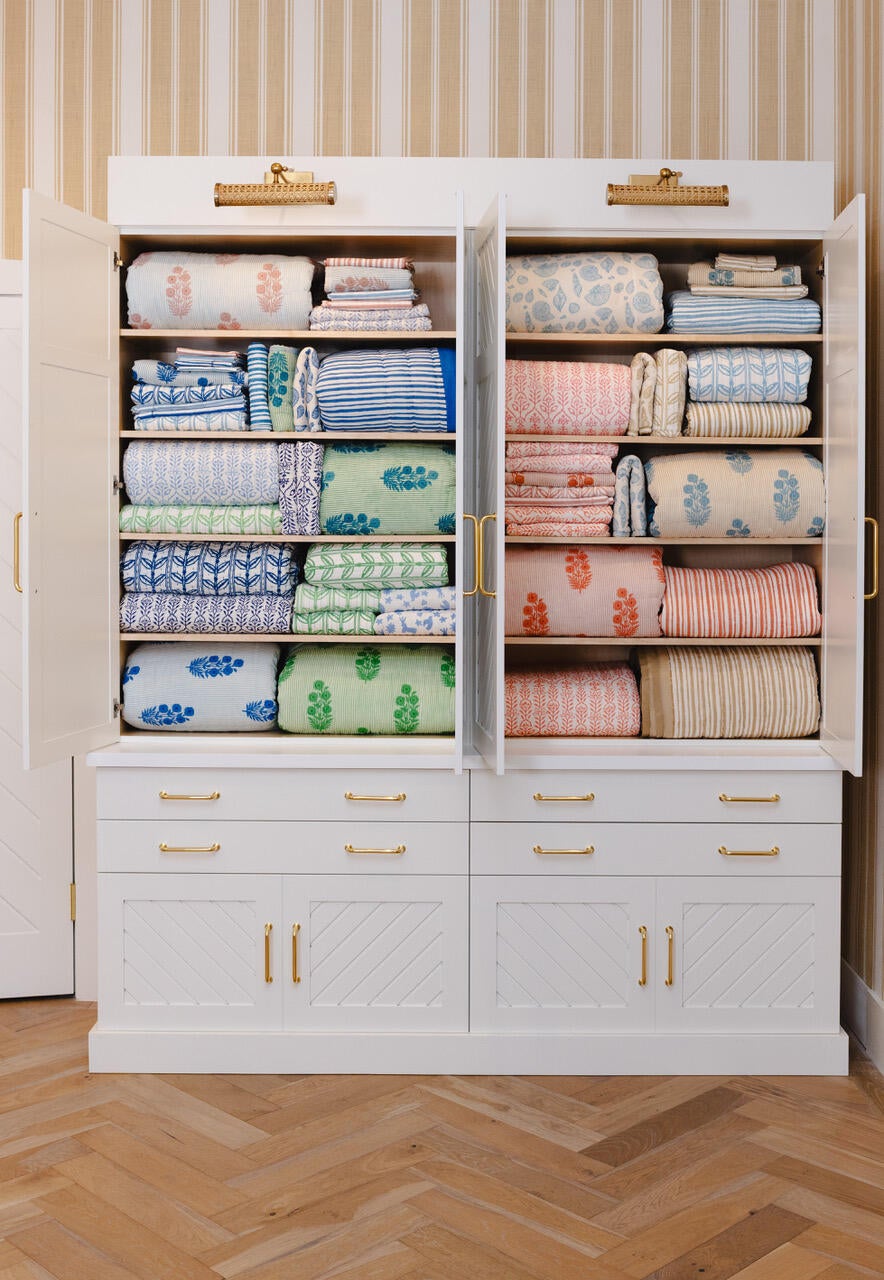
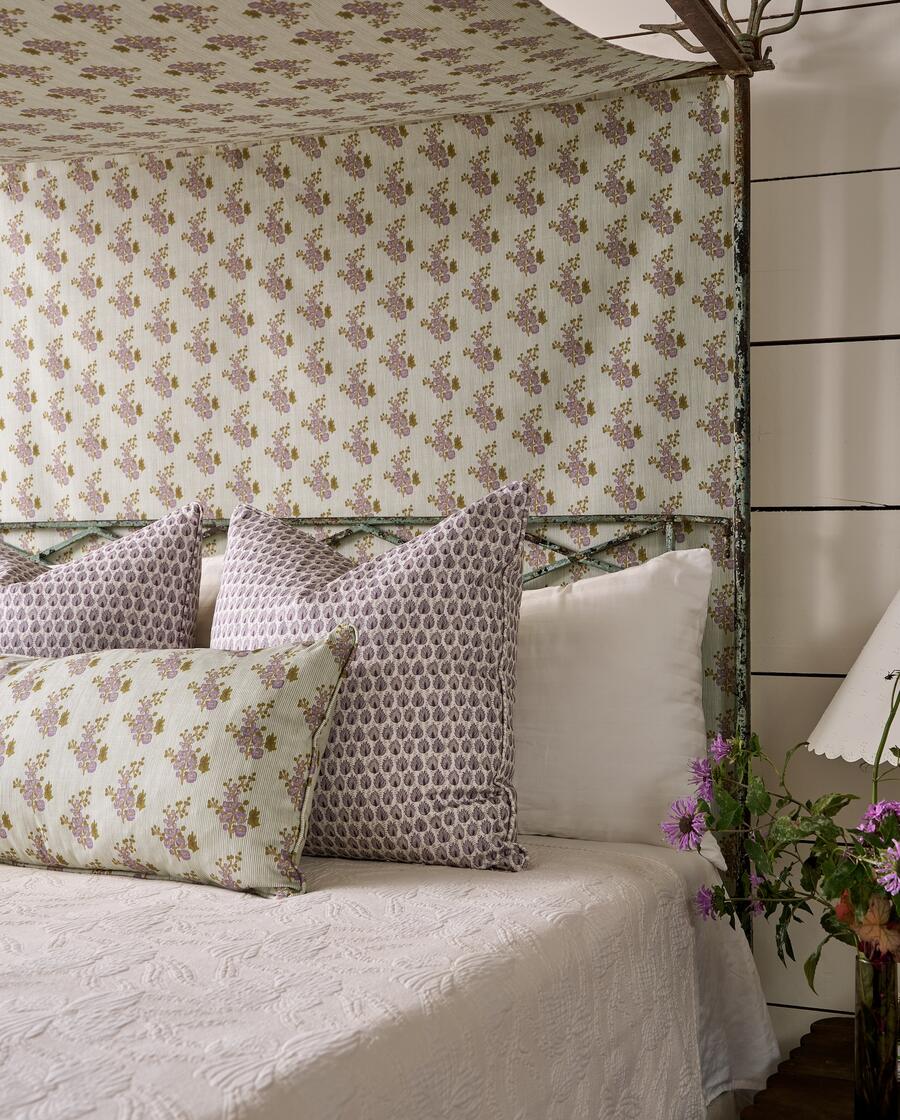
Bedding was always a hard sell with a client, because there was a big void between something you bought at [a mass retailer like] Bed Bath & Beyond and [a brand like] Matouk. My interiors are very colorful, full of texture—rattan, papier-mâché, grasscloth—and in Florida, everyone is in vacation mode. They don’t want [high-maintenance] crisp white linens; they want something basic, even if they have all the money in the world. When Roberta Roller Rabbit started with block-print bedding and pajamas, I loved the comforters. You can wash them, and they were something soft to put at the end of the bed. I started using them in my interiors, mixed with a white duvet. I needed something that a dog or grandchild could lie on. It was almost like a protective layer, too, so you could spill something while watching TV and not ruin the really expensive linens. When I worked for another firm in Jupiter [before opening my store,] everything was very crisp—or those heavy silks, like your bed was out of a department store. It just didn’t seem practical. You didn’t want the dog on the bed.
When Roller Rabbit sold to new owners, they dissolved that bedding line. Bed Bath & Beyond was going down, too, and things were just getting cheaper. My clients and customers would look at my Instagram and say, “Where’d you get that bed quilt?” I thought, “I should just make some of this stuff. What’s one more layer of the business?” But it is a little taxing right now, because of everything that’s happened with my health. We’ve had [product fabrication] on hold until a week or two ago.
What are some of the tougher lessons you’ve learned from having your own line?
We don’t have enough time. My kids are 23 now, and when they’re having a bad day, I always say, “I’m 55 and still learning.” Everything changes all the time. Just when everything got back to normal after Covid, then came the tariff situation. Then it’s fuel [costs]. With the bedding, we struggle most with the fact that we’re here in Florida and not in India. I love to meet in person. I love to go to a workroom and talk with the craftsmen, see how they’re doing it. I want to make sure we’re on the same page, and that’s sometimes hard over Zoom or WhatsApp or email.
The hardest part is having patience. It feels like we need to get a certain color in a certain time of year, or a pattern before anyone else does it, and it might feel like another brand is creating something very similar, but they’re not. It’s hard to separate life from Instagram and not feel the pressure. I was 100 percent guilty of that before I got ill—I felt like I wasn’t doing enough, or we weren’t getting things fast enough. That was a life lesson: The whole world was passing me by while I was in and out of hospitals for four months, and then recovering from open-heart surgery. I could only do so much in a day. We had to give up clients, which was really hard. But I have an amazing team. I have 15 employees and they managed everything while I was in the hospital.
I did a webinar back in January, and I’d just gotten out of the hospital. I found out I had endocarditis, which is an infection of the heart, and they were trying to figure out what to do next, if it was surgery or whatever. The woman who was hosting the webinar asked me, “Do you mind if we bring it up? Everything looks perfect in your life on Instagram.” That was a lesson too. There was a time last year when I did not feel like I was doing enough, and [I realized] that’s stupid. We have a design firm. We’re doing 15 houses pretty much every year. We have a 2,500-square-foot retail store. We have a 1,500-square-foot e-commerce facility. We make bedding. We also make dresses and linens. And I thought I wasn’t doing enough? It’s embarrassing. It’s embarrassing.
Did your health scare change your approach to management too?
Yes and no. It happened very slowly. I got sick at Thanksgiving, then I was in the hospital a couple weeks later, and [the doctors] couldn’t figure it out. It wasn’t like I had a heart attack and everyone had to scramble. It was, “Something’s happening [with our boss]. What do we prioritize [while she’s out]?” The store is easy because I’ve had it for 19 years and I’ve had an amazing longevity with employees. One employee has been there for all 19 years. [The team] all managed that, and I could be in a hospital bed, typing away, placing some orders.
Design-wise, it got a little bit tricky because we were in the throes with lots of clients, and they’re not necessarily meeting with my assistant. My name’s on the door. I’m the creative person. Some clients didn’t have the patience to stick around. It was very hard to say, “I really don’t know what’s happening. I have a PICC line now. I have to see a doctor.” People get impatient, and that’s fine. I don’t blame you. Here’s your money back. My team really stepped up. They took on more responsibility with existing clients who were past the conceptual parts and on to production. It was amazing to rely on them, which I always knew I could. I never felt like I had to give anything up; it was just scaling back.
But it’s very, very hard. It’s a very slow process. I’m a runner. I love playing tennis, pickleball. But yesterday I pulled an eight-hour day and it was the first time I’ve done that since Christmas. This crazy infection destroyed one of the valves in my heart. We have one huge project right now, and once it ends, I’m not stressed about what’s next. I am making sure my health is a priority.
I typically ask store owners where they’d like to take their businesses next, and how they’d like to grow, but you’re in a phase of doing less. What does that look like?
I’m still in a bit of survival mode right now. I felt great on Monday, and now I feel horrible. I don’t want to get my own expectations up and then not meet them. This is a slow recovery, and I hope to be back in full force, working full days, a year from now. Typically, we carry 15 projects at a time, and right now we have five. It’s hard. But I never [wanted] 10 designers under me. I always wanted to be a boutique firm, [with fewer] projects that fit our aesthetic. I want to be valued as a designer. We want to find the right clientele. My goal is to get back up to where we were.
For the bedding and the store, it’s interesting. Not once did my family say, “You should close the store.” I have great people. I opened the store in 2007, and in 2011 I got Lyme disease. There had been that period of three, four years where I was there 16 hours a day, and then I really had to learn to delegate and trust. Any business owner, when you hire people, you have to give them something to do and trust that they’ll do it. I tell my team, I’m learning as we go. We make mistakes. My team is forthcoming, like, “Oh my God, I screwed up—I thought I measured this correctly, and now we have to tell the client right away.” I sleep well at night because of that.
What does your favorite day at the store look like, especially now?
My employees—my shop girls, as we call them—would say, “This is laughable,” because I’m never there. Pretty much since I opened the design firm, I live at the design firm. And it’s been hard [since I was hospitalized] because I don’t have the stamina to talk to the shop girls and then have customers interjecting. But before all this, I loved being at the store, and I’m obsessed with the products we sell. I use all the things, I gift all the things. I have great salespeople, and I love that they have relationships with customers who keep coming back. That’s my favorite part: happy customers.


 Withdraw Consent / Manage Privacy Preferences