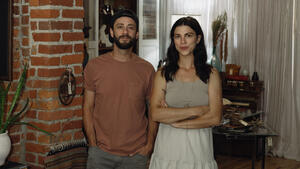









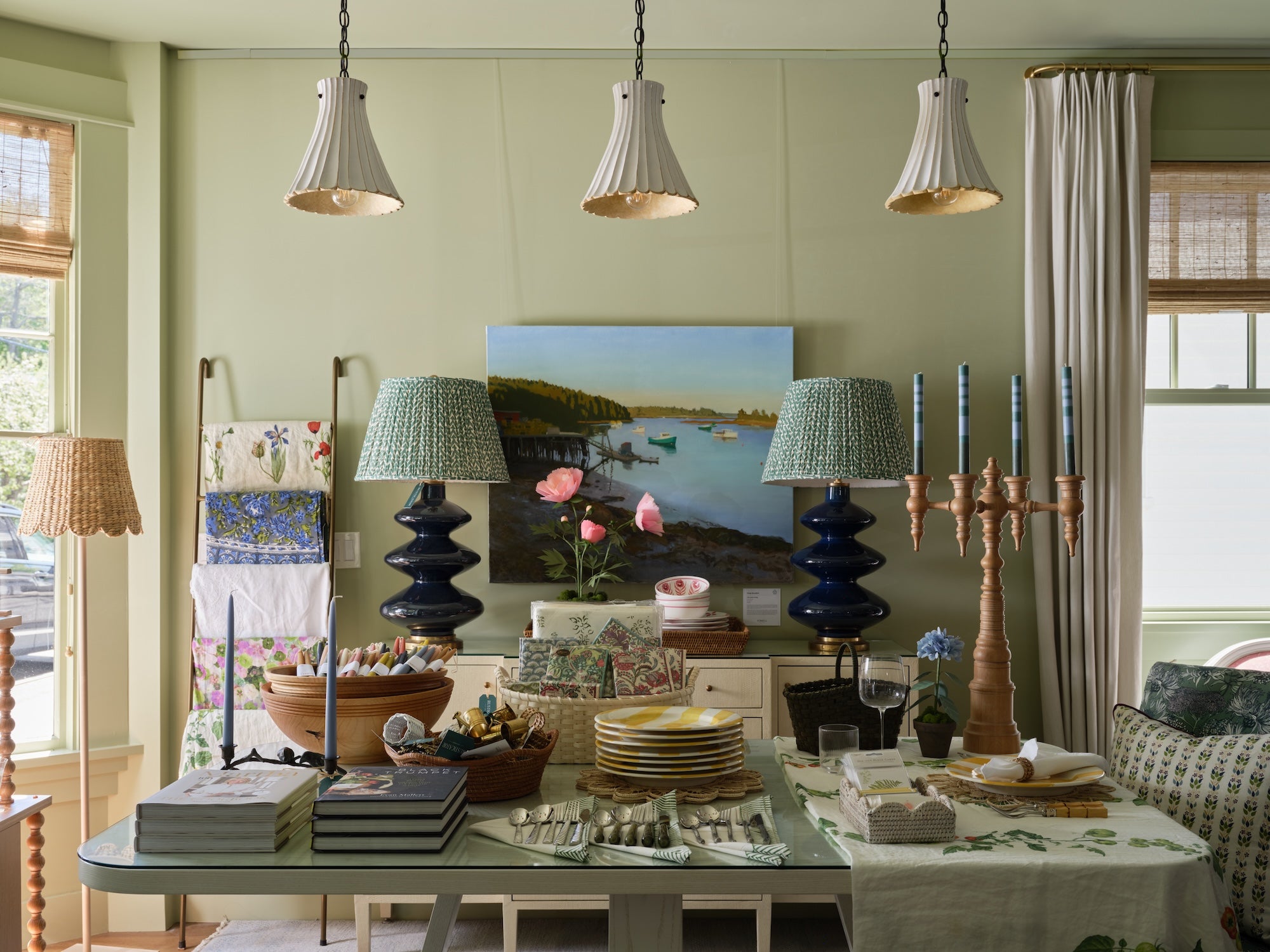

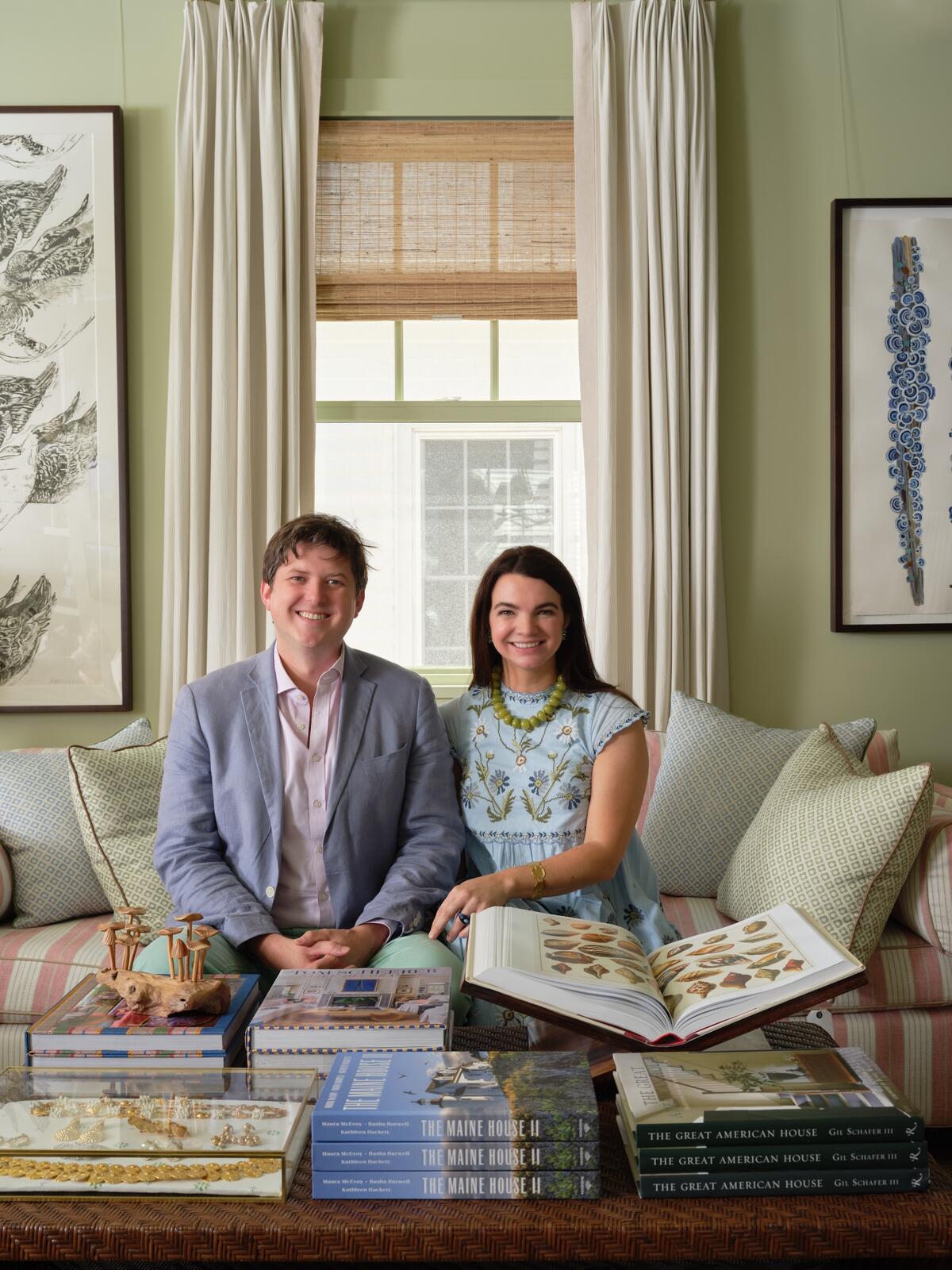
In Business of Home’s series Shop Talk, we chat with owners of home furnishings stores across the country to hear about their hard-won lessons and challenges, big and small. This week, we spoke with Laura Keeler Pierce and Vassar Pierce of the seasonal Maine shop Rusticator.
In the late 19th century, city-dwelling artists, intellectuals and the nation’s elite—the Rockefellers, Astors, Carnegies—began summering on the shores of Mount Desert Island, drawn by the humble fishing villages and majestic wilderness. Dubbed “rusticators,” many of those tourists built grand summer cottages and luxury resorts. Though the tourism boom tapered off after the Second World War, visitors still flock to the island, where Laura and Vassar hearken to that grand history at their appropriately named boutique.
The couple met through friends in 2008, and split their time between the island and Boston, where Laura’s interior design firm, Keeler & Co., is based, making their lives and businesses a constant game of logistics. They wouldn’t have it any other way.
“What differentiates Mount Desert Island from most places in coastal New England is that you can go to the beach, you can go out on the water, but you can also go hike a mountain. It’s rare to have mountains meeting the sea,” notes Vassar, who has been coming to the island his whole life. “The setting is so magical.”
Ahead, they talk about the difficulty of their particular location in Seal Harbor, how they structure their finances, and the grace that came with opening their doors in the middle of a pandemic.
How did you find your way to this island?
Vassar Pierce: My family has been coming to Mount Desert Island in Maine since the 19th century. My great-great-great-grandfather was one of the original “rusticators.” So my whole life, since the first month I was born, I came here. And when Laura and I met, she quickly learned to love it as well.
And Laura, when did you begin your design firm?
Laura Keeler Pierce: I started Keeler & Co in 2017. After three previous careers, I went to RISD and got my certificate in interior design. It was one of those moments where I was sitting in the first class, front row center, eating up everything the teacher was saying. I realized that every time we moved, my parents would renovate or build a new house. I was constantly surrounded by the construction process. My dad would pore over architectural plans, and my mom would decorate. It was an aha moment that this was what I was supposed to be doing.
Why did you want to go into retail?
Laura: There was this moment in our relationship where Maine really became a nonnegotiable, like, “This place is incredible, and we need to spend as much time here as we possibly can.” How do we put down some roots that allow us to [do that] on MDI?
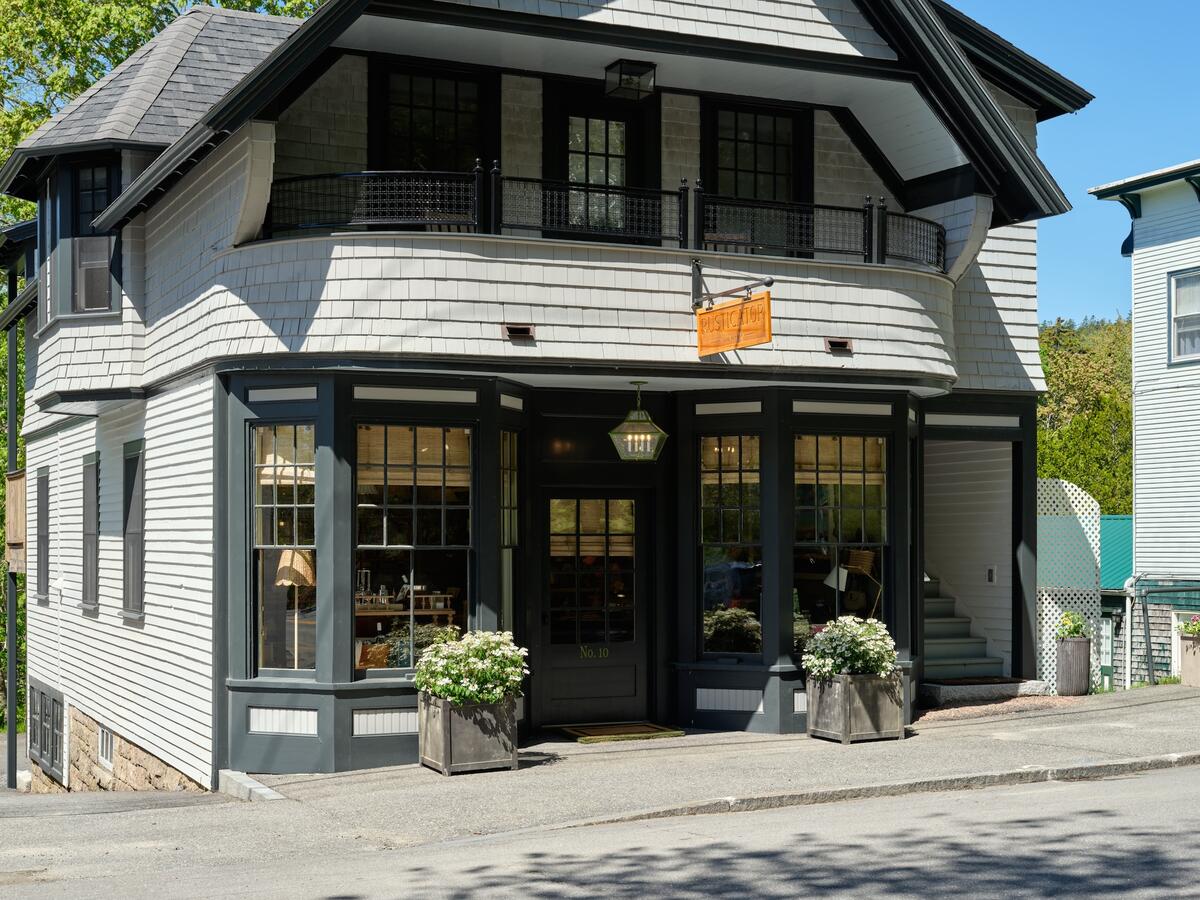
We were working with a lovely real estate agent who said, “Why don’t we look at something a bit different?” There was a boarded-up building right in the middle of Seal Harbor that used to be the general store, and a butcher shop before that. I completely fell in love with it. I knew there wasn’t anything on MDI servicing that clientele who wanted something a little more design-forward, that didn’t look like their grandmother’s house. Vassar came at it differently, since we weren’t technically in business together at that point.
Vassar: When I think about brick-and-mortar retail, I think about community. Obviously this place matters to us. Providing a resource and a gathering space for the community was something we really wanted. When Laura found this beautiful building, I was like, This is it. How do we make it a place people want to come to? Because Seal Harbor is a very small village with not a very robust commercial presence. We were the only shop on our little strip when we opened. It’s a destination.
Tell me about the timeline of opening, since it was 2020.
Laura: We bought the building in 2018, and it had to undergo extensive renovations. We were planning to open Memorial Day Weekend 2020, bringing our team from Boston to help. Then we couldn’t cross state lines without quarantining for two weeks. Ultimately, we opened on July 11. We didn’t have everything we were hoping to have in stock, but we had a wonderful first season.
Vassar: Opening during the pandemic was such a blessing for us, because we didn’t know anything about retail, and folks were just so grateful something was open that they were generous with their patience in a way people aren’t necessarily today, and weren’t before. It allowed us to figure out how to run a shop.
What is the aesthetic of the store, and how is it similar to Laura’s style with Keeler & Co.?
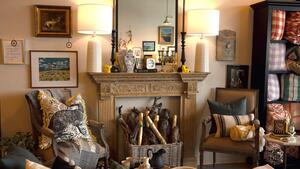
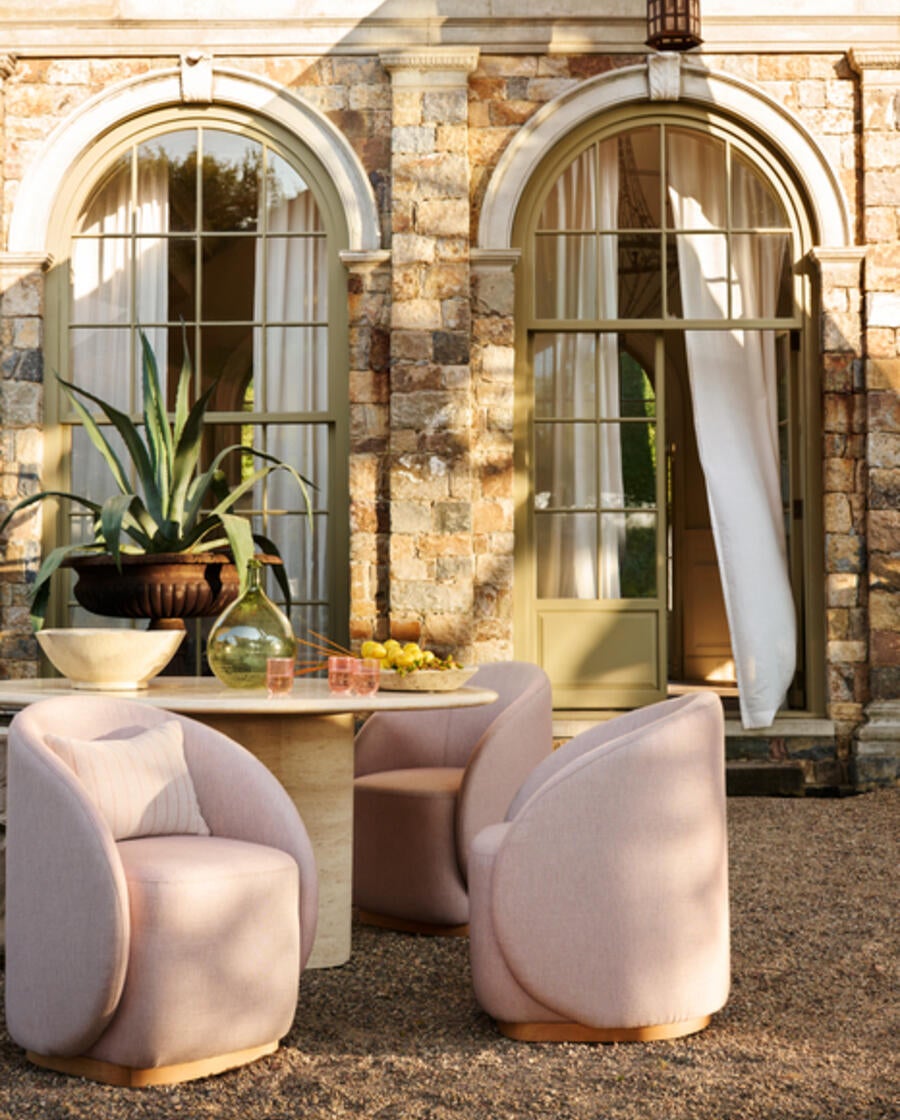
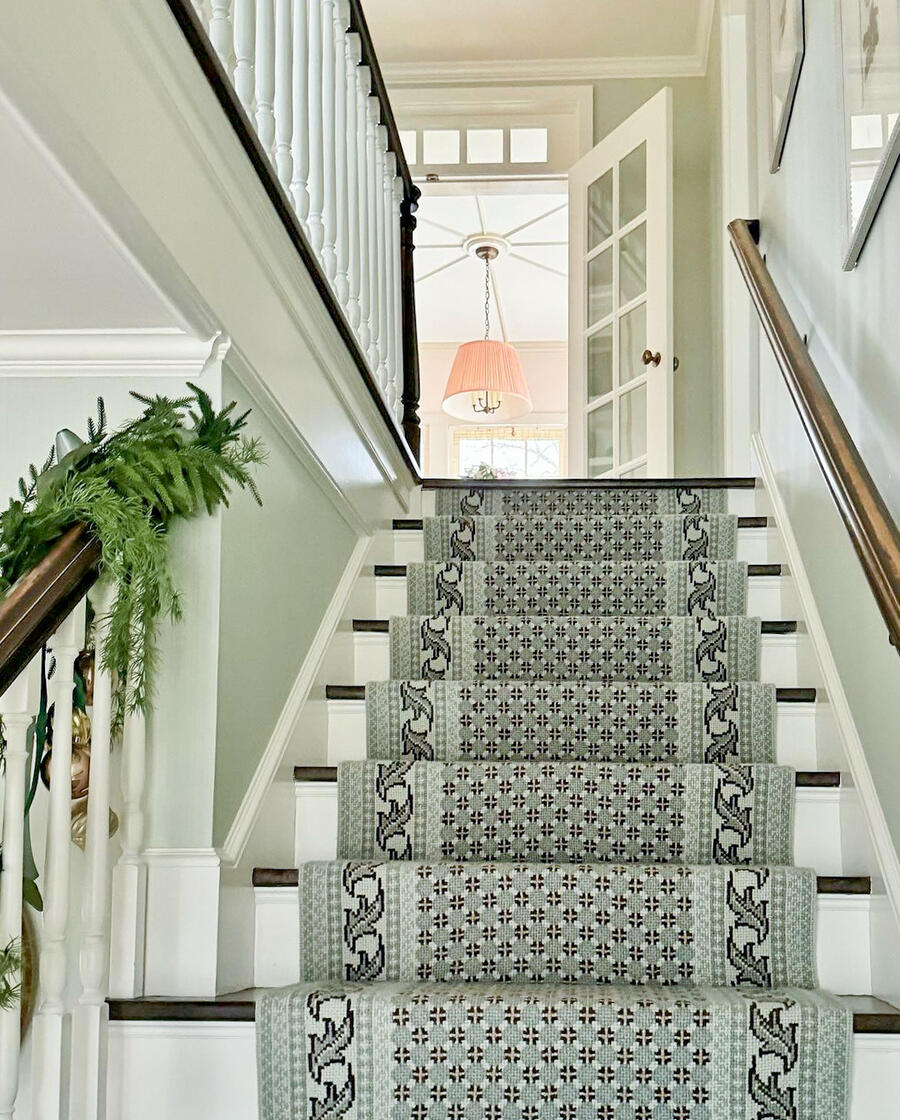
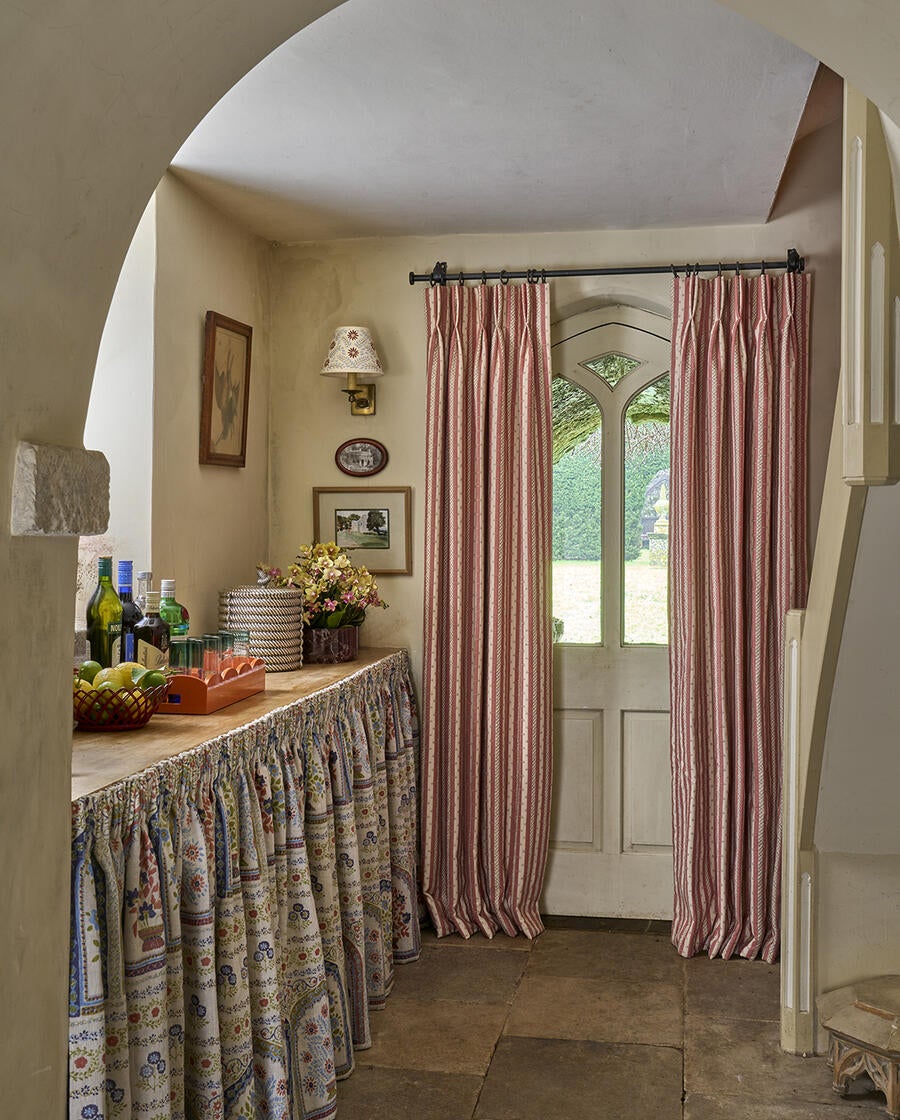
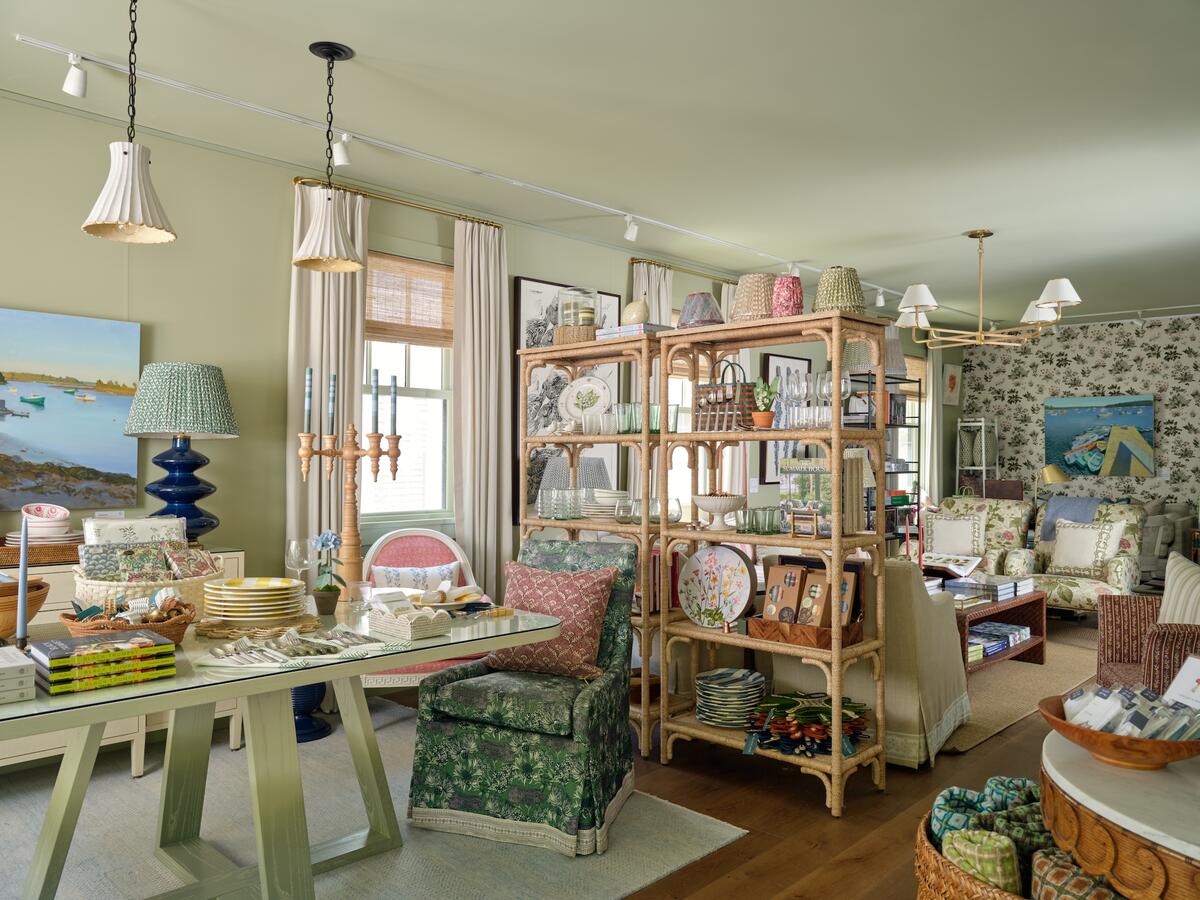
Laura: There’s this rich history of decorating on Mount Desert Island, creating these retreats to “rusticate” in. There is a very formal aesthetic, almost English, with layered florals, painted wicker, chintz, that set the stage in those early years. Because there’s so much sentimentality around going to the same place year after year, there’s a reluctance to change these houses. Vassar’s house has been in his family for over a century and looks exactly the same as it did a hundred years ago. I saw an opportunity to take this rich history and figure out how to interpret it for today. My litmus test for the shop is if I don’t love it, it doesn’t go in. We think about modern-day heirlooms—the things you’re going to hold on to for a century. The majority of what we carry is made in the U.S. or U.K., and it’s going to look just as beautiful in a hundred-year-old house as something that’s newly constructed.
What’s your sourcing process like, and is it difficult to get product to the island?
Vassar: Our approach is organic, and we are constantly out and about looking for special things. Before we owned the store, I was not someone who spent all my time poking around antique markets, but now that is my pastime. We love to travel, and find things on our travels. We go to High Point; Laura was just at Brimfield. We have relationships with vendors from markets, but our primary goal is to find small makers. Getting things to Maine can be logistically challenging, but we have a wonderful receiver—
Laura: We are an island that has a bridge!
Vassar: You can drive on, so FedEx and UPS do show up, but we have a receiver on the island where we store the majority of our inventory. They’re here in the shop right now. They help in a situation where someone wants a sofa, making sure it gets delivered to wherever it’s going, which in some cases is across the country.
What is a favorite vendor relationship?
Laura: We were just on Zoom with Megan Aronson of Aronson Woodworks in Iowa. We’ve never met in person, but we have become dear friends, and we’re currently working on a few collaborations with her. We’ve got two things in the shop that we’ve designed with her—a little step stool and a spot table.
Vassar: And we have this gentleman, Jeff Litchfield, who owns Owl Haven Machine. He makes unbelievably beautiful candleholders. He is the father of our photographer Sean, and he retired and started making these for fun. We received one as a client gift for Christmas from Sean, and we were like, “Oh my God, this is incredible. Do you think your dad would let us sell these in the shop?” I think we’re the only store that carries him, but you can find him online.
Laura: I want to add one more. One of the things that was really important to me when we opened Rusticator was original art. We collaborated early on with a dear friend of ours, who happens to be an art advisor, Hadley Powell, who owns Powell Fine Art Advisory. Like us, she splits her time between Boston and Maine, and puts together our art program. So you’re not just seeing something “decorative” on the walls; you’re seeing a breadth of photography, painting, printmaking.
Who are your customers, typically?
Vassar: Someone design-curious, seeking out beautiful things. They’re not stumbling across us. There are local people who live on Mount Desert Island year-round; there’s seasonal people; there are tourists who stay at boutique hotels. Laura designed the Claremont hotel in Southwest Harbor in 2021, so we get a lot of people who have stayed at the Claremont and asked, “Who designed this?” We have a number of designers come in. We have a small trade program. Designers use us as a tool to finish projects—lampshades and lamps, luggage racks, art—as they’re doing an installation. But I think our primary customer is the public.
Is there a certain category or one-off product that you can barely keep in stock?
Laura: In addition to home goods, we carry a little bit of vintage jewelry and bags. Chester Vintage provides us with an assortment for the summer. Those fly off the shelves. People get a pair of pillows and a little clutch and go out the door—something for the home and something for you.
What about each of your own favorite categories?
Laura: I have a real obsession with table linens. Vassar’s like, “These cannot continue to end up in our house. There’s no more room for place mats!” We carry Summerill & Bishop, this beautiful line out of London, in vibrant colors. Often they’re depicting the natural world, which is very appropriate for MDI. I also have a thing for mushrooms. We had incredible woven mushroom place mats last summer.
Vassar: I lean into the bar section. We just got this beautiful bar that Dunes and Duchess made for us. We’ve been experimenting with not only the bar accessories, like cocktail shakers and bottle openers, but also some consumables like bitters. That is my small corner of the shop, where I have free reign.
Given your location, how do you entice people to stop by—is it with events or collaborations?
Laura: A little bit of all that. One of the things that’s particularly charming about where we are is that people embrace the post office. We have postcards dropping in everyone’s mailboxes today to announce the reopening of our season, and people come in with their postcards. We do have a series of events throughout the summer: two book signings, a flower workshop, an artist talk. Our community loves to come together, so we try to give that opportunity. We’ve done pop-ups in the past and would again.
Instagram’s a great tool for us. Vassar is locally famous for this “Walkthrough Wednesdays,” where he brings everyone on a rambling tour of the store, highlighting his favorite things—not always with a hundred percent accuracy, which our customers find hilarious and endearing. It’s especially exciting when someone comes in and says, “I saw this on the walkthrough and had to come in again.” Instagram has been a real friend to us because it’s allowed people to make an effort. We’ve been shocked—people have come from two hours away! Yes, we’re a destination, but we didn’t quite realize how much of a destination.
Vassar: I would add that Laura and I are both involved in various nonprofits here, and we’ll do collaborations with vendors who support them. We have a custom wrapping paper, and this year we’re launching two new designs that will support local organizations. They’ll help promote us, too. That’s not why we do it, but it is a way to drive awareness.
Can you talk a bit about how you structure the finances of a seasonal business?
Vassar: It’s evolved over time. The first season, we bootstrapped and borrowed and bought inventory. At the end of the season, we held inventory for the offseason and kept expenses really low—rent and seasonal employees. As we’ve grown, we’ve developed a robust decorating program. Rusticator serves not only as a storefront, but a resource for people who don’t have full-home design. They want one furniture piece or one room refreshed and upgraded, and we offer decorating services to support them.
In a seasonal place, people want work done in the offseason. So our full-time staff do mostly decorating work in the offseason, and that generates revenue. And of course, in-season sales keep us moving forward. But the decorating program has really expanded us to a year-round business, even though the doors are closed.
What are some of your hopes for the future of the business? More locations, or certain product lines you’re interested in launching?
Vassar: A little bit of everything you just said. I don’t think we’ll ever be a store or a brand that is everywhere, but I could see us having two or three shops in the next five years. We really love supporting our vendors, and we want to be able to buy more from them. I think the opportunity to do collaborations with them is more expansive the bigger you are and the more volume you can do. Laura’s so talented creatively, and she has a lot of ideas, and I think the way that we can implement those ideas is if we’re bigger. I never want to be huge, but I’d love for us to grow.
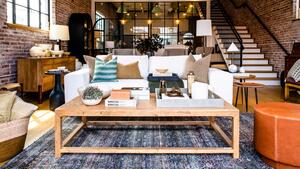
Laura: I’ll add that we’ve been very consciously not web-centric. When you come into Rusticator, you’re coming into a home. We have a dining area, a living room, a bedroom. I want it to feel like we’re welcoming you in: Would you like a glass of water or a cup of coffee? Stay a while. We had one customer a few years ago who drove halfway across the island to see us because she was having a terrible day and she needed to go somewhere where she knew she would be happy. Every time I talk about that, I get emotional that we’ve created somewhere so special!
As a result, I don’t want to say we’ve “rejected” [e-commerce], but we really want that relational experience. Until very recently, we had no ability to say, “Click here, buy here” on Instagram. It was all through Instagram messages, so we had that engagement with our customers there, too.
One thing we’re exploring going into our seventh season is [reaching] people who aren’t on the island, or the customers who were with us for a brief time and are in other parts of the country. What does an online presence look like for us? It’s another place where I see opportunity.
What’s your favorite day at work?
Laura: I just gave it away with that story!
Vassar: Mine is standing in the store and having a mix of regulars and people finding us for the first time. It’s a beautiful, sunny day, the door is open, and the salt air is coming through. One of the best things about being a destination is it’s rare that someone walks in and walks out. They have that cup of coffee, we talk to them. We are so people-centric that getting to deeply engage with someone for the first time or the hundredth time brings me so much joy.