



These days, predicting the future feels like an increasingly foolish pastime. In 2019, who could have forecasted the madness of the pandemic? In 2021, the mind-boggling advancements in AI? In 2024, the tariff roller coaster? When the world—and the design industry—changes so fast, it’s hard enough to keep up, let alone look ahead.
Still, we try. Straining our necks to see around the next corner is how an industry stays sharp, focused and creative. To that end, we’ve asked 22 designers and business leaders to dust off their crystal balls and offer a peek at the year to come. From the rise of purple to AI for DIYers, their answers may surprise you.
STYLE
“Purple is the design industry’s most reviled color—at least in all the years I have observed—but it may be having its moment in the spotlight. I’ve observed an increasing interest in lavender, have had clients warm to the hue, and even recently saw an article about Edo Purple, a blueish hue from traditional Japanese imperial design. I am here for it!” —Noz Nozawa, designer
“A return to sleek kitchens and cooler metals. I’m working on kitchens inspired by the 1940s and ’50s and Machine Age glamour. I love an English kitchen, but even I’m over it.” —Summer Thornton, designer
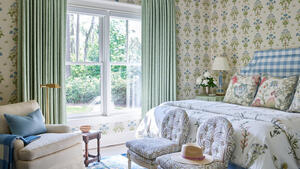
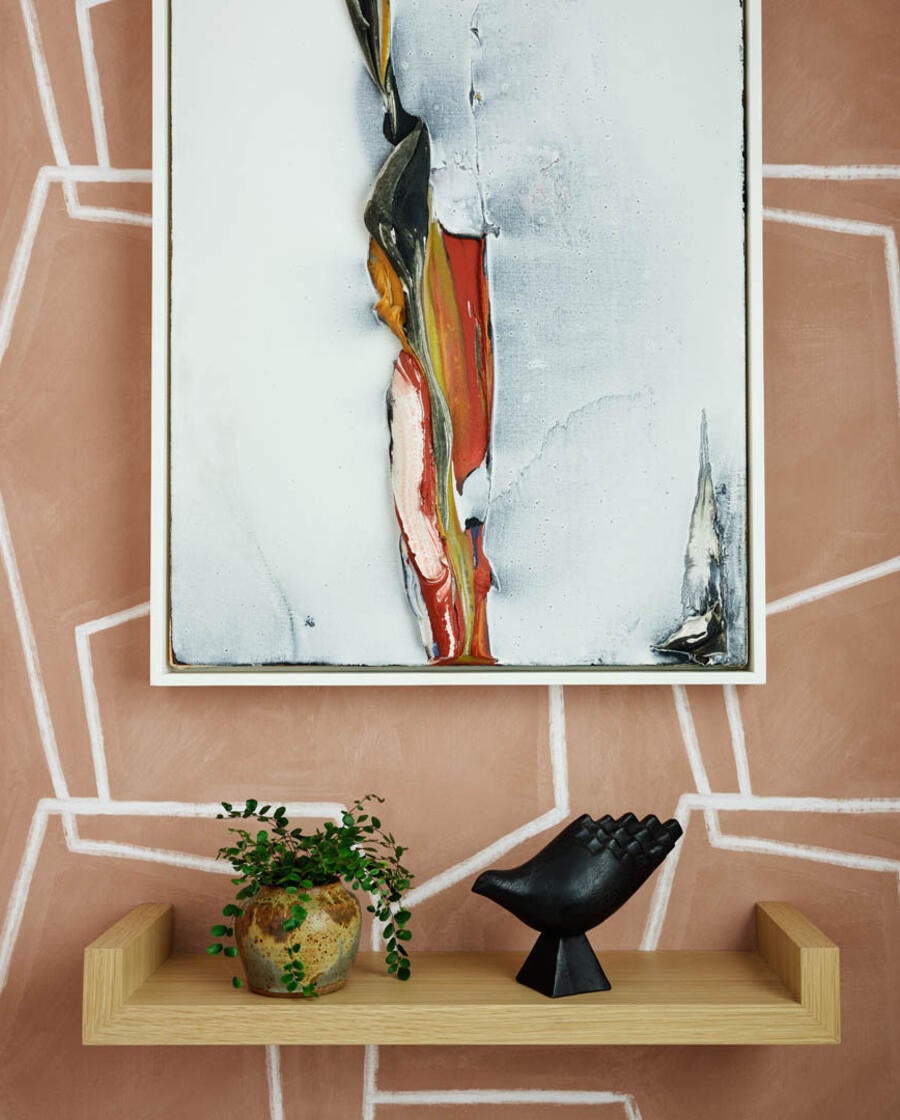
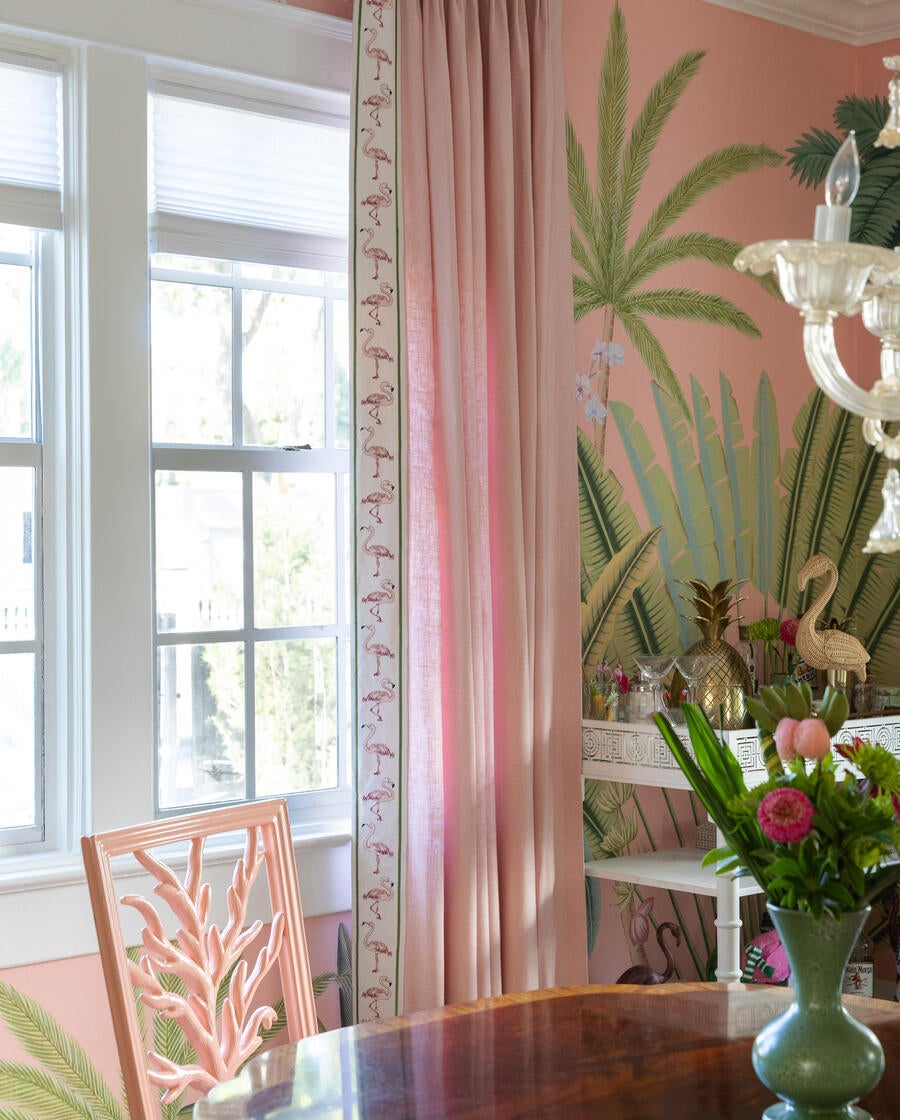
“There will be a lot more emphasis on decorative finishes, such as various plasters, glosses and limewashes. It creates an extra layer that feels very luxurious on walls. I also predict a resurgence of more classical or historical floral prints as statements throughout the room.” —Sasha Bikoff, designer
“There’s a clear shift away from designing for photos and toward creating spaces that support how people actually live. That means multifunctional rooms that still feel thoughtful and elevated, smarter storage, softer lighting, and materials that age well over time. We’ll see a move toward warm, lived-in color palettes—aged greens, ocher, brick red, earthy browns—used with intention rather than as blanket trends.” —Gray Benko, designer and star of the Magnolia Network’s Anything but Gray
“We’re seeing continued momentum toward spaces that feel genuinely lived in—less about staged perfection and more about authenticity, character, and designs that maintain their relevance over time.” —Carla Zajac, co-founder and CCO of Regina Andrew Detroit
“My prediction for 2026 is that the average American is going to wake up and demand that the mass building industry stop feeding them sterile, white, lifeless boxes for homes, and that we return to the days of character and charm and good architecture that makes the cities we love to visit worth visiting. It will have to be the people that make the change, because as long as we buy it, they’re going to keep building it.” —Stephanie Sabbe, designer and author of Interiors of a Storyteller
“With the surging interest in AI-created images, I believe people are going to go for organic content; things that are made by hand, that are high design, designed by people, and have great longevity.” —John Edelman, president and CEO of Heller
“What I find myself watching for in the home industry is a return to images and objects that feel touched by real people. So much of what we see is beautiful, but increasingly smooth, efficient and familiar. I hope 2026 is a moment where photography feels more artful again, where we can sense the human hand behind the image, the decisions, the hesitations and even the imperfections, instead of something frictionless or overly optimized.” —Colin King, stylist and author of the Substack The Last Layer
BUSINESS AND WORK
“2025 was a year of tumult for our industry. Looking ahead to 2026, I think we’ll see more stability. We’ve all ingested the impact of tariffs, rethinking our supply chain and pricing strategy. And with continued interest rate cuts on the horizon, we might actually see that housing market recovery we’ve been thinking about for so many years. It’ll [also] be a year of continued consolidation as smaller and midsize players band together to help withstand some of the vicissitudes of the market.” —Lee Mayer, CEO of Havenly Brands
“There’s going to be a shift toward manufacturers making a lower barrier to entry for industrial designers to contribute new work without so much risk or volume required. I think that tariffs and heavy dependency on manufacturing in China, along with difficulties that young industrial designers face, creates a really nice opportunity for manufacturers to try and take advantage of it.” —David Rosenwasser, co-founder and co-CEO of Rarify
“I think brands are going to matter a lot more. For us, that means doubling down on what we already do best: building and investing in our own brands, sharpening the design point of view, elevating the service experience, and making each brand tighter and more visible. In the era of GEO—generative engine optimization—brand authority becomes part of the discovery funnel. If AI models don’t recognize your brand as a trusted source of truth, you simply don’t show up for the modern consumer. So strengthening our brands isn’t just a marketing exercise—it’s positioning them to win inside the new AI-driven channels.” —Mark Feng, chairman and CEO of Markor Home Furnishings and founder of DecorX
“I expect to see dupe-driven businesses quietly fade away. Consumers already realize the quality and longevity of products from some companies is just atrocious. It’ll be a quiet pullback as shoppers return to brands that prioritize craftsmanship, materials and products designed to last.” —Mehdi Ait Oufkir, CEO of Parachute Home
“[I’m predicting] smaller but more projects. In my practice, I have observed a downward trend in gung-ho project confidence from new clients. Their home values are consistently aspirational, but their hesitation to commit to whole-home scopes has felt like a new enduring reality, at least while the economy keeps on like it has. It hasn’t even been about project budgets, which we’ve been able to hold fairly consistent to per square foot—but that clients are, more and more, asking to start with certain priority areas, and then later adding the rest.” —Nozawa
“I expect a shift in how we work: more holistic, end-to-end creative partnerships where designers act as true collaborators, guiding clients through an experience that expands their taste as much as their space. And as sustainability becomes not just a value but an expectation, the emphasis on vintage, longevity and thoughtful materiality will continue to shape the conversation, pushing the industry toward design that’s both timeless and responsible.” —Zoë Feldman, designer
“Thinking about next year, I imagine us riding one of those old wooden amusement park roller coasters, the kind that starts off with a big sudden drop that scares everybody and causes lots of screaming and shouting, and then slowly, over the course of the rest of the ride, makes its way back up to the platform. When you get off the roller coaster, you realize you ended up exactly where you started, but you feel a little shaken by the experience. Hopefully I’m wrong, but somewhere along the way, we’re probably going to have a bit of a correction, and then we’ll probably recover from that correction as the administration takes action to make sure the economy is in a pretty healthy position by the November elections.” —Alex Shuford, CEO of Rock House Farm
“Despite all the noise, what I’m optimistic about heading into the new year is how thoughtful the industry has become. I think because of tariffs, primarily, there’s been more intention from vendors around things like design and sourcing and storytelling than there was even a year ago.” —Cyrus Loloi, principal and CMO of Loloi Rugs and Joon Loloi
“From a business perspective, designers will be looking for true partners: brands that support their process with intuitive self-service tools, reliable logistics and consistent execution. Streamlined shipping, dependable quality and selective exclusivity help designers deliver on their promise to clients. As trade partnerships grow, it’s this combination of creative integrity and operational reliability that builds trust and long-term collaboration.” —James Slaven, co-founder and CEO of Regina Andrew Detroit
TECHNOLOGY AND AI
“Ten years ago at Peloton, I was warned that virtual reality would make the bike obsolete and that people would soon be sweating and consuming content with headsets strapped to their faces. Spoiler alert: That future never arrived. Today, some predict that artificial intelligence will replace interior designers, but I don’t see that happening either. In 2026, I expect the design industry to thrive—with AI serving as a powerful complement to human creativity, not a substitute for it.” —John Foley, co-founder and CEO of Ernesta
“I see two countervailing forces in the design world moving toward collision, or synthesis, in 2026. On one hand, there is a broad shift—led by digital natives—toward authenticity and the analogue: reduced screen time; paper books; film photography; no filters; collected objects; vintage fashion; hands-on hobbies; and interiors that feel personal rather than optimized. It is a clear backlash against the digitization of daily life and its flattened texture, and it is already reshaping design toward more color, pattern, warmth and lived-in complexity. On the other hand, there is the accelerating rise of AI, which will only intensify in 2026. The defining question is whether these forces can coexist productively: Will technology free up time and mental space for craft, family and home, or will it push us further toward hyperproductivity, device dependence and an increasingly automated design culture? My prediction is that 2026 will be shaped by this tension—and by a growing appetite for designers, companies and influential voices willing to address it honestly, articulate a credible middle path, and offer a compelling vision for how to live well amid uncertainty.” —Michael Diaz-Griffith, executive director and CEO of the Design Leadership Network and author of The New Antiquarians
“I predict that 2026 will be the year that the interior design industry fully embraces the potential of AI: harnessing its abilities and weaving them into day-to-day studio processes like renderings and creative pitches to clients.” —Corey Damen Jenkins, designer and host of Design Reimagined
“This fall, I pruned the shrubbery at my new house in the Hudson Valley with the help of my landscaping assistant, ChatGPT. ‘What on God’s green Earth is this?’ I prompted. ‘Should it stay or go?’ After complimenting the clarity of my photographs, ChatGPT named the shrub, assessed its value as a pollinator and sent diagrams indicating where to trim. How successful was this collaboration? We’ll find out in the spring. But based on a sample of one and the state of the economy, I predict that in 2026 ChatGPT will surpass YouTube videos as the confidence-building instigator of DIY projects, if it hasn’t done so already. I mean, when was the last time a YouTube video complimented you?” —Julie Lasky, design journalist
“As content becomes infinite, taste, curation and craft become the real differentiators. Consumers are increasingly drawn to what feels intentional, human and authentic. In AI, that means moving away from one-size-fits-all models and toward differentiated, opinionated systems—models designed with a clear point of view, domain expertise and a strong sense of craft.” —Mariam Naficy, co-founder and CEO of Arcade
“In 2026, we anticipate the routine integration of AI into design workflows. While we firmly believe that true creative vision—which carries emotion, personality and sense of feeling—cannot be replicated by AI, our studio will continue to thoughtfully observe and test AI tools to enhance the client experience and streamline project management. We’re committed to embracing innovation while preserving the human connection that makes this industry so special.” —Alex Spielman, designer
“AI is maturing quickly. We’re moving past pure ‘creative vibes’ into real reasoning, quality benchmarking, and tools that help people make better decisions. At DecorX, that’s the direction we’re building toward: ensuring retailers get discovered by the AI-first consumer and giving designers intelligent tools that truly understand the complexity of their projects. All this digital efficiency is influencing taste. As the digital world becomes cleaner, faster and more perfect, the physical world is leaning human again. We’re seeing a clear swing back toward maximalism and traditionalism. When digital perfection becomes cheap and instant, value shifts to what feels layered, historical and imperfect—the things AI can’t fake.” —Feng