















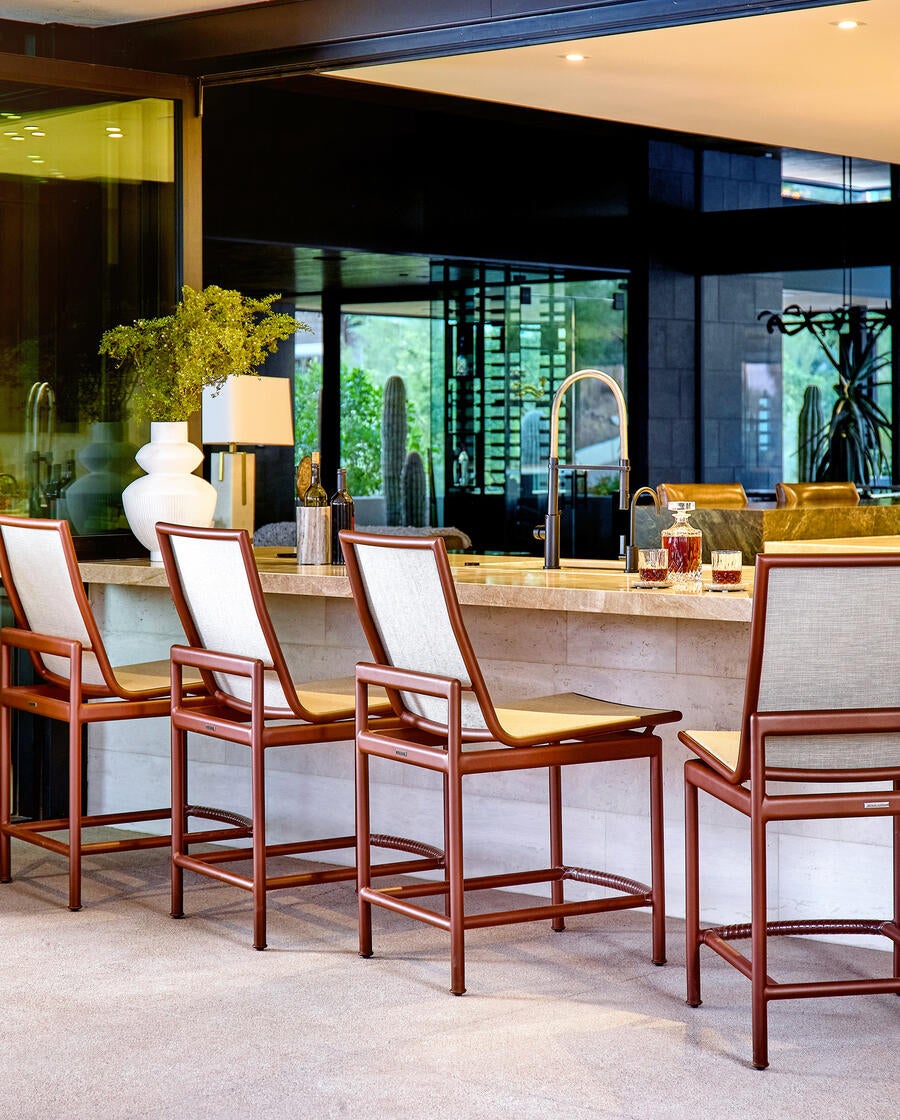
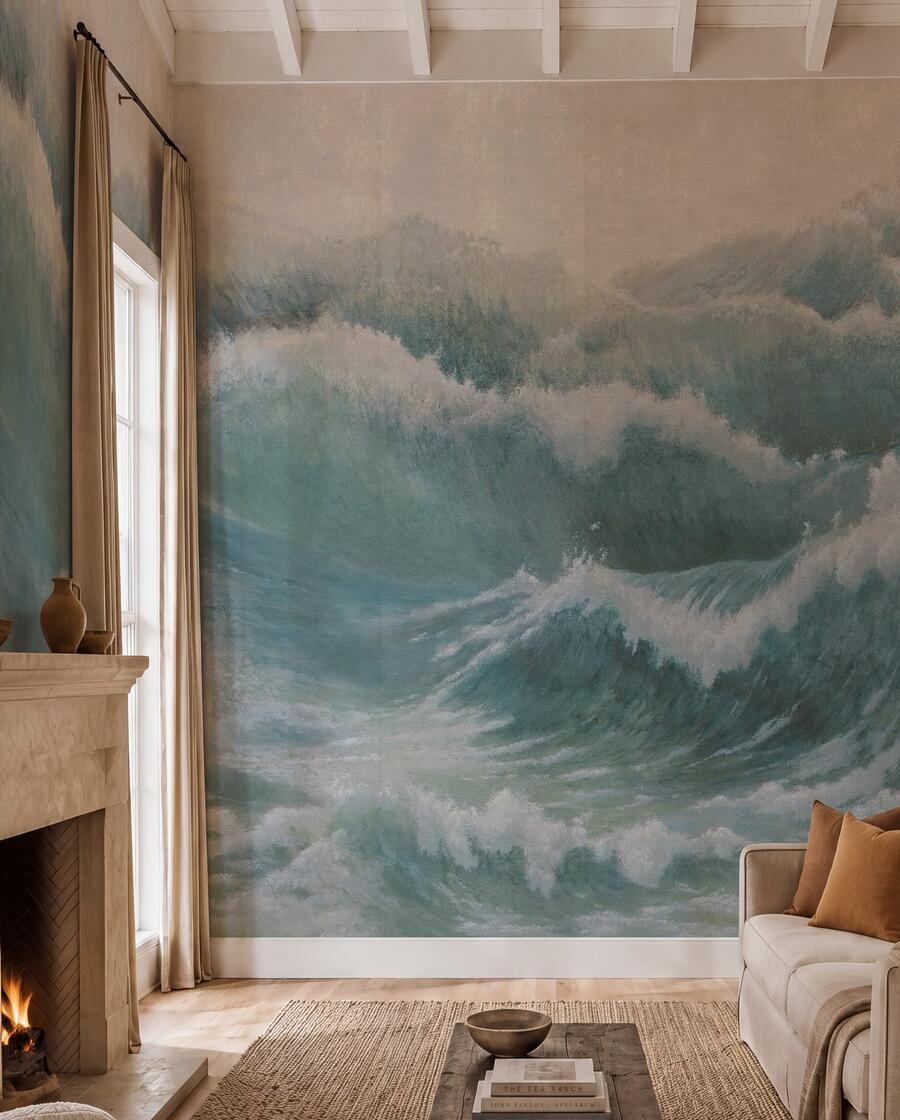
Add it to the absurdly long list of things that AI can do: product development. This week, Arcade, a creation of Minted founder Mariam Naficy, unveiled an update that allows users to go back and forth with a chatbot to design (and purchase) AI-generated textiles, ceramics, rugs, lampshades and more.
“It’s a great tool for the very design-conscious consumer who wants to own exactly what she wants to own,” says Naficy, who has raised $42 million from a broad range of investors (Kelly Wearstler and Colin Kaepernick are on the cap table alongside blue-chip VC firms) to get Arcade off the ground. “Instead of shopping through pages and pages of home sites looking for the perfect chocolate brown pillow, it would save a huge amount of time to be able to describe what you’re looking for and have it instantly pop up. … [The goal is to] take custom and make it as easy as [an online] search.”
The hook is simple. The mechanics of the business are complex. Naficy says Arcade’s generative model has been trained on the work of artists who agreed to submit their portfolios to the platform. If a user creates and purchases a product that taps an artist’s input, the artist gets a cut of the sale. (Naficy declined to disclose the percentage, but said it was more than the typical 5 to 6 percent royalty rate that a retail brand might offer on a licensing deal.)
Then there are the producers of the physical product, the makers and brands that actually deliver the stuff Arcade’s algorithm concocts. Naficy has tapped a diverse group, including French heritage silver house Christofle, Moroccan rug brand Salam Hello, media and decor brand Cabana, and furniture maker Crafted Glory, among others. They receive the lion’s share of revenue on every order, while Naficy says Arcade takes a flat 20 percent across the board.
In a business full of unique challenges, pricing is uniquely challenging for Arcade: How to accurately put a number on a product that an algorithm dreams up? “We recruited the makers, tested them extensively, then negotiated with them on pricing and how the formulas would work with our detection models,” says Naficy, adding that Arcade has won two patents for its “prompt to price” technology.
In some casual testing, the site appears to generate what seem like reasonable click-to-buy prices for home goods ($20 for a digitally printed pillowcase cover, $968 for a Moroccan rug). In some cases, like a custom marble sink or wooden table, the platform requires users to get a quote directly from the maker.
While Arcade is designed to be a consumer product, Naficy says there are a wide range of B2B use cases. A simple one: Creating something custom with a client. A more involved, but compelling idea: Designers could use the site to quickly spin up a product line based on their aesthetic, tapping the platform’s makers to produce it on demand.
Arcade’s rollout has seen some stops and starts. It debuted in beta form last fall with jewelry as its launch category, drawing buzzy media coverage, but Naficy’s team pulled the site offline to finesse the product and redesign the platform. They found that though customers were intrigued by the concept, they suffered from blank-slate anxiety. “We learned that people needed a lot more assistance in prompting,” she says. “It’s very, very hard for people—beyond early adopters—to stare at a blank screen and put in text that describes a product.”
The site resurfaced this March with an expanded home goods selection, but the Arcade team again pulled the site to tweak its user interface. “We really felt like we had to populate the site with starting points that you could edit. So we have been filling the site with things that the community has designed, and we have launched the agent,” says Naficy. “Those are two key ways to kind of get around the difficulty of prompting.”
The resulting agent, named “Maia,” will be familiar to users who have experimented with purpose-built chatbots—imagine messaging with ChatGPT if it was only interested in crafting pillowcases and rugs. Maia has chops: In a quick trial run, it was able to iterate on the design of several products (a pillowcase, a console table, a rug) across five or six granular revisions. If the algorithm can’t quite get the customer all the way there, Arcade also allows users to request a human designer to step in and finalize a product.
The platform will likely face at least some skepticism in the marketplace, as some consumers, once wowed by generative AI’s seemingly miraculous capabilities, start to turn on the technology amid a barrage of AI-generated content clogging their social media feeds and the threat of job loss hovering ominously on the horizon.
Comedian Dan Rosen, known for his satirical takes on celebrity homes, is one of Arcade’s launch partners—he debuted a line of textiles inspired by Vanessa Bell and Duncan Grant of the Bloomsbury Group. Rosen is widely liked in the design industry, but his Instagram post about the Arcade collaboration drew some fire. (“It’s not AI slop when you do it,” sniped one commenter.)
“I think the backlash is more reflexive and not because people actually looked into how it worked,” says Rosen. “It was my initial reflex as well, but I think they do a good job of preventing copyrighted works from being produced and paying artists for their licensed style, and the artists who are a part of it who I met seem very happy about the additional revenue stream.”
Lurking beyond the knee-jerk backlash are bigger questions about creativity, value and desire. Even with an AI assist, can the average consumer create products they’ll really want? Can artists finally get a cut of the AI boom? What does it mean for the marketplace if anyone can spin up a full product collection with the click of a few buttons?
“This is a very, very new field,” says Naficy. “Nobody knows how to do this, because nobody’s doing this, and nobody really knows how consumers will react. It’s a continuously evolving learning process.”









 Withdraw Consent / Manage Privacy Preferences