














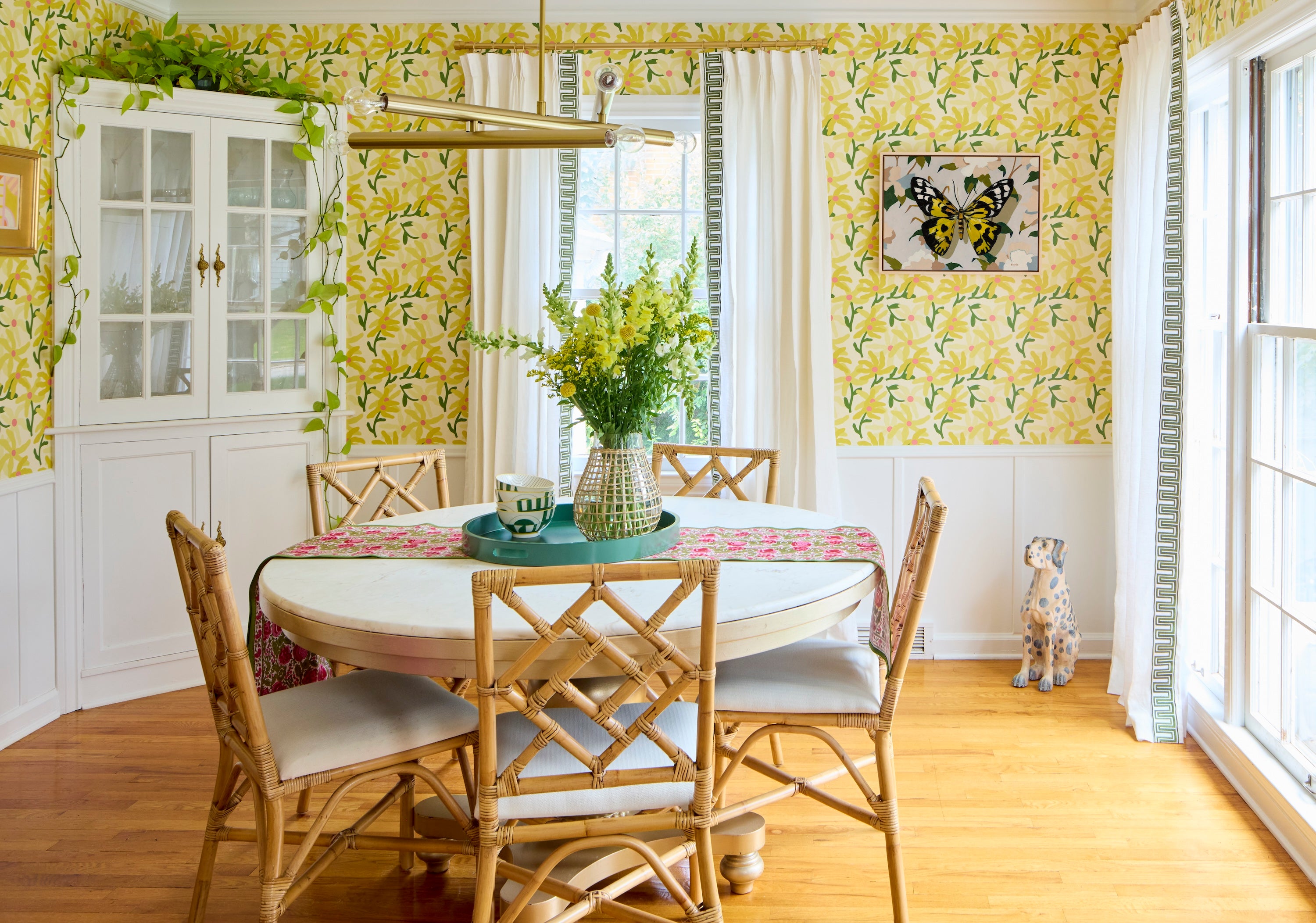

This week in design, the hottest sourcing destination in town is an annual tag sale hosted by star home stager Jason Saft, which drew more than a thousand visitors this year. Stay in the know with our weekly roundup of headlines, launches, recommended reading and more.
Business News
The median age of first-time homebuyers hit a record high of 40 this year, according to the National Association of Realtors. As The New York Times reports, that number rose steeply in recent years, gradually ticking up from 28 in 1991 to 33 in 2020, before jumping to 38 in 2024. For younger Americans, the challenges of paying for student loans, rising rents and a higher cost of living, as well as a dearth of affordable housing options, have pushed property ownership out of reach. The share of first-time homebuyers in the U.S. market fell to 21 percent in 2025—roughly half of what it was in 2007.
In related news, a new proposal from President Donald Trump aims to address housing affordability with the introduction of a 50-year mortgage. While the Trump administration says it would benefit buyers by providing lower monthly payments, many experts argue that the plan would negatively impact lenders in the long term. As CNN reports, a $450,000 home under a 30-year mortgage at a 6.25 percent interest rate would translate to monthly payments of $2,771 and more than $547,000 in interest over the life of the loan. With a 50-year mortgage, the same loan would require monthly payments of a slightly lower $2,452, but the interest payments would total about $1.02 million—87 percent more than on the 30-year loan.
According to new research, federal flood maps—used by mortgage lenders, developers and homeowners to assess a property’s risk—are overlooking millions of homes, The Wall Street Journal reports. According to climate consultancy First Street, while roughly 8 million properties are currently listed in FEMA-designated flood zones, another 13 million share the same level of risk but have not been properly labeled, leaving homeowners to underestimate their risk. The overlooked homes and buildings include nearly half a million structures in major cities like New York, Houston, Los Angeles, Philadelphia and Chicago. According to the WSJ, the issue lies in the fact that federal maps are often outdated and based on historical data rather than future projections, despite the fact that heavy rainfall is becoming increasingly common.
Arhaus and 1stDibs released their third-quarter earnings reports last week, and both brands debuted largely positive results. Arhaus saw an 8 percent increase in revenue year over year, marking the highest third-quarter net revenue in the company’s history, according to co-founder and CEO John Reed. Elsewhere, the company saw gross margin increase 8.4 percent, along with comparable growth of 4.1 percent. Meanwhile, 1stDibs also saw revenue increase, rising 4 percent year over year, while gross profit increased 9 percent during the same period.
Thrice Media, a media and events company specializing in the home industry, has acquired the Design Influencers Leadership Conference from Esteem Media. The terms of the deal were not disclosed. The purchase will see Thrice Media—a venture by Kate O’Hara, CEO of O’Hara Interiors and co-founder of Fay + Belle Rugs; and Nicole Heymer, founder of creative agency Glory & Brand—relaunch the 15-year-old event in 2027, while taking next year off to formulate a new approach to the conference’s programming, partnerships and audience experience.
San Francisco–based short-term rental company Sonder Holdings has announced plans to file for Chapter 7 bankruptcy, which will involve liquidating its U.S. operations. As CNN reports, Sonder’s decision to close the business comes after the abrupt end of a planned 20-year partnership between Sonder and Marriott, which allowed the hotel chain’s guests to book rentals directly on its website and app. When the news broke earlier this week that the partnership had ended, guests who had already booked stays with Sonder were forced to vacate their rentals and find new accommodations immediately. The decision to close marks a steep decline from the heights of Sonder’s business, once valued at $1 billion and considered a major rival to Airbnb.
Launches and Collaborations
Generative AI marketplace Arcade, which recently completed a $25 million Series A funding round, has announced the debut of Maia: a conversational AI program that will act as a personal design assistant, allowing users to input ideas and preferences and receive custom designs for jewelry, home decor and gifts. Those designs can then be produced by Arcade’s vetted group of brands and artisans, which includes small makers as well as established brands like French silverware maker Christofle, Italian ceramic house Bitossi, home decor brand Cabana and stoneware maker Anastasio Home. The launch also coincides with the introduction of the platform’s new home decor categories, including windowcoverings, lampshades, sinks, table linens and bedding.
French fashion brand Sézane has teamed up with Paris-based decorative arts boutique Antoinette Poisson for the debut of a lifestyle collection. Inspired by 18th century papier dominoté (domino paper)—hand-colored and block-printed papers formerly used as lining for furniture, walls and books—the assortment spans women’s, men’s and children’s clothing and accessories, as well as homeware items like mugs, trays, quilts and throw pillows.
Chasing Paper has teamed up with Des Moines, Iowa–based Liz Lidgett Gallery + Design for a new collection of wallcoverings and prints created by nine artists: Aly Ytterberg, Anee Shah, Bekah Worley, Kevin Brent Morris, Kristen Abbott, Michele Aschenbrenner, Racheal Jackson, Paige Barnes Dorsey, and Lidgett herself. The collaboration features 14 wallpaper prints and seven art prints united by vibrant color and nature-inspired motifs.
Recommended Reading
In a market oversaturated with sleek, minimalist seating, the fringe sofa—adorned with extravagant tassels, expensive fabrics and plush cushions—has emerged as an unexpected status symbol. For The New York Times, Misty White Sidell explores the exclusive market for the fringe-embellished look, which took off during the Gilded Age and persists today with one-of-a-kind pieces often accessible only to the trade.
Several years ago, a “Stone Age” aesthetic started gaining in popularity, exhibited through neutral-toned interiors that appeared carved out of clay. As Leonora Epstein writes for Architectural Digest, that style has evolved (or maybe regressed?) into something even more primitive: Caveman Core, characterized by the use of raw materials like molten resin and furnishings that appear to be chiseled from rock.










 Withdraw Consent / Manage Privacy Preferences