














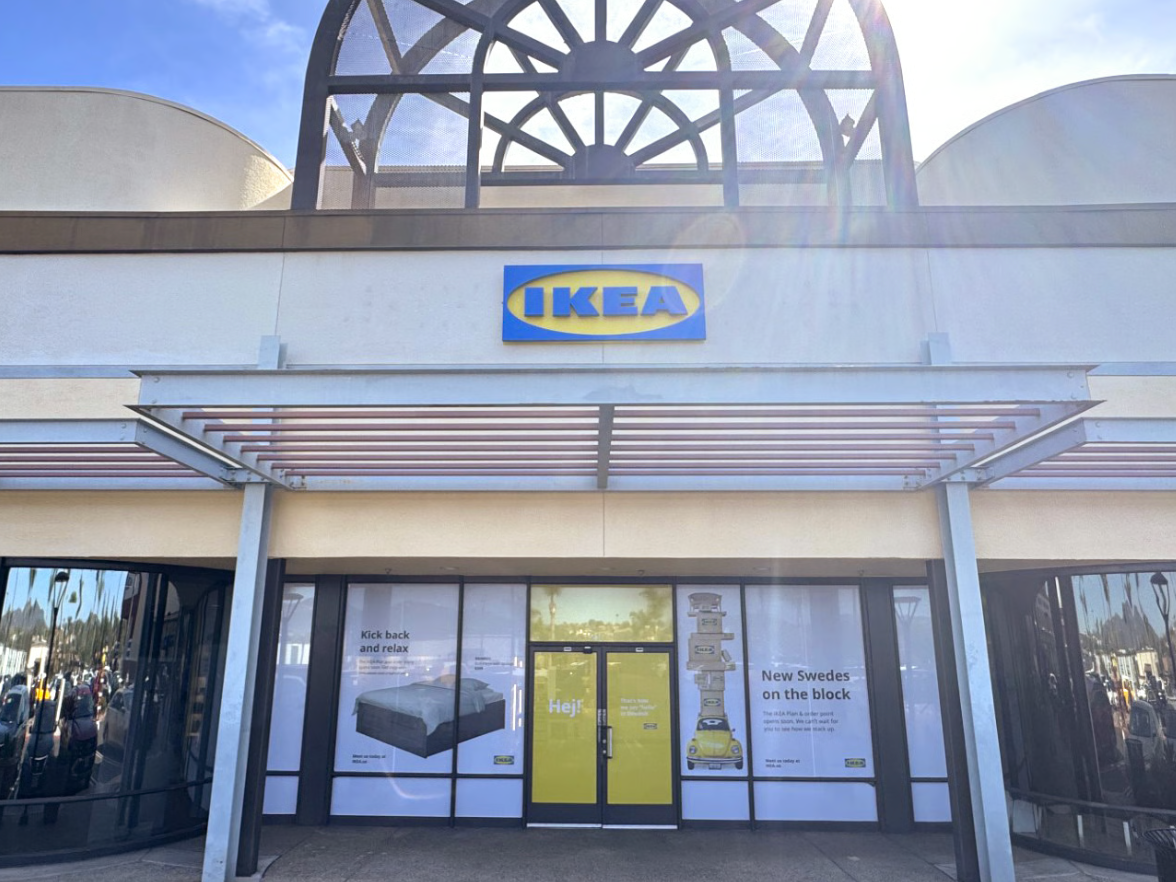

The frozen housing market has been a disaster for most home retailers: When people aren’t buying real estate, they aren’t buying furniture. That dynamic—along with tariff turmoil, inflation, and general consumer malaise—is putting independent stores out of business and dragging down the stock price of the big players. But while homebuyers are timid, renters are roaring, and a certain Swedish retail giant is poised to benefit.
“Renters are 40 percent of our customer base,” Shideh Hashemi, the chief marketing officer for Ikea’s U.S. business, tells Business of Home. As far as a demographic goes, that’s no small potatoes. Though a majority of Americans own, the momentum is with renters. A recent analysis of census data found that 80 percent of new household growth is made up of renters, and the number of occupied rental units—46.1 million—is at an all-time high.
Just like owners, renters buy furniture—but they tend to have a smaller budget and less space, and can’t put screws in walls for cabinetry or storage. It’s a set of needs that Ikea has long sought to address. “Ikea’s strength has always been our expertise in small-space living,” says Hashemi, who joined the company 16 years ago. “We need to be experts in showing the consumer solutions with ‘drill-free’ options.”
Some home furnishings retailers may offer limited assortments addressing this customer, but for Ikea, it’s a core competency that has served the Swedish company well since it opened its first American store more than 40 years ago. That means that while it offers a full array of built-in kitchen cabinetry, it will also feature kitchen island carts that renters can take with them when they move.
Ikea also offers a large selection of fabrics that can be used as wallcoverings in addition to more permanent wallpaper. And many of its products, particularly in storage and seating, are scaled for smaller living spaces. These are just some of the examples of what Hashemi says represent Ikea’s ability to cater to renters.
One of Ikea’s other strengths is its pricing strategy: The company is well-known for reducing, rather than raising, retail prices. “Cost consciousness is a core value,” she says. “We have to turn over every rock. Affordability is so important.”
One Ikea initiative that addresses that issue head-on is its “As-Is” section (something it first tested in Europe), where it buys back used products from customers then sells them at a discount. That program (which, as of 2023, customers can access online for in-store pickup) is now in the majority of the company’s U.S. locations, and will eventually be rolled out to the remainder.
That U.S. fleet is very much a work in progress. Ikea has more than 50 stores that can measure around 500,000 square feet, which is how most Americans encounter the brand. As the company opens 10 new stores throughout the country this year, however, it is exploring different formats—including several “Plan and Order” locations in urban areas, where shoppers can work out new kitchens or organizational and storage configurations. These outposts also double as pickup spots for shoppers who have ordered online but can’t get to full-line stores, which tend to be on the outskirts of urban areas. There are also several smaller-format stores in the works with edited-down assortments.
Despite its emphasis on new store concepts, Ikea is aiming for consistency in one crucial area: “Shoppers are always asking, ‘Can I still get meatballs in this store?’” says Hashemi with a laugh. The good news: Ikea’s tasty little meatballs are available in all its stores, regardless of square footage.
____________
Warren Shoulberg is the former editor in chief for several leading B2B publications. He has been a guest lecturer at the Columbia University Graduate School of Business; received honors from the International Furnishings and Design Association and the Fashion Institute of Technology; and been cited by The Wall Street Journal, The New York Times, The Washington Post, CNN and other media as a leading industry expert. His Retail Watch columns offer deep industry insights on major markets and product categories.











 Withdraw Consent / Manage Privacy Preferences