















On a 96-degree July morning, I find myself standing inside an enormous warehouse in Houston surrounded by 18th century antiques and avant-garde Italian modernist sofas. Every piece is being meticulously unpacked, carefully cataloged, and handled with extraordinary precision—a behind-the-scenes look at the craftsmanship and care that goes into protecting, delivering and installing an interior design client’s furnishings.
I’m there for Rainey Richardson’s sixth annual Project Design Week, a day camp–style program for high school and college students that educates aspiring designers on the ins and outs of running a successful interiors firm. Richardson, the brains behind the endeavor, has brought her class of seven to the warehouse to teach them the importance of having a reliable moving company. “If nobody takes responsibility for a damaged delivery, the buck stops with me,” she tells the group. “I’m buying a new piece of furniture.”
It’s no small lesson. The designer reminds her students that every aspect of the job—no matter how unglamorous—is essential to the success of the finished project. From selecting the right movers to coordinating deliveries and installations, it’s the mundane details that allow the big reveal to appear effortless. “Our job is to make it look easy,” she says.

The idea for Project Design Week first came to Richardson, a former seventh-grade history teacher, as she reflected on her own high school internship at a law firm. “I wanted to show young people who are genuinely interested in interior design what the job really entails—both the rewarding moments and the challenging ones,” she says.
Since its launch in 2021, the program has grown into a robust mentorship initiative that introduces students to every facet of the design industry. This year, seven students, ranging from high school seniors to recent college graduates, were hand-selected from a competitive pool of dozens of local applicants for spots in the immersive weeklong program. “We post about it on social media and go to local schools to recruit,” says Richardson. “The pile of candidates gets more impressive every year.”
Completing the program is no small feat either. Over the course of the week, students are introduced to vendors, showrooms, workrooms and other industry partners, gaining firsthand insight into the relationships and resources that bring a designer’s vision to life. For some, the experience serves as a springboard to internships at Rainey Richardson Interiors. “While we’re showing the inner workings of running a firm, we’re also in the background looking for students who are curious, have a great attitude—and talent,” says Richardson.
Though only present to observe two days of the program, I am exposed to countless aspects of the design industry. Field trips include a visit to the Kravet showroom at the Decorative Center Houston, where students learn how to scan and collect samples; as well as a tour of James Craig, a multiline Houston Design Center showroom that offers insights into the inner workings of custom furniture and transparent pricing. Along the way, Richardson peppers the students with insights into how her firm operates.
“We make sure clients understand that we charge a flat design fee that includes the manufacturer’s suggested retail price on everything,” she tells the students from the showroom floor. “Sometimes they’ll ask, ‘But don’t you get a discount?’ and we say, ‘No, we get trade pricing because we’re designers who have spent years building relationships with these brands, and we’re not passing that price on to anyone.’”
More lessons take place at the firm’s headquarters, ranging from discussions about navigating new construction to explaining the difference between a final install and spaces specifically styled for editorial photography. We are also visited by a representative from Fabricut, who walks the students through The Vale London’s latest collection, prompting a room full of oohs and aahs.
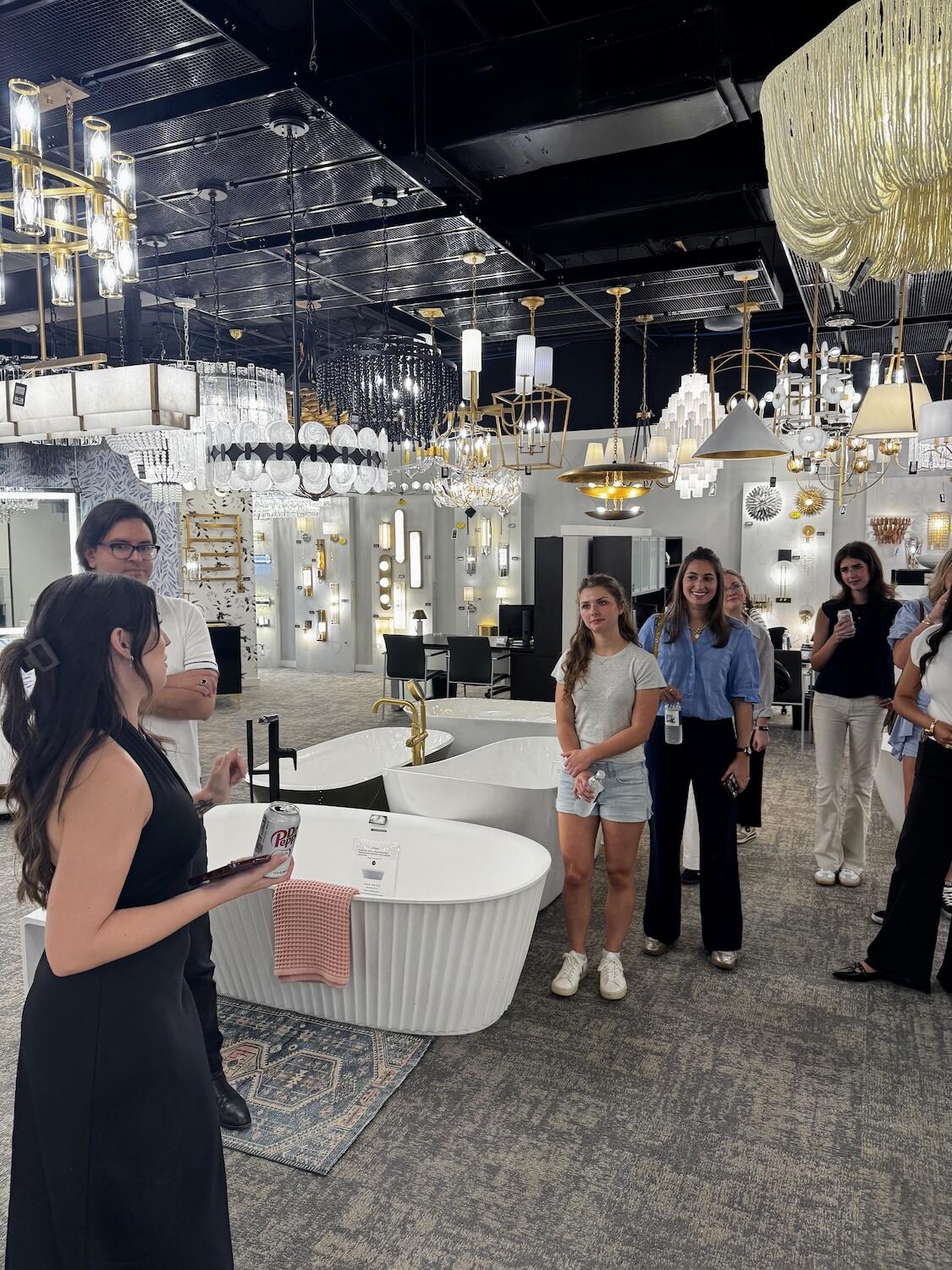
Just as an interiors firm wouldn’t succeed without strong vendor relationships, Project Design Week depends on Richardson’s local industry network. The tight-knit crew includes professionals such as Lindsey Root, architecture and design account manager at Ferguson Home, who hosts the students at the showroom to teach them about plumbing and appliances; Karen Ashcraft, an A&D manager at the regional rep agency Southwest Sales; and some fellow Houston designers, including Karen Black and Jennifer Kizzee. “They help me get the word out about Project Design Week,” says Richardson. “And having a solid group of friends to discuss the highs and lows of business with doesn’t hurt.”
Also integral to the initiative’s success is Richardson’s daughter, Ragan, who serves as the firm’s lead designer and a teacher at Project Design Week. The company’s other lead designer, Connor Burnam, also plays a key role in bringing the program to life. “Check-writing fatigue is real no matter how much money you have,” he warns the students. Ragan adds: “We order everything for remodels right away, because lead times can be equally frustrating for clients—and you often have to anticipate what you’ll need before you actually need it.”
On the last day of Project Design Week, the group tours one of Richardson’s completed projects: a desert-modern residence in Houston’s tree-shaded Timbergrove neighborhood. From room to room, the group sees the lessons of the week come to life, complete with thoughtful finishes, carefully considered details—including a custom Wrensilva record player console and a hand-fabricated display hook for a beloved pair of chaps—and a visit from project manager Rick Wayne of Winfrey Design Build, who answers the students’ questions with insight and enthusiasm.
The tour concludes with a Zoom meeting with the homeowners, who speak candidly about the ups and downs of the process. “It’s not all rainbows and butterflies,” one says. “But Rainey does a great job of truly getting to know the client. She never tries to push trends; she wants to build something everlasting—a forever home.”
If the students who participated in this year’s program are any indication, the future of the industry looks bright. “I heard about Project Design Week from my architecture teacher,” 17-year-old high school senior Almudena Sanchez-Nettel tells me. “The experience inspired me to think about the kind of firm I hope to build one day—one that values collaboration, strong networking and mentorship.”
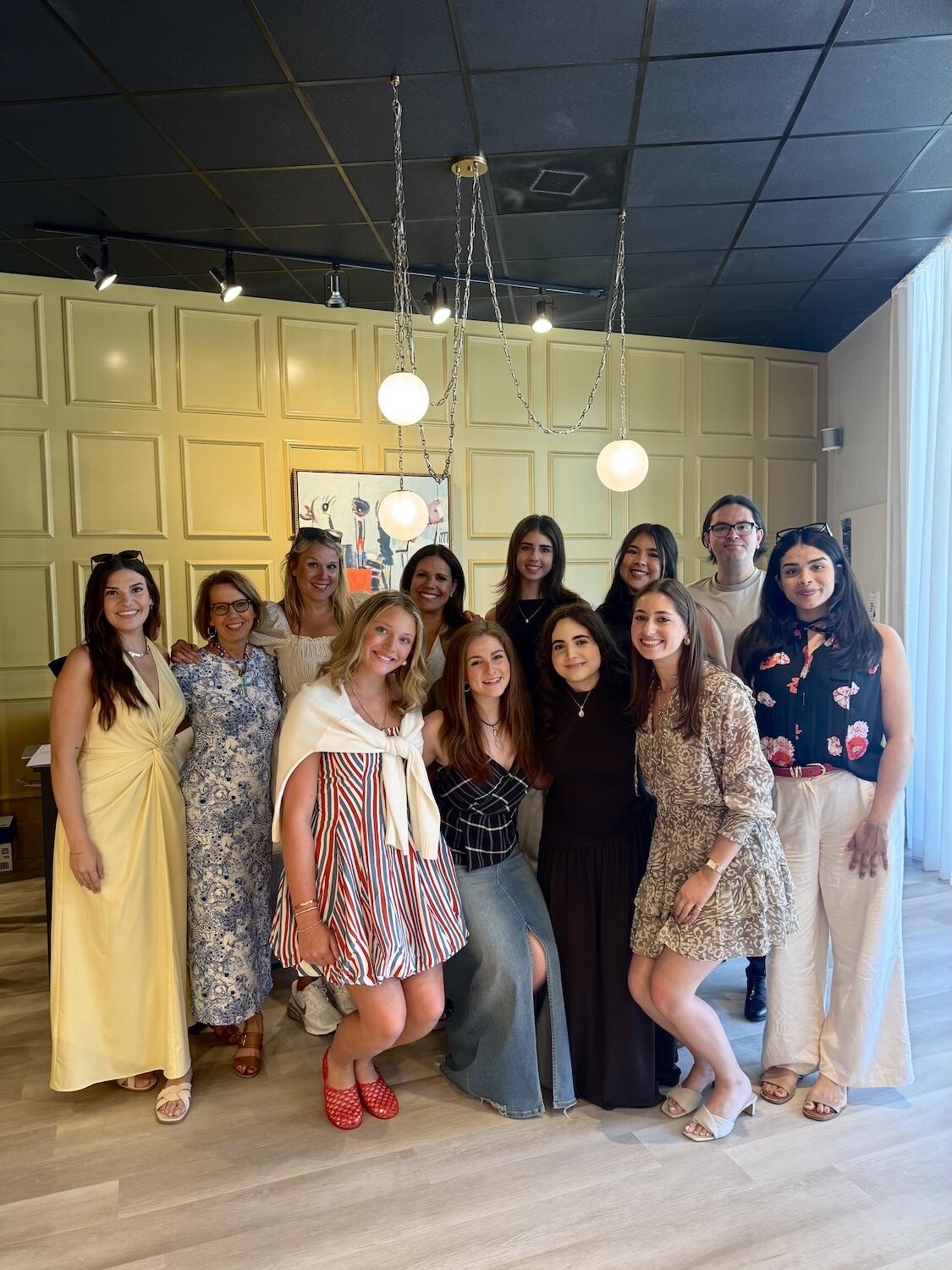
In many ways, the lessons of running an interiors firm extend far beyond the office: Knowledge is power, good relationships are essential, and kindness and character are what make a lasting impact. They’re principles Richardson returns to throughout the week, reminding students that success is measured by more than beautiful spaces.
Before the group disperses on the last day, the designer leaves them with one final piece of advice. “According to writer Joyce [Landorf] Heatherly, there are two kinds of people you meet in business—and in life. Balcony people are the ones who elevate and support you, while basement people bring you down. Be aware of both, and choose wisely who you surround yourself with.”









 Withdraw Consent / Manage Privacy Preferences