








Five years ago, Kelsey Kline Haywood reached a point in her Chicago-based firm that many small businesses owners can relate to: She needed more hands during a busy season, but wasn’t looking to take on the overhead of a permanent full-time hire. Help came from an unconventional source, hundreds of miles from her office—the University of Cincinnati’s College of Design, Architecture, Art and Planning.
The design program—known as DAAP—runs on a co-op model: Starting in their sophomore year, students alternate semesters taking classes and working full-time jobs in their intended field. The positions are paid, last either four or eight months, and are more immersive than internships. Kline Haywood learned about the program through a friend and was immediately intrigued by the notion that she could have a trained design assistant on a temporary basis.
“These students are essentially embedded,” she says. “You treat them just like you would any other employee. But if the ebbs and the flows of your business don’t align, you just don’t hire that semester.”
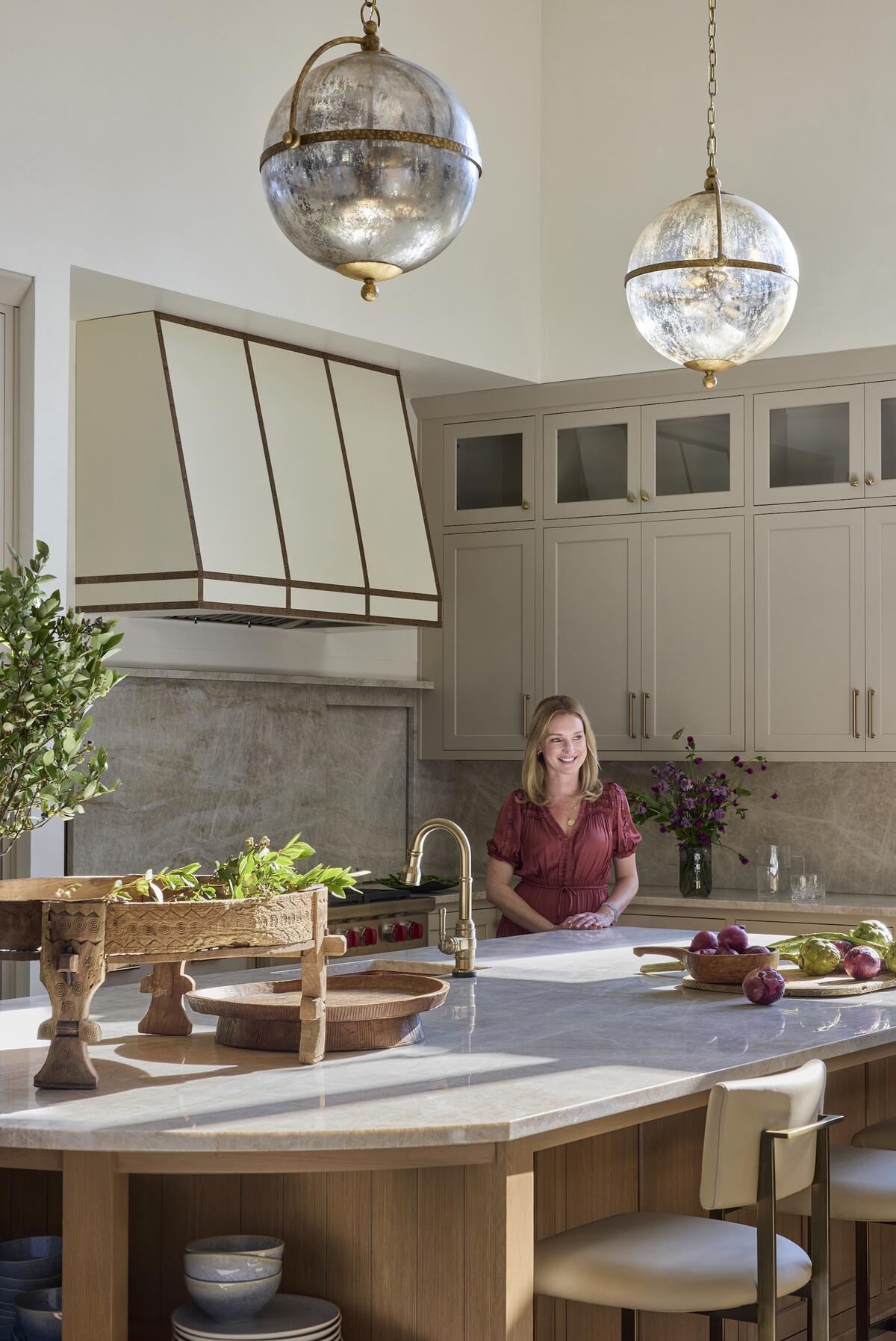
In February of 2022, Kline Haywood took on her first co-op student. She’s since had five students come through her firm, including one who spent a full eight months as a design assistant. The onboarding process is accelerated: She typically interviews a prospective applicant over Zoom before deciding whether or not to bring them on. “I’m used to more like a five-step hiring process, but you don’t get that in this setting,” she says. “It’s a quick process. If you meet them, you like them and they fit your needs—you have to pull the trigger.”
Each time, the designer specifies that she wants a third- or fourth-year student (the program lasts five years), so that candidates have substantial experience under their belt. “In the interview, I asked all the same questions that I would ask a design assistant candidate,” she says. “Especially if I’m looking for someone who can do CAD drawings, I ask to see their portfolio, and even things they wouldn’t ordinarily put in a portfolio. I try to dig deep into the skills I need at that moment.”
Kline Haywood’s staff size has fluctuated over the years, pushing to five employees at one point, but at present, she’s back to a team of two: her and a design assistant, a role that has mainly been held by a co-op student over the last few years. Utilizing the program allowed her to find her footing as the pandemic era boom slowed and she retooled her firm—rebranding from Haywoodmade Interiors to Kline Interiors, and shifting her focus from more piecemeal projects to full-home renovations.
Alexis Rammel, the DAAP student who spent two semesters at Kline Interiors, came to the firm with three prior co-op experiences. She had completed stints at firms in Atlanta, Dallas and Santa Monica before heading to Chicago, with semesters back in Cincinnati in between. “My idea was really to have as diverse of experiences as possible,” she says. “I wanted to test out different cities, different parts of the interior design industry, different sizes of firms—anything that could give me an idea of what I want to do in the future.” Ultimately, Rammel realized that her interest was in residential interiors, not commercial as she had initially thought, and that she preferred small firms like Kline Haywood’s to the larger ones.
While the positions are paid (DAAP says that interior design co-op students make an average of about $22 an hour), participating employers don’t provide benefits or help with costs for housing, food or transportation. Rammel says the school provides some leads on housing and guides to certain cities, but students are largely left to manage their own arrangements.
For Kline Haywood, the process hasn’t been without its hiccups. Embedding an employee only to have them leave after four months means that work has to be assigned in a way that’s easy to take over when the term ends. “With my first co-op student, I let her get a little too in the weeds with CAD, to the point where handing things off was difficult,” she says. She ended up switching from CAD to a web-based program called Rayon, so that any drawings were visible across the firm and could be easily picked up by her or another employee.
After testing the waters at firms across the country, Rammel, who graduated in May, hopes to end up back in Chicago—ideally at a firm a lot like Kline Interiors, a tight-knit team focused on residential projects. Looking back on her time as a co-op student, she feels more than ever that DAAP’s model is uniquely suited to the design industry. “I think it’s really helpful having young people that are still learning and still curious and excited to bring fresh ideas and a new sense of creativity into an office,” she says. “Especially in some larger firms, there can be a lot of burnout. The design industry can be really demanding, and it’s really helpful to have those younger people that are catalysts for change, and catalysts for trying new things that can bolster the office.”





 Withdraw Consent / Manage Privacy Preferences