





In the BOH series What I Wish Designers Knew, we ask an industry expert to share the ins and outs of their category in the market—including how designers can evaluate materials, make informed decisions for their clients, and avoid common mistakes.
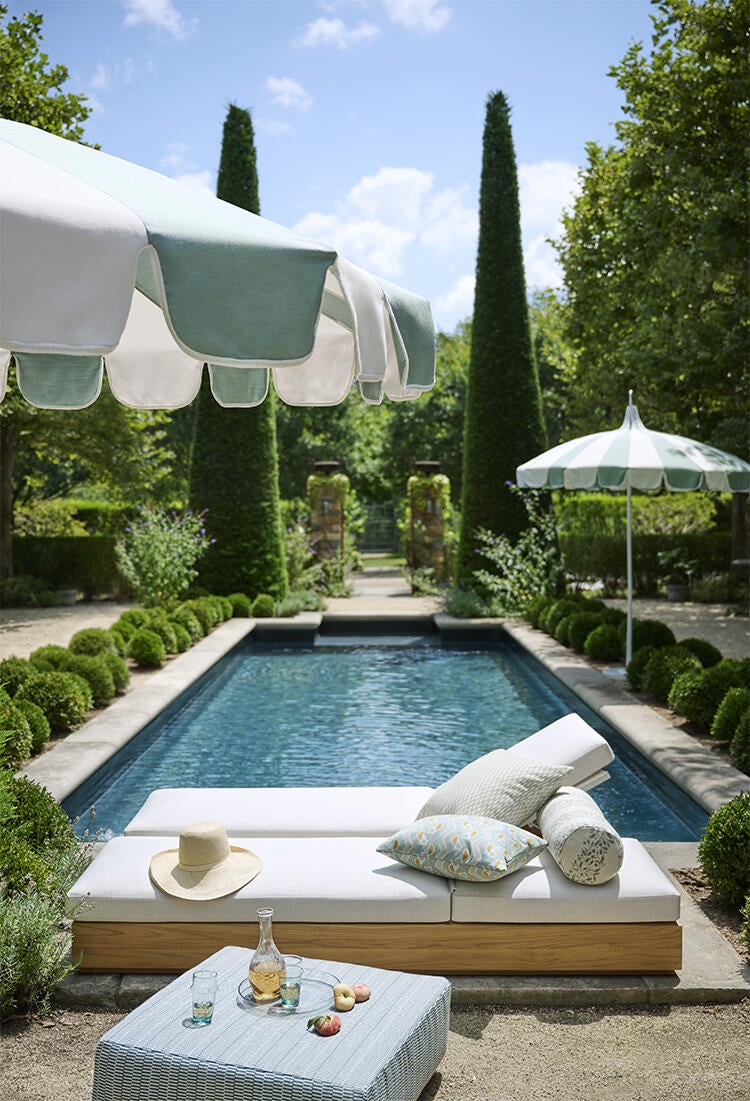
At first, performance fabric had one primary purpose: to weather the elements without fading. Aesthetics were a secondary consideration at best. But times have changed, and so have industry expectations. Today, these formerly outdoor-only fabrics are not only selected to serve interior spaces as well, but expected to do so with style. Performance fabric now looks great and feels even better, with stain- and spill-resistance a given. “But not all performance fabrics are created equal,” says Esther Chang, creative director at Sunbrella. For designers debating how to enhance even their most high-end projects with these hardworking materials, she speaks to the brand’s expertise in the category—and its exciting new trade program.
THE SITE IS THE SOURCE
Founded in 1961, Sunbrella has long been regarded as the authority in performance materials—“We were early in pioneering the category,” says Chang, who has been with the company for 15 years. But with its ever-evolving portfolio of products and partners, designers haven’t always known where to find the brand. That changes now, with its new trade hub, which provides them with direct access to purchase Sunbrella fabrics and products and peruse brand information and collaboration details in one easy-to-navigate location. In addition to placing orders, program members can access complimentary memo samples, enjoy concierge service, and save with exclusive pricing on the ever-expanding digital source. If they’re curious, they can take a peek at the colorful history of the company too.
It all began as awnings. Sunbrella’s patented textiles were proven to deflect UV rays and repel moisture, mold and mildew far longer than standard versions. Throughout the 1970s and ’80s, the brand brought those benefits to boats, backyards, pools, patios and porches. Headquartered in Burlington, North Carolina, the company opened its flagship manufacturing facility—a state-of-the-art, million-plus-square-foot, fully vertically integrated mill that Chang calls “the heartbeat of Sunbrella”—in Anderson, South Carolina, in 1994, then expanded its global presence four years later with the acquisition of France-based Dickson Constant. With its outdoor dominance secure, the company is bringing that same innovation and excellence inside the home with its sub-brand Sunbrella Interiors, presenting everything people trust about Sunbrella in a curated offering of fabrics and products thoughtfully designed for indoors. “Advances in our spinning capabilities enabled us to enhance the hand of our fabrics, introduce sophisticated new textures, and evolve our core technology to serve a broader range of applications,” she explains. “Continuous innovation has been key to our growth.”
A PERFECT SOLUTION
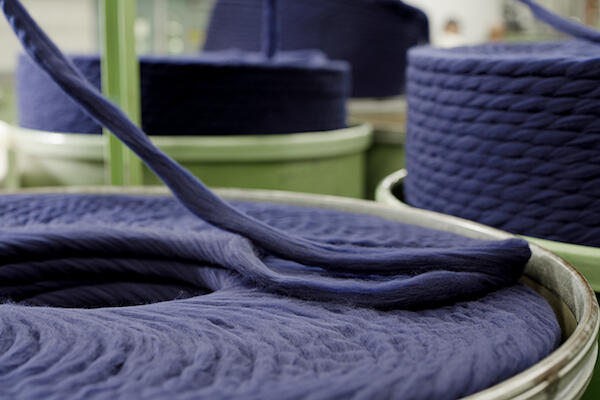
Central to that innovation is Sunbrella’s trademarked Color to the Core technology. While other mills purchase yarn, Sunbrella makes its own, spinning fibers into strands that are then woven into fabrics that won’t fade. But even before any fiber is formed, proprietary pigments are integrated directly into a polymer. Chang likens it to mixing a custom shade of paint—once the color is added to the base, there’s no separating it. “That’s essentially how the solution-dyeing process works,” she says. Or think of vegetables. “Fabrics that are yarn-dyed or piece-dyed are like a radish: The color is only on the surface; the inside is white,” she continues. “We compare Sunbrella fabrics to a carrot, because if you were to chop our fibers in half, the color runs all the way through.” It explains why the textiles maintain their richness over time. “Performance isn’t applied after the fact: It’s built into the fabric from the very beginning,” she says.
THOROUGHLY TESTED
After the fibers are spun into yarn, and the yarn woven into textiles, they’re subjected to rigorous testing to guarantee they will hold up to all that life throws at them. “Each yard of Sunbrella fabric goes through 100 quality checks,” says Chang. A third-party-certified lab grades for everything from abrasions to stain removal. Sometimes, as pretty as a pattern might be, it doesn’t pass with flying colors—sending the team back to the drawing board, where they rework the pattern and the weave until it’s market-ready.
Particularly as their presence becomes more commonplace indoors, performance fabrics need to be not just durable but environmentally safe. Sunbrella transitioned away from PFAS in 2023, and it independently tests for toxic dyes, heavy metals, pesticides, allergens—anything that might compromise air quality or aggravate the consumer. Its commitment earns stamps of approval from organizations such as ISO, Greenguard and Oeko-Tex. “From sustainable manufacturing practices to the inherent longevity of our fabrics, we see our products as part of a global effort to create more intentionally,” says Chang. Sunbrella’s solar farms account for its use of about 50 percent renewable electricity in all its U.S. manufacturing facilities and 100 percent in its plants in China and France. The flagship mill in South Carolina uses landfill-free practices, and for more than 25 years, Sunbrella has supported a recycling program, diverting over 98 percent of waste from landfills by converting it into materials for industrial products like insulation. It also repurposes its own scraps and “seconds” into its ReMade collection of aprons, bags, tabletop accessories and wall hangings. “We do everything we can to minimize our impact on this planet,” she says.
SOFT TOUCH
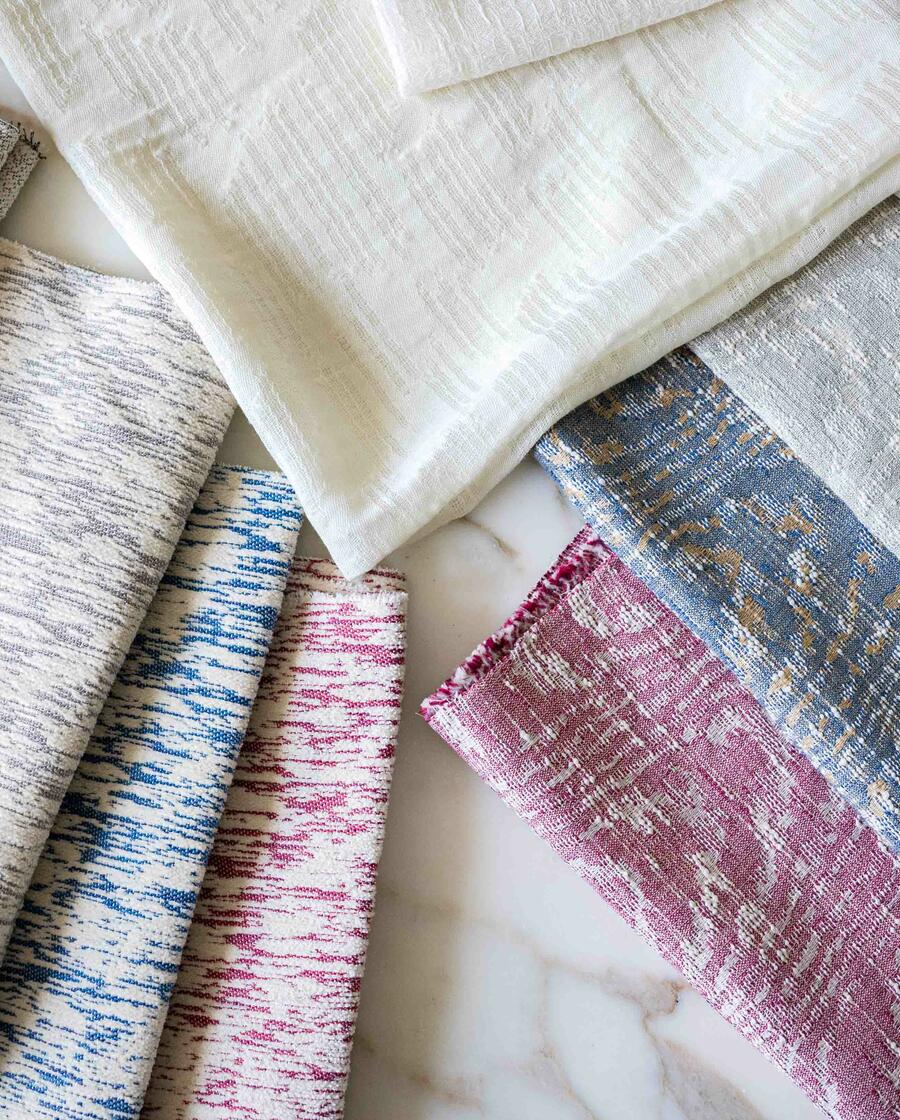
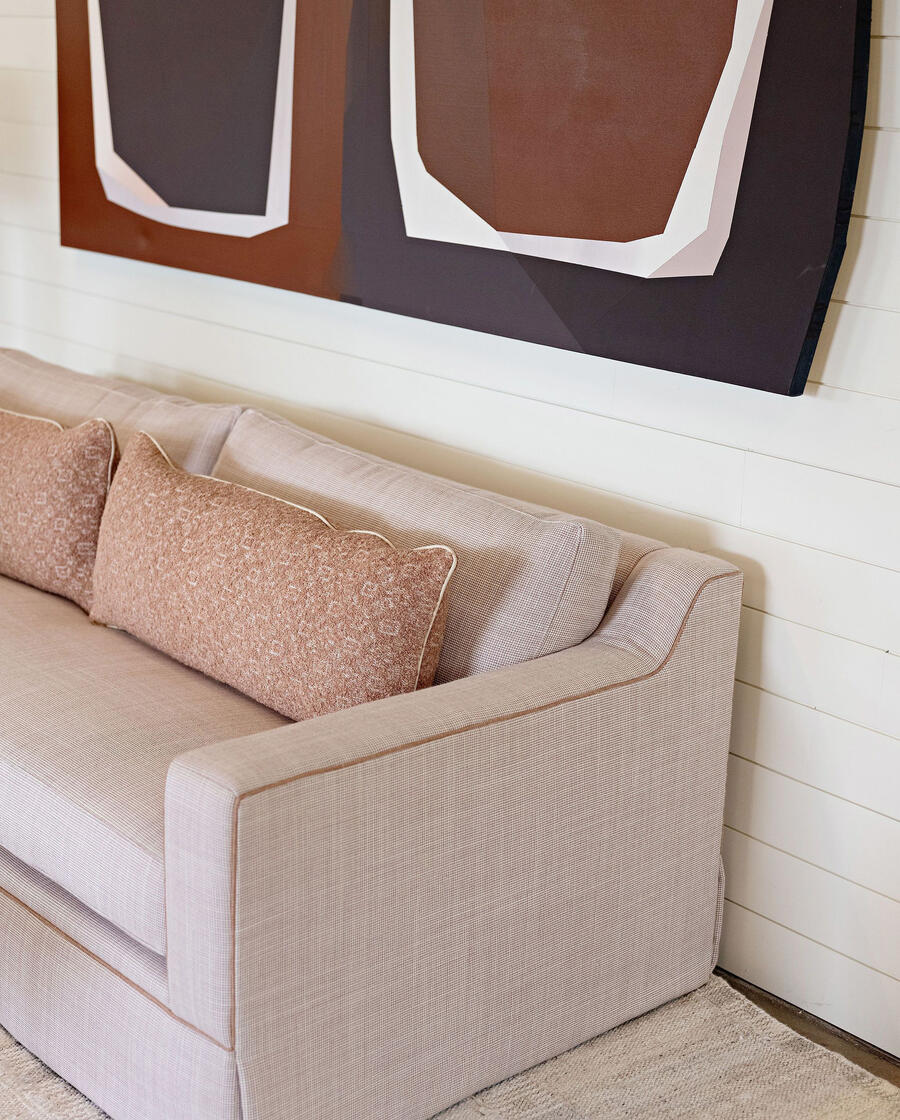
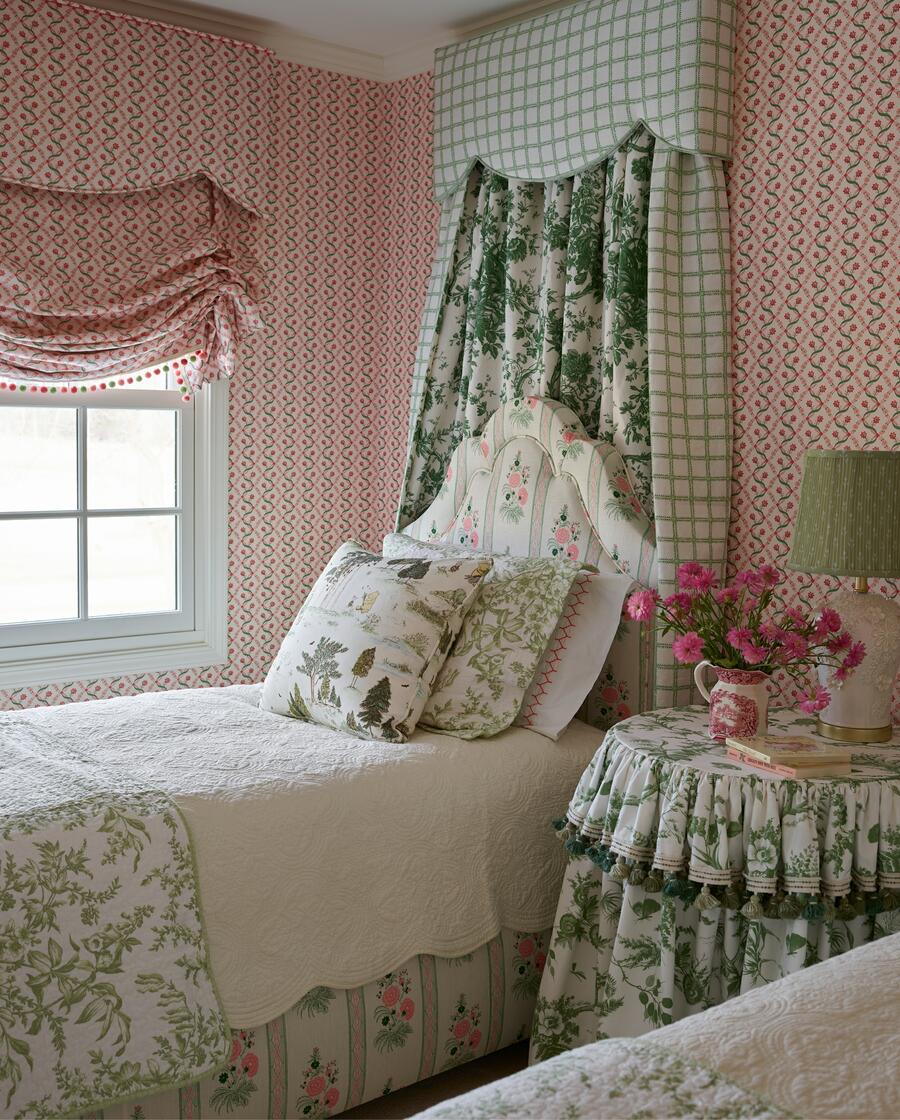
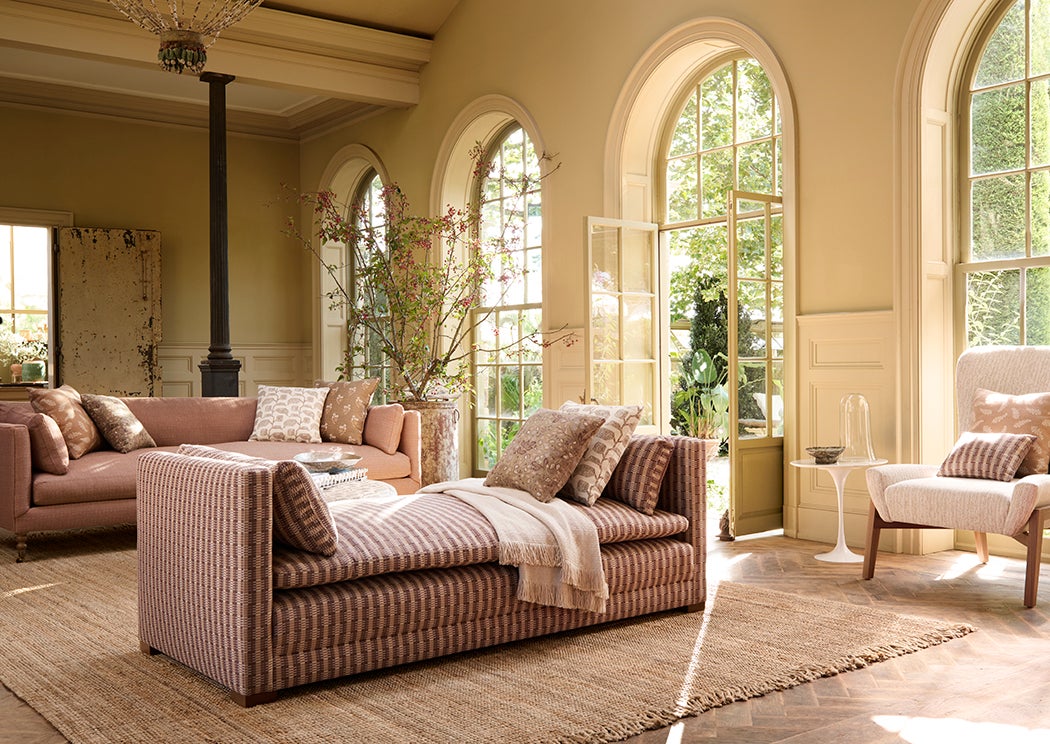
Even when performance fabrics check all the boxes for endurance and sustainability, designers still may hesitate to specify them for interiors because of a lingering perception that synthetic fibers can’t compete with cotton, linen or silk. But the category has come a long way. “Today, performance and luxury are not mutually exclusive,” observes Chang. “We’ve spent decades evolving beyond that.” Sunbrella fibers closely mimic wool and cotton, imbuing fabrics with a similarly soft, natural feel, as well as the strength to resist abrading and pilling. And while other brands may print their fabrics, reproducing different designs on top of the same base construction, Sunbrella’s patterns are woven, allowing it to achieve complex surfaces and varying depths. “Designers are often surprised by the breadth of textures that we offer,” she says.
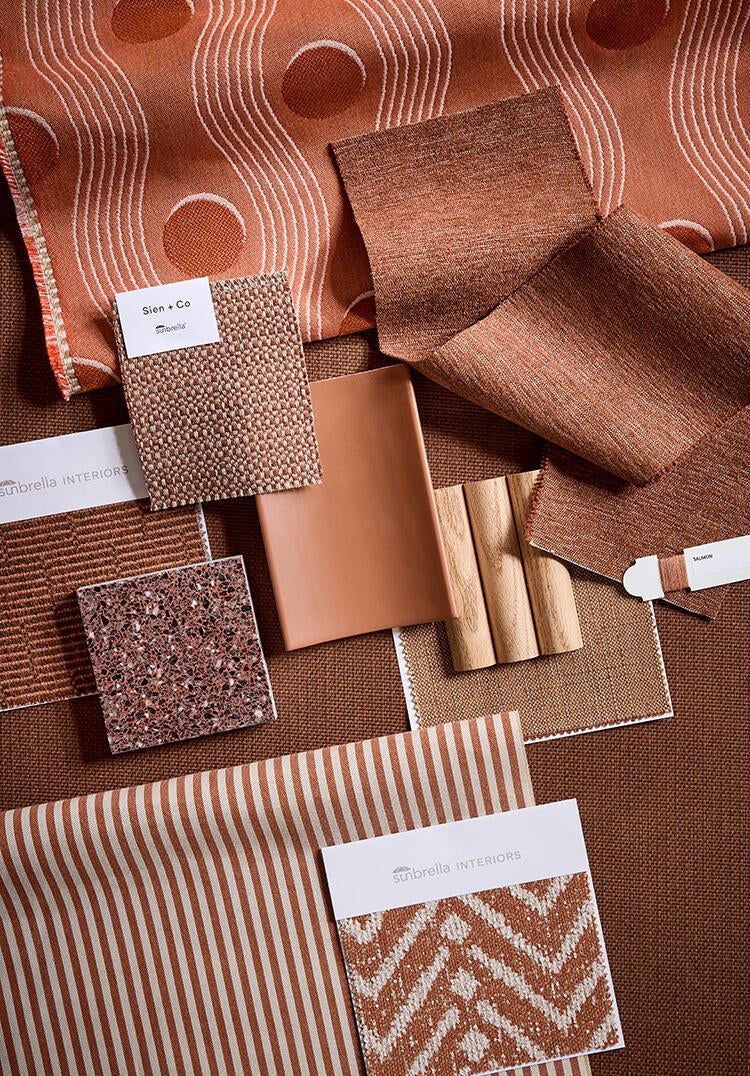
To conjure up such tempting tactility, Sunbrella’s designers have only to cross the street. Right next door to the Burlington headquarters is its novelty yarn plant, where its color-saturated, solution-dyed fibers are soft-spun into special textures. “It allows us to create fabrics that not only elevate and bring incredible dimension to a space, but also support the way people live today, where comfort, durability and longevity are expected,” says Chang. Different weaving techniques also contribute to textural effects, producing dynamic jacquards and other intriguing structures that bring sophistication to performance. “Sunbrella has a huge assortment of patterns: florals, geometrics, weaves that replicate watercolor paintings,” she continues. The details come down to interpretations and choices. “A linen weave will showcase color differently than a plain,” she says. “There’s so much room for experimentation.”
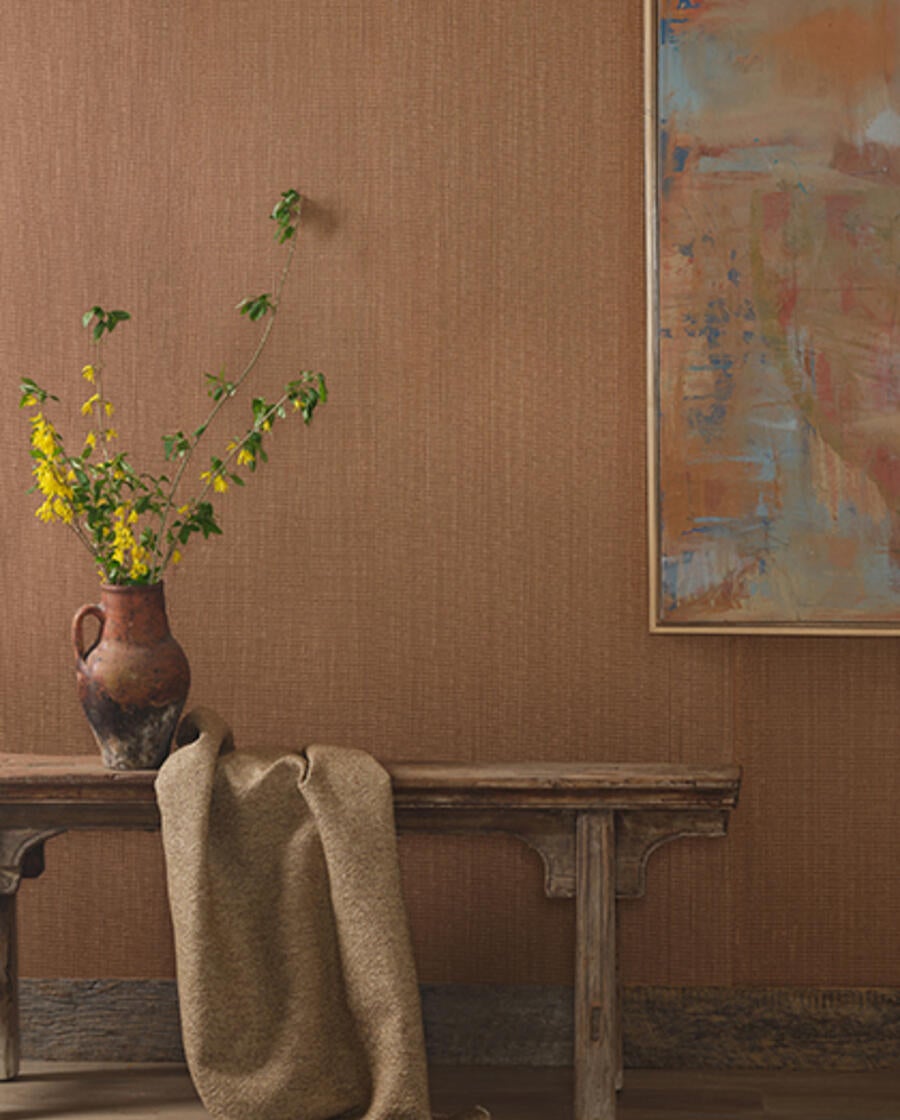
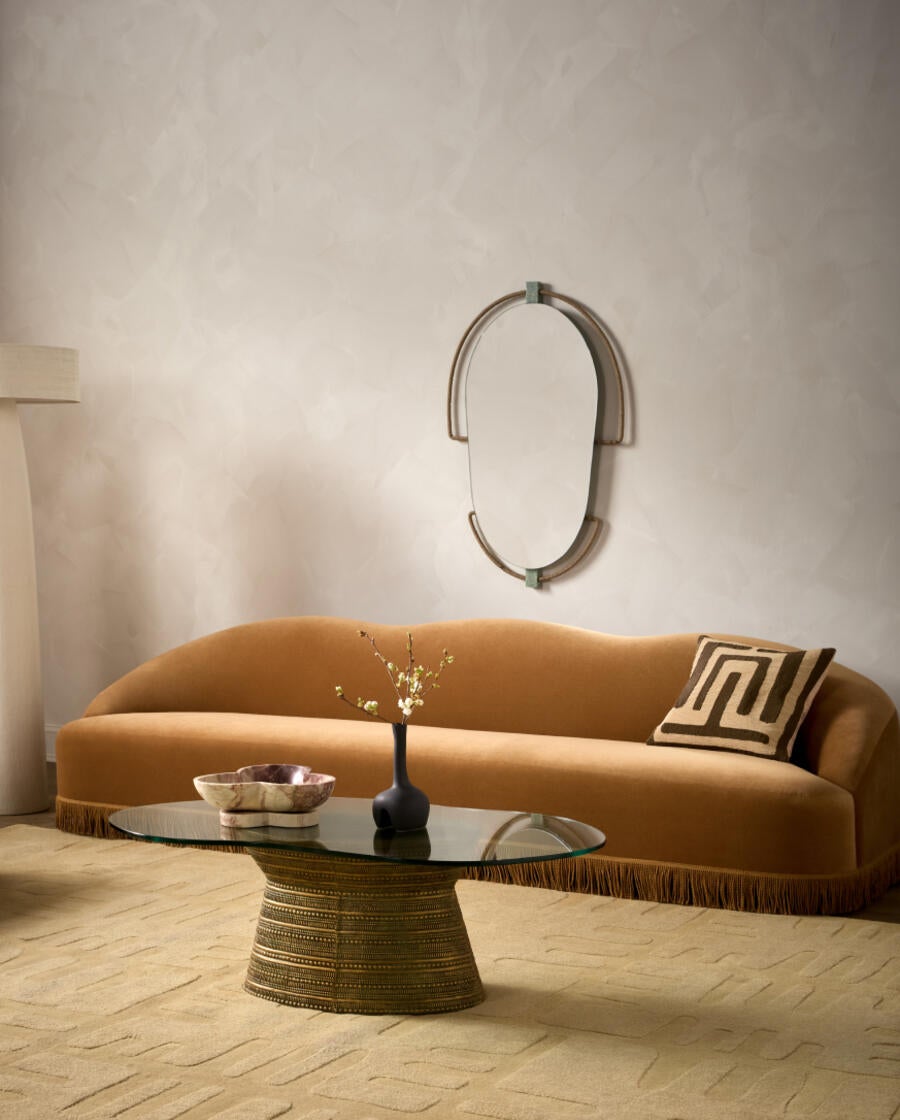
The creativity extends to colorways. Once relegated to bland business beiges, performance fabrics are now infinitely more nuanced, and available in every imaginable palette. Neutrals remain a mainstay, but Chang notes a shift toward warmer tones anchored by indigo. “Now it’s rich camels and browns—colors with intention and depth that feel inviting and comforting,” she says. Bolder shades are making statements as well. “I personally gravitate toward earthy, grounded terra cottas and baked clays, but also unexpected pairings that feel both timeless and modern,” she adds. Her current favorites include sky blue with bold red; pine green with sea tones; and mustard yellow with any number of hues.
PARTNERSHIP TRACK
Referencing a library of over 85,000 pieces of art and traveling often for research, Sunbrella’s global design team crafts collections that, as Chang says, “hit on every aesthetic.” Featuring solids, stripes and jacquards, its stock offering alone comprises more than 270 SKUs. The scope of patterns, scales, colors and textures lets designers conceive of spaces that not only meet their performance needs but feel collected, layered and unique to their clients. “We live in an interesting time where it’s not about specific trends anymore,” she continues. “People are drawn to pieces that they can connect with emotionally, that feel truly special.”
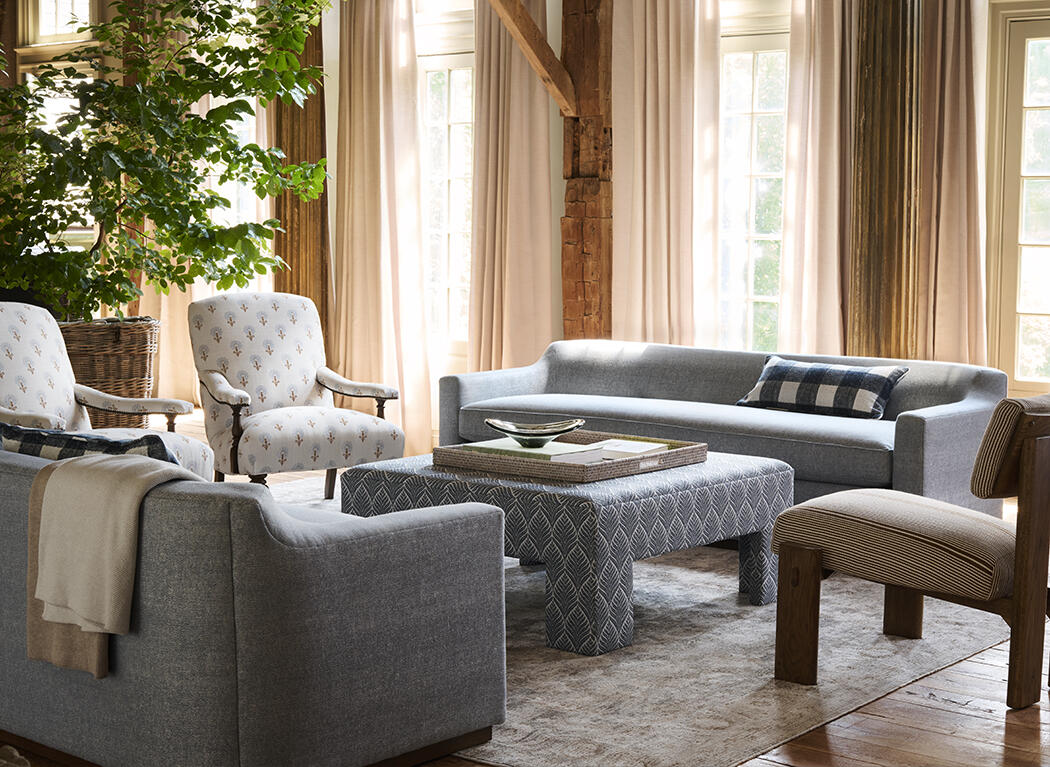
To satisfy those desires, Sunbrella creates hundreds of styles of its own each year, in addition to custom fabric development for partners like Pindler, Peter Dunham, Holly Hunt, Rose Tarlow and Kravet. It also regularly collaborates on design-driven collections with artisanal brands like Block Shop, Sien + Co, Kelly Ventura and CW Stockwell. Injecting distinctive perspectives into performance—and appealing to new audiences via social media—these curated capsules challenge the company to investigate fresh aesthetic territory while staying true to shared values of performance, legacy and style.
“Block Shop pushed us to experiment with color combinations we hadn’t explored before,” says Chang of the Los Angeles studio known for its cheerful graphic prints. Drawing inspiration from Frank Lloyd Wright’s iconic Hollyhock House, the playful motifs are meant to be mixed and matched. “All nod to art deco, but are interpreted in a modern way,” she adds. Sien + Co’s collection, adapting traditional weaving techniques from Argentina, intentionally designs subtle irregularities and “imperfections” into its fabrics to give them a sense of authenticity, a vintage patina and a handcrafted feel. “Lush, sunbaked neutrals are layered with moments of vibrant color,” says Chang. “The look is timeless and translates beautifully across a range of spaces.” Rooted in nature, Sunbrella’s line with Kelly Ventura celebrates soft florals, subtle patterns and classic stripes. The brand’s most recent collaboration, its second with California’s legendary CW Stockwell, brings the energy with basket plaids, banana leaves, even funky fish. “It feels fun and relevant,” she says.
PROGRAM FOR SUCCESS
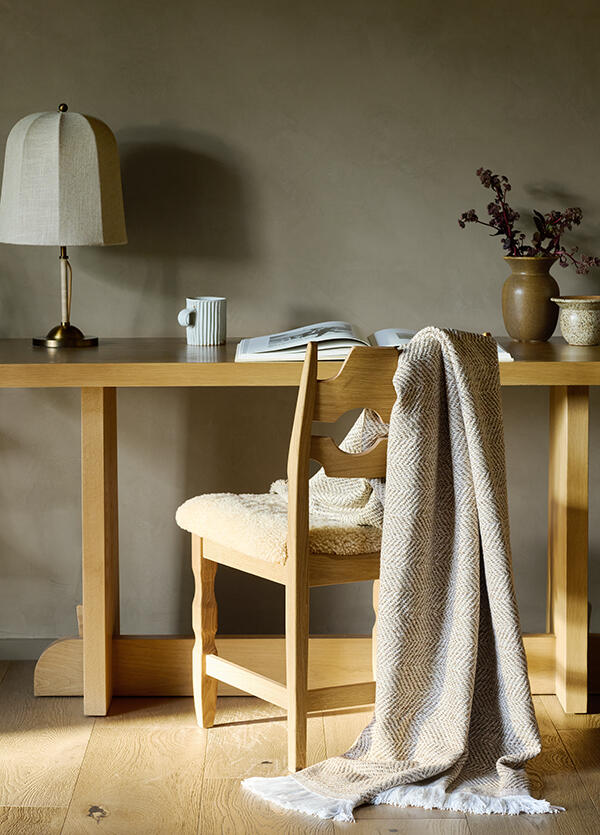
Having mastered awnings, boats, patio umbrellas, porch swings and living room furniture, performance materials are moving beyond fabric by the yard into even more decorative and ready-made categories—and why not? If a chaise longue can resist fading under intense afternoon sun, so can the curtains of a west-facing window. If a sofa seat back is impervious to Syrah and spaghetti sauce, a cozy throw can be too. “As the pioneer in performance materials, Sunbrella sees a huge opportunity to expand its innovation and deliver its trusted durability, beauty and ease of care to new items,” says Chang. Its debut selection of signature indoor-outdoor throws is snuggly soft, but also bleach-cleanable and backed by a five-year warranty. “They come in chic herringbone, plaid and stripe patterns and have such a luxurious hand, you’d think they were wool or cashmere, but you can literally toss them in the washing machine,” she notes. From a choice of 250 fabrics, the company also offers an array of durable, fade-proof drapery, sheers, and Roman and solar shades with performance-level color retention that’s perfect for residential and hospitality settings. “And beyond that, we’re exploring other complementary products that allow designers to layer performance throughout a space. Ultimately, these innovations make it possible to create environments that are not only beautiful, but also highly livable, easy to care for, and built to last—a priority in both residential and hospitality design today.”
With the launch of the new trade program, designers can now find all things Sunbrella on its website. But Chang still invites them to tour the South Carolina mill and witness firsthand how its fabrics are made. “People are always blown away by what goes into creating our textiles,” she says. “It’s so helpful to see the process.” In person or online, Sunbrella is committed to providing the perfect performance piece, durable and design-driven, for your every project need. “Fabrics fill all facets of our life, and designers are so creative in the ways that they use them,” Chang concludes. “We’re excited to deepen our collaboration with them.”
This story is a paid promotion and was created in partnership with Sunbrella.
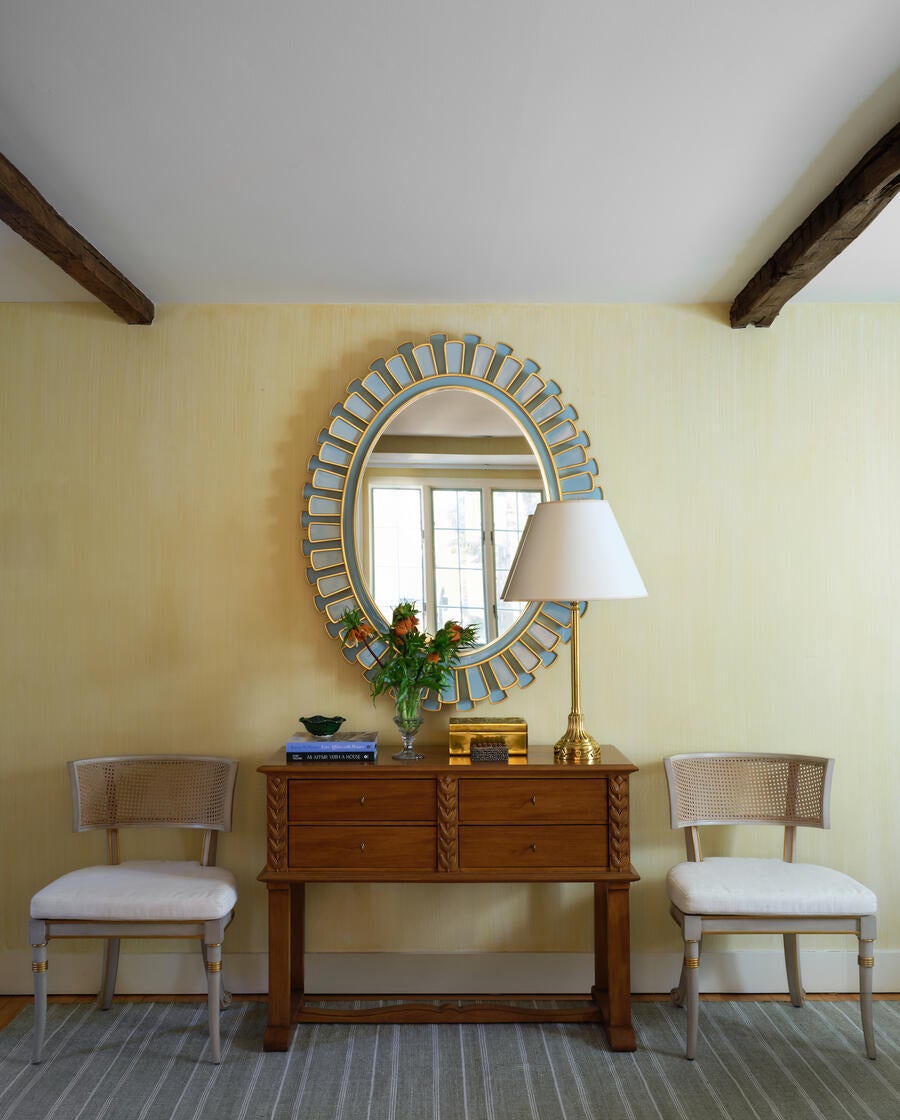
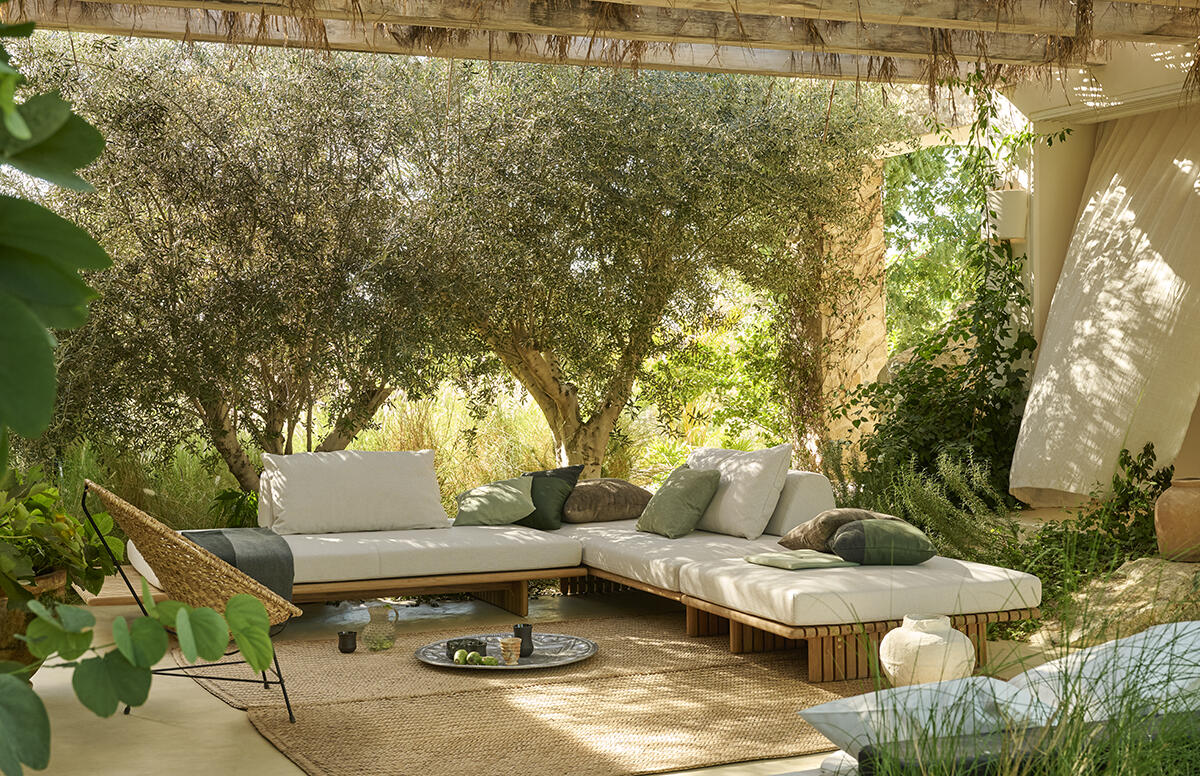
Homepage image: Collaborating with like-minded studios and makers, Sunbrella designs unique capsule collections to style elevated interiors | Courtesy of Sunbrella