



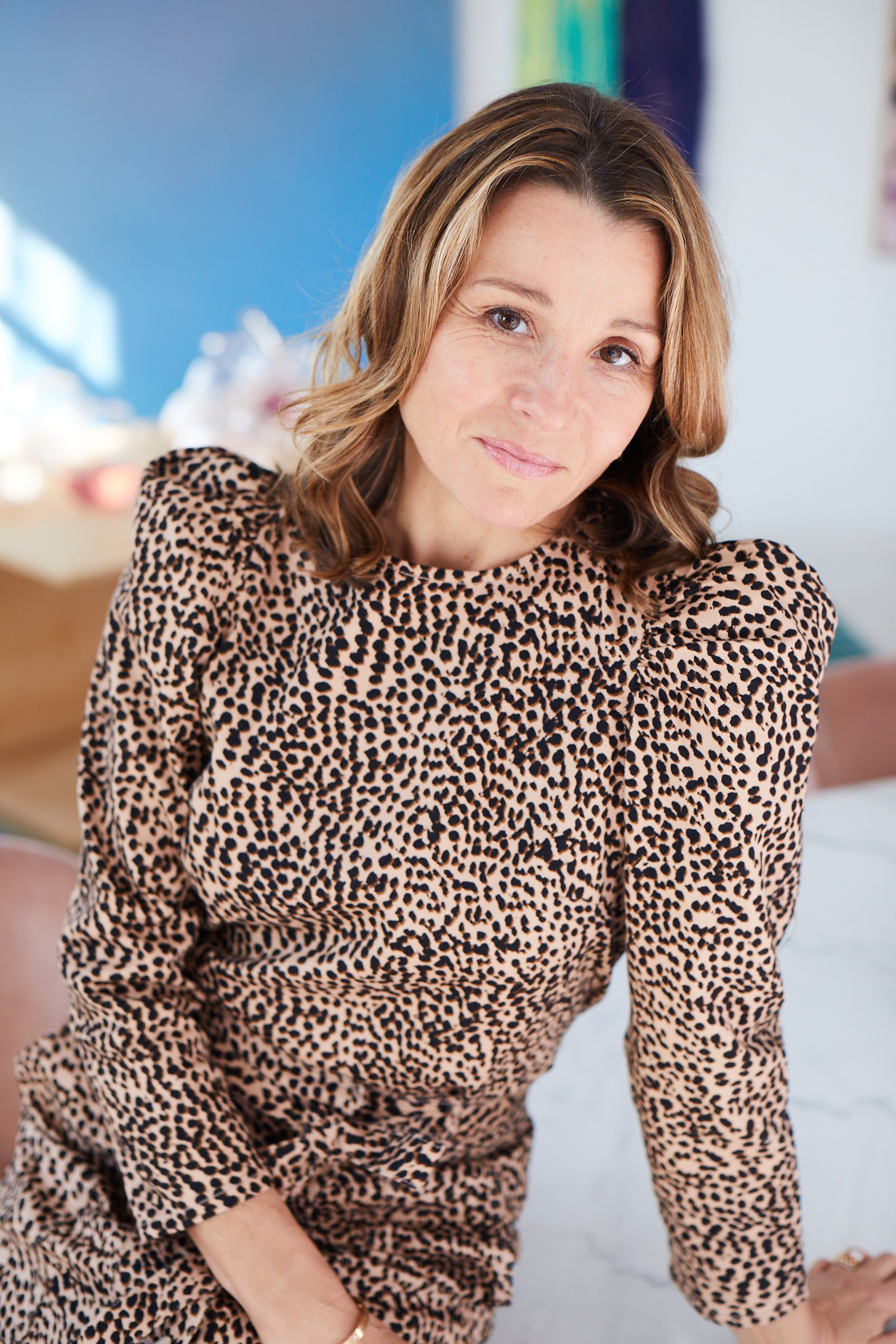

In our new series Ask an Expert, we’re speaking to the specialists who help design firms thrive. This week, we spoke with Kate Verner of the New York brand strategy firm Kate Verner + Associates.
Verner has become a go-to for product development after cementing her skills as a product designer, working with New York designer Clodagh on custom product for nearly a decade, and then launching her own firm in 2003. Here, Verner talks about how she helps designers turn their ideas into product lines, why there’s no one-size-fits-all path to landing a deal, and a new offering she’s rolling out in 2027 to help smaller brands find their footing.
Where did you start your career, and what led you down the path of licensing and product design?
I went to Parsons School of Design for industrial design, studying furniture design specifically.
Shortly after I graduated, I helped to open a gallery with a gentleman named Murray Moss—which was like an [education] of its own—in New York in the mid-1990s. After helping him significantly grow the gallery for three years, I really missed designing. It was great hanging out with Philippe Starck and Ron Arad and all these amazing, acclaimed product designers. But I was no longer designing anything—I was just selling all their cool stuff.
[At that point] I became partners with Clodagh and built out the product design side of her business. Back in those days, we were doing a lot of work for Starwood Hotels. We’d design all the products that went into a hospitality project, and then reach out to vendors who could make the broadloom carpet, the furniture, the lighting, et cetera. That naturally led to licensing. One of our collaborators asked if they could add some of our designs to their line and pay us a royalty. We were like, “Wow, that sounds fabulous. Let’s do that.” So we started doing that with every category that we were specifying. Around seven years in, I realized I should be doing this for lots of people, not just one person, so I decided to start my own agency.
Has your focus always been on trade-only brands?
Yes. Now, sometimes the product will find its way into the general consumer, but that’s not our focus. If somebody comes and says, “I want to collaborate with Pottery Barn,” or if you want to be at Target, I’m not your girl. There are plenty of agents out there who just focus on that, but we are not agents. We are product design strategists.
With that in mind, who were some of your first clients when you started out?
Some of my first clients were Laura Kirar, David Easton and David Rockwell. I was really working with an array of designers who were interested in licensing their name to brands. That’s how it all started, and everything was going swimmingly. Then around 2008 to 2009, things really shifted, obviously, because the economy changed. We had to get more creative about how to help designers make money.
How did your business evolve then?
That’s when we hatched the whole concept of private label, where designers create their own lines of furniture—typically upholstery, case goods and seating—and distribute it themselves. An example of that would be 10 years ago, when I started working with Workshop/APD, and we put together strategies for them as to how to expand their brand’s equity in the marketplace.
Clients come to us with a portfolio of custom designs—and I’m not talking about custom like a made-to-measure program where you pick a back and an arm and a length, and then a trade brand makes it for you. That’s not product design. I’m talking about truly bespoke pieces. If you are an interior designer or architect and you’re creating custom pieces time and time again on a project, chances are those are things that other people would be interested in sourcing as well. Creating private-label product is where we’re helping you [translate your designs into] an assortment of SKUs, and then helping you develop a strategy to reach out to manufacturers. They will make those things for what we refer to as a “cost of goods,” and then the designer puts a margin on [that price] and resells through sales channels [they have cultivated,] which could be multiline reps, showrooms, e-commerce—you name it. What’s different in that scenario is you’re not making a royalty. You’re making a margin on each transaction. With Workshop/APD, for example, their collection is sold through multiline showrooms like R Hughes, Coleman & Rose, and then they have their own showroom in New York.
What makes a designer a better fit for the private-label model versus a more traditional licensing deal with a brand?
When designers and architects hire us, we’re mining their business looking for [the best] opportunities to put product into it. So if they’re interested in the private-label model, they have to be super interested in marketing the product, creating a sales force to support selling the product, and then implementing customer service. That’s not for everyone. It truly isn’t. There are plenty of examples in the marketplace of designers who have dabbled in private label and have never been successful. Sometimes, I tell [a designer] what it’s going to take to do it, and they’re like, “No, I don’t want to put that kind of investment capital into it.” But if you do it our way, you have a shot.
You said the 2008 recession changed your business. Did the pandemic change it again?
We started getting hired more by brands directly. What changed the most for the interior design community was how people find and buy things sight unseen. Marketing [products] using social media is at a whole different level over the past seven years, [during which] we’ve really been focused on helping brands to pivot their businesses to sell and market themselves more directly to the design trade. But we’re not a marketing firm—the stuff that we affect is product assortment, scale, finishes, details, and the programming that goes behind the sale of that product assortment.
Tell me more about the programming piece of it. What questions are you asking?
Do they have a designer discount program in place? Are they engaging in outward-facing events where designers can interface with them? We’re not a big proponent of typical shows. We’re talking about things that are more focused and experiential—and we help our manufacturer clients to build out programming that targets designers so that they’re getting noticed and making one-on-one connections with the design trade.
Let’s go back to your work with designers. When you’re meeting with a potential designer client, what do those initial conversations look like?
First, we’ll try to quickly understand what the scale of their own specification is in any given year. We want to understand the categories where they’re most active. Is it furniture? A lot of designers get a lot of stuff made from workrooms, which means they don’t have relationships with brands. If that’s the case, then are they buying lots of fabric and wallcovering? Do they have a great relationship with a manufacturer?
We’re trying to understand how the designer’s business is organized so that we can think about whether private label or licensing is a fit for them, and [who they should approach first for partnerships]. For example, one designer we’re just starting to work with spends millions of dollars a year with a well-established brand. I was like, “Well, there you go: That should be your first conversation. Reach out to them.”
We’ll also do an audit of their brand through their website and social media to make sure that there is a heartbeat out there about who they are. Sometimes we find that the most lucrative designers are heads-down and super busy, but don’t really have a buzz out there about their brand. If that’s the case, we’ll probably refer them to a marketing group so that they can start to generate a story and get some PR going before they work with us.
Finally, we will look at whatever intellectual property that they have. That could be CAD drawings, SketchUp renderings, pencil sketches, or pictures of the last 20 years of custom product that they’ve created with a handful of vendors. We want to get under the hood and understand what their point of view is, and what their look and feel would be for a product offering in each category.
What if they don’t have that?
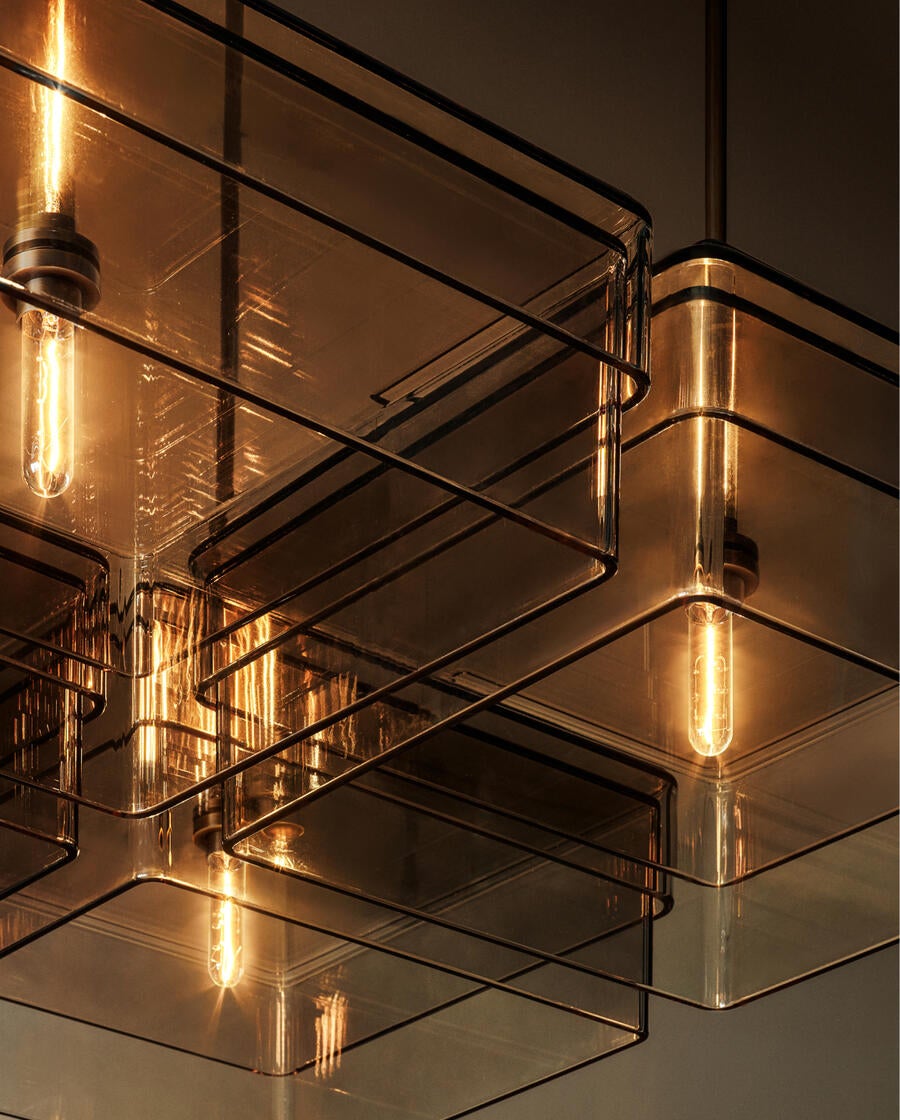
If they don’t have any of that, that doesn’t mean we can’t work with them. It just means we need to start a little bit more granular and extract that out of them. That could be via Pinterest boards or photography that they provide from their camera roll—[whatever] gets them excited about a product category. As an example, we started working with [New York designer] Phillip Thomas two years ago. He shared a file of 1,400 inspiration images that he had collected throughout his career, which is what we used to help him develop a cohesive 25-piece lighting collection.
Does your firm help design the product?
Half of my firm focuses on the strategy and the implementation of the big ideas—that’s determining whether we’re going to do licensing or private label.
But we also design behind some of the greatest talents that are out there, taking cues and creative direction from them—or behind well-known brands that are looking for a fresh point of view. But it’s all in the background. We don’t operate as a branded designer; we assign the designs to everyone we work for.
In that scenario you mentioned earlier, where your client is looking for a licensing partnership and brings a proposal to a brand they source from frequently, what does that process look like?
If a designer believes that they have a unique point of view in a category, it is on them to develop that lookbook in advance of a conversation, and then to shop it to see if someone wants to make the things. In that example, I might recommend that the designer reach out to the right contacts at a brand and have a conversation like, “We’re such a good customer of yours, we spend X number of dollars with you a year. We have some ideas on what a licensed collection might look like. Are you interested in seeing a lookbook?” In that scenario, the designer would then present the concept renderings they have developed under the protection of an NDA. If we do go into a licensing contract, there would be some refining and back-and-forth before eventually entering into manufacturing. The whole process takes anywhere from 18 to 24 months, from when you deliver the CAD drawings to when the product launches at a market.
But this business is not built for the faint of heart, and it isn’t unusual to shop something to multiple vendors, and that could take over a year. It’s very possible you could have the door slammed on you three to four times before you find someone who’s interested in part of your lookbook. It’s very rare that you create a lookbook, pitch it, and the response is, “This is amazing, let’s do it all.”
Is there a service that you offer that you would like to do more of?
Even though we’ve been focused on balancing licensing, private label and the development work that we do with bigger brands, I feel like people still know us just as for the licensing. I would like more people to understand that we help lots of brands [across] furniture, lighting, fabric and hardware to better target the trade customer with their offerings. We are very good at helping bigger brands to focus their assortment on the design trade, and understanding what that landscape of competitors looks like, so that they can be more targeted.
The segment of the market where we are focused on putting some new programming in place for 2027 is reaching the designer maker community: smaller lighting, furniture and rug companies that are selling $5 million to $10 million a year, or even smaller. They usually stumble into the marketplace, not really understanding who they should be targeting or the margins that come with that. Oftentimes, they find us when they realize that a direct-to-consumer model doesn’t work and they want to sell to the design trade, or they need to be able to sell wholesale to someone else and their model’s not built for it, so they need to go through a massive price increase in order to function at that next level.
What will you be launching for those businesses?
We’re putting programming together for a six-week course. We want to group together four to six of these brands from different product categories, and touch on topics like sales channels and territories, and product margins and revenue models, in weekly meetings. We want to give them a good foundation to go back to their companies and really implement some of those changes, and give them the guardrails to get to the next step.
We are very much a behind-the-velvet-rope resource. But more than two decades in, I miss those formative years of helping, and being an advocate, to these designer-makers. I want to give them a solid foundation so that they can make the necessary adjustments while they are still nimble. We’ve worked with huge brands, we’ve worked with a lot of medium-size brands, and what really interests me now is trying to help some of these smaller brands so that they can build longevity. It’s really expensive to make product right now—and it’s even more expensive to ship it. I want to help.
Looking for an expert? From accountants and attorneys to fabricators, installers and artisans, the Business of Home Find an Expert directory connects you with industry professionals and skilled trades with the knowledge to bring your vision to life and move your business forward.

 Withdraw Consent / Manage Privacy Preferences