













A new shelter magazine is about to hit the market. From the team behind U.K. brand Homes & Gardens comes Anthology—a biannual journal for the U.S. market. “It’s not designed to replicate Homes & Gardens—it’s got a different pace, format [and] editorial voice that really speaks to the design community,” says Sarah Spiteri, H&G’s global brand director and group editor in chief. “We want to offer substance as well as beauty—thoughtful writing, lovely photography and strong opinions, as opposed to creating another service magazine helping you decorate your house.”
Anthology—which launches September 14—is a larger-format magazine, and while its heart is in England, its outlook is American, with a global spin. (Notably, Spiteri says it will feature primarily American projects.) “We have a plan that this will ultimately be as relevant to globally minded British designers as [to] Americans,” says Jason Orme, the managing director for lifestyle brands at Future, H&G’s parent company. “The interior design audience that we speak to in the U.S. is a very outward-looking one. It can flex very well between working in Texas and California and New York and London and Dubai, so I think the audience is going to be a global audience, because the issues in the magazine are global and hopefully of interest to anybody.”
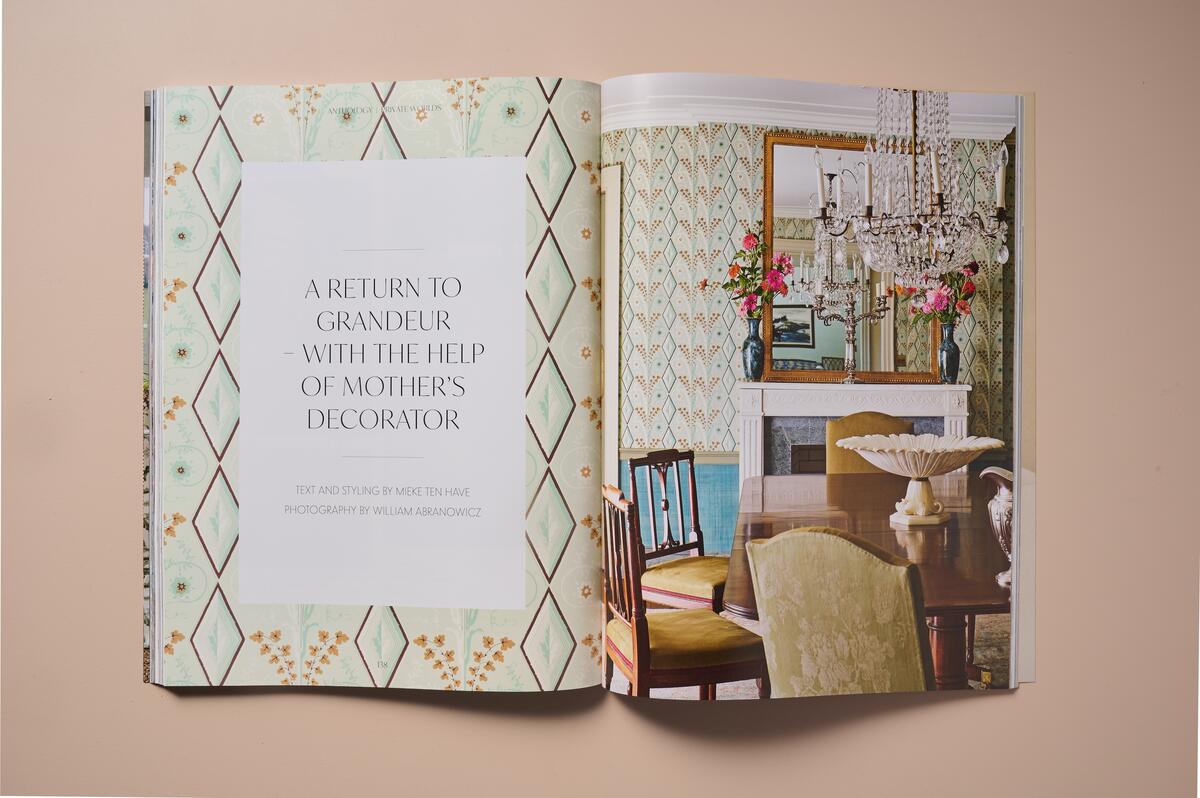
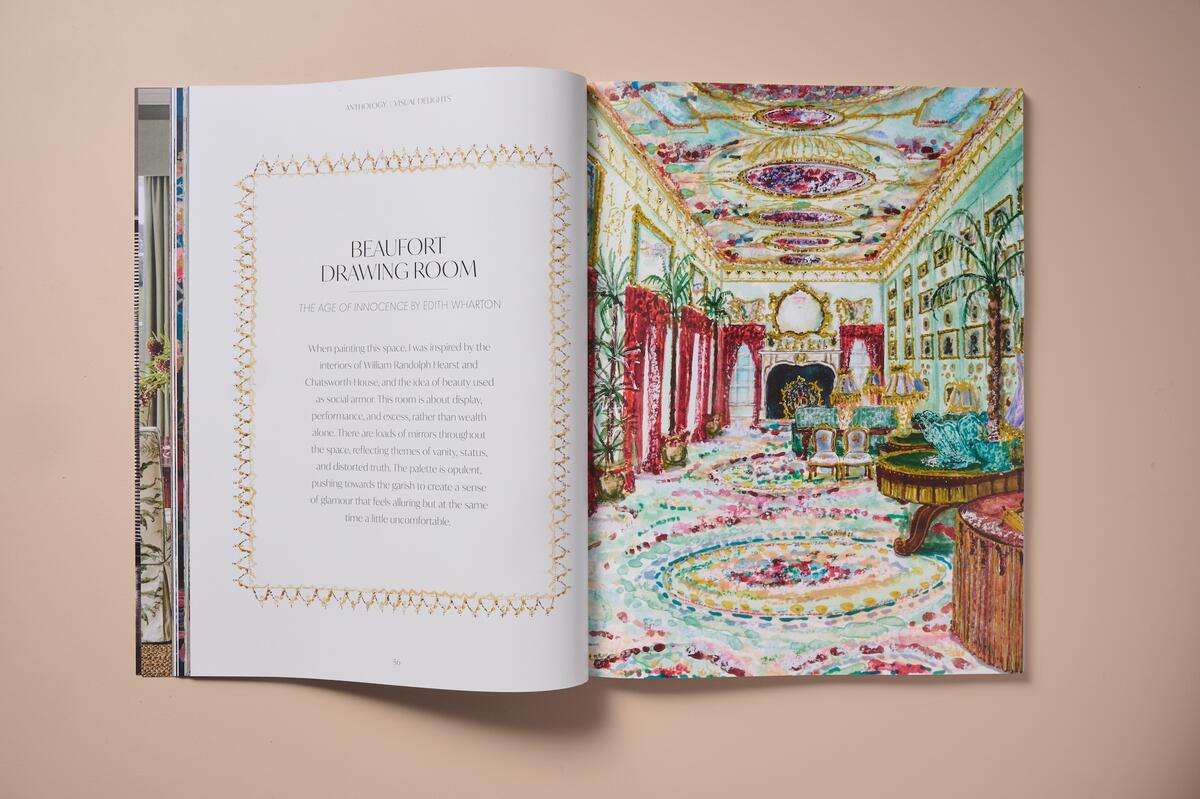
Each issue will have an anchoring theme. The first will focus on the transatlantic design exchange, with essays from industry notables like Michael Diaz-Griffith, Steven Gambrel, Lulu Lytle and Ben Pentreath, and a section called “Visual Delights,” which features portraits of imagined rooms from classic British and American novels like Jane Eyre and The Great Gatsby. “We really wanted it to be this collection of stories and voices, and deliberately different to a magazine where you so often are just getting the editor’s point of view,” says Spiteri.
The issue also showcases five exclusive home tours—work by Bunny Williams, Gil Schafer, Ferguson & Shamamian, Thomas Jayne, House Seven Design, and Roger Seifter of Robert A.M. Stern Architects—in expansive features that each sprawl over 12 to 14 pages. The projects have been documented with an eye for detail and reported with the trade in mind. “The copy really draws out what an interior designer would want to know about this approach to the project,” says Spiteri. “It’s not about the homeowner who bought this ramshackle cottage and did X, Y and Z. It’s very much focused on the design details and the things that you could learn peer to peer.”
For magazine lovers, Anthology’s format will be part of the appeal. “Big images, beautiful binding, incredible paper,” enthuses Benjamin Reynaert, who joined Homes & Gardens as U.S. editor last week. “I believe that print has become more special, not less. We’re surrounded by disposable imagery all day long. For me, slowing down, reading, and really savoring beautiful, large-format images like that feels luxurious.”
The launch comes at a time when Americans are increasingly interested in the classically British layered aesthetic. “We absolutely want to be true to our English eye, and to have that heritage behind us, but what we really did want this to be was this conversation between the two, and I think also to acknowledge that actually now it’s a very two-way interest,” says Spiteri. “The starting point for a British designer is a heritage piece or an antique, so often we’re mixing styles. I think that’s probably what the British designers are particularly good at. I think what American designers are so good at is bringing such a joyfully fresh perspective to anything that’s got a rich heritage. So this is not about us thinking ‘British is best’ at all; this is about saying British brands are obsessed with coming to America and Americans are interested in Britishness.”
While the inaugural issue is all about the relationship between the two design cultures, future ones will skew more American with the personalities it features, while still maintaining an English viewpoint. “The houses we are drawn to featuring will be the ones with layering and the ones with decorating, as opposed to the more sleek,” says Spiteri. “It’s always going to have that heritage aesthetic. [But] I’m not sitting in the office in London trying to tell American designers what I think that they want to hear—we’re drawing together voices from all over the U.S. design community to create this interesting melting pot of ideas.”
One of the key drivers of the launch is to translate the digital appeal of Homes & Gardens—which has garnered a wide audience in the States, both online and on social media—into a tangible product. “I’ve learned that interior designers [in America] really value print,” says Orme. “While anybody can go into Barnes & Noble and buy the Homes & Gardens British publication on export, what they can’t get is a unique version of the experience dedicated to the U.S. interior design market, and that’s really where we got to with Anthology. We wanted to create something that was specific to that audience, but absolutely rooted in the unique position that we’ve got, which is that ability to look transatlantically.”
The Anthology team believes the timing is ideal, especially as more and more trade events nod to British design. With the growing popularity of events like Design Destination London and stateside festivals honoring British design (among them the upcoming Rooms With a View in Connecticut), both audiences are yearning to learn more about each other. “There’s a gap in the market for a non-branded, interiors-focused, beautiful publication,” says Spiteri. “Cultures are meeting, but they’re not separate worlds.”







 Withdraw Consent / Manage Privacy Preferences