







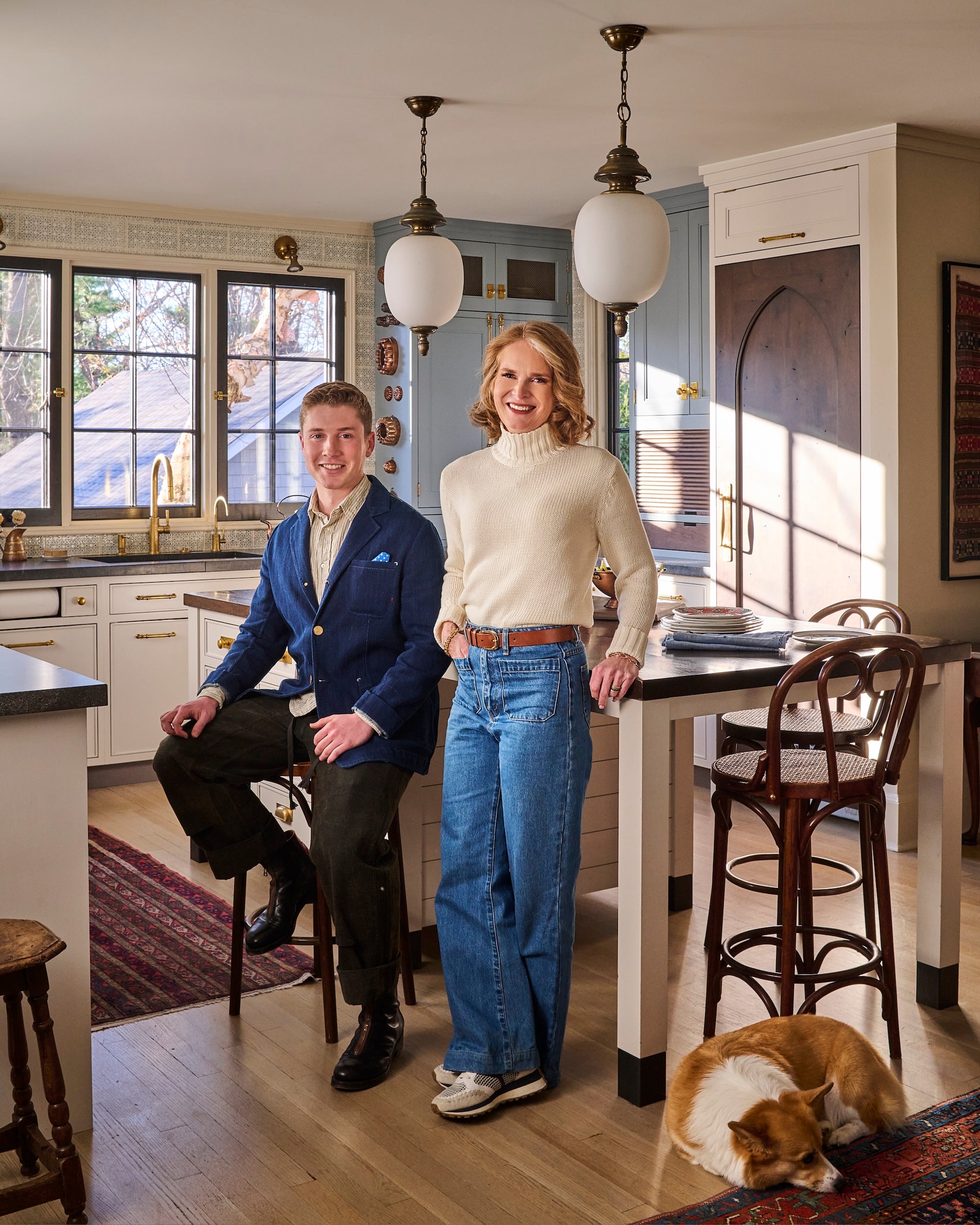

From a very early age, Sarah Robertson understood the power of design: Growing up in her family home in Illinois, she painted the walls and moved furniture around as often as she could. But when it came to planning her future, she chose a more “practical” path, attending business school at Northwestern University while working as a paralegal, and then joining McKinsey & Company as a consultant. Yet her creative impulses couldn’t be denied. Robertson began purchasing properties and renovating historic homes in Chicago’s Wicker Park neighborhood with her mother, a hobby that soon became a passion. She eventually quit her day job and started Studio Dearborn, specializing in deeply personal, highly functional kitchens for residential clients. Over the course of her career, she has won numerous awards, been featured in countless shelter magazines, and been recognized as a thought leader in the kitchen industry for her research-driven approach and ingenious custom storage solutions.
But it almost didn’t happen. When a friend asked Robertson to design her mother’s kitchen, she initially passed on the project. “I certainly had plenty of things going on—I had two kids under the age of six. I said no, and the no turned into a yes,” she tells host Dennis Scully on the latest episode of The Business of Home Podcast. “That project turned into another project for a friend, which turned into another project, and I said to my friend, ‘Does this mean I’m printing business cards now?’”
Robertson’s experience renovating historic homes taught her the technical aspects of building kitchens, and gave her a deep appreciation of how they relate to the broader architecture of a home. But what has set her apart is a talent for learning the habits and sensibilities of each client, then using that information to create a design that is unique to their daily rhythms and routines. While satisfying, the process can be labor intensive. “Overinvesting in terms of time and attention is kind of what I do for a living,” she laughs. “That turns out to be my superpower.”
Elsewhere in the episode, Robertson discusses the Amish cabinetmakers she can’t live without, having her son Owen join her company, and the organizational ethos that guides her.
Crucial insight: The design process can be challenging for clients who don’t have the language to articulate what they want, so Robertson has developed a helpful strategy. “I’ve found that a nice approach is to focus on the function of the kitchen first—because it’s hard enough to get through that discussion. I think once you’re grounded in, ‘OK, I feel comfortable now that we’re going to have a functional kitchen,’ then I think clients are more comfortable starting to nuance these aesthetic details. Whereas if you hit them with that up front, it can be overwhelming because they don’t feel like the basis of the functioning aspect is figured out.”
Key quote: “Whatever people are doing in terms of personalizing kitchens, it does not seem to be putting off buyers. … We’re not doing wacky things that are only going to make sense to one or two people. We’re just bending the rules a little bit in terms of the way kitchens are typically designed. Those rules are meant to be bent.”
This episode is sponsored by Ernesta and Crypton. Listen to the show below. If you like what you hear, subscribe on Apple Podcasts or Spotify.
The Thursday Show
Host Dennis Scully and BOH executive editor Fred Nicolaus discuss the biggest news in the design world, including fuel surcharges, the impact of tariffs and LA’s most tasteful burglar. Later, Ernesta CEO John Foley joins the show to talk about his latest fundraise.
This episode is sponsored by Loloi and Chelsea House. Listen to the show below. If you like what you hear, subscribe on Apple Podcasts or Spotify.








 Withdraw Consent / Manage Privacy Preferences