




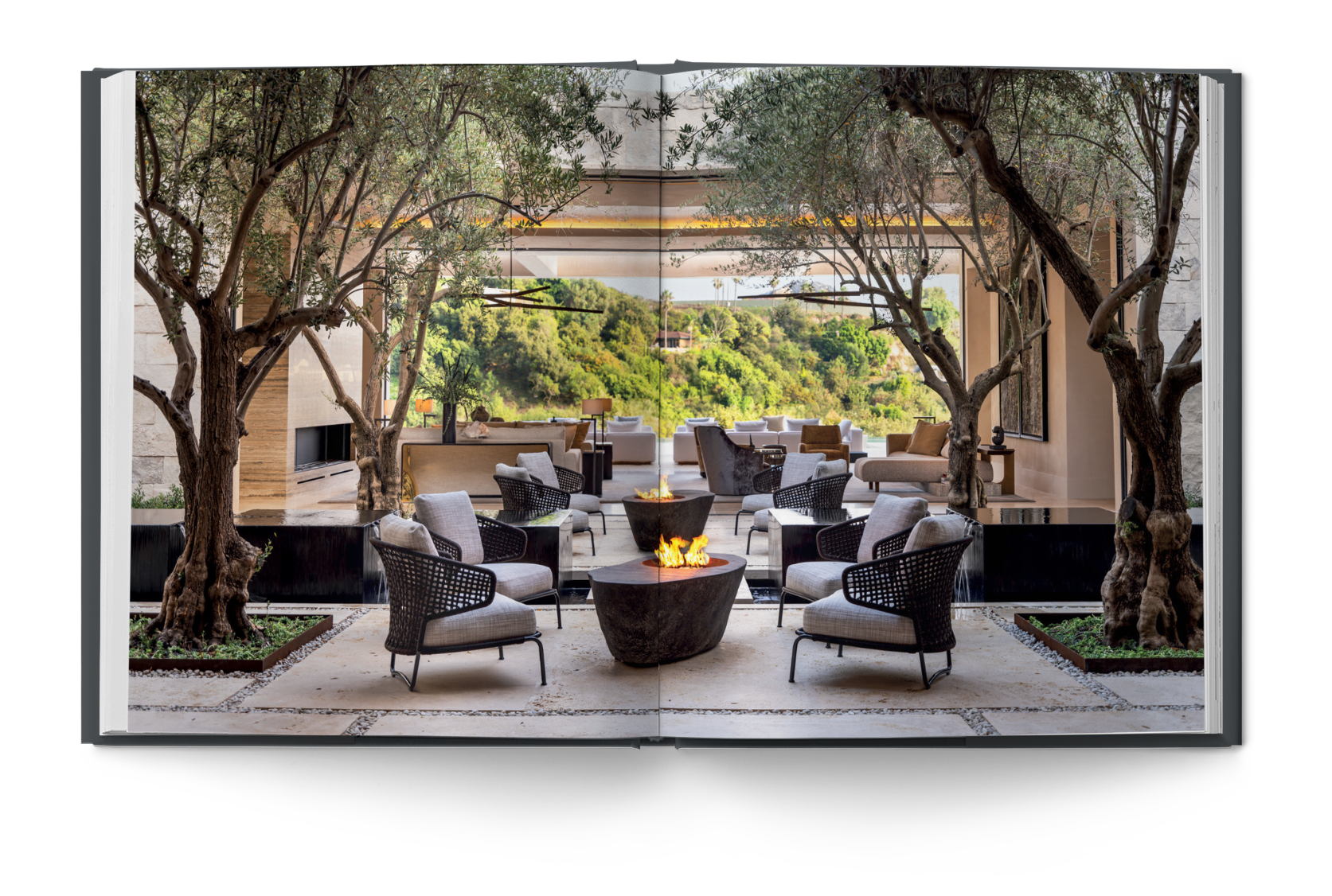

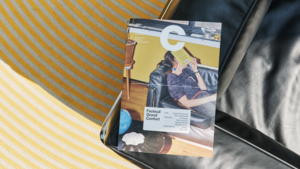
This month Sandow will release a new design book. Like other design books, it’s full of stunning homes and sweeping gardens, captured by top-notch photographers. But this one has a twist: You can’t get a copy. Unless, that is, you belong to the paper-thin slice of the demographic that flies private.
The book, Private Tour: Extraordinary Homes, will be free of charge, on offer exclusively through special displays in private airline terminals. Spearheaded by longtime design publishing doyenne (and current Luxe editor in chief) Jill Cohen, Private Tour will feature 15 firms showing off one project each. The group includes designers Summer Thornton and Suzanne Lovell; architects Tom Kligerman and Stan Dixon; and landscape designer Ed Hollander.

The concept for the book emerged from a unique distribution network. Early on in Luxe’s history, Sandow founder Adam Sandow struck deals with private jet companies to get copies of the publication into terminals—over time, the partnerships expanded, to the point that Sandow now has exclusive arrangements with what Cohen describes as “the majority” of operators. The company is already sending magazines into the private skies. Why not a book too?
“Talking with Adam, it was exciting to imagine doing something for this audience,” says Cohen. “It’s an average of 30 minutes to wait for refueling, so you’ve got their attention. Some of the flights fly low for a while and can’t get Wi-Fi, so you’ve got a captive audience.”
The project is in some ways a tacit acknowledgment of the true target audience for design books: potential clients. While some titles become runaway bestsellers, most only sell a few thousand copies and don’t directly recoup the expense of production—designers make their money back if the book helps land them new projects. But traditional distribution can be a gamble. How to know if your book ends up in a Hamptons-bound boat-and-tote or just languishing on a shelf in Barnes & Noble?
Private Tour dispenses with the concept of retail sales altogether. Instead, the point is to take all the guesswork out of distribution and put the book in proximity to an extremely desirable audience. “Adam really believes that the person who flies private—that is the great divide in wealth,” says Cohen. “If you’re spending 80 grand to go to a meeting and fly right back, their time is really worth it.” According to Sandow’s research, private-jet travelers have an average of 3.5 homes and a net worth of $190 million.
All in, the company will print 10,000 copies and distribute them across the country, targeting the 7 million or so well-heeled travelers who don’t have to check their luggage. “I told the designers, ‘At least you know the people who are looking at this can afford to hire you,’” says Cohen.
Initially, she had thought of the project as a series of books by individual firms. But the unique freight costs involved in getting crates of heavy books to private airports made single-designer titles prohibitively pricey. So she opted for a co-op model, inviting 15 principals to collectively front the expense. They share the pages of Private Tour equally, but there were challenges involved in bringing together more than a dozen big names who are used to taking top billing on their own. No two firms could be geographically competitive, for example—or publish projects that looked too similar to another in the book.
Sandow’s network allows for more strategic deployment than the average book distribution strategy. For example, if the featured designers have a market where they’re hoping to get more work, Cohen’s team can more heavily stock nearby terminals.
Cohen hopes to make the book into a series, with future volumes potentially focused on either another roster of blue-chip talent, or another concept entirely—large-scale family compounds, for example. That’s assuming, of course, the first one is well received: “If everybody gets a billionaire client with four houses, we’ll have a robust business.”


 Withdraw Consent / Manage Privacy Preferences